Installing surveillance cameras in private spaces like guest rooms raises serious legal and ethical questions about personal privacy. Homeowners often seek to enhance security, but doing so in areas where guests expect confidentiality can lead to civil lawsuits or criminal charges. This article delves into the boundaries of acceptable surveillance, key legal principles, and practical advice for compliance.
Understanding Privacy Expectations in Private Homes
In residential settings, individuals hold a strong reasonable expectation of privacy, particularly in sleeping quarters. Courts evaluate privacy based on whether a person would reasonably anticipate seclusion from observation. Guest rooms fall into this category, akin to bedrooms or bathrooms, where monitoring without disclosure typically violates norms and laws.
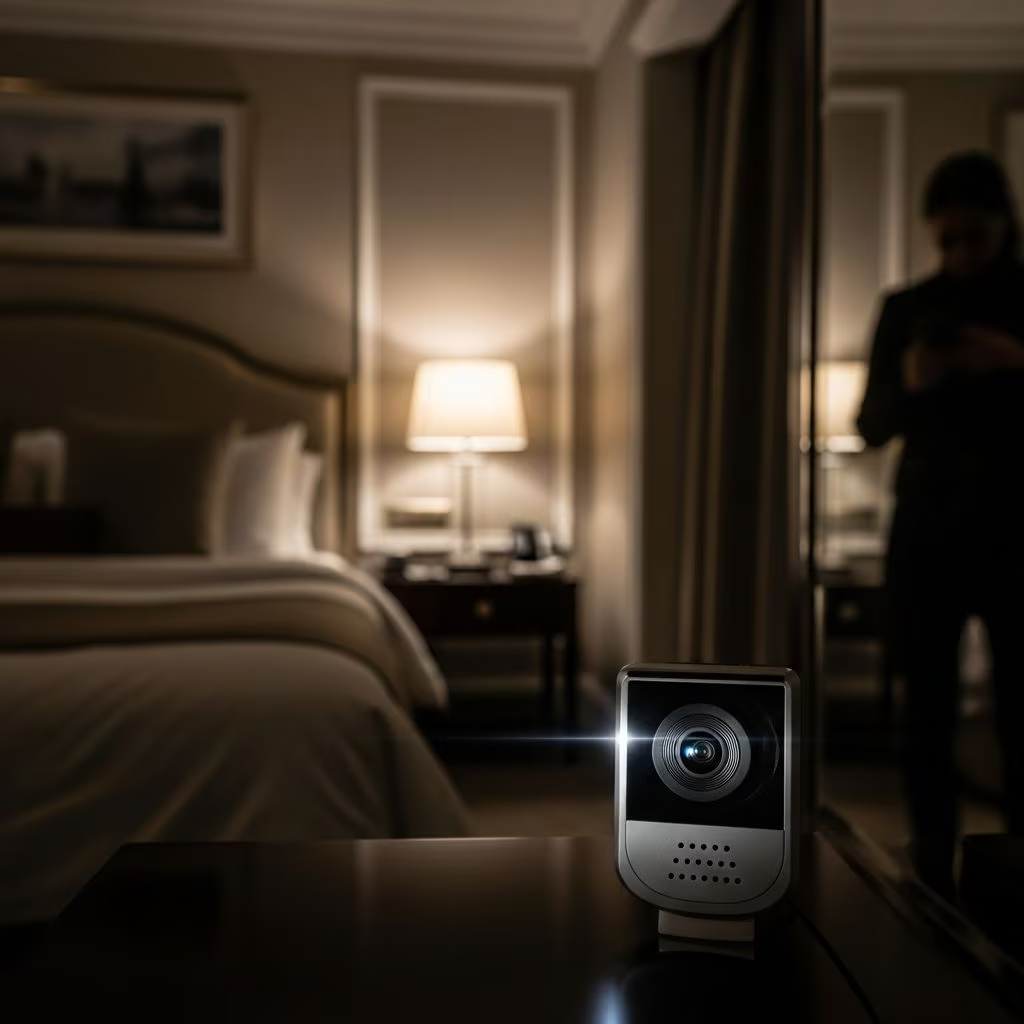
For instance, when visitors stay overnight, they assume temporary autonomy in that space. Hidden recording devices undermine this trust, potentially capturing intimate moments without consent. Legal precedents emphasize that even property owners cannot unilaterally override guests’ privacy rights in such zones.
- Common areas like living rooms permit visible cameras if disclosed.
- Private bedrooms, including guest ones, demand explicit permission or absence of surveillance.
- Audio recording adds complexity, often requiring all-party consent in certain states.
Key Legal Frameworks Governing Home Surveillance
U.S. privacy laws vary by jurisdiction but center on the Fourth Amendment’s protection against unreasonable searches and state-specific statutes. Federal wiretapping laws under 18 U.S.C. § 2511 prohibit unauthorized interception of communications, extending to video with audio.
State penal codes provide clearer prohibitions. In California, Penal Code Section 647(j) criminalizes using devices to secretly view or record individuals in private settings with intent to invade privacy. This includes peeking via cameras into areas like changing rooms or bedrooms. Elements include use of concealed equipment without consent under circumstances implying privacy.
| State | Key Rule | Consent Required? |
|---|---|---|
| California | Penal Code 647(j): No secret recording in private areas | Yes, explicit |
| New Hampshire, Maine, etc. | Reasonable expectation principle for hidden cameras | Yes |
| Most others | Legal in common areas; prohibited in high-privacy zones | Disclosure advised |
Landlords face heightened scrutiny; tenant guest rooms cannot host hidden cameras without agreements. Neighbors’ cameras overlooking private home interiors may also trigger disputes if they capture indoor activities.
Real-World Scenarios and Court Rulings
Consider a homeowner placing a camera in a guest room for ‘security.’ If undisclosed, a guest discovering it could sue for invasion of privacy, emotional distress, or pursue criminal complaints. Cases like those involving Airbnb hosts have resulted in fines and bans for similar violations.
In one documented instance, a host’s nanny cam in a bedroom led to lawsuits when footage revealed private behaviors. Courts ruled it an unlawful intrusion, awarding damages. Another example involves Wi-Fi cameras sharing footage with third parties, amplifying liability under data protection laws.
Technology blurs lines: Smart devices with cloud storage risk hacking, exposing footage to unauthorized viewers. Manufacturers like Ring have faced scrutiny for police access without warrants, highlighting secondary privacy breaches.
Consent, Disclosure, and Best Practices
To mitigate risks, obtain informed consent via written notices or verbal agreements before guests arrive. Signs in common areas stating ‘This home is monitored’ suffice for hallways but not bedrooms.
- Disable cameras in guest rooms entirely.
- Use motion-activated devices without audio in permitted zones.
- Review footage privately and delete promptly.
- Secure systems with strong passwords to prevent hacks.
Waivers can protect hosts, but they must be clear and voluntary. For short-term rentals, platform policies often mandate disclosure.
Consequences of Non-Compliance
Violations carry steep penalties: misdemeanor charges under state codes yield fines up to $2,000 and jail time. Civil suits may demand compensatory damages, punitive awards, and attorney fees. Reputational harm affects personal and business relationships.
In extreme cases, intent for arousal elevates charges to felonies. Even absent malice, negligence suffices for tort claims. Insurance policies often exclude privacy invasion coverage, leaving owners personally liable.
Balancing Security Needs with Guest Rights
Homeowners prioritize safety amid rising burglaries, yet surveillance must respect boundaries. Alternatives include door alarms, locks, and visible deterrents without invasive recording. Ethical considerations foster trust, essential for hospitality.
Consult local attorneys for jurisdiction-specific advice, as laws evolve. Recent 2026 updates emphasize data minimization in smart home regs.
Frequently Asked Questions
Is a camera in my guest bathroom legal?
No, bathrooms command absolute privacy; any recording is illegal without consent.
Can guests sue if they find a hidden camera?
Yes, for invasion of privacy and potential emotional distress.
What if the camera only records video, no audio?
Video alone can still violate laws in private spaces.
Are doorbell cameras okay if they capture my hallway?
Generally yes, if not aimed inside private rooms.
How do I legally inform guests about cameras?
Use clear signage, apps, or pre-arrival notices.
Emerging Trends in Home Privacy Tech
Advancements like AI privacy masks blur faces automatically, but core rules persist. Blockchain-secured footage and guest-controlled access emerge as solutions. Regulations like CCPA in California mandate transparency for smart devices.
Public discourse shifts toward ‘privacy by design,’ urging manufacturers to default-disable indoor cams. Homeowners should audit systems annually for compliance.
In conclusion, while security cameras enhance protection, their placement in guest rooms often crosses legal lines. Prioritize transparency to avoid disputes and uphold rights.
References
- California Penal Code Section 647(j) PC: Invasion Of Privacy — Los Angeles Criminal Lawyer. 2023-05-15. https://www.losangelescriminallawyer.pro/california-penal-code-section-647-j-pc-invasion-of-privacy.html
- Is Your Home Surveillance System Invading Other People’s Privacy? — UC Berkeley School of Information. 2022-06-27. https://blogs.ischool.berkeley.edu/w231/2022/06/27/is-your-home-surveillance-system-invading-other-peoples-privacy/
- Are Security Cameras an Invasion of Privacy? What You Need to Know — Backstreet Surveillance. 2024-02-10. https://www.backstreet-surveillance.com/blog/post/are-security-cameras-an-invasion-of-privacy-what-you-need-to-know
- Legality of Security Camera Usage & Placement in 2026 — Security.org. 2026-01-20. https://www.security.org/security-cameras/legality/
- Is it invasion of privacy if I’m being recorded in a guest bedroom? — Avvo Legal Answers. 2015-08-12. https://www.avvo.com/legal-answers/is-it-invasion-of-privacy-if-i-m-being-recorded-in-5862502.html