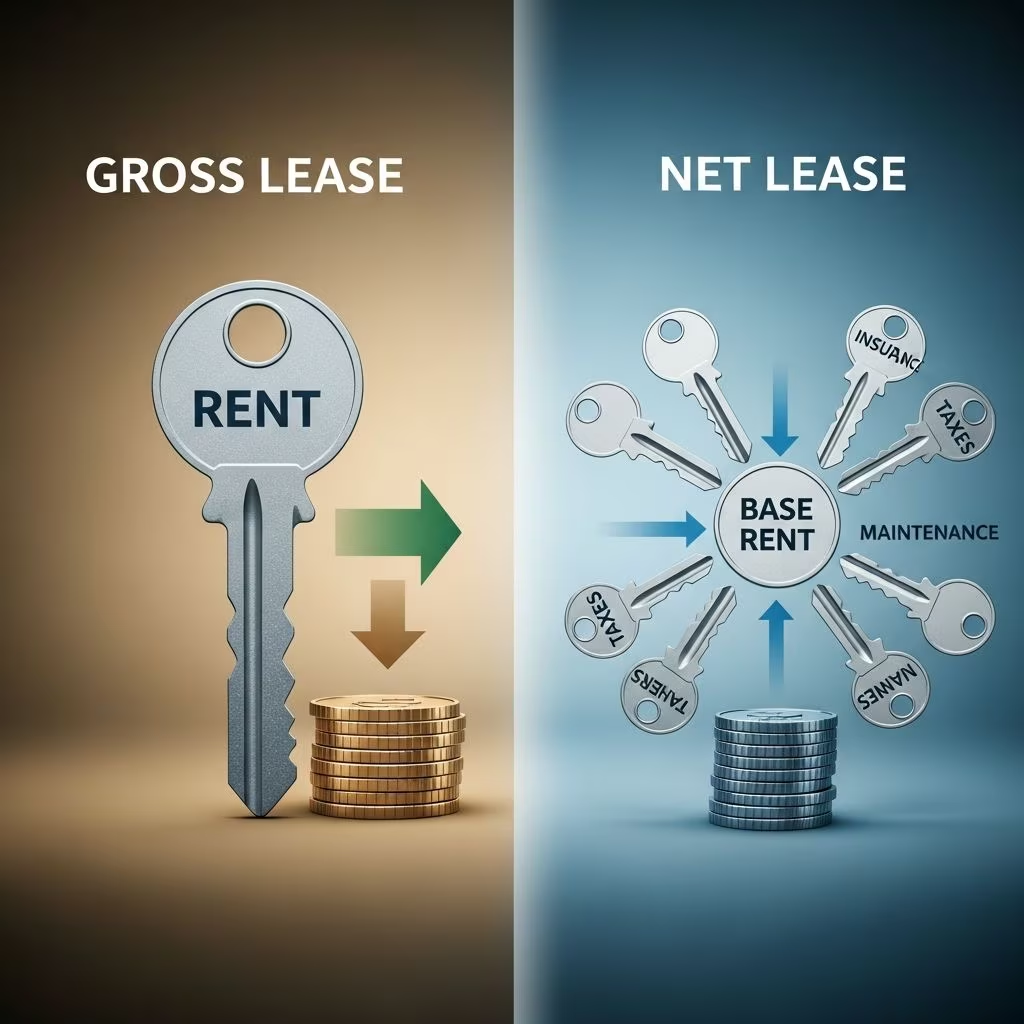
Commercial leasing decisions shape business operations and financial planning. Gross leases bundle all costs into a single payment, while net leases shift expenses to tenants for potentially lower base rents. This guide explores these structures, their variations, benefits, drawbacks, and decision-making factors to help tenants and landlords align on optimal agreements.
Understanding Gross Leases in Commercial Real Estate
A **gross lease** simplifies tenant obligations by incorporating base rent plus most operating expenses into one fixed monthly payment. Landlords typically handle property taxes, insurance, maintenance, and sometimes utilities, making it ideal for businesses seeking budgeting stability.
Common in office buildings and older retail centers, gross leases provide predictable cash flow. The formula often used is: Gross Rent per Square Foot = Net Rent + Operating Expenses (including taxes, insurance, and common area maintenance). Tenants pay only interior utilities, shielding them from variable costs like repairs or tax hikes.
- Base Year Inclusion: First-year expenses set the benchmark, rolled into rent.
- Full-Service Variant: Covers utilities too, enhancing predictability.
- Typical Venues: Multi-tenant offices or community facilities.
Gross leases suit startups or risk-averse operators prioritizing fixed costs over potential savings.
Exploring Net Lease Structures
**Net leases** divide responsibilities, with tenants paying base rent plus specified expenses. This lowers initial rent but introduces variability through annual reconciliations where tenants cover their pro-rata share.
Net leases dominate retail, industrial, and investment properties, favored by landlords for reduced risk.
Single Net (N) Lease
Tenants pay rent plus property taxes. Simpler than fuller nets, it offers moderate predictability.
Double Net (NN) Lease
Adds insurance to taxes and rent. Tenants manage rising premiums, common in smaller commercial deals.
Triple Net (NNN) Lease
The most prevalent, tenants cover rent, taxes, insurance, and common area maintenance (CAM). Annual true-ups adjust for actuals. Pro-rata shares apply in multi-tenant spaces.
Absolute Net Lease
Extreme tenant burden: all costs including structural repairs (roof, foundation). Long-term, non-cancellable, ideal for sale-leasebacks with investors.
Modified Gross Leases: A Balanced Approach
**Modified gross leases** hybridize models, with landlords covering base-year expenses (taxes, insurance, maintenance). Tenants reimburse escalations above this threshold post-base year.
Utilities often pass-through, blending stability with shared risk. Formula: Base Rent + Base Year Ops + Excess Increases.
- Appeal: Predictable Year 1, adjustable thereafter.
- Drawbacks: Potential annual hikes, complex terms.
- Common In: Office parks, medical buildings.
This structure fits growing businesses balancing control and simplicity.
Percentage Leases: Revenue-Tied Options
Less common, **percentage leases** charge base rent plus a sales/revenue percentage. Suited for retail with fluctuating income, aligning landlord incentives with tenant success.
- Pros: Lower fixed costs, flexibility.
- Cons: Revenue reporting demands, peak-season spikes.
Rare in non-retail but useful in mixed-use properties.
Comparative Analysis of Lease Types
Choosing requires weighing cost predictability, control, and market norms. The table below summarizes key attributes:
| Lease Type | Tenant Pays | Cost Predictability | Landlord Benefits | Best For |
|---|---|---|---|---|
| Gross | Rent only (ops by landlord) | High | Higher rent | Offices, predictability seekers |
| Modified Gross | Rent + escalations over base | Medium | Shared risk | Growing ops in offices |
| Single Net (N) | Rent + taxes | Medium | Reduced tax burden | Basic commercial |
| Double Net (NN) | Rent + taxes + insurance | Medium-Low | Lower maintenance | Retail/industrial |
| Triple Net (NNN) | Rent + taxes + ins + CAM | Low | Minimal risk | Investors, retail chains |
| Absolute Net | All expenses + structural | Low | Max stability | Long-term single-tenant |
| Percentage | Base + % revenue | Variable | Tied to success | High-traffic retail |
Data drawn from industry standards. Gross favors tenants for stability; nets favor landlords for pass-throughs.
Financial and Tax Implications
Gross leases yield higher base rents but fixed payments aid forecasting. Nets lower rent but expose to escalations, with tax deductions for direct expenses.
NNN structures enhance property values for investors via stable income. Tenants in nets gain expense control, potentially cutting CAM via efficiency. Reconciliations demand audits to avoid overcharges.
Pros and Cons from Tenant and Landlord Perspectives
Tenant Viewpoint
- Gross Pros: Budget ease, no surprises.
- Gross Cons: Premium pricing.
- Net Pros: Lower rent, customization.
- Net Cons: Volatility, admin load.
Landlord Viewpoint
- Gross Pros: Simplified management.
- Gross Cons: Full expense risk.
- Net Pros: Predictable income, tenant incentives.
- Net Cons: Tenant default risks expense gaps.
Balance shifts by property type and market.
Strategies for Selecting the Right Lease
Assess business stage, location, and risk tolerance. Review market comps; negotiate caps on escalations in nets. For NNN, audit CAM billings annually. Consult brokers for hybrid tailoring.
Long-term tenants may prefer nets for control; short-term opt gross. Factor renewal options, subletting rights.
Frequently Asked Questions
What is the main difference between gross and net leases?
Gross leases include operating expenses in rent (landlord pays); net leases require tenants to pay them separately alongside base rent.
Are triple net leases better for tenants?
Not always—lower rent but higher variability and responsibility. Ideal for cost-controlling operators.
What does CAM mean in commercial leases?
Common Area Maintenance: shared costs for parking, landscaping, etc., typically tenant-paid in nets.
Can gross leases include utilities?
Full-service gross leases do; standard ones exclude tenant-specific utilities.
How do lease reconciliations work?
Landlords estimate monthly, true-up annually based on actuals; tenants pay shortfalls or receive credits.
Negotiation Tips for Commercial Leases
- Audit base year expenses for fairness.
- Cap annual increases (e.g., 3-5%).
- Define CAM exclusions clearly.
- Secure audit rights without fees.
- Include exit clauses for absolutes.
These steps minimize risks across structures.
References
- Difference Between Gross Lease vs. Net Lease for ECE Owners — Hinge Advisors. 2023. https://hingeadvisors.com/blog/gross-lease-vs-net-lease
- What Is the Difference Between Gross, Net, and Modified Gross Leases — Allegro Realty. 2023. https://allegrorealty.com/articles/what-is-the-difference-between-gross-net-and-modified-gross-leases
- NNN lease versus a gross lease: What’s the difference? — WeWork. 2023. https://www.wework.com/ideas/professional-development/business-solutions/nnn-lease-versus-a-gross-lease-whats-the-difference
- Understanding Gross, Double Net, and Triple Net Leases — Commercial Real Estate Loans. 2023. https://www.commercialrealestate.loans/commercial-real-estate-glossary/gross-double-net-triple-net-lease/
- Triple Net (NNN) vs. Gross Lease: Guide to Commercial Leases — Crunchafi. 2023. https://www.crunchafi.com/blog/commercial-lease-types-explained-triple-net-vs-gross-lease-more
- Understanding Different Types of Commercial Leases — Visual Lease. 2023. https://visuallease.com/understanding-different-types-of-commercial-leases-exploring-triple-net-and-pass-through-leases/
- Different Types of Commercial Lease Agreements — Prologis. 2023. https://www.prologis.com/what-we-do/resources/different-types-of-commercial-leases