
Must Green Card Holders Carry ID Always?
Essential guide for U.S. permanent residents on carrying green cards, travel rules, and avoiding residency loss risks.
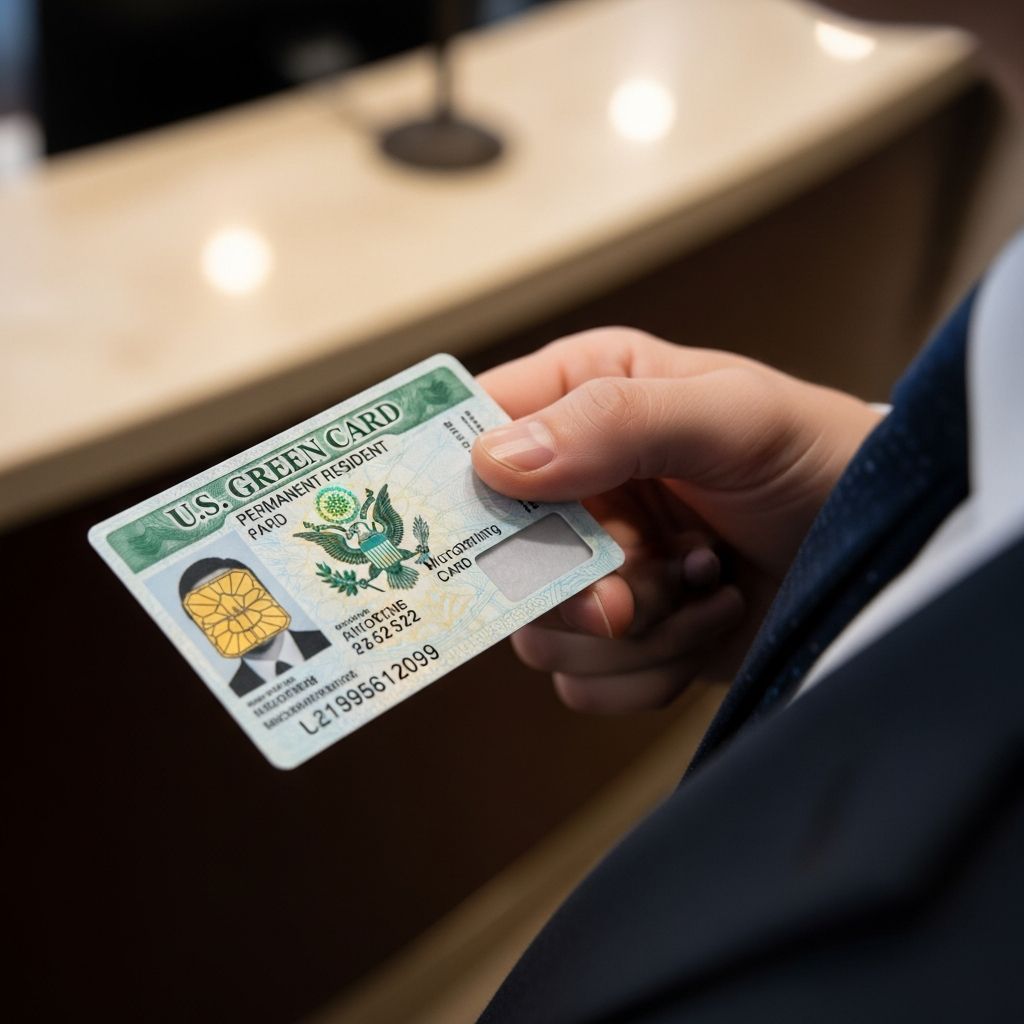
U.S. lawful permanent residents, known as green card holders, enjoy many rights similar to citizens but face specific documentation duties. While daily carrying of the green card isn’t federally mandated everywhere, certain situations demand it for proof of status. This guide explores obligations, travel essentials, and strategies to safeguard residency.
Understanding Your Permanent Resident Card
The Permanent Resident Card, or Form I-551, serves as official proof of your lawful permanent resident (LPR) status. Issued by U.S. Citizenship and Immigration Services (USCIS), it confirms eligibility to live and work indefinitely in the U.S. The card includes your photo, personal details, and expiration date, making it crucial for interactions with authorities.
Green cards are typically valid for 10 years for adults, with conditional cards lasting 2 years. Renewal is required before expiration to avoid issues. Losing or forgetting the card doesn’t revoke status, but lacking it complicates verification during routine checks or travel.
Daily Life: Is Carrying the Green Card Required?
No federal law requires green card holders to carry their card at all times within the U.S. However, practical needs arise in scenarios like:
- Employment verification, such as I-9 forms for new jobs.
- Police encounters or traffic stops, where immigration status may be questioned.
- Accessing federal benefits or facilities requiring status proof.
- Airports or border checkpoints within the U.S.
Carrying a photocopy is advisable for daily use, reserving the original for high-risk situations. Always keep the original secure at home or in a safe deposit box if not needed. In states with local immigration enforcement, having proof readily available prevents escalation.
| Situation | Recommended Action | Risk if Not Carried |
|---|---|---|
| Domestic Flights | Carry original green card | Delayed boarding or secondary screening |
| Job Interviews | Photocopy suffices initially | Unable to complete I-9 verification |
| Routine Traffic Stop | Photocopy or digital scan | Potential ICE referral if status doubted |
| Banking or Rentals | Original or copy | Service denial |
Travel Essentials for Green Card Holders
International travel amplifies documentation needs. Green card holders must present their valid Permanent Resident Card alongside a passport upon re-entry to the U.S. Failure to do so can lead to denied boarding or entry challenges at ports.
Customs and Border Protection (CBP) officers inspect for abandonment of residency. Absences exceeding 6 months raise flags; over 1 year without a re-entry permit risks status loss. Always carry:
- Valid green card (unexpired).
- Passport from your country of citizenship.
- Proof of U.S. ties: lease, tax returns, bank statements, employment letter.
- Return ticket and itinerary.
For trips under 6 months, standard documents suffice. Plan ahead to demonstrate your U.S. life center remains stateside.
Navigating Extended Absences Abroad
Staying outside the U.S. for over 1 year but under 2 requires a Re-entry Permit (Form I-131). Apply while physically in the U.S. before departure; it’s valid for 2 years and mailed to your U.S. address or a consulate.
Without it, prolonged absence may be seen as abandoning residency, leading to deportation proceedings upon return. Recent enforcement trends emphasize proving ongoing U.S. connections, like active bank accounts, driver’s licenses, and property ties.
If your green card is lost abroad:
- Report to local police for a statement.
- Gather evidence of recent U.S. visits (under 364 days).
- Apply for a boarding foil at a U.S. consulate, including Form I-131A, passport, photos, and fees.
- Processing takes days; avoid buying non-refundable tickets prematurely.
Boarding foils authorize airlines to transport you but don’t guarantee CBP entry approval.
Proving Strong U.S. Ties During Re-Entry
CBP assesses intent to reside permanently. Key evidence includes:
- Financial Ties: U.S. bank accounts with recent activity, tax filings (Form 1040).
- Property: Home ownership deeds, lease agreements.
- Employment: Pay stubs, employer letters confirming job retention.
- Family: U.S. citizen/resident relatives’ documents.
- Government IDs: Valid driver’s license, state ID.
Secondary inspections occur if travel patterns suggest non-residency, like frequent long trips. Prepare a folder of documents to expedite processing.
Renewal and Replacement Procedures
Green cards expiring soon? File Form I-90 online or by mail up to 6 months prior. Processing takes months; receive an I-797 extension notice usable temporarily with your old card.
For theft or damage abroad, consulates assist with foils, but replacements require U.S. presence. Never abandon status via Form I-407 without intent, as it flags airlines and CBP.
| Document | Form | Where to Apply | Validity |
|---|---|---|---|
| Re-entry Permit | I-131 | In U.S. via USCIS | 2 years |
| Green Card Renewal | I-90 | USCIS online/mail | 10 years |
| Boarding Foil | I-131A | U.S. Consulate abroad | One-time use |
| Advance Parole | I-131 | USCIS for pending cases | Varies |
Risks and Rights During Enforcement Encounters
Green card holders enjoy constitutional protections but must comply with lawful status checks. You have the right to remain silent beyond basic ID requests and not sign relinquishing documents.
Avoid travel if facing criminal charges or status issues, as re-entry isn’t guaranteed. Recent policies heighten scrutiny for long absences or weak ties.
Frequently Asked Questions (FAQs)
Do I need my green card for domestic U.S. flights?
Yes, as valid ID proving LPR status. Alternatives like passports work, but green card is primary.
What if my green card expires while abroad?
If under 364 days out and status maintained, seek boarding foil. Renew upon return; don’t travel without planning.
Can I lose residency from one long trip?
Over 1 year without re-entry permit risks abandonment. Prove ties to rebut presumptions.
Is a photocopy enough for police stops?
Often yes, but original strengthens your case. Digital scans via apps help too.
How to prepare for CBP secondary inspection?
Carry comprehensive ties proof: taxes, job docs, property papers. Stay calm and organized.
Best Practices for Long-Term Security
Maintain active U.S. life markers: vote if eligible (no, LPRs can’t), file taxes annually, update addresses with USCIS. Store digital backups securely. Consult immigration attorneys for complex cases, especially with criminal history.
Path to citizenship via naturalization removes travel hassles after meeting residency periods. Until then, vigilance preserves your status.
References
- U.S. Lawful Permanent Residents (Green Card holders) — U.S. Consulate General Hong Kong & Macau. Accessed 2026. https://hk.usconsulate.gov/immigrant-visas-u-s-lawful-permanent-residents-green-card-holders/
- 4 New Rules for Green Card Holders – TRAVEL at your own Risk — YouTube (Immigration Update Video). Accessed 2026. https://www.youtube.com/watch?v=zSBqwfFJLZM
- Documents needed for Lawful Permanent Residents (LPR)/Green Card Holders — U.S. Customs and Border Protection (CBP). Accessed 2026. https://www.help.cbp.gov/s/article/Article1287?language=en_US
- Travel documents for foreign citizens returning to the U.S. — USAGov (Official U.S. Government Site). Accessed 2026. https://www.usa.gov/travel-documents-foreign-citizens
- Green Card Holders: Know Your Rights & Risks — National Immigration Law Center (NILC). Accessed 2026. https://www.nilc.org/resources/green-card-holders-know-your-rights-risks-during-the-second-trump-administration/
Similar Articles








Read full bio of medha deb


