
Digital Dragnets: Government Surveillance of Social Media
Uncovering state-sponsored social media monitoring and its privacy impact.
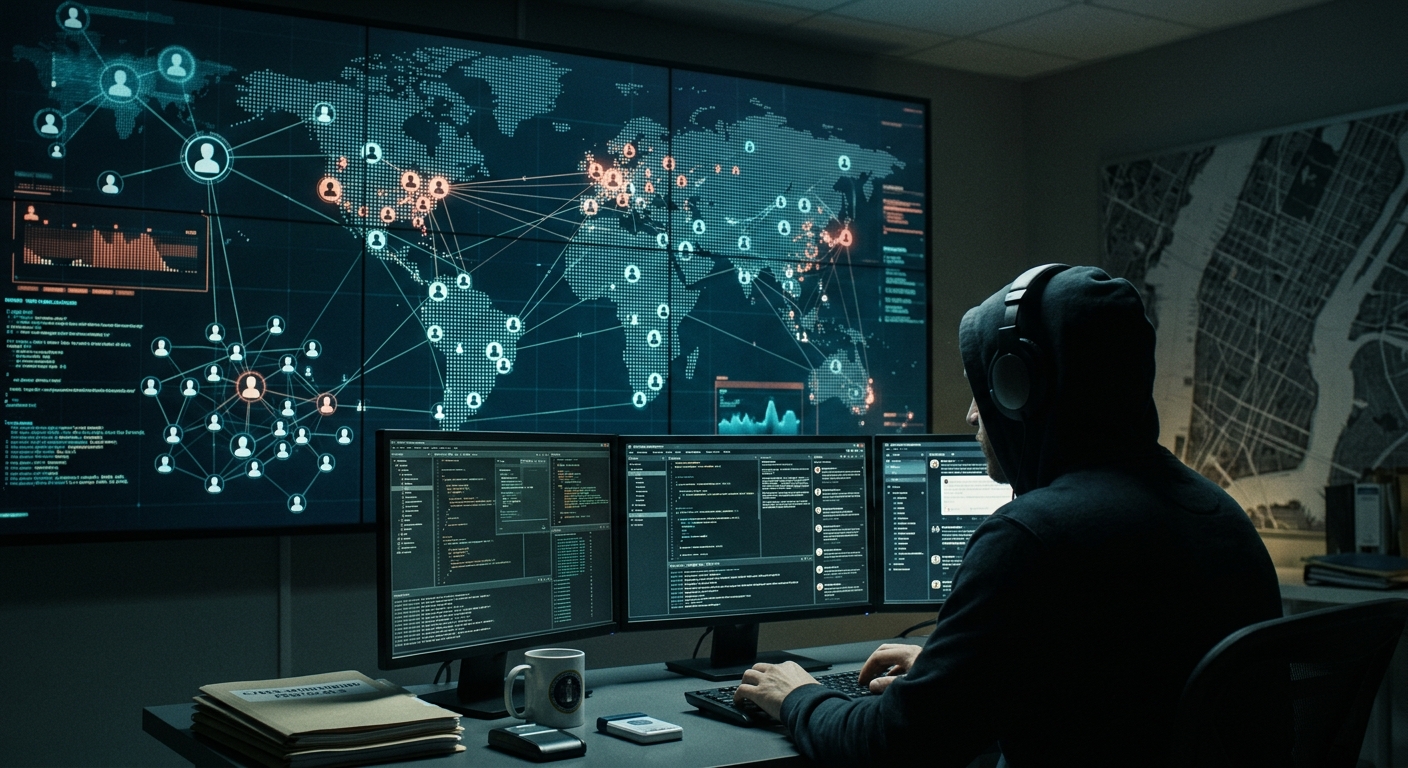
The modern internet was once heralded as a decentralized utopia, a global town square where individuals could share ideas, organize communities, and express themselves freely without the constraints of geographic borders. However, as our lives have increasingly migrated to the digital realm, that town square has been fundamentally transformed into a panopticon. Today, every tweet, post, like, and share contributes to a vast, invisible digital footprint. Unbeknownst to many users, this footprint is routinely monitored, cataloged, and analyzed by an array of government entities.
The notion that state actors actively track social media activity is no longer relegated to the realm of dystopian fiction; it is a documented reality of modern law enforcement, national security, and immigration policy. This pervasive surveillance architecture operates largely in the shadows, insulated by outdated legal frameworks and a lack of public transparency. Federal and local agencies no longer need to rely solely on physical wiretaps or undercover informants to build profiles on individuals. Instead, they can turn to the vast troves of open-source intelligence (OSINT) and commercially available data generated by users every second of the day. As the boundary between public speech and private life continues to blur, understanding the scope, mechanics, and implications of government social media monitoring has never been more critical for the everyday citizen.
The Mechanics of Modern Digital Surveillance
To understand how the government tracks social media activity, one must first demystify the tools and methods employed by intelligence and law enforcement agencies. The sheer volume of data generated on platforms like Facebook, X (formerly Twitter), Instagram, and TikTok makes manual monitoring impossible. Consequently, the state relies on a sophisticated ecosystem of automated technologies, artificial intelligence, and private sector partnerships to continuously harvest and analyze data.
The Data Broker Loophole
One of the most controversial mechanisms facilitating government surveillance is the exploitation of the “data broker loophole.” Under the Fourth Amendment of the U.S. Constitution, law enforcement typically requires a warrant based on probable cause to compel a communications company to turn over private user information. However, government agencies have found a highly effective, legal workaround: the open commercial market.
Data brokers are multi-billion-dollar private enterprises that scrape, aggregate, and package user data. This includes geolocation pings, social media associations, search histories, and purchasing habits. Because users technically “consent” to this collection by agreeing to labyrinthine terms of service and privacy policies, these brokers can legally sell the compiled profiles. Federal agencies frequently purchase these commercially available datasets. By simply buying the information, intelligence and law enforcement agencies can bypass the judicial oversight traditionally required for surveillance. As a result, the government can track the digital associations and physical movements of citizens without ever seeking a judge’s approval or demonstrating probable cause.
Algorithmic Scrutiny and Artificial Intelligence
Beyond purchasing bulk data from private brokers, agencies utilize specialized software to conduct continuous, automated monitoring of social media ecosystems. Artificial intelligence and machine learning algorithms are deployed to scan millions of posts for specific keywords, sentiment shifts, and network connections. These advanced programs map out complex digital associations, identifying not just individual suspects but entirely new networks of people based purely on their online interactions.
Companies specializing in open-source intelligence provide the state with tools that can cross-reference a single anonymous social media post with expansive facial recognition databases or historical location data. For instance, an image posted anonymously at a protest can be scraped, analyzed by facial recognition software, and instantly linked back to an individual’s government ID or driver’s license photo. This rapid synthesis of disparate data points allows agencies to construct comprehensive behavioral profiles. In some instances, it enables authorities to assign predictive risk scores to individuals who have never committed a crime, fundamentally altering the presumption of innocence.
Agency Involvement: Who is Watching and Why?
The surveillance of social media is not confined to a single, monolithic intelligence agency. It is a decentralized, widespread effort that has been integrated into the daily operations of numerous federal, state, and local departments. While the stated justifications for this monitoring typically center on national security, border protection, and public safety, the surveillance net is cast incredibly wide.
Department of Homeland Security (DHS) and Immigration
The DHS, alongside its sub-agencies Immigration and Customs Enforcement (ICE) and Customs and Border Protection (CBP), stands out as one of the most prolific monitors of social media. Following policy shifts toward “extreme vetting,” the State Department and DHS began requiring millions of visa applicants to submit their social media handles. This data is fed into monitoring systems to continuously evaluate the perceived risk posed by immigrants and international travelers. Furthermore, DHS has been known to monitor domestic social media during periods of civil unrest, keeping tabs on activists, journalists, and everyday citizens involved in constitutionally protected protests under the guise of threat assessment.
Federal Bureau of Investigation (FBI) and Local Police
The FBI utilizes aggressive social media monitoring to track domestic extremism, cybercrime, and gang activity. Local law enforcement agencies often follow suit, utilizing federal grants to purchase their own localized social media monitoring software. Police departments frequently use these tools to monitor neighborhood protests, track the digital whereabouts of persons of interest, and create localized threat assessments. Unfortunately, because the training and oversight of these local programs are highly inconsistent, innocent digital interactions—such as using specific emojis, quoting rap lyrics, or utilizing slang—are frequently misinterpreted by police software as evidence of criminal intent or gang affiliation.
| Government Agency | Primary Justifications for Surveillance | Common Surveillance Methods & Tools |
|---|---|---|
| Department of Homeland Security (DHS) | Immigration vetting, border security, domestic threat assessment | Mandatory handle collection, algorithmic screening, continuous third-party analytics |
| Federal Bureau of Investigation (FBI) | Counterterrorism, organized crime, domestic extremism | Undercover profiles, keyword scraping, data broker intelligence purchases |
| State Department | Visa processing, diplomatic security | Mandatory social media handle submissions for incoming international travelers |
| Local Law Enforcement | Gang violence, protest monitoring, crime prevention | Geofencing, automated social media listening tools, predictive policing software |
Constitutional Concerns and the Chilling Effect
The normalization of government surveillance on social platforms raises profound constitutional and ethical questions, striking directly at the heart of American civil liberties. These practices challenge the foundational rights to free expression and privacy that democracies rely upon.
First and foremost is the undeniable impact on the First Amendment. Social media serves as the modern equivalent of the public square. When individuals know or suspect that the government is scrutinizing their every digital utterance, a “chilling effect” naturally takes hold. People become hesitant to express dissenting political views, explore controversial topics, or associate with marginalized groups. A comprehensive report by the Brennan Center for Justice highlighted how international filmmakers, activists, and ordinary citizens frequently self-censor online out of fear that a misconstrued post could result in a revoked visa or an intense interrogation at the border. When free expression is stifled by the invisible, omnipresent gaze of the state, the core principles of an open society are severely compromised.
The Fourth Amendment is equally imperiled. The legal doctrine currently governing digital privacy in the United States is woefully outdated. The 1970s-era “Third-Party Doctrine” argues that individuals inherently lose their expectation of privacy when they willingly share information with a third party, such as a bank or a telecommunications provider. The government leverages this aging doctrine to justify harvesting massive amounts of data from social media platforms and private data brokers. However, modern civil rights advocates and legal scholars argue that participating in the digital economy is no longer a voluntary choice but a basic requirement of modern life. Therefore, utilizing a digital service should not result in a blanket forfeiture of constitutional privacy rights.
Furthermore, algorithmic monitoring is notoriously flawed and prone to bias. Artificial intelligence struggles profoundly with context, sarcasm, and cultural nuances. This technological limitation leads to the disproportionate targeting of minority communities. Activists, community leaders, and immigration advocates have frequently found themselves in the crosshairs of federal monitoring simply because of their digital associations or the specific language they use online. The automation of suspicion essentially codifies and scales systemic biases into the federal surveillance apparatus.
The Regulatory Vacuum and Push for Reform
Unlike the European Union, which is governed by the stringent regulations of the General Data Protection Regulation (GDPR), the United States currently lacks a comprehensive, nationwide federal data privacy law. This regulatory vacuum has allowed the public-private surveillance-industrial complex to flourish with minimal oversight and virtually no public accountability.
However, the tide may be slowly turning as awareness grows. Privacy advocates and bipartisan coalitions in Congress are beginning to push back against unchecked state surveillance. Legislation such as the proposed “Fourth Amendment Is Not For Sale Act” aims to close the data broker loophole entirely by explicitly prohibiting intelligence and law enforcement agencies from purchasing personal data that would otherwise require a judge’s warrant. Additionally, federal watchdogs like the Federal Trade Commission (FTC) and the Consumer Financial Protection Bureau (CFPB) have increasingly sought to regulate data brokers. Recent proposed rules from the CFPB aim to strictly limit the sale of sensitive personal data—such as geolocation and financial history—to state actors. While these are promising and necessary steps, the breakneck speed of technological innovation continues to vastly outpace the slow, deliberate grind of legislative reform.
Protecting Your Digital Privacy
While systemic reform requires broad legislative action, individuals are not entirely powerless in the face of state surveillance. By adopting proactive digital hygiene and security practices, you can significantly mitigate the amount of data available to both private brokers and government monitors.
- Audit Your Privacy Settings: Regularly review the privacy configurations on all your social media accounts. Ensure that your posts, friend lists, and biographical information are visible only to trusted connections rather than the general public.
- Limit Geolocation Data: Turn off location tracking for applications that do not absolutely require it to function. Do not “check in” to specific locations or tag your geographic coordinates in your photos and posts.
- Use End-to-End Encryption: For private conversations, transition away from standard social media direct messages and unsecured SMS. Utilize end-to-end encrypted messaging applications like Signal or WhatsApp, which prevent both the platform providers and the government from intercepting and reading your messages.
- Practice Data Minimization: Before downloading a new application or signing up for a digital service, read the permissions carefully. If a simple app demands access to your contacts, camera, or microphone without a clear functional reason, deny the request or delete the app entirely.
- Be Mindful of Open-Source Intelligence: Remember that any public post is permanently accessible and easily archived. Avoid oversharing intimate personal details that could be aggregated over time to build a comprehensive behavioral profile of your life.
Frequently Asked Questions (FAQs)
Can the government read my private social media direct messages?
Under normal legal circumstances, the government requires a subpoena or a search warrant signed by a judge to compel a social media company to hand over the actual contents of private communications. However, they can often access metadata (information regarding who you messaged, when, and from what location) much more easily. If you use end-to-end encrypted messaging, neither the platform nor the government can read the content of the messages, even with a warrant.
Am I legally required to hand over my social media passwords at the U.S. border?
U.S. border and customs agents have broad authority to search electronic devices at ports of entry. While they generally cannot compel U.S. citizens to provide passwords to cloud-based social media accounts without reasonable suspicion, refusal can lead to device confiscation and significant travel delays. For foreign nationals and visa applicants, providing social media handles is often a mandatory part of the rigorous vetting process.
Is it legal for the police to create fake accounts to monitor my group?
Yes. It is a highly common law enforcement tactic to create fictitious profiles to monitor public pages, infiltrate private digital groups, or initiate interactions with potential suspects. Many local and federal police departments actively train their officers in undercover online operations and digital persona management.
References
- Social Media Surveillance by the U.S. Government — Brennan Center for Justice. 2022-01-07. https://www.brennancenter.org/our-work/research-reports/social-media-surveillance-us-government
- Wyden, Paul and Bipartisan Members of Congress Introduce The Fourth Amendment Is Not For Sale Act — U.S. Senate. 2021-04-21. https://www.wyden.senate.gov/news/press-releases/wyden-paul-and-bipartisan-members-of-congress-introduce-the-fourth-amendment-is-not-for-sale-act-
- CFPB Proposes Rule to Stop Data Brokers from Selling Sensitive Personal Data to Scammers, Stalkers, and Spies — Consumer Financial Protection Bureau. 2024-12-03. https://www.consumerfinance.gov/about-us/newsroom/cfpb-proposes-rule-to-stop-data-brokers-from-selling-sensitive-personal-data-to-scammers-stalkers-and-spies/
- Information for Data Brokers — California Privacy Protection Agency (CPPA). 2024-01-01. https://cppa.ca.gov/data_brokers/
Similar Articles








Read full bio of Sneha Tete


