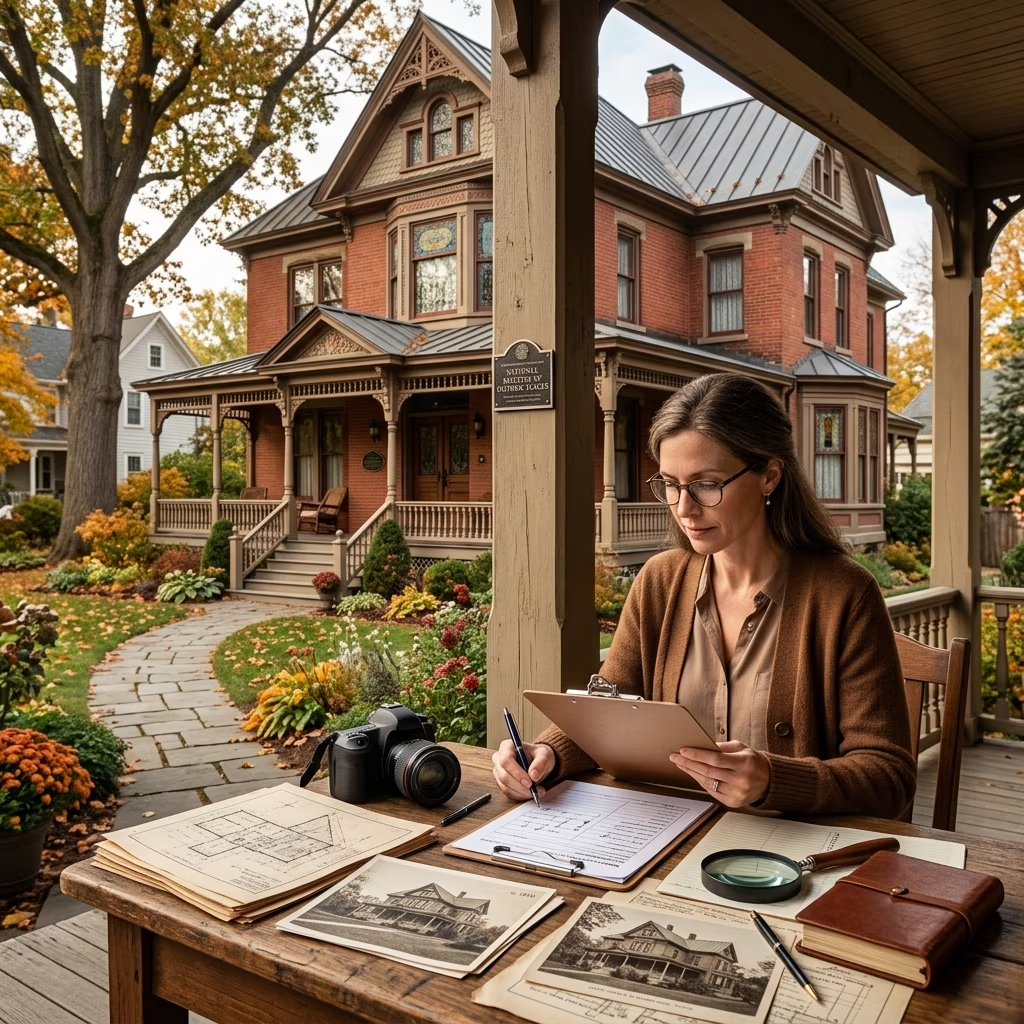
The National Register of Historic Places is the official federal list of historic properties deemed worthy of preservation in the United States. Being listed can bring recognition, access to financial incentives, and protection in certain government review processes. This guide walks property owners and community advocates through what listing means, who is involved, and how to move a nomination from idea to successful designation.
Understanding What National Register Listing Really Means
Before starting a nomination, it is important to understand what listing does and what it does not do. Many owners worry about losing control over their property. In most cases, those concerns are misplaced.
What Listing Does Not Do
Under federal law, simply being listed on the National Register does not directly regulate what a private owner may do with the property. Owners can generally remodel, sell, or even demolish a listed building without federal approval, unless federal funding, permits, or licenses are involved.
- No automatic federal restrictions on remodeling or demolition.
- No obligation to open the property to the public.
- No requirement to restore the building to an earlier condition.
What Listing Can Offer
While listing is largely honorific, it can create meaningful benefits, especially when combined with state and local programs.
- Recognition and prestige for the property and community.
- Potential eligibility for federal rehabilitation tax credits on qualified income-producing properties (currently 20% of eligible costs).
- In some states, additional state tax credits or grant programs for approved rehabilitation work.
- Consideration in federal project review processes, such as Section 106 review under the National Historic Preservation Act.
Local governments may also have their own designation programs and incentives. These are separate from the National Register but often interact with it, especially in communities with heritage preservation commissions.
Key Players in the Nomination Process
The path to National Register listing involves several offices and review bodies. Understanding their roles helps you plan your strategy and timeline.
State Historic Preservation Office (SHPO)
The State Historic Preservation Office (SHPO) is usually the starting point for nominations. Each state has a SHPO responsible for historic preservation planning, surveys, and National Register coordination.
- Provides forms and guidance for nominations.
- Maintains statewide surveys and files on previously evaluated properties.
- Reviews nominations and forwards them to the National Park Service with recommendations.
Local Preservation Commissions and Heritage Programs
Many cities and counties maintain heritage preservation commissions or local historic designation programs. While National Register listing is federal in scope, local designation often comes first or happens in parallel.
- Maintain inventories of locally designated properties.
- Adopt criteria for determining local historic significance.
- Comment on or initiate nominations in coordination with the SHPO.
National Park Service and the Keeper of the National Register
The National Park Service (NPS), through the Keeper of the National Register, makes the final listing decisions.
- Receives complete nominations from the SHPO.
- Determines whether a property meets National Register Criteria for Evaluation.
- Issues a formal decision, usually within 45 days after receiving a complete nomination.
Special Cases: Federal and Tribal Land
If the property is on federal or tribal land, the process begins with the Federal Preservation Office or Tribal Historic Preservation Office (THPO) rather than the SHPO. These offices coordinate with NPS and may consult with tribes, agencies, or other stakeholders.
Step 1: Confirming Eligibility and Historic Significance
A property must meet National Register Criteria for Evaluation, which consider age, integrity, and significance. Before investing in detailed documentation, confirm that your property is plausibly eligible.
Age and Integrity Requirements
Most listed properties are at least 50 years old, although younger properties may qualify in exceptional cases.
- Age: Generally 50 years or older at the time of evaluation.
- Integrity: The property should still look substantially as it did during the period when it gained significance.
Integrity is evaluated through aspects such as location, design, setting, materials, workmanship, feeling, and association. Extensive alterations, especially to character-defining features, may undermine eligibility.
Evaluating Historic Significance
Significance relates to how the property connects to broader historical themes.
- Association with important events, activities, or developments in local, state, or national history.
- Connection to the lives of persons significant in the past.
- Representation of architectural, landscape, or engineering achievements.
- Potential to yield information important in history or prehistory, often relevant for archaeological sites.
| Question | Consideration |
|---|---|
| Is age alone enough? | No. The property must also have historic significance and integrity. |
| Can altered buildings qualify? | Yes, if key historic features and overall character remain intact. |
| Do only grand landmarks qualify? | No. Modest buildings can be listed if they illustrate important themes. |
Step 2: Researching the Property’s History
Thorough research is the foundation of a strong nomination. You must demonstrate how the property meets specific criteria using reliable sources.
Where to Find Background Information
State and local repositories often hold rich records about buildings, landscapes, and neighborhoods.
- SHPO inventories and survey files for previously studied properties.
- Local heritage preservation commission records and designation reports.
- Historical society archives, including photographs, maps, and city directories.
- Public library collections and special local history sections.
The National Park Service publishes National Register Bulletins, including detailed guidance on researching a historic property. These bulletins outline best practices for documenting physical characteristics and historical context.
Key Research Tasks
Effective research typically includes:
- Documenting a chain of title or ownership history.
- Identifying architects, builders, and significant occupants.
- Building a timeline of major events and alterations.
- Placing the property within broader development patterns, such as industrial growth, transportation changes, or demographic shifts.
Many owners work with historians, preservation consultants, or local historical societies to compile this information, especially for complex properties.
Step 3: Working with Your SHPO and Local Offices
Once you have a sense of eligibility and historical context, contact your SHPO to discuss the nomination and obtain the official National Register forms.
Initial Contact and Pre-Application Review
SHPO staff can provide crucial feedback early in the process:
- Confirm whether the property has been previously evaluated for listing.
- Advise on which criteria are most applicable.
- Identify potential challenges or missing information.
- Explain timelines and upcoming review board meetings.
In some jurisdictions, a preliminary application or information form may be required before you begin a full nomination.
Notification and Public Comment
The SHPO is responsible for notifying affected property owners and local governments about proposed nominations and soliciting public comment.
- Owners receive formal notice and an opportunity to support or object.
- Local governments can provide information on zoning, planning, and community context.
- Public comment may be collected through hearings or written submissions.
If an owner objects, the property cannot be formally listed but may still be evaluated for a Determination of Eligibility (DOE), which acknowledges significance without conferring full listing status.
Step 4: Preparing the National Register Nomination
The heart of the process is the official National Register nomination form. This document provides a detailed description, statement of significance, and supporting documentation.
Core Components of a Nomination
While each nomination is unique, most include:
- Physical description of the property, including setting, materials, and notable features.
- Statement of significance explaining how the property meets the National Register criteria.
- Historical narrative placing the property in local, state, or national context.
- Maps and site plans showing boundaries and key structures.
- Photographs documenting exterior and interior views, as well as surrounding context.
Attention to clarity, consistency, and documentation improves the likelihood of approval. Citations to primary sources and authoritative secondary works help substantiate claims.
Property Types and Districts
Nominations can cover individual buildings, sites, structures, objects, or historic districts comprising multiple related properties.
- Individual property nominations focus on a single resource and its significance.
- District nominations address collections of buildings or sites that share historical themes or physical character.
- Landscape features, bridges, industrial facilities, and archaeological sites can also be eligible.
Step 5: State Review and Submission to the National Park Service
After you submit a complete nomination, the SHPO and the state’s National Register Review Board evaluate it before forwarding it to the National Park Service.
State Review Board
The review board, typically composed of preservation professionals and scholars, assesses whether the nomination meets National Register standards.
- Reviews the description and significance sections for accuracy and completeness.
- Ensures the property boundaries are appropriate.
- Votes on whether to recommend the nomination to the National Park Service.
The state-level process generally takes at least 90 days, though timing can vary based on board schedules and the number of pending nominations.
National Park Service Decision
Upon receiving a recommended nomination, the National Park Service conducts its own review.
- Verifies consistency with National Register Criteria for Evaluation.
- Confirms that procedural requirements, including owner notifications, have been met.
- Makes a listing decision, typically within 45 days of receiving a complete, documented nomination.
If approved, the property is formally listed in the National Register, and the SHPO updates its records and notifies the owner.
Benefits and Practical Considerations for Property Owners
Owners often weigh the costs of preparing a nomination against potential benefits. While the process requires time and documentation, listing can offer long-term advantages.
Financial Incentives
Listed properties may qualify for federal and, in some states, additional state tax credits for certified rehabilitation work.
- Federal rehabilitation tax credit: 20% of qualified rehabilitation expenses for income-producing properties, subject to specific standards and approvals.
- State tax credits or grants: Some states offer parallel programs that require National Register listing and compliance with federal rehabilitation standards.
Owners should consult tax professionals and state program administrators to understand eligibility, application requirements, and timing.
Planning and Regulatory Implications
Listing does not automatically trigger local regulation, but it can influence planning decisions and federal project review.
- Projects using federal funds or permits must consider impacts on listed or eligible properties.
- Local governments may reference National Register status when making zoning or development decisions, especially in historic districts.
- Environmental review laws in some states recognize historic resources regardless of formal listing, but listing may strengthen their protection.
Frequently Asked Questions
Does listing on the National Register mean I cannot change my building?
No. National Register listing by itself does not impose federal restrictions on what a private owner can do, unless federal funds, permits, or licenses are involved in a project affecting the property.
Can anyone submit a nomination?
Property owners, local governments, historical societies, preservation organizations, and other individuals or groups can submit nomination forms, typically through the SHPO.
What if I disagree with listing my property?
If a private owner objects, the property cannot be formally listed, though it may still be evaluated for a Determination of Eligibility that recognizes its significance without listing.
How long does the process usually take?
The state-level review process generally takes at least 90 days, followed by about 45 days for National Park Service review once a complete nomination is submitted. Complex nominations may take longer.
Is local historic designation the same as National Register listing?
No. Local designation is created by city or county ordinances and may carry regulatory requirements. National Register listing is a federal recognition focused on significance, age, and integrity, and typically does not impose direct restrictions on private owners.
Key Takeaways for Successful Nominations
Property owners who succeed in listing their properties on the National Register typically share several strategies:
- Begin early conversations with the SHPO and local preservation staff to understand criteria and procedures.
- Invest time in solid research to support the statement of significance with credible sources.
- Use clear, detailed descriptions that accurately convey the property’s physical character and setting.
- Engage community stakeholders, including neighbors and local officials, to build support and address questions.
- Consider how listing can complement broader goals, such as downtown revitalization, tourism, or long-term stewardship.
With careful preparation and collaboration, the National Register can be a powerful tool for recognizing and preserving the places that tell the story of a community’s past.
References
- How to List a Property — National Park Service, National Register of Historic Places. 2024-03-01. https://www.nps.gov/subjects/nationalregister/how-to-list-a-property.htm
- National Register of Historic Places / Minnesota State Historic Preservation Office — Minnesota Department of Administration. 2023-06-15. https://mn.gov/admin/shpo/registration/nrhp/
- National Register Frequently Asked Questions — Minnesota State Historic Preservation Office. 2023-06-15. https://mn.gov/admin/shpo/registration/nrhp/nrfaqs/index.jsp
- Using Minnesota and Federal Historic Preservation Laws in Your Practice — Mayeron & Seltzer, Minnesota Continuing Legal Education. 2017-01-01. https://www.minncle.org/eaccess/1017211801/205_Mayeron_Seltzer.pdf
- Find Information About a Property’s History — Minnesota Historical Society. 2022-05-10. https://www.mnhs.org/preservation/buildings/history