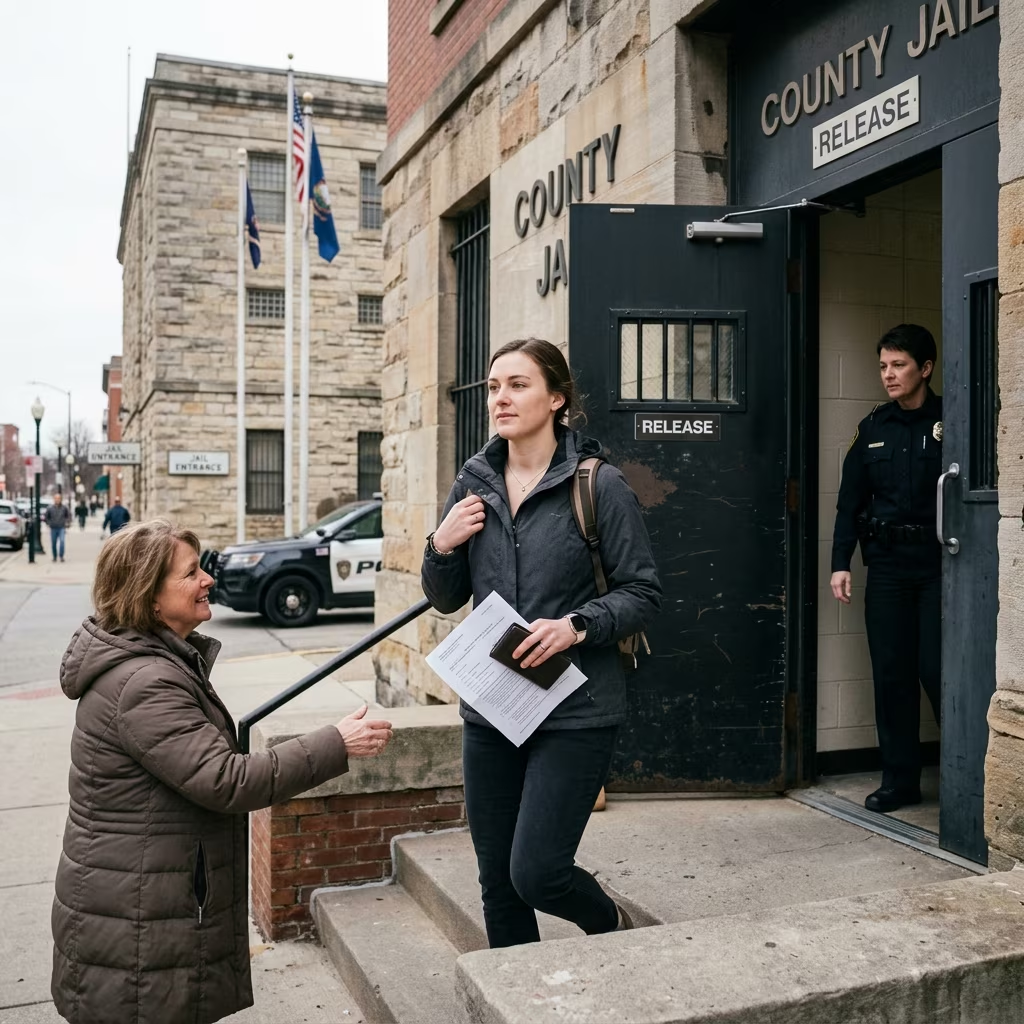
Being arrested is frightening and confusing. The good news is that in many cases you do not have to stay in jail until your case is finished. Instead, the law provides several ways to seek pretrial release so you can return home while your case moves through the courts.
This guide explains, in plain language, what typically happens in the hours and days after an arrest, how judges decide whether you may be released, and the main options for getting out of jail, including bail, bail bonds, and release on your own recognizance.
1. What Happens Immediately After You Are Arrested?
An arrest is the starting point of the criminal justice process. Once police place you under arrest, several key steps usually follow before you ever see a judge.
1.1 The Booking Process
After a lawful arrest, officers generally take you to a police station or jail for booking. Booking is an administrative procedure that formally records your arrest and prepares you to enter the court system.
- Collecting your personal information (name, address, date of birth)
- Photographing you (a “mugshot”) and taking fingerprints
- Listing the charges and recording details of the alleged offense
- Inventorying your belongings and placing them in storage until release
During booking, you are usually held in a cell or holding area while authorities process paperwork and decide what happens next.
1.2 Charging Decisions by the Prosecutor
After the police complete their initial work, a prosecutor (such as a district attorney) reviews the evidence and decides whether to file formal charges in court.
- If no charges are filed, you must be released.
- If charges are filed, your case moves forward to an initial court appearance.
In some situations, especially with minor offenses, people may be released from the police station with a desk appearance ticket or citation ordering them to appear in court on a future date instead of being held in jail.
1.3 Your First Court Appearance (Arraignment)
In most jurisdictions, you have a right to be brought before a judge for your first court hearing, often called an arraignment, within a short time after arrest (for example, within 24 hours in some states).
At arraignment, several important things happen:
- The formal charges are read to you in court.
- You are asked to enter a plea, usually “not guilty” at this early stage.
- You are informed of your right to an attorney, and a lawyer may be appointed if you cannot afford one.
- The judge decides whether you can be released before trial and under what conditions.
That last step—deciding whether you may leave jail while your case is pending—is where bail and other release options come into play.
2. How Judges Decide on Release: Risk and Conditions
The law aims to balance two goals: allowing people to remain in the community while their case is pending, and making sure they come back to court and do not endanger others. When deciding whether to release you and what conditions to set, judges usually focus on two core questions:
- Are you a flight risk? (Will you come back for future court dates?)
- Are you a danger to the community or particular individuals?
2.1 Common Factors Judges Consider
Although details vary by state, judges typically weigh factors such as:
- The seriousness of the charge (violent vs. nonviolent, felony vs. misdemeanor)
- Your criminal record, including past failures to appear in court
- Your ties to the community (job, family, length of residence)
- Your financial situation and ability to pay bail
- Any history of substance use or mental health concerns tied to risk
Some jurisdictions use pretrial services programs or risk assessments to provide the judge with recommendations about whether you should be released and under what conditions.
2.2 Types of Pretrial Release Conditions
If the judge allows you out of jail before trial, that release almost always comes with rules you must follow. Common conditions include:
- Staying away from alleged victims or certain locations
- Not traveling out of state or out of a defined area without permission
- Complying with a curfew or monitoring requirements
- Submitting to drug or alcohol testing when ordered
- Checking in regularly with a supervising agency or officer
Violating release conditions can lead to re-arrest, additional charges, or having your bail revoked and being returned to jail.
3. Understanding Bail: Money, Purpose, and Outcomes
Bail is one of the most widely used tools for pretrial release. In simple terms, bail is an amount of money or property you give the court as a guarantee that you will return for future court dates.
3.1 What Is Bail?
Legal aid organizations define bail as an amount some people charged with crimes must pay in order to be released from jail while their case continues. Courts can set bail in cash or allow other forms, and the amount can vary widely depending on the case.
| Feature | Description |
|---|---|
| Purpose | Ensure the accused returns for court and follows conditions of release. |
| Who sets bail? | A judge or magistrate at a bail hearing or arraignment. |
| What happens if you appear? | Bail is generally refunded or “exonerated” at the end of the case. |
| What if you do not appear? | The court can keep the money and issue a warrant for your arrest. |
3.2 How Bail Is Paid
There are several common ways to post bail:
- Cash bail: Paying the full amount in cash, certified check, or similar forms accepted by the court or correctional facility.
- Property bail: Pledging real property (such as a house) as collateral, often requiring proof that the property is worth at least the bail amount.
- Bail bond agent: Paying a commercial bondsman a nonrefundable fee (often a percentage of the total bail) to post the bail on your behalf.
- Ten percent deposit options: In some jurisdictions, posting a fraction of the total bail to the court itself as a deposit to obtain release.
How and where you can pay bail depends on local rules. For example, some cities allow online payment of certain types of bail, while others require payment at the courthouse or jail.
3.3 What Happens to the Money?
If you make all required court appearances and follow your conditions of release, the court typically orders the bail to be exonerated when the case ends. In the case of cash bail, the person who posted the money should eventually receive it back, minus any permitted fees or fines, often within several weeks after exoneration.
On the other hand, if you fail to appear for court or violate key conditions, the court may forfeit the bail, keep the money, and issue a warrant for your arrest.
4. Main Ways to Get Out of Jail Before Trial
Depending on the facts of your case, your record, and local law, there are several different paths to securing your release from jail pending trial.
4.1 Release on Your Own Recognizance (No Money Bail)
When the court determines that you are not a significant flight risk and do not pose a serious danger, you may be released on your own recognizance. This means you do not have to pay money to get out of jail.
- You sign a written promise to appear at all future court dates.
- Conditions such as no-contact orders or travel limits can still apply.
- This option is more common for minor charges and individuals with strong community ties.
If you break your promise by missing court, the judge can issue a warrant and may be less likely to grant recognizance release in the future.
4.2 Cash Bail and Property Bonds
If the judge sets a money bail amount, you (or someone acting on your behalf) can pay that amount directly to the court or jail to secure your release.
- Cash bail is the most straightforward method: pay the full amount, and you are released once the payment is processed.
- Property bonds involve signing over rights to real property as a guarantee that you will appear in court, with the risk of losing the property if you do not.
These methods can be expensive and may be out of reach for many people, which is why other options exist.
4.3 Using a Bail Bond Agent
If you cannot afford to post the full bail amount, you may look to a bail bond agent, sometimes called a bail bondsman. The agent agrees to post the bail for you in exchange for a fee, which is typically a percentage of the total bail and is usually nonrefundable.
- You pay the fee to the bondsman, not the court.
- The bondsman posts the full bail amount on your behalf.
- If you miss court, the bondsman may be financially responsible and can take steps to find and surrender you.
Using a bondsman can make pretrial release possible when cash bail is set at levels that are otherwise unaffordable, but it also means paying money you will not get back even if you follow all rules.
4.4 Supervised and Conditional Release
There are options beyond money bail and recognizance release. Courts increasingly use supervised release or similar programs that allow you to return to the community under closer monitoring.
- Regular check-ins with a pretrial services officer or program
- Electronic monitoring in some higher-risk cases
- Mandatory counseling, treatment, or other services tailored to your circumstances
These approaches are designed to manage risk without relying solely on money bail, while still ensuring that you return to court and comply with court orders.
5. Practical Tips if You or a Loved One Is in Jail
Facing jail after an arrest is stressful. The following practical steps can help you navigate this period more effectively.
5.1 Stay Calm and Ask About Your Rights
- Remember your right to remain silent and your right to an attorney.
- Politely ask when you will see a judge and whether you will have access to a lawyer.
- Keep track of any paperwork you receive, including notices of court dates.
5.2 Prepare for the Bail Hearing
- Gather information about your employment, family, and community ties that show you are likely to appear for court.
- Identify relatives or friends who may be able to attend the hearing or help with bail if needed.
- Discuss with your lawyer whether to request release on recognizance or a lower bail amount.
5.3 Understand the Consequences of Missing Court
- Failing to appear can lead to a warrant for your arrest and additional charges.
- Bail money or property can be forfeited, causing serious financial harm.
- Your chances of receiving favorable release conditions in the future may decrease.
6. Frequently Asked Questions (FAQs)
Q1: Do I always have a right to bail?
Answer: Not always. While many people are entitled to a hearing on pretrial release, some serious cases, especially involving violent felonies, may result in being held without bail under state law. The judge decides based on the specific facts and applicable statutes.
Q2: Is bail the same in every state?
Answer: No. Bail systems and rules differ from state to state. Some jurisdictions rely heavily on cash bail, while others are moving toward risk-based assessments and alternatives to money bail. Local law and court practices will determine the exact process in your area.
Q3: What if I cannot afford any bail amount?
Answer: If you cannot afford bail, your lawyer can ask the court to reduce the amount or consider non-monetary release options, such as recognizance or supervised release. In some places, pretrial services programs provide information that supports these requests.
Q4: How quickly will I be released after bail is paid?
Answer: Release is not always immediate. Once bail is paid, jail staff must verify the payment and process the paperwork. Depending on the facility and the time of day, this can take several hours.
Q5: Do I get my bail money back if I am found guilty?
Answer: Bail is not a fine or punishment. If you attend all required court dates and comply with release conditions, the court generally returns cash bail when the case ends, regardless of the outcome, subject to any authorized deductions.
7. Why Legal Advice Matters
This article provides general information about what typically happens after an arrest and how people get out of jail. Criminal law and procedure are complex, and local rules make a big difference. If you or someone you care about has been arrested, consulting with a qualified criminal defense attorney can help you:
- Understand your specific rights and options in your jurisdiction
- Request favorable bail or recognizance conditions
- Respond effectively if bail is set too high
- Plan for what happens if charges move forward to trial or plea discussions
Professional legal guidance is especially important where liberty is at stake and where misunderstandings about bail, release, and conditions can have long-lasting consequences.
References
- The Arrest Process — FindLaw. 2023-05-01. https://www.findlaw.com/criminal/criminal-procedure/chronology-the-arrest-process.html
- Getting Out of Jail if You Are Arrested — LawInfo. 2022-08-10. https://www.lawinfo.com/resources/criminal-defense/getting-out-of-jail-after-you-have-been-arrested.html
- What Happens After You Get Arrested — Vera Institute of Justice. 2021-01-15. https://www.vera.org/news/what-happens-after-you-get-arrested
- What You Need to Know About Bail — The Legal Aid Society (NYC). 2022-06-30. https://legalaidnyc.org/get-help/bail-incarceration/what-you-need-to-know-about-bail/
- Getting Out of Jail after an Arrest: Bail Process — Rosenblum Law. 2020-09-01. https://www.njticketattorneys.com/getting-out-of-jail-after-an-arrest-the-bail-process/