
Getting a Certified Copy of Your Marriage Certificate
Understand the difference between licenses and certificates and learn how to request certified marriage records in the U.S. and abroad.
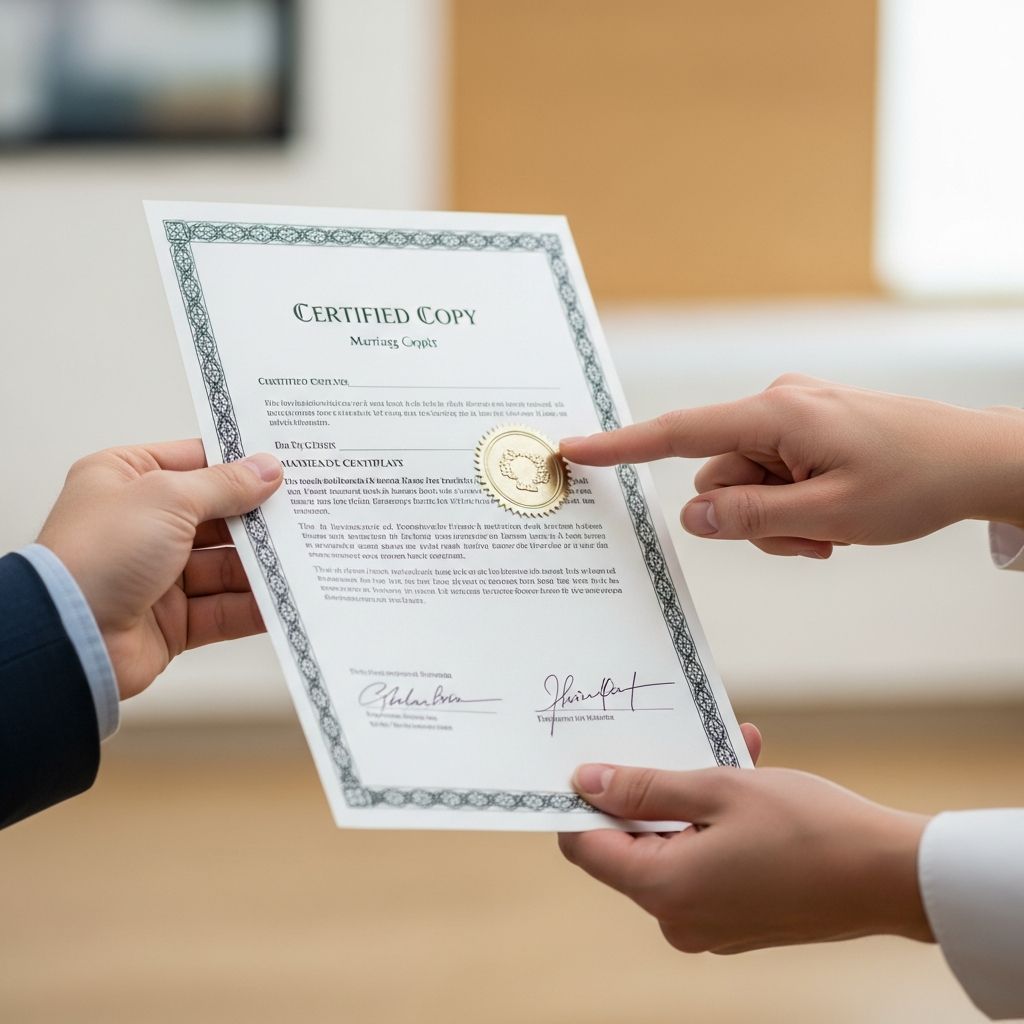
A marriage certificate or marriage license is often required for legal, financial, and immigration matters. Understanding where to request these records and what to provide will help you avoid delays, extra fees, and rejected applications.
This guide explains the difference between a marriage license and a marriage certificate, how to request certified copies if the marriage took place in the United States or abroad, and what to do if you are not sure where to start.
Marriage License vs. Marriage Certificate: Why the Difference Matters
Although people sometimes use the terms interchangeably, a marriage license and a marriage certificate serve different legal purposes.
- Marriage license – Authorization issued before the ceremony that gives the couple legal permission to marry.
- Marriage certificate – Official record created after the ceremony and registration, used to prove that the marriage took place.
In most U.S. jurisdictions, the couple applies for a license, an authorized officiant performs the ceremony and completes the document, and the completed record is filed with a local office so that a certificate or certified copy can be issued.
| Feature | Marriage License | Marriage Certificate |
|---|---|---|
| When issued | Before the wedding | After the wedding and registration |
| Main purpose | Authorizes the ceremony to occur | Proves that a valid marriage occurred |
| Typical use | Given to officiant to complete legal formalities | Used for name changes, immigration, taxes, benefits |
| Where kept | Filed with local clerk or vital records office | Recorded and stored by vital records or court |
When You Need a Certified Copy
A simple photocopy of a marriage document is not always enough. Many institutions require a certified copy, which is an official reproduction bearing a raised seal, stamp, or other authentication from the issuing office.
Situations where a certified copy is commonly required include:
- Changing your name on a driver’s license, passport, or Social Security record.
- Adding a spouse to health insurance or employment benefits.
- Applying for a mortgage or updating property titles.
- Filing for certain immigration benefits, such as a marriage-based green card.
- Proving marital status in inheritance or probate matters.
Because different agencies may keep your documents or require originals, many couples order several certified copies at the same time to avoid repeated requests.
How to Request a Copy for a Marriage in the United States
In the U.S., vital records are generally maintained at the state or local level rather than by the federal government. The exact office depends on when and where you were married.
1. Identify the State or Territory of Marriage
You must first determine the U.S. state, territory, or district where the ceremony occurred. Each state sets its own rules on eligibility, fees, and acceptable identification.
Common record-holding offices include:
- State vital records office or department of health.
- County clerk or recorder where the license was issued.
- City or town clerk, particularly in New England states.
2. Check the State’s Vital Records Instructions
Once you know the state, review the official instructions for marriage records from that jurisdiction. State vital records pages usually explain:
- Whether the state maintains all years of marriage records or only more recent ones.
- Which office you must contact for older records.
- Accepted request methods: online, mail, phone, or in-person.
- Processing times and rush or walk-in options.
Some states centralize marriages at the state level; others require you to contact the county or city that issued the license.
3. Gather Required Information Before Requesting
To locate your record, the office will typically ask for details such as:
- Full names of both spouses at the time of the marriage.
- Date or approximate date of the ceremony.
- City, county, and state where the marriage occurred.
- Your current contact information for mailing or pickup.
- The reason you need the record (for some applications).
For security and privacy reasons, many states limit who can obtain a certified copy to the spouses, their immediate relatives, or authorized legal representatives.
4. Provide Identification and Any Required Documentation
Most states require valid identification before releasing a certified marriage record.
Typical ID and documentation may include:
- Government-issued photo ID (driver’s license, passport, state ID).
- Proof of relationship if you are not one of the spouses.
- A notarized application if you submit by mail and do not appear in person.
- Legal documents such as a court order if the record is sealed or restricted.
5. Pay the Applicable Fees
Fees vary by state, and by office within the state. You usually pay per certified copy requested.
- Common payment methods: credit card (online or by phone), check, money order, or cash for in-person requests.
- Expedited services may carry higher fees, especially for overnight shipping or priority processing.
- Prices for certified copies can range from under $10 to more than $30 depending on jurisdiction and vendor.
6. Understand Processing and Delivery Times
Turnaround can range from days to several weeks depending on demand, staffing, and mail times.
- Mail requests may take longer because offices must receive and manually process paper forms.
- In-person visits can sometimes result in same-day service, especially in local clerk offices.
- Online orders through approved vendors often strike a balance between convenience and speed, but may charge service fees.
Requesting a Marriage Record for a Wedding Abroad
If your wedding took place outside the United States, the process depends on the laws of the country and locality where the ceremony occurred. There is no single U.S. agency that maintains or retrieves foreign civil marriage records on behalf of citizens.
1. Confirm the Marriage Was Registered Locally
Many countries require that religious or symbolic ceremonies be registered with a civil office before a marriage is legally recognized. The certificate is generally issued by a municipal registrar, civil registry, or national statistics office.
If you are unsure whether the marriage was officially recorded:
- Review any paperwork from the officiant or venue.
- Contact the local civil registration office that serves the area where the ceremony took place.
- Consult that country’s embassy or consulate for instructions on civil registrations.
2. Contact the Local Civil Registry or Vital Records Authority
Once you identify the office responsible for marriages, request their instructions on how to obtain a certificate or certified copy. Procedures may include:
- Completing a national or local request form.
- Providing copies of passports or national IDs.
- Paying fees in local currency or via international payment method.
- Requesting legalization, such as an apostille, for use outside that country.
Some foreign authorities allow online orders; others require in-person or postal applications.
3. Use U.S. Embassy or Consulate Resources
While U.S. embassies and consulates generally cannot issue or replace foreign marriage certificates, they often provide country-specific guidance on requirements and documentation.
- Many embassy websites describe local rules on age, documents, and residency for marriage.
- Consular staff may direct you to the correct civil registry office.
- In some cases, they can notarize statements or provide other limited services that may help with registration or recognition.
Using Your Marriage Certificate in the United States
Once you obtain the certificate or a certified copy, you may need to present it to different agencies or organizations. Requirements vary, but common uses in the United States include:
- Changing your name with the Social Security Administration, state motor vehicle agency, and passport office.
- Health insurance and employment benefits when adding a spouse or verifying eligibility.
- Tax filing to claim a filing status such as married filing jointly.
- Immigration applications as proof of a valid marital relationship.
Some agencies will return your certified copy; others may keep it in their records. Plan ahead so you have enough official copies for all required purposes.
Common Issues and How to Address Them
Problems occasionally arise during the request process. Understanding typical issues can help you anticipate and resolve them efficiently.
1. You Do Not Remember the Exact Date
If you cannot recall the specific day of the ceremony, provide an approximate month and year along with the location. Offices can often search by name and time range, although this may require extra fees or more time.
2. Names Have Changed Since the Marriage
Record searches typically rely on the names that appeared on the license or certificate. If your name has changed since the marriage, include both your current name and the name used at the time of the ceremony to help staff locate the record.
3. You Need a Long-Form Certificate
Some agencies or foreign governments require a “long-form” or “full” marriage certificate that includes more details than a short abstract. When requesting, specify any special format you need, especially if you are using the document abroad or for complex legal proceedings.
4. Access Is Restricted
For privacy reasons, some states limit who can receive certified copies of recent records, particularly if the record contains sensitive information. If your request is denied because you are not an authorized person, you may need:
- A signed authorization from one of the spouses.
- Proof that you are an immediate family member or legal representative.
- A court order directing the vital records office to release the information.
Best Practices When Requesting Marriage Records
To reduce delays and complications, consider the following best practices before you submit your request:
- Verify the correct office—Check whether records are at the state, county, or city level for the relevant years.
- Use official websites—Follow links from government (.gov) domains to avoid unofficial services with high fees.
- Order extra certified copies—If you anticipate multiple uses, extra copies can save time and future processing costs.
- Keep copies secure—Store certified copies in a safe place, and consider separate storage from other identity documents to reduce risk.
- Plan for long processing—If you need the certificate for a deadline, such as immigration filing or passport renewal, request it well in advance.
Frequently Asked Questions (FAQs)
Do I request a marriage certificate from the federal government?
No. In the United States, marriage records are maintained by states and local jurisdictions, not by a federal agency. You must contact the vital records or clerk’s office where the marriage was recorded.
Can I get a copy if I am not one of the spouses?
Possibly. Many states limit access to spouses, close relatives, or individuals with a legal interest. You may need to show proof of relationship or provide documentation such as a court order.
Is an electronic copy the same as a certified copy?
Not necessarily. Some offices provide electronic or printed copies for reference, but a certified copy must generally include an official seal, signature, or stamp from the issuing office.
How long after the wedding before a certificate is available?
The officiant must first file the completed license with the recording office. After it is registered, you may request certified copies. This can take anywhere from a few days to several weeks depending on local practices.
What if my foreign marriage certificate is not in English?
For many U.S. uses, including immigration, you may need a complete translation accompanied by a certification from the translator affirming accuracy. Specific agencies provide detailed translation requirements in their instructions.
References
- How to get a copy of a marriage certificate or a marriage license — USAGov. 2024-01-04. https://www.usa.gov/marriage-certificate
- Marriage Laws by State — WeddingWire. 2023-06-15. https://www.weddingwire.com/wedding-ideas/marriage-laws-by-state
- Handbook on Marriage Registration — U.S. National Center for Health Statistics (CDC). 1988-04-01. https://www.cdc.gov/nchs/data/misc/hb_marr.pdf
- Marriage — U.S. Department of State, Bureau of Consular Affairs. 2023-07-20. https://travel.state.gov/en/international-travel/living-abroad/marriage.html
- Marriage License vs Certificate: A Complete Guide for Couples — Courtly. 2023-09-12. https://www.courtly.com/resources/marriage-license-vs-marriage-certificate
- What Documents Do We Need for a Marriage Green Card? — Boundless Immigration. 2024-02-05. https://www.boundless.com/immigration-resources/what-documents-for-marriage-green-card
Similar Articles








Read full bio of Sneha Tete


