
Georgia Traffic Rules: Essential Driver’s Guide For Safer Roads
A practical guide to Georgia’s road rules, common violations, and driver responsibilities.
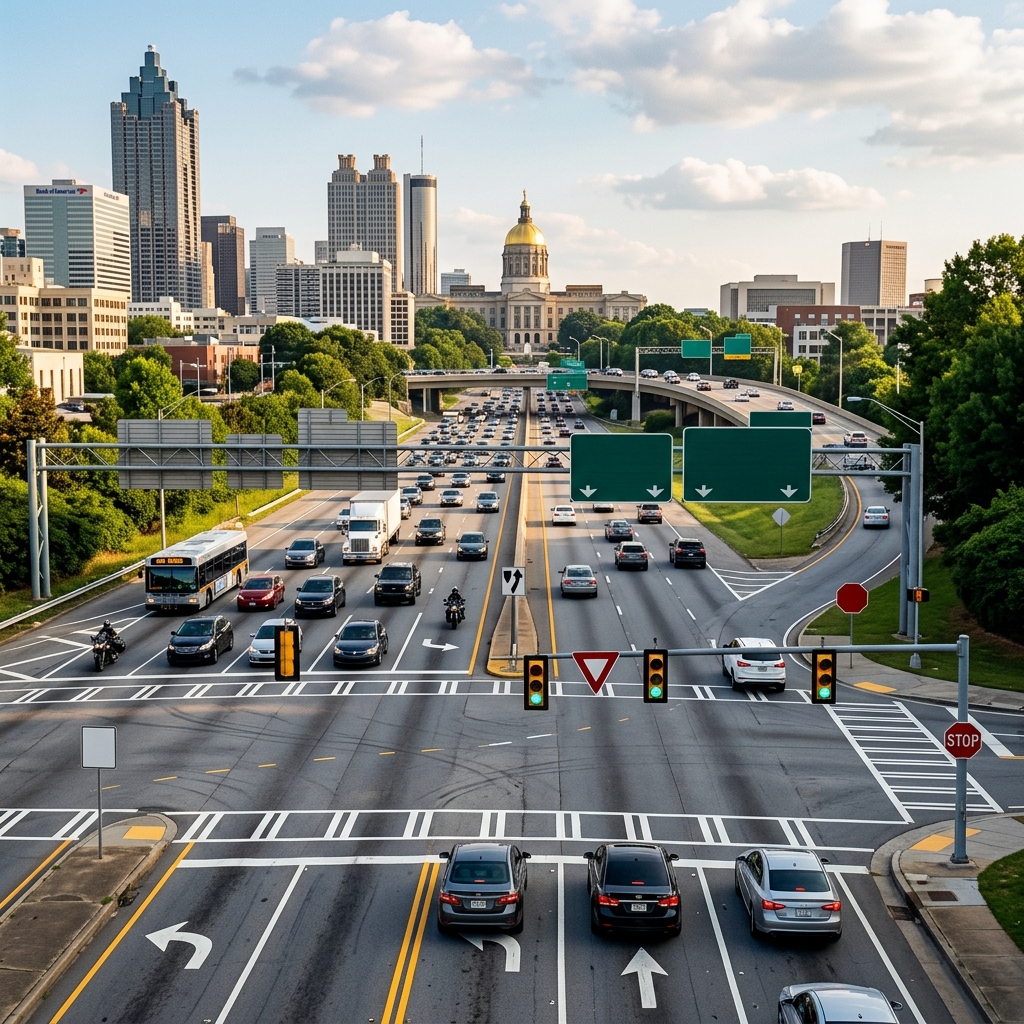
Georgia Traffic Rules Every Driver Should Know
Georgia drivers are expected to follow a mix of statewide rules that govern everyday behavior on the road, from lane changes and signaling to passing, headlights, and stopping for emergency vehicles. Some of these rules are familiar nationwide, while others are especially important because they are easy to overlook and can lead to tickets or more serious safety problems.
This guide breaks down the most important Georgia traffic laws in clear language. It is designed to help drivers understand what the law expects in common driving situations, how to avoid violations, and why certain rules matter for public safety.
Core Duties of a Georgia Driver
Before looking at specific rules, it helps to start with the basics. Georgia law requires drivers to obey traffic control devices, follow lawful instructions from officers or firefighters, and avoid driving on roads that have been officially closed for construction or other authorized reasons. These are the most fundamental obligations on the road and apply even when a driver thinks a signal, detour, or closure is inconvenient.
- Obey traffic lights and signs.
- Follow directions from authorized emergency personnel.
- Do not enter roads that are closed by official order.
These basic duties form the foundation for nearly every other traffic rule in the state. When a driver ignores them, the risk is not just a citation but also a dangerous conflict with other vehicles, pedestrians, or road workers.
Right-of-Way Rules in Common Driving Situations
Right-of-way disputes are one of the most common causes of crashes at intersections and in traffic flow. Georgia law addresses who must yield in a wide range of situations, especially when drivers arrive at the same time or when one road has a stop sign and the other does not.
When two vehicles approach an intersection at the same time without traffic signals, the driver on the left must usually yield to the driver on the right. At all-way stop intersections, the first vehicle to arrive should move first. If two or more vehicles arrive at nearly the same time, the vehicle to the right generally has priority.
| Situation | General Rule |
|---|---|
| Two vehicles arrive together at an uncontrolled intersection | Yield to the vehicle on the right |
| All-way stop | Proceed in order of arrival |
| Road without a stop sign meets a stop-controlled road | Driver at the stop sign must yield |
Pedestrians also have protected rights in many crossing situations, and drivers must remain alert whenever people are on or near a crosswalk. The safest approach is to assume that another road user may not see you and to yield whenever the law requires caution.
Turning, Merging, and Lane Use
Georgia traffic law includes rules that affect how drivers enter, cross, and leave lanes. One important example is the restriction on using the center lane. A center lane is generally intended for left turns, not for merging into traffic or using as a shortcut to get around congestion.
Drivers should also use signals before turning or changing lanes. A signal gives other motorists advance notice of movement and reduces the chance of a side-impact collision. In heavy traffic, a careful and predictable lane change is especially important because other drivers may already be adjusting their speed and spacing.
- Use the center lane only for lawful turning movements.
- Signal before turning or changing lanes.
- Do not force a merge when traffic conditions make it unsafe.
Proper lane discipline is also important on multilane roads. Drivers should not camp in the passing lane when faster traffic is approaching from behind, because that can create unnecessary congestion and encourage risky passing maneuvers on the right.
The Move-Over Rule and Emergency Vehicle Safety
Georgia’s move-over law requires drivers to make room for stopped emergency vehicles and certain other service vehicles with flashing lights. The purpose is simple: protect first responders, tow operators, utility crews, and others who work near active traffic lanes.
When possible, drivers must move over into an adjacent lane. If changing lanes is not safe or not possible because of traffic, the driver must slow down and proceed carefully. This rule is not optional, and it applies even when a driver is already traveling at or below the speed limit.
- Move over when approaching stopped vehicles with flashing lights.
- Reduce speed if a lane change is unsafe.
- Watch for police officers, tow trucks, utility vehicles, and similar roadside workers.
The legal goal is not only to prevent crashes but also to give roadside workers enough space to perform their duties safely. Drivers who fail to move over may face penalties and, more importantly, may place others in immediate danger.
Passing, Speed, and the Left Lane
Speeding is not the only driving problem that can create legal trouble. In Georgia, the left lane is not meant to be used as a permanent cruising lane when faster traffic is coming up from behind. Drivers are expected to yield the passing lane when they know, or reasonably should know, that another vehicle is overtaking them at a higher speed.
That does not mean every driver must drive aggressively or exceed the speed limit. It does mean that slower traffic should not block the lane designated for passing, especially on roads with multiple lanes in the same direction. The law aims to reduce risky lane weaving and improve traffic flow.
Drivers should also choose a speed that fits the road, weather, visibility, and traffic conditions. Even if a posted limit allows a certain speed, conditions may require a lower and safer pace.
Headlights, Wipers, and Visibility Requirements
Georgia law links visibility rules to weather conditions. When a driver uses windshield wipers because of rain or similar conditions, headlights must also be on. This rule exists because wet weather reduces visibility for everyone, and headlights help vehicles remain visible at a greater distance.
Lighting rules matter at dusk, during storms, and whenever road spray or poor light makes it harder to see nearby traffic. Turning on headlights early is a low-cost safety measure that helps other drivers judge distance and position.
- Turn on headlights when using windshield wipers.
- Use headlights in low-visibility conditions.
- Make sure your lights are working before driving in bad weather.
These requirements are especially important in traffic congestion, where a driver’s ability to see brake lights and lane markings may be limited by weather and road spray.
Phone Use, Headphones, and Distracted Driving
Georgia places limits on behavior that reduces attention behind the wheel. Using a phone while driving can be dangerous not just because it pulls a driver’s eyes from the road, but also because it slows reaction time and weakens awareness of nearby traffic and emergency sirens.
The state also restricts the use of headphones or earbuds in both ears while driving, since blocking both ears can interfere with hearing horns, sirens, and other important traffic sounds. The idea behind these rules is to preserve as much sensory awareness as possible in a driving environment that can change instantly.
- Do not text while driving.
- Avoid holding or resting a phone in a way that violates Georgia’s hands-free rules.
- Do not wear both earbuds or headphones in a way that blocks outside sound.
Distracted driving is more than a convenience issue. It can cause rear-end collisions, missed signals, and lane departures that endanger the driver and everyone nearby.
License, Plates, and Vehicle Visibility
Drivers in Georgia should keep their licenses and vehicle information readily available and visible. Law enforcement officers need to be able to identify both the driver and the vehicle during a stop, and the state has rules designed to keep that process straightforward.
License plates must not be blocked by decorative frames, covers, dirt, or any other obstruction that makes identification difficult. Georgia also requires drivers to carry the appropriate license and be prepared to present it during a traffic stop.
- Carry a valid driver’s license.
- Keep the license plate fully visible.
- Do not use frames or covers that hide important plate information.
These are small compliance issues, but they can create unnecessary problems if an officer cannot quickly read a plate number or verify a driver’s credentials.
Special Rules for Young Drivers
Young drivers in Georgia face additional restrictions because they are still building experience. These limits are meant to reduce high-risk situations during the early stages of driving independence, especially late-night travel and crowded passenger conditions.
For some younger license holders, nighttime driving is restricted, and passenger limits may also apply. Those rules recognize that fatigue, peer pressure, and distraction are more likely to contribute to unsafe decisions when a driver has less experience.
Parents and guardians should review the conditions attached to a young driver’s license so that the driver understands exactly when, where, and with whom they may legally drive.
Traffic Stops, Insurance, and What Happens After a Violation
A traffic stop is often the first step in enforcing Georgia’s road rules, but the consequences can go beyond a simple warning. Depending on the offense, a driver may face a citation, court appearance, points on a driving record, increased insurance costs, or, in serious cases, license suspension.
Insurance is another practical concern. Even when the immediate penalty seems minor, repeated traffic violations can become expensive over time because insurers may treat unsafe driving as a sign of higher risk.
- Pay attention to deadlines on citations.
- Understand that multiple violations can affect your record.
- Keep insurance and registration current.
For drivers trying to protect both their license and their finances, the best strategy is to respond promptly after any citation and to correct the behavior that led to it.
Frequently Asked Questions
Can I use the center lane to merge into traffic in Georgia? In general, no. The center lane is intended for lawful turning movements, not for regular merging into traffic.
Do I have to move over for stopped emergency vehicles? Yes. If it is safe to do so, you must move over. If you cannot change lanes safely, you must slow down and proceed with caution.
Do my headlights have to be on when I use windshield wipers? Yes. Georgia requires headlights to be on when the wipers are in use because of weather-related visibility concerns.
Can I keep my phone in my hand while stopped in traffic? Georgia law restricts phone use in ways that may still apply even when a vehicle is stopped in a traffic lane, so drivers should avoid using a phone unless the law clearly allows it.
Is it legal to cover part of my license plate with a frame? No. Anything that blocks plate visibility can create a legal problem.
Why These Rules Matter on Georgia Roads
Traffic laws are not just technical rules for avoiding tickets. They create a shared system that helps thousands of drivers, cyclists, workers, and pedestrians move through the same space with less risk. Georgia’s rules on lane use, headlights, right-of-way, and emergency vehicles all reflect the same basic principle: predictability saves lives.
Drivers who understand these laws are better prepared to handle traffic stops, reduce accident risk, and avoid preventable citations. More importantly, they are more likely to make choices that keep everyone on the road safer.
References
- Georgia Traffic Laws — FindLaw. 2026-07-09. https://www.findlaw.com/state/georgia-law/georgia-traffic-laws.html
- Section 5: Traffic Laws — Georgia Department of Driver Services. 2026-07-09. https://dds.georgia.gov/section-5-traffic-laws
- Georgia Code Title 40: Motor Vehicles and Traffic — State of Georgia. 2024-01-01. https://law.justia.com/codes/georgia/title-40/
- Georgia Traffic Codes — Georgia Department of Public Safety. 2026-07-09. https://dps.georgia.gov/ask-us/resources/georgia-traffic-codes
- Adults & Teens under GA Traffic Laws — Fayette County, Georgia. 2026-07-09. https://fayettecountyga.gov/courts/solicitor_general/traffic_laws.php
- Georgia Traffic Laws Governing Right-of-Way — Robert N. Katz, Attorney at Law. 2026-07-09. https://www.robertnkatz.com/practice-areas/car-accident-lawyers/georgia-driving-laws/georgia-traffic-laws-governing-right-of-way/
Similar Articles








Read full bio of medha deb


