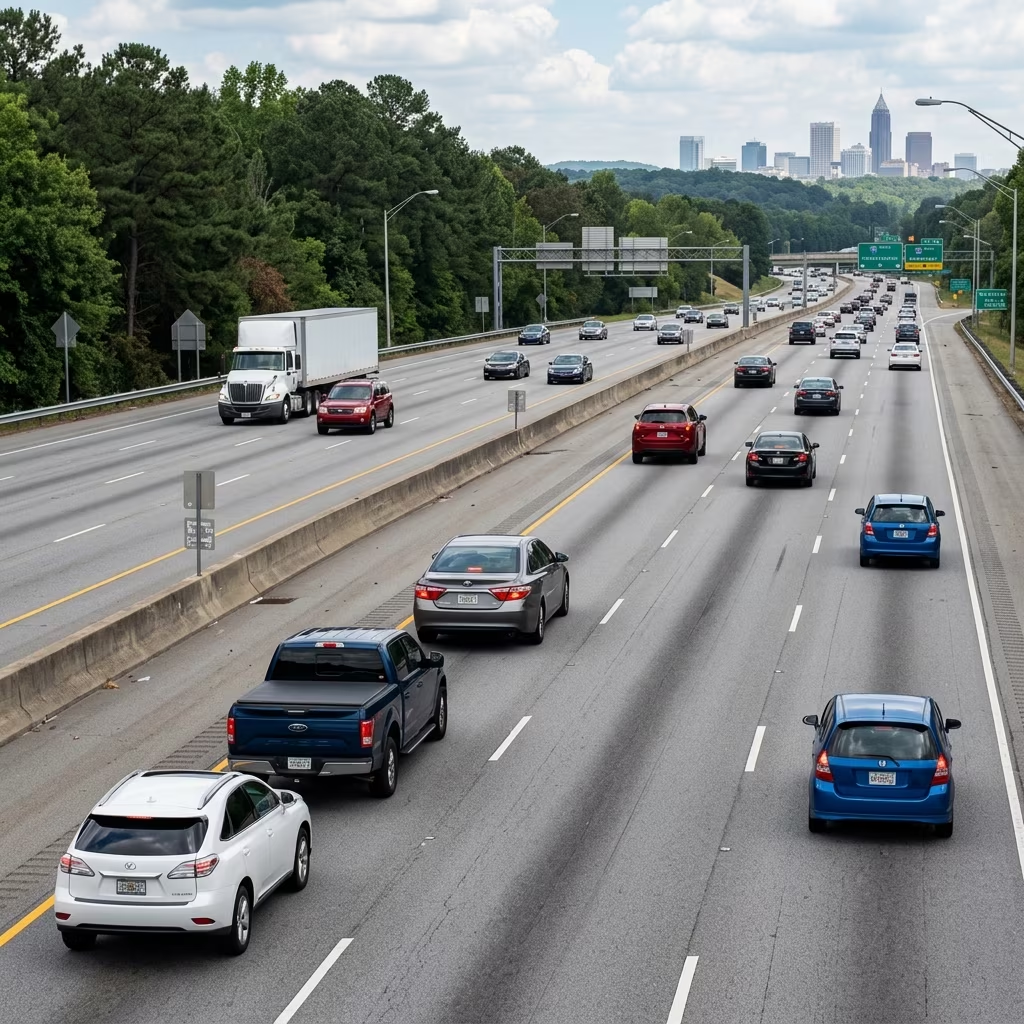
Georgia takes left-lane driving seriously. Under the state’s Slowpoke Law, drivers can be cited not only for speeding, but also for staying in the left lane and impeding the normal and reasonable movement of traffic, even when they are traveling at or near the posted speed limit. Understanding how this law works is essential if you regularly drive on Georgia highways or multi-lane roads.
This guide breaks down the legal rules, common misconceptions, penalties, and practical strategies so you can stay safe, avoid tickets, and contribute to smoother traffic flow.
1. What Is Georgia’s Slowpoke Law?
Georgia’s Slowpoke Law is found in O.C.G.A. § 40-6-184, a statute that addresses minimum speeds and behavior in the left (passing) lane. It does two key things:
- Prohibits driving so slowly that you impede the normal and reasonable movement of traffic, unless a reduced speed is necessary for safety.
- Requires drivers on roads with two or more lanes in the same direction to move out of the passing lane when they know or reasonably should know they are being overtaken by a faster vehicle.
In plain terms, Georgia law expects the left lane to be used primarily for passing or preparing for a left turn, not for casual cruising or pacing other vehicles. Official guidance from the Georgia Department of Public Safety also emphasizes that the left lane is for passing and that slower traffic should keep right.
1.1 The Legal Definition of Impeding Traffic
Subsection (a) of O.C.G.A. § 40-6-184 states that no person shall drive a motor vehicle at a slow speed that impedes the normal and reasonable movement of traffic, except when a reduced speed is necessary for safe operation. This means:
- There is no single fixed speed that always counts as impeding traffic.
- Officers look at the overall traffic flow, conditions, and your relative speed.
- You are allowed to slow down for safety reasons, such as bad weather, construction, or hazards.
The focus is on whether your driving is unreasonably disrupting the flow of vehicles behind you under the circumstances.
2. How the Left-Lane Rule Works in Georgia
Subsection (c) of the statute addresses what happens when you are in the left lane of a multi-lane road. On any road with two or more lanes moving in the same direction, you may not continue driving in the passing lane once you know or reasonably should know that a faster vehicle is overtaking you from behind.
For purposes of this law, the “passing lane” means the left-most lane other than a high-occupancy vehicle (HOV) lane. The critical points are:
- The rule applies on any qualifying road, not just interstates.
- Your exact speed or the posted speed limit does not excuse you from moving right.
- The obligation arises when a faster vehicle approaches from the rear.
2.1 When You Must Move Over
You are generally required to move out of the left lane when:
- You are in the left-most (passing) lane on a road with at least two lanes in your direction of travel.
- You become aware, or reasonably should become aware, that a vehicle behind you is traveling at a higher speed.
- There is a safe opportunity to move to a lane on your right.
Law enforcement and educational campaigns often summarize this rule as: “Keep right, let faster traffic pass.”
2.2 Recognizing a Faster Vehicle
You do not need to wait for another driver to tailgate or flash headlights before moving. Indicators that a vehicle is overtaking you include:
- Seeing a vehicle quickly closing the distance behind you in your mirrors.
- Observing that most traffic in the right lanes is moving faster than you.
- Noticing a line of vehicles forming behind you while the lane to your right is open.
The law uses the standard “knows or should reasonably know,” which means officers and courts can consider what a prudent driver would have noticed in the same situation.
3. Exceptions: When Staying in the Left Lane Is Allowed
Georgia law recognizes that there are legitimate reasons to be in the passing lane for longer than a simple, quick pass. Subsection (d) of O.C.G.A. § 40-6-184 lists specific exceptions where subsection (c) does not apply.
| Exception | When It Applies |
|---|---|
| Traffic conditions or congestion | Heavy traffic makes it necessary to occupy the left lane and prevents safe movement to the right. |
| Inclement weather, obstructions, hazards | Weather, debris, or road hazards require remaining in the left lane for safety. |
| Obeying law or traffic control devices | Signs, signals, or legal requirements direct you to use the left lane. |
| Preparing to exit or turn left | You must use the left lane to exit, cross over, or make an upcoming left turn. |
| Toll highways and passes | Left-lane toll booths or electronic pass lanes require staying left. |
| Emergency vehicles | Authorized emergency vehicles engaged in official duties. |
| Maintenance and construction vehicles | Highway maintenance or construction operations in the left lane. |
Even when an exception applies, drivers are still expected to exercise reasonable care and move right when it is safe and practical to do so.
4. Minimum Speeds and Engineering Studies
In addition to the general ban on impeding traffic, Georgia law allows transportation officials to establish explicit minimum speed limits on certain roads. Under subsection (b):
- The Commissioner of Public Safety or the Commissioner of Transportation, or local authorities, may determine that low speeds impede traffic after an engineering and traffic investigation.
- They can then post minimum speed limits on signs, below which drivers may not travel except when necessary for safe operation.
If a minimum speed limit is posted, driving below that speed without a valid safety reason can result in a citation independent of whether you are in the left or right lane.
5. Special Rules for Trucks and Large Vehicles
Separate Georgia statutes restrict where large trucks may drive on multi-lane roads. Under O.C.G.A. § 40-6-52 and related provisions, trucks are generally limited to the two right-most lanes on roads with three or more lanes in each direction, and may not use the left lane on two-lane roads except to pass or prepare for a left turn.
These rules work together with the Slowpoke Law to reduce conflicts between heavier vehicles and faster-moving traffic, helping improve safety and traffic flow.
6. Penalties for Violating the Slowpoke Law
Impeding traffic or unlawfully occupying the left lane is typically treated as a misdemeanor traffic offense in Georgia. While exact outcomes can vary by court, record, and circumstances, potential consequences include:
- Fines — Fines can reach up to approximately $1,000 for violations of O.C.G.A. § 40-6-184.
- Points on your license — A conviction commonly carries three points on your Georgia driving record.
- License implications for young drivers — Georgia can suspend the license of a driver under 21 who accumulates 4 or more points and of an adult driver who gathers 15 or more points within 24 months.
- Increased insurance premiums — Insurance companies often review traffic convictions and points when setting rates, so a Slowpoke Law citation can lead to higher premiums.
- Possible jail exposure — As a misdemeanor, the statute allows for up to 12 months in jail, though jail time is not common for routine first-time traffic offenders.
The number of tickets issued for Slowpoke Law violations has been significant. Reporting from Georgia law enforcement has noted dozens of citations issued per month for left-lane-related offenses after the law’s enactment.
7. Why Georgia Enforces Left-Lane Discipline
Legislators and law enforcement support left-lane discipline for several policy reasons:
- Reducing road rage and aggressive driving — Drivers stuck behind slower vehicles in the left lane may tailgate, weave through traffic, or make unsafe lane changes. Requiring slower drivers to move right helps reduce these tensions.
- Improving traffic flow — When left lanes are used primarily for passing, traffic tends to flow more smoothly and consistently, particularly on heavily traveled corridors.
- Enhancing safety — Speed differentials and lane changes are major contributors to crashes. Discouraging left-lane cruising helps reduce sudden braking and unpredictable maneuvers.
Georgia’s approach is similar to many other states that emphasize “keep right except to pass” as a key safety principle.
8. Practical Tips to Avoid a Slowpoke Law Ticket
Even experienced drivers sometimes develop habits that conflict with the law. The following strategies can help you stay compliant:
8.1 Make the Right Lane Your Default
- Use the right-most lane as your primary cruising lane whenever practical.
- Enter the left lane only when you need to pass a slower vehicle or prepare for a left exit or turn.
- After passing, promptly signal and move back to the right when it is safe.
8.2 Monitor Your Mirrors Frequently
- Check your mirrors regularly to identify faster vehicles approaching from behind.
- If you see a vehicle closing in, plan early to move right when a safe gap appears.
- Avoid waiting until another driver is right on your bumper or reacting only to horn honks or flashing lights.
8.3 Respect the Flow of Traffic
- Driving exactly at the speed limit in the left lane does not guarantee compliance with the Slowpoke Law.
- If most traffic is moving slightly faster and you remain in the left lane, you may still be considered as impeding the flow, even if you are “following the sign.”
- Adjust your lane choice to match the pattern of traffic, not just the posted numbers.
8.4 Account for Weather and Road Conditions
- Use posted advisories and common sense in rain, fog, or other adverse conditions.
- You may drive below the normal flow for safety, including at or below the posted speed, as long as your speed is reasonable for the conditions.
- When conditions improve, gradually resume typical right-lane use.
8.5 Be Extra Cautious in Work Zones
- Observe all temporary signs and lane restrictions in construction areas.
- Remember that maintenance and construction vehicles have special permissions to occupy the left lane.
- Move over and slow down when required to protect workers and yourself.
9. Frequently Asked Questions About Georgia’s Left-Lane Rules
9.1 Can I get a ticket for impeding traffic if I am driving the speed limit?
Yes. The Slowpoke Law does not excuse left-lane drivers simply because they match the posted speed. If a vehicle behind you is traveling faster and you remain in the passing lane when it is safe to move right, you can be cited for impeding the normal and reasonable movement of traffic. The law focuses on traffic flow and lane behavior, not just your speedometer reading.
9.2 Does the law apply only on interstates?
No. The statute applies to any road, street, or highway with two or more lanes moving in the same direction. That includes divided highways, some urban arterial roads, and other multi-lane routes, not just interstate highways.
9.3 What if congestion makes it impossible to move back to the right?
Heavy congestion is one of the explicit exceptions in the law. If traffic conditions or congestion make it necessary to drive in the passing lane and prevent you from safely changing lanes, subsection (d) provides that the left-lane requirement does not apply. Still, when conditions ease, you should return to the right lane as soon as safely possible.
9.4 Are there different rules for trucks in the left lane?
Yes. Separate Georgia laws restrict trucks to certain lanes on multi-lane roads, usually the two right-most lanes, and prohibit them from using the far left lane except in specific situations. Large trucks that cruise in the left lane can face additional citations beyond the Slowpoke Law.
9.5 How many points will a Slowpoke Law conviction add to my record?
A conviction for impeding traffic under O.C.G.A. § 40-6-184 can add three points to your Georgia driving record. Accumulating too many points in a 24‑month period can lead to license suspension, especially for drivers under age 21.
9.6 Do I need a lawyer if I get a Slowpoke Law ticket?
While some drivers choose to pay the fine and move on, a Slowpoke Law citation can affect your record and insurance. Many people consult a traffic or criminal defense attorney, especially if they already have prior points, are a commercial driver, or believe the officer misinterpreted the conditions. An attorney can evaluate the evidence, explain possible defenses, and represent you in court if you contest the ticket.
10. Key Takeaways for Georgia Drivers
- The left-most lane on Georgia’s multi-lane roads is legally defined as a passing lane, not a travel lane, in most circumstances.
- You may not continue to drive in the left lane once you know or should know a faster vehicle is overtaking you from behind, unless a specific legal exception applies.
- Driving so slowly that you impede normal and reasonable traffic flow is prohibited, even if your speed is within the posted limit, unless it is necessary for safety.
- Violations can bring fines, points, possible license impacts, and higher insurance premiums.
- Using the right lane as your default, checking mirrors frequently, and treating the left lane as a passing lane will help you comply with Georgia law and improve overall road safety.
References
- Georgia Code § 40-6-184 (2024) – Impeding traffic flow; minimum speed limits; slower driving in a passing lane — Justia / State of Georgia. 2024. https://law.justia.com/codes/georgia/title-40/chapter-6/article-9/section-40-6-184/
- Georgia Law: Semi-Trucks in the Left Lane — Clark, Smith & Sizemore. 2022. https://www.clarksmithsizemore.com/georgia-law-semi-trucks-in-the-left-lane/
- Impeding the Flow of Traffic in Georgia: Slow Poke Law — Daniels & Taylor, P.C. 2023. https://www.georgiacriminaldefense.com/blog/impeding-the-flow-of-traffic-in-georgia-slow-poke-law/
- Georgia’s “Slow Poke” Law: What You Need to Know — The Ticket Clinic Georgia. 2023. https://www.ticketclinicgeorgia.com/blog/georgias-slow-poke-law-what-you-need-to-know/
- Understanding Georgia’s ‘slowpoke’ law — WSB-TV / YouTube (Ga. Dept. of Public Safety commentary). 2015. https://www.youtube.com/watch?v=QhET4lpm0I8