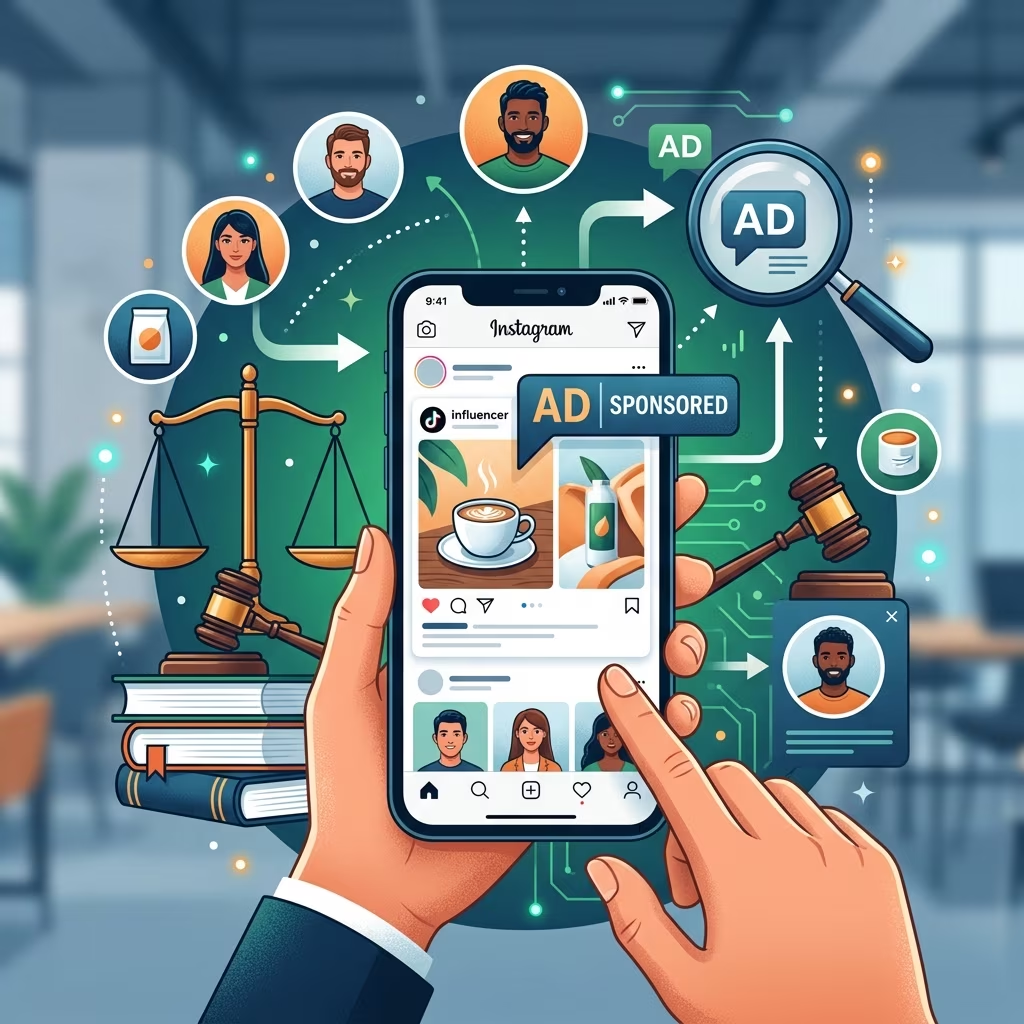
Digital marketing has blurred the traditional boundaries between advertising and everyday content. The Federal Trade Commission (FTC) continues to update its guidance so that disclosures in online ads, influencer posts, and other digital promotions are understandable to ordinary users, not just lawyers and marketers. This article explains how those disclosure principles apply to social media and what influencers, brands, and agencies should do to comply.
Why Disclosure Rules Matter More Than Ever
The FTC’s core mission in advertising law is simple: consumers should not be misled about what they are seeing, and endorsements must be truthful and transparent. When a post looks like an authentic recommendation but is actually sponsored, that lack of clarity can be deceptive. Updated guidance on endorsements and disclosures brings older “.com disclosure” concepts into today’s ecosystem of short videos, stories, livestreams, and native ads.
For anyone promoting products or services online, the rules are no longer optional hygiene; they are a central part of risk management. Failure to disclose clearly can lead to enforcement actions, reputational damage, and costly changes to campaigns after launch.
Key Definitions: Endorsements, Material Connections, and Advertisers
To use the FTC’s rules effectively, it helps to understand a few core concepts that show up throughout its endorsement guidance.
| Term | What It Means in Practice |
|---|---|
| Endorsement | Any message that consumers could reasonably understand as reflecting someone’s personal opinion or experience with a product, service, or company, including likes, tags, or ratings. |
| Endorser | The person or entity making the endorsement – this can be an influencer, a customer, a virtual persona, or an organization. |
| Advertiser | The brand or business whose product or service is being promoted, as well as those directing or benefiting from the promotion. |
| Material connection | Any relationship that might affect how people evaluate the endorsement and that they would not reasonably expect, such as payment, free products, commissions, or family ties. |
If a material connection exists and is not obvious to the audience, it usually must be disclosed clearly and prominently.
From “.com Disclosures” to Social Media Platforms
Earlier FTC guidance on online advertising introduced the idea that disclosures must be clear and conspicuous in the context of digital interfaces, not just printed fine print. Those principles now apply across social apps, websites, and emerging platforms.
In practical terms, this means:
- Disclosures must be integrated into the same screen, format, and flow as the claim or endorsement.
- Users should not have to click, scroll, or expand text merely to discover that a post is sponsored.
- The disclosure must be easy to notice, easy to read or hear, and understandable to ordinary consumers.
- Design choices (such as low contrast text or tiny fonts) cannot be used to hide or downplay the disclosure.
As formats evolve, the FTC focuses less on the specific technology and more on the consumer’s overall impression. If an average user would think a piece of content is independent when it is not, there is likely a disclosure problem.
When Disclosure Is Required in Social Media Posts
Disclosures are required whenever there is a material connection that an ordinary viewer would not expect and that could influence their evaluation of the endorsement. The obligation does not depend solely on receiving money; it can arise from any benefit or relationship, including:
- Direct payment or per-post fees
- Free products, trips, or event access
- Affiliate links or commission-based codes
- Ownership stakes or employment relationships
- Endorsing a product owned by the influencer, a family member, or a close friend
There are a few limited situations where a separate disclosure may not be necessary. For example, if a display ad is obviously an ad, or if it is common knowledge that a person is the brand’s spokesperson, the commercial nature may be clear without an extra label. But whenever there is any doubt about what users will understand, disclosing is the safer path.
What “Clear and Conspicuous” Means in Practice
The FTC expects disclosures to be difficult to miss and easy to grasp. That standard applies across screen sizes and formats. Helpful practices include:
- Proximity: Place the disclosure close to the endorsement itself, not buried in a separate profile page or after unrelated hashtags.
- Prominence: Use a font, color, and size that stand out against the background and are legible on mobile screens.
- Plain language: Use straightforward expressions like “ad,” “sponsored,” or “paid partnership,” avoiding vague abbreviations.
- Same language: Make the disclosure in the same language as the content so the audience can understand it.
- Duration: In videos or stories, keep the disclosure on screen long enough that viewers can read it comfortably.
Statements that are technically true but formatted so that almost no one will notice them are unlikely to satisfy the FTC’s expectations.
Platform-Specific Considerations
Because disclosure must fit the format, the details differ across platforms. Current FTC guidance and best-practice summaries highlight several recurring themes for common content types.
Image and Feed Posts
For static images and feed posts, users typically scan quickly and may not expand long captions. To stay compliant:
- Put the disclosure at or near the beginning of the caption, before any “more” break.
- Do not hide the disclosure at the end of a hashtag cloud or after unrelated links.
- For stories or disappearing content, overlay the disclosure directly on the image in a legible, high-contrast font.
Short-Form and Long-Form Video
Video creates extra disclosure challenges, because some viewers watch without sound while others may ignore on-screen text. The FTC suggests using both audio and visual disclosure whenever possible.
- State the relationship out loud early in the video, in clear terms (“This video is sponsored by…”).
- Display a visible text disclosure on screen for long enough to read.
- Do not rely on disclosures solely in the video description or below a “view more” link.
Livestreams and Interactive Content
Livestreams present a moving audience; viewers may join at any time. To keep disclosures effective:
- Explain the sponsorship clearly at the start of the stream.
- Repeat the disclosure periodically, especially before or during promotional segments.
- Use on-screen labels or pinned comments where the platform allows.
Audio-Only Content
For podcasts and other audio formats, visual cues may not exist. Sponsors should be identified clearly in the spoken content, not only in episode notes. The disclosure should be understandable even for listeners who never read the show description.
Disclosures That Are Insufficient or Misleading
Certain practices fail the FTC’s clarity standard and may result in enforcement. Common problems include:
- Using ambiguous abbreviations such as “#sp,” “#spon,” or “#collab” instead of easily understood terms.
- Including a single general statement in a profile bio that some content may be sponsored, without disclosing on each relevant post.
- Relying solely on built-in platform labels when they are not prominent or clear enough on their own.
- Requiring users to scroll, click, or expand a section solely to see that a post is an ad.
When in doubt, the safest approach is to spell out the relationship in plain language, close to the endorsement itself.
Responsibilities of Influencers, Brands, and Agencies
FTC guidance makes clear that responsibility does not rest solely with the individual poster. Brands and intermediaries also have obligations.
Influencers and Creators
Influencers are on the front line of disclosure, because they control the content their audiences see. The FTC’s own brochure for social media influencers emphasizes that they must disclose anytime they have a financial, employment, personal, or family relationship with a brand they mention.
- Only give endorsements based on honest opinions and real experiences.
- Do not make claims that the advertiser could not substantiate, particularly about health or safety.
- Follow written brand guidelines about disclosure, but improve them if they do not meet the clear and conspicuous standard.
Advertisers and Brands
Advertisers can be held liable for deceptive endorsements made on their behalf, even if they did not write the post themselves. To manage that risk, brands should:
- Provide clear written policies explaining how and where influencers must disclose.
- Train marketing staff and agency partners on the FTC’s endorsement rules.
- Monitor influencer posts and ask for corrections when disclosures are missing or unclear.
- Keep records of guidance given, content reviewed, and steps taken to fix problems.
Agencies, Networks, and Platforms
Agencies and networks that organize campaigns also play a role in ensuring that disclosures are adequate. They should build compliance checks into campaign workflows, review content before and after launch, and escalate issues to brands quickly when they arise.
Designing Compliant Social Media Campaigns
To integrate disclosure into planning, rather than treating it as an afterthought, consider these steps when developing campaigns:
- Map material connections: Identify every relationship that triggers a disclosure obligation, including affiliate programs and gift seeding.
- Choose standard phrases: Decide on clear disclosure language for each platform and format, and use it consistently.
- Storyboard disclosure: For video, stories, and livestreams, plan where disclosures will appear and how often they will be repeated.
- Test on mobile: Review draft content on actual devices to confirm that disclosures are readable without extra taps or zooming.
- Update regularly: Periodically revisit policies in light of new FTC guidance and platform changes.
Frequently Asked Questions
Do I need a disclosure if I bought the product myself?
If there is no material connection at all – no payment, free product, relationship, or other benefit – then no sponsorship disclosure is required. You still must be truthful and avoid misleading claims, but simply sharing a genuine, unpaid opinion about something you purchased does not require a special label.
Is tagging a brand enough to count as disclosure?
No. Tagging a brand or using its hashtag does not clearly tell people that you have been paid or given something of value. The FTC recommends using explicit wording such as “ad” or “sponsored by [brand]” so ordinary viewers understand the relationship.
Can I rely on the platform’s built-in “paid partnership” tools?
Built-in tools are helpful but may not always be sufficient on their own. If a label is small, placed in an obscure location, or unclear to users, the overall disclosure may still be inadequate. Influencers and brands remain responsible for ensuring that disclosures are clear and conspicuous in context.
What if my audience already knows I work for the brand?
If it is obvious to the typical viewer that you are speaking on behalf of your employer or your own company, an additional disclosure may not always be necessary. However, because audiences grow and content is shared, many creators and brands choose to disclose anyway to avoid confusion.
How often must I disclose in a long livestream?
The FTC recommends repeating disclosures periodically so viewers who tune in partway through still receive the information. For example, reiterating the sponsorship at the beginning of promotional segments or every so often during a long broadcast helps maintain transparency.
Staying Ahead of Future Updates
The FTC continues to refine its approach as new formats and marketing practices emerge. Recent updates to its endorsement guidance underscore a consistent theme: consumer understanding comes first. Marketers who embed that principle into creative decisions, influencer contracts, and campaign reviews are less likely to find themselves surprised by enforcement activity.
Ultimately, clear disclosure is not just a regulatory obligation; it is a trust-building tool. When audiences know when content is sponsored, honest creators and brands can still communicate effectively while respecting consumer expectations.
References
- Advertising and Marketing Basics — Federal Trade Commission. 2023-05-01. https://www.ftc.gov/business-guidance/advertising-marketing
- Endorsements, Influencers, and Reviews — Federal Trade Commission. 2023-06-29. https://www.ftc.gov/business-guidance/advertising-marketing/endorsements-influencers-reviews
- FTC’s Endorsement Guides: What People Are Asking — Federal Trade Commission. 2023-06-29. https://www.ftc.gov/business-guidance/resources/ftcs-endorsement-guides-what-people-are-asking
- Disclosures 101 for Social Media Influencers — Federal Trade Commission. 2019-11-01. https://www.ftc.gov/business-guidance/resources/disclosures-101-social-media-influencers
- FTC Requirements for Influencers: Guidelines and Rules — Termly. 2023-08-15. https://termly.io/resources/articles/ftc-requirements-for-influencers/
- The Scoop on Social Media Influencer Disclosure Requirements — Truth in Advertising. 2023-02-10. https://truthinadvertising.org/resource/social-media-influencer-disclosure-requirements/
- FTC Compliance and Disclosure Rules for Social Media Influencers — HCH Lawyers. 2023-10-01. https://www.hchlawyers.com/social-media-law/ftc-compliance/