
FSIS Recall Classes: 3 Meat And Poultry Risk Levels Explained
How USDA recall classes help consumers understand meat risks and act quickly.
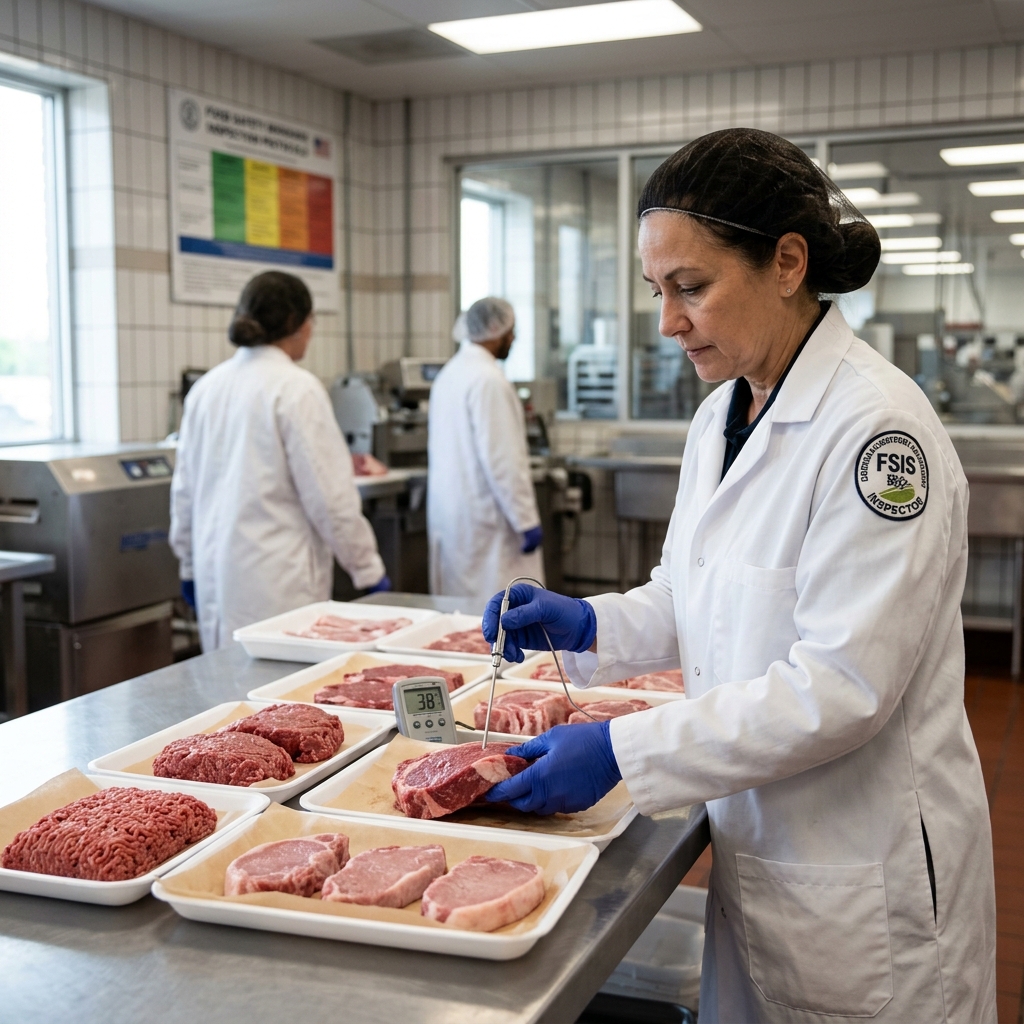
When meat or poultry is pulled from the market, the recall notice is more than a warning label. It is a risk signal. The U.S. Department of Agriculture’s Food Safety and Inspection Service (FSIS) uses recall classes to tell the public how serious the problem may be, from products that may cause severe illness to products that are unlikely to harm anyone. Those categories help consumers decide how urgently they need to act and help retailers, distributors, and inspectors prioritize their response.
For shoppers, the system can look technical at first glance. But the basic idea is simple: the lower the number, the higher the concern. A Class I recall signals the greatest danger, Class II indicates a possible but less likely health issue, and Class III covers violations that are not expected to cause adverse health consequences. Understanding those labels can make the difference between tossing a product immediately and missing a serious safety threat.
Why recall classifications matter
Food recalls are not only about correcting paperwork or removing a mislabeled carton. They are public health tools designed to limit exposure to products that may be contaminated, improperly processed, or incorrectly labeled. FSIS uses recall classifications to communicate the estimated level of risk after a health hazard evaluation. That evaluation helps determine how aggressively the public should be notified and what kind of follow-up is needed from the company involved.
In practical terms, the recall class helps answer three questions:
- How likely is the product to make someone sick or cause injury?
- How urgently should consumers stop using it?
- How intense should the company’s and government’s recovery efforts be?
That structure is important because meat and poultry recalls can involve a wide range of problems, from pathogen contamination to undeclared ingredients or foreign objects. Different hazards call for different levels of urgency, even when the same product category is involved.
The three FSIS recall classes
FSIS groups recalls into three classes based on the relative health risk. The categories are used to help the public understand the seriousness of the situation, not to assign blame or describe the legal consequences of the problem.
| Recall class | What it means | Consumer takeaway |
|---|---|---|
| Class I | A health hazard situation with a reasonable probability that eating the product will cause serious health problems or death. | Stop using the product immediately and follow recall instructions at once. |
| Class II | A potential health hazard situation with a remote probability of adverse health consequences. | Do not eat the product; check whether exposure creates any special risk. |
| Class III | A situation in which eating the product is not expected to cause adverse health consequences. | The product still violates requirements and should be removed as directed. |
Class I is the most serious category. A product in this class has a meaningful chance of causing major illness or death, so the warning demands fast action. Class II recalls are less severe but still concern public health because the product may still create a real, though less likely, risk of injury or illness. Class III recalls are the least dangerous from a health standpoint, but they still matter because they involve food that does not meet regulatory standards.
What triggers a meat or poultry recall
Recalls can begin for several reasons, and contamination is only one of them. FSIS recall materials show that recalls are typically initiated by the manufacturer or distributor, sometimes after FSIS requests action. The underlying issue may involve adulteration, misbranding, or another type of regulatory violation that means the product should not remain in commerce.
Common triggers include:
- Pathogen findings, such as contamination discovered through verification testing, company testing, illness investigations, or consumer complaints.
- Foreign material in the product, including metal, plastic, or glass that could injure a consumer.
- Misbranding, such as labeling that fails to disclose allergens or gives inaccurate product information.
- Processing or sanitation problems that create a health hazard or show a break in controls.
The seriousness of the trigger affects the class. A pathogen in a ready-to-eat product may point to a much higher risk than a minor labeling mistake. A sharp metal fragment may be treated differently from a tiny piece of harmless material. FSIS looks at the likely health effect, not just the presence of a defect.
How FSIS decides the class
After a potential recall is identified, FSIS uses a recall committee or similar internal review process to evaluate the public health risk. The agency examines the product, the distribution pattern, and the evidence of possible exposure to determine the appropriate class. The assessment is not simply a label check; it is a health hazard analysis.
Key factors include:
- The nature of the defect or contamination.
- The amount of product involved.
- The dates and locations of production and distribution.
- Whether the product has already reached consumers or remained in controlled channels.
- How likely the hazard is to cause illness or injury.
FSIS also verifies that the recalling company has enough information to identify where the product went. That includes packaging details, lot or code information, production dates, and consignee records. Without those details, a recall can be harder to execute and harder for consumers to understand.
How the public learns about the recall
FSIS uses different notification methods depending on the class. According to the agency’s recall materials, Class I and Class II recalls are announced through public press releases, while Class III recalls are generally communicated through a Recall Notification Report with substantially the same information in a different format. The point is to match the public notice with the seriousness of the risk while still giving consumers enough information to act.
That notice usually includes the product name, codes, establishment information, and instructions for what consumers and retailers should do. The recall announcement may also explain whether the product was sold frozen, fresh, or fully cooked, since that can affect the risk profile and the likelihood that the item is still in a refrigerator or freezer.
Consumers should treat any recall notice seriously, even if the class appears low. A Class III recall may not pose a health hazard, but it still means the product does not meet regulatory requirements and should be handled according to the notice.
What consumers should do after seeing a recall
Consumers do not need to analyze the science behind every recall to respond correctly. The safest approach is to follow the instructions in the notice and remove the product from use as soon as possible. If the item is in the refrigerator or freezer, it should not be eaten unless the recall notice specifically says otherwise.
- Check the product name, package size, and code dates against the notice.
- Look for establishment numbers and lot information on the package.
- Do not taste the product to test whether it is safe.
- Keep the package and receipt if the notice asks for proof of purchase.
- Return the item, discard it, or contact the company as directed.
If a recalled meat product may have been served to a child, an older adult, a pregnant person, or someone with a weakened immune system, extra caution is warranted because those groups can face more serious consequences from foodborne illness. Even when a recall is classified as less severe, the safest response is still to stop using the product immediately and monitor for recall updates.
Why the class is not the whole story
A recall class is useful, but it does not tell the entire story. Two recalls in the same class may involve very different hazards. One Class I recall may involve a pathogen in ready-to-eat meat, while another may involve a foreign object capable of causing physical injury. Both are serious, but the response details may differ.
Likewise, a lower classification does not mean consumers can ignore the notice. Some product issues do not create immediate injury but still create problems for vulnerable people, for retailers trying to remove stock, and for regulators tracking the integrity of the food supply. In other words, the class is a guide to risk, not a permission slip to keep using the product.
Recall notices also reflect how much information is available at the time of the decision. As the investigation develops, additional information can shape the scope of the recall, the distribution reach, and the public response. The initial class is important, but it may be accompanied by later updates if more product is identified.
How companies are expected to respond
From the company side, a recall is a fast-moving process. FSIS materials indicate that firms are expected to work quickly with the agency, provide production and distribution data, and help identify affected consignees. The company must also cooperate with effectiveness checks, which are steps FSIS uses to confirm that the recalling firm has made reasonable efforts to contact everyone who received the product.
That process matters because a recall is only effective if the product is actually removed from commerce. If the product remains on shelves, in warehouses, or in home refrigerators, the health risk continues. The recall class helps FSIS decide how much public attention and follow-up are needed to reduce that risk.
Questions consumers often ask
Below are some common questions that arise when a meat recall is announced.
Is Class I always the most dangerous?
Yes. Under FSIS definitions, Class I is the highest-risk category because there is a reasonable probability that eating the product will cause serious health problems or death.
Does Class II mean the product is safe?
No. Class II means the probability of serious harm is remote, not impossible. Consumers should still follow the recall notice and avoid using the product.
Can a Class III recall be ignored?
No. Class III means adverse health consequences are not expected, but the product still violated a rule or standard and should be handled as instructed.
Where can consumers find the details they need?
FSIS recall notices typically list the product name, packaging details, code dates, establishment number, and the steps consumers should take. Matching those details to the item in the kitchen is the fastest way to know whether it is affected.
In the end, recall classes are a practical communication tool. They translate complex food safety decisions into a simple hierarchy that helps consumers, retailers, and regulators act quickly. The labels do not replace the need to read the notice carefully, but they do offer an immediate sense of how worried the public should be when meat or poultry leaves the shelf for safety reasons.
References
- FSIS Food Recalls — GovInfo. 2006. https://www.govinfo.gov/content/pkg/GOVPUB-A110-PURL-gpo16827/pdf/GOVPUB-A110-PURL-gpo16827.pdf
- Food Recall Classes — Los Angeles County Department of Public Health. n.d. http://www.publichealth.lacounty.gov/eh/safety/food-recalls/ref/recall-classes.htm
- FSIS Recalls: A Legal Perspective — Meat Science Association. 2000. https://meatscience.org/docs/default-source/publications-resources/rmc/2000/fsis-recalls-a-legal-perspective.pdf?sfvrsn=2
- USDA Recall Guide: Process Requirements, Company Obligations and Risk Classification — OFW Law. n.d. https://ofwlaw.com/usda-recall-guide/
- USDA Food Recalls for the Period 2012–2023 Compared with FDA Food Recalls — ScienceDirect. 2025. https://www.sciencedirect.com/science/article/pii/S0362028X25000444
- Revisions to USDA-FSIS Directive on Meat, Poultry, Egg Recalls — Food Safety Magazine. n.d. https://www.food-safety.com/articles/9142-revisions-to-usda-fsis-directive-on-meat-poultry-egg-recalls
Similar Articles








Read full bio of medha deb


