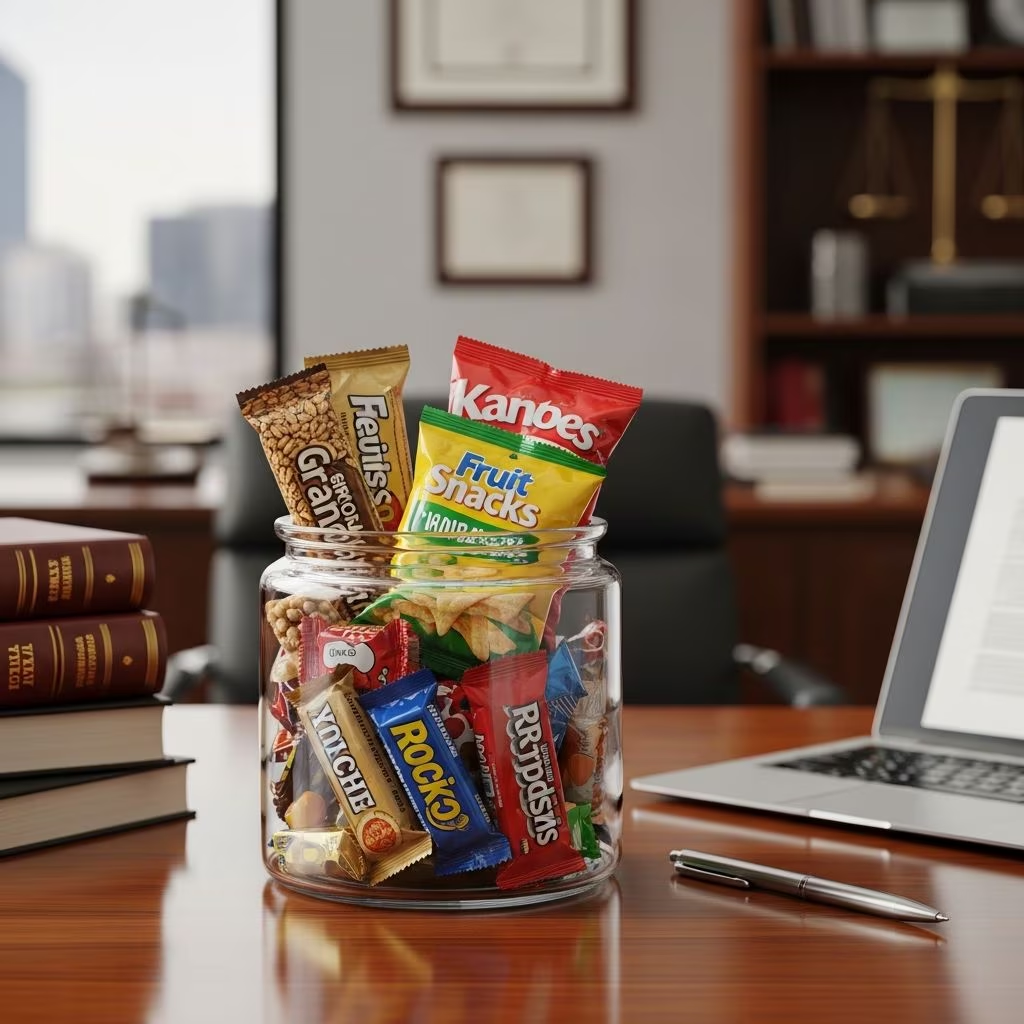
Offering complimentary food in professional settings has become a staple in many industries, but for high-pressure environments like law firms, the question arises: do free lunches and snacks truly elevate team performance and satisfaction, or do they introduce unnecessary complications? This analysis delves into the multifaceted impacts of such perks, drawing from workplace culture trends and legal practice management strategies.
Understanding the Rise of Food Perks in Professional Services
In competitive talent markets, law firms increasingly adopt amenities to attract and retain top legal talent. Free snacks and lunches serve as tangible symbols of appreciation, fostering a sense of community amid long billable hours. These perks align with broader efforts to humanize high-stakes offices, where attorneys often work late into the evenings.
Industry observers note that such initiatives can mirror tech sector innovations, adapted for the conservative legal world. By providing easy access to refreshments, firms aim to minimize distractions from hunger, potentially sustaining focus during critical tasks like case preparation or client negotiations.
Key Benefits: Enhancing Team Spirit and Productivity
One primary advantage lies in morale enhancement. When staff feel valued through small gestures like stocked pantries, it cultivates loyalty and reduces turnover intentions. Studies in professional services highlight how creature comforts contribute to higher job satisfaction scores.
- Improved Collaboration: Shared break areas with snacks encourage informal interactions, sparking ideas that might not emerge in formal meetings.
- Sustained Energy Levels: Quick access to healthy options prevents energy dips, supporting consistent productivity during peak workloads.
- Recruitment Edge: Prospective hires view these perks as indicators of a supportive culture, making the firm more appealing in talent wars.
Moreover, these amenities can indirectly bolster client relationships. A energized, positive team delivers better service, aligning with proven strategies for client retention through staff empowerment and satisfaction.
Potential Drawbacks: Costs and Unintended Consequences
Despite the upsides, implementing free food programs demands careful fiscal oversight. Recurring expenses can accumulate, straining budgets especially in smaller practices. Firms must balance generosity with profitability, as unchecked spending erodes margins vital for competitive pricing.
| Aspect | Pros | Cons |
|---|---|---|
| Financial Impact | Low per-employee cost if sourced wisely | Unexpected hikes from waste or vendor fees |
| Health Considerations | Opportunity for nutritious choices | Risk of unhealthy overindulgence |
| Cultural Fit | Builds inclusivity | May alienate remote or diet-restricted staff |
Cultural mismatches pose another risk. Not all employees partake equally, potentially breeding resentment if some view it as extravagant amid economic pressures. Hygiene issues in communal spaces and dietary inclusivity further complicate rollout.
Strategic Implementation: Making Snacks Work for Your Firm
Success hinges on thoughtful execution. Firms should pilot programs, gathering feedback to refine offerings. Opt for vendor partnerships offering bulk discounts on fresh, varied items to control costs.
- Assess Firm Needs: Survey staff preferences to ensure relevance, incorporating options for allergies and dietary restrictions.
- Set Boundaries: Define access rules, such as time-specific availability, to prevent abuse.
- Monitor ROI: Track metrics like retention rates and productivity pre- and post-implementation.
- Integrate with Culture: Pair with team-building events for amplified impact.
Leveraging technology, such as inventory apps, optimizes stock levels and reduces waste, mirroring efficient client management tools.
Real-World Examples from Legal Practices
Larger firms often lead with comprehensive perks packages, including catered lunches weekly, reporting uplifts in employee net promoter scores. Boutique operations might favor snack stations with nuts, fruits, and granolas, achieving similar morale gains at fraction of the cost.
Feedback loops reveal that personalization—tailoring selections based on team input—maximizes appreciation. One mid-sized firm noted a 15% dip in voluntary overtime post-perk introduction, attributing it to refreshed teams prioritizing work-life balance.
Balancing Perks with Core Retention Drivers
While snacks delight, they complement rather than replace foundational elements like clear communication and growth opportunities. Robust client relationship strategies, emphasizing transparency and personalization, form the bedrock of thriving practices; amenities enhance this foundation.
Firms excelling in staff nurturing report sustained growth, as satisfied teams drive client advocacy. Integrating food perks into holistic wellness programs amplifies retention, fostering loyalty akin to long-term client bonds.
Financial Modeling: Crunching the Numbers
To evaluate viability, construct a simple cost-benefit model. For a 50-attorney firm, daily snacks at $5 per person total $125,000 annually, offset potentially by 10% productivity gains valued at higher billables.
- Snack costs: $3-7/employee/day
- Expected morale boost: 20-30% satisfaction increase
- Break-even: Via reduced turnover (avg. $50K replacement cost)
Smaller firms might allocate 1-2% of revenue, scaling with profitability. Transparency in budgeting prevents perceptions of mismanagement.
Health and Wellness Integration
Position perks as wellness investments by prioritizing nutrient-dense options. Partner with nutritionists for guidance, promoting balanced eating that sustains mental acuity crucial for legal work.
This approach mitigates overindulgence risks, aligning with modern employee expectations for comprehensive benefits packages.
Frequently Asked Questions (FAQs)
What is the average cost of free snacks for a law firm?
Costs range from $3-10 per employee daily, depending on quality and variety. Annual expenses for a 20-person firm could hit $20,000-$40,000.
Do free lunches improve attorney retention?
Yes, when part of broader culture efforts; perks signal investment in staff, correlating with lower turnover per industry benchmarks.
How can firms handle dietary restrictions?
Conduct surveys, label items clearly, and offer diverse choices like gluten-free, vegan, and nut-free options.
Are snack perks tax-deductible for law firms?
Generally yes, as de minimis fringe benefits under IRS rules, provided they are occasional and low-value.
Should remote workers get equivalent perks?
Equity demands alternatives like stipends or delivery credits to maintain inclusivity.
Conclusion: A Calculated Indulgence
Free snacks and lunches represent a low-risk, high-reward strategy when implemented judiciously. By enhancing daily experiences without derailing finances, they fortify the human element in law firms, driving performance and loyalty in tandem with proven relational practices.
References
- How you can succeed with effective law firm client relationship management — OneLegal. 2023-05-15. https://www.onelegal.com/blog/how-you-can-succeed-with-effective-law-firm-client-relationship-management/
- Client Relationship Strategies for Thriving Law Firms — Hiring & Empowering. 2024-02-20. https://hiringandempowering.com/client-relationship-strategies-for-thriving-law-firms/
- Building a Successful Law Practice: Client Relationship Management — National Black Lawyers Top 100. 2023-11-10. https://nbltop100.org/client-relationship-management/
- Leveraging Client Relations into Law Firm Growth: A Step-by-Step Approach — AAEPA. 2024-03-01. https://www.aaepa.com/2024/03/leveraging-client-relations-into-law-firm-growth-a-step-by-step-approach/
- Build better client relationships — Thomson Reuters Legal. 2023-08-22. https://legal.thomsonreuters.com/en/insights/articles/building-better-client-relationships
- The Attorney-Client Relationship: 2025 Guide + Tips — LawPay. 2024-12-05. https://www.lawpay.com/about/blog/attorney-client-relationship-tips/