
Free-Range Parenting: Legal Limits and Benefits
Discover free-range parenting: fostering independence in kids while navigating legal boundaries and safety concerns across states.
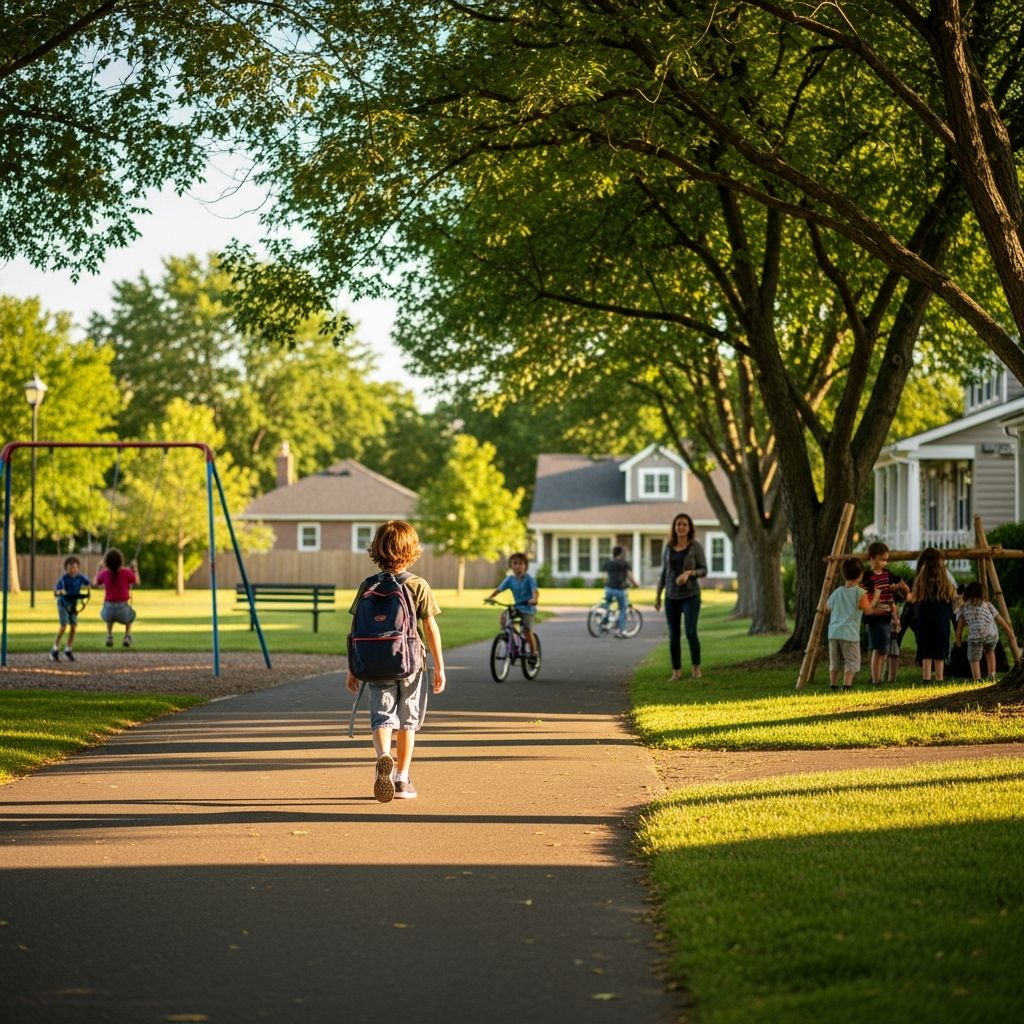
Free-range parenting promotes child independence by allowing age-appropriate unsupervised activities, contrasting with intensive oversight styles, and its legality varies by state based on neglect definitions.
Understanding the Philosophy Behind Independent Child-Rearing
This approach draws from historical norms where children roamed freely, building resilience through real-world experiences rather than constant protection. Parents prioritize teaching practical skills like crossing streets safely or managing time, believing such autonomy prepares youth for adulthood more effectively than overprotection.
Core tenets include trusting a child’s growing competence, distinguishing genuine hazards from minor risks, and encouraging unstructured exploration to spark creativity and self-reliance. Unlike neglect, which ignores basic needs, this method maintains guidance while granting freedom proportional to maturity.
Key Traits That Define This Parenting Method
- Age-Suitable Autonomy: Younger kids might play in a fenced yard alone, while teens handle errands independently, with freedoms expanding as responsibility proves itself.
- Focus on Skill-Building: Instruction covers safety protocols, such as wearing helmets or stranger awareness, empowering children to navigate environments confidently.
- Unstructured Play Emphasis: Prioritizing free outdoor time over rigid schedules fosters imagination and physical health, countering screen overuse.
- Learning via Consequences: Minor errors teach accountability without parental rescue, cultivating problem-solving from natural outcomes.
- Parental Detachment from Fear: Ignoring media hype about rare dangers allows rational risk assessment, promoting trust in the child’s abilities.
Advantages for Children’s Growth and Development
Advocates highlight how this style nurtures essential life competencies. Children gain confidence from mastering challenges solo, reducing anxiety linked to overparenting.
Socially, unsupervised peer interactions enhance negotiation skills and empathy, vital for future relationships. Creativity flourishes in self-directed play, where kids invent rules and scenarios unbound by adult input.
| Benefit | Impact on Child | Supporting Evidence |
|---|---|---|
| Boosted Self-Esteem | Success in independent tasks builds lasting assurance | Children feel capable, less reliant on approval |
| Enhanced Creativity | Free exploration sparks innovative thinking | Unscheduled time allows experimentation |
| Better Social Skills | Real-world mingling improves interactions | Peer dynamics teach conflict resolution |
| Resilience to Failure | Viewing setbacks as temporary lessons | Prepares for adult challenges |
| Physical Fitness | More outdoor activity combats sedentary habits | Increased movement and exploration |
Potential Challenges and Criticisms
Critics worry about immediate dangers like traffic accidents or abductions, amplified by 24/7 news cycles. Social judgment from neighbors or authorities can lead to investigations, even if no harm occurs.
Parents may struggle relinquishing control, fearing blame for mishaps. In diverse communities, cultural norms favoring supervision clash with this freedom-oriented model. Balancing autonomy without neglect requires vigilant assessment of each child’s readiness.
Legal Framework: When Independence Crosses into Neglect
United States child welfare laws hinge on whether lack of supervision endangers well-being, with no uniform federal age for independence. States define neglect individually, often requiring proof of harm rather than mere absence.
For instance, Utah’s 2018 ‘free-range kids’ law shields parents allowing children under 14 to engage in reasonable activities without supervision, provided no imminent risk exists. This protects routine errands or park visits[relevant state legislation]. Conversely, Illinois mandates supervision for kids under 14 in cars, while others like Maryland have prosecuted parents for leaving young children home briefly.
Courts evaluate context: child’s age, location safety, duration, and prior instructions. What constitutes neglect in urban New York might be acceptable in rural areas. Always consult local child protective services guidelines.
State-by-State Variations in Supervision Rules
| State | Key Rule on Unsupervised Minors | Notes |
|---|---|---|
| Utah | No neglect for age-appropriate independence | Explicit ‘free-range’ protections since 2018 |
| Illinois | Children under 14 cannot be left alone at home | Strict enforcement on home supervision |
| Maryland | Case-by-case; short absences scrutinized | High-profile neglect charges possible |
| Texas | Focus on actual harm, not age alone | Flexible if child is mature |
| California | Neglect if supervision absence endangers | Contextual evaluation required |
These differences underscore the need for parents to research local statutes. Organizations like the National Conference of State Legislatures track updates[relevant official source].
Contrasting with Other Popular Parenting Approaches
Free-range differs markedly from helicopter parenting, where constant intervention stifles growth. Authoritative styles offer structure with gradual freedoms, while permissive lacks boundaries entirely.
Helicopter vs. Free-Range
Helicopter parents hover to avert all failure, fostering dependence; free-range steps back for self-discovery.
Authoritative Balance
Combining warmth, rules, and autonomy, this middle ground validates desires but enforces safety limits.
Practical Tips for Implementing Safely
- Start small: Supervised walks progress to solo ones as skills develop.
- Communicate openly: Discuss risks and strategies beforehand.
- Know your area: Assess neighborhood safety statistically.
- Build gradually: Tie privileges to demonstrated responsibility.
- Stay connected: Use check-ins without hovering, like designated times.
Document decisions and instructions to demonstrate due diligence if questioned.
Frequently Asked Questions (FAQs)
What age is appropriate for free-range activities?
Depends on maturity and locale; 7-10 for neighborhood play, 12+ for public transit in safe areas.
Is free-range parenting illegal anywhere?
Not inherently, but specific acts like leaving infants alone violate most state neglect laws.
How does it differ from neglect?
Neglect deprives essentials and ignores safety; free-range provides guidance within bounds.
Can it improve mental health?
Yes, by building confidence and reducing parental anxiety transfer.
What if others report me to authorities?
Know your rights; many states protect reasonable independence, but cooperate with investigations.
Navigating Modern Society with This Approach
In an era of surveillance tech and safety apps, free-range parents resist constant tracking, arguing it undermines trust. Schools and activities increasingly demand pickups, complicating implementation. Community education combats misconceptions, emphasizing evidence that moderate risk-taking benefits development.
Research from child psychologists supports measured independence correlating with better emotional regulation and adaptability. Longitudinal studies show free-range alumni excelling in independence metrics[relevant peer-reviewed].
For dual-income families, after-school freedoms enable self-care, teaching time management. Cultural shifts toward this style gain traction amid burnout from intensive parenting.
Conclusion: Empowering the Next Generation Responsibly
Free-range parenting equips children for a complex world by prioritizing capability over coddling, provided parents stay informed on laws and child cues. It demands courage amid societal pressures but yields resilient, thoughtful adults.
References
- Free-Range Parenting: Definition, Characteristics, Pros, & Cons — Choosing Therapy. 2023-10-15. https://www.choosingtherapy.com/free-range-parenting/
- Free-Range Parenting: Raising Independent and Confident Kids — Findmykids.org. 2024-05-20. https://findmykids.org/blog/en/free-range-parenting
- Free-Range Parenting: Raising Independent Kids — Kidslox. 2024-02-12. https://kidslox.com/guide-to/free-range-parenting/
- Child Welfare Information Gateway: Definitions of Child Abuse and Neglect — U.S. Department of Health and Human Services (.gov). 2024-08-01. https://www.childwelfare.gov/topics/systemwide/laws-policies/statutes/define/
- Free-Range Parenting Law (Utah Code § 76-2-401) — Utah State Legislature (.gov). 2018-03-28 (last amended 2023). https://le.utah.gov/xcode/Title76/Chapter2/76-2-S401.html
Similar Articles








Read full bio of Sneha Tete


