
Free Legal Help for Twin Cities Landlords and Tenants
A practical guide to free and low‑cost legal resources, rights, and protections for renters and rental housing providers in Minneapolis–St. Paul.
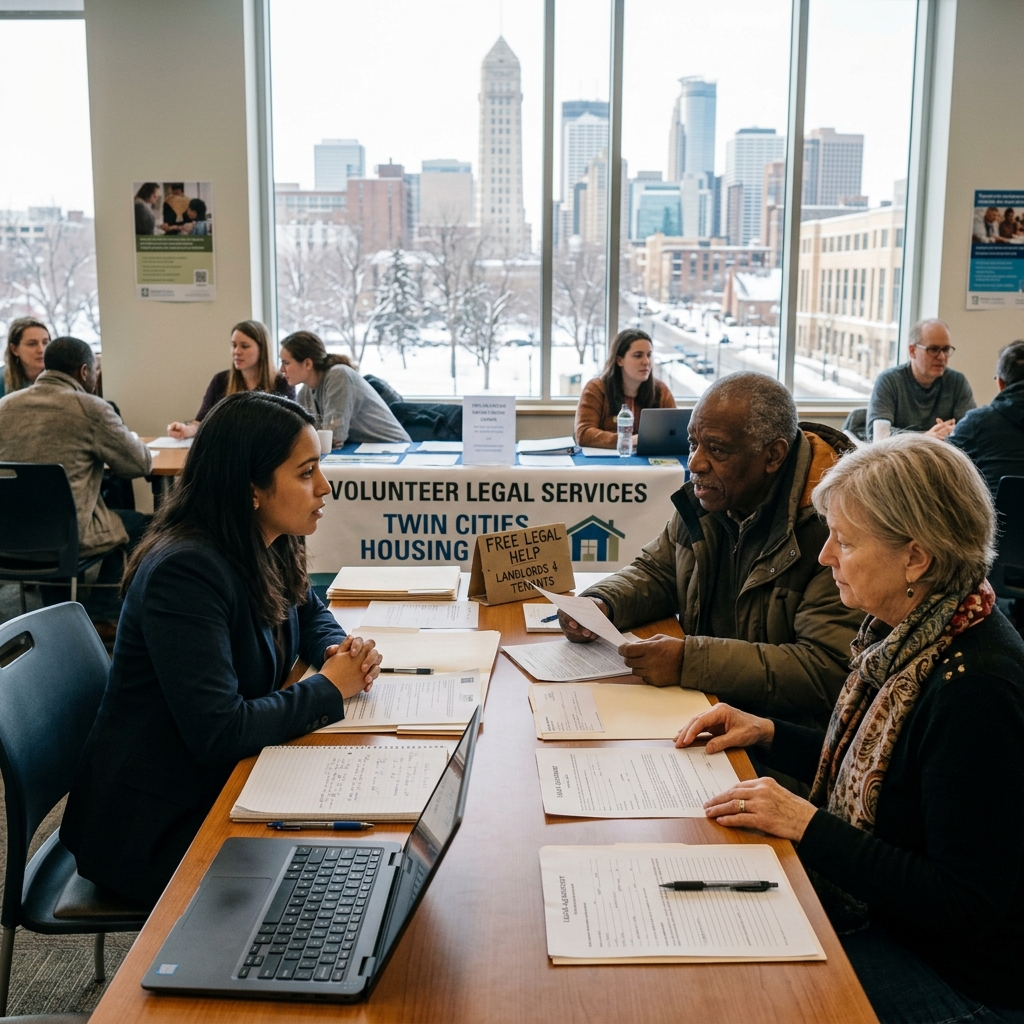
Housing stability in Minneapolis and St. Paul depends on both tenants and landlords understanding their legal rights and responsibilities under Minnesota law. When problems arise—late rent, repair disputes, eviction threats, or safety concerns—free and low‑cost legal resources in the Twin Cities can make the difference between losing housing and resolving a conflict fairly.
This guide explains what Minnesota landlord–tenant law covers, how free legal advice services work, and where both renters and rental housing providers in the Twin Cities can turn for help at little or no cost. It is based on Minnesota statutes and official guidance and is designed for general information, not individual legal representation.
Understanding the Legal Framework in Minnesota
Most landlord–tenant issues in the Twin Cities are governed by Minnesota state law, especially Chapter 504B of the Minnesota Statutes, along with local ordinances in cities such as Minneapolis and St. Paul. State law sets baseline rules that apply everywhere in Minnesota, while cities may add extra renter protections or licensing requirements.
- State statutes: Minnesota Statutes Chapter 504B covers topics like leases, eviction procedures, repairs, security deposits, and access to the unit.
- Attorney General guidance: The Minnesota Attorney General publishes a comprehensive handbook on landlords and tenants that explains rights and responsibilities in plain language.
- Local renter protections: Cities such as Minneapolis have ordinances on rental licensing, renter protections, and inspection requirements that go beyond state law.[10]
Free legal advice services will typically start by asking where you live, what kind of housing you have, and whether a written lease exists, so they can determine which laws and rules apply.
Key Rights of Tenants in the Twin Cities
Tenants in Minneapolis, St. Paul, and elsewhere in Minnesota have several core protections under state law. Understanding these rights before contacting a legal service can help you ask more focused questions.[10]
Protection from Illegal Lockouts and Utility Shutoffs
Under Minnesota law, a landlord cannot forcibly remove a tenant by changing locks, shutting off heat or electricity, or taking other actions that are intended to force the tenant out without a court order.
- A landlord must obtain a court order (writ of recovery) and have the sheriff carry out an eviction.
- Self‑help evictions—such as lock changes, removing doors, or cutting utilities—are prohibited and can lead to financial penalties.
- Tenants may sue for damages, including statutory amounts and attorney’s fees, if a landlord violates these rules.
If you face a lockout or utility shutoff, free legal advice services can help you respond quickly and may assist you in filing court papers.
Habitability and Repair Obligations
Landlords must keep rental units safe and habitable, complying with housing and building codes.
- Required basics include structural safety, functioning plumbing and electricity, and compliance with fire and health codes.
- For units without individual thermostats, landlords must provide a minimum indoor temperature of 68°F between October 1 and April 30.
- Tenants can usually request repairs in writing and may have legal options if serious issues are not addressed, such as rent escrow or constructive eviction claims.
Legal aid providers often help tenants prepare written repair requests and decide whether to pursue court remedies when serious problems persist.
Right to Seek Police and Emergency Assistance
Minnesota law protects tenants who call police or emergency services. A landlord generally cannot evict or penalize a tenant simply for seeking help in an emergency, including situations involving domestic violence or threats.
Some statutes also give victims of violence special rights related to leases, such as the ability to terminate a lease under specific conditions. Free legal advice programs can explain these protections and assist with documentation.
Security Deposits and Move‑Out Inspections
Security deposits are tightly regulated in Minnesota, and recent changes give tenants more transparency at move‑in and move‑out.
- Tenants may request an inspection at the beginning and end of tenancy to identify existing problems and avoid unfair deposit deductions.
- Landlords must return deposits or provide a detailed explanation for any deductions within a specified period after the tenancy ends (usually within three weeks).
- Tenants can challenge improper deductions in court and may recover damages and fees if the landlord acts in bad faith.
Free legal services can help tenants evaluate whether deposit deductions are lawful and how to file a claim if needed.
Important Responsibilities and Rights of Landlords
Landlords also have rights—such as collecting rent and enforcing lease terms—but must follow specific procedures set out in Minnesota law. Free legal advice services in the Twin Cities can help rental housing providers understand new requirements and avoid costly mistakes.
Notice Before Entering a Rental Unit
Recent changes to Minnesota law require most residential landlords to provide at least 24 hours’ advance notice before entering a tenant’s unit, and entry must generally occur between 8:00 a.m. and 8:00 p.m.
- Landlords must give an anticipated time or time window for entry.
- Tenants may allow earlier entry, but cannot be forced to waive their right to 24‑hour notice as a condition of signing or keeping the lease.
- Reasonable entry is allowed for repairs, inspections, showing the unit to prospective renters, and emergencies, but emergencies may justify shorter notice.
Legal advisors can help landlords craft notice policies and lease language that comply with these rules.
Eviction Procedures and Limits
Evictions in Minnesota must proceed through court and are constrained by statutory rules.
- Nonpayment of rent is a common ground for eviction, but tenants may sometimes “redeem” the tenancy by paying amounts due under specified conditions.
- Landlords generally cannot evict tenants for conduct occurring away from the rental property, except in limited circumstances involving violent crimes.
- Self‑help evictions, as noted above, are prohibited; only the sheriff can carry out a court‑ordered eviction.
Free legal clinics help landlords understand valid grounds for eviction, required notices, and how court hearings work, which can reduce conflicts and unlawful practices.
Licensing and Local Compliance in Minneapolis–St. Paul
In cities like Minneapolis, landlords must typically obtain a rental license before leasing a unit, and failure to maintain licensing and property standards may limit their ability to collect rent or pursue evictions.[10]
- Licenses may require periodic inspections and compliance with local renter protection ordinances.
- Cities now must provide landlords with a link to the Minnesota Attorney General’s landlord–tenant guide when issuing or renewing rental licenses or similar approvals.
- In some situations, operating without a license can be a defense for tenants in eviction actions or rent disputes.[10]
Legal aid organizations and city resources can explain how licensing rules interact with state law and what corrective steps landlords should take.
Where to Find Free or Low‑Cost Legal Advice
In the Twin Cities, several organizations offer free or low‑cost assistance to both tenants and landlords. Services range from brief legal advice over the phone to full representation in court, depending on income, case type, and capacity.[10]
| Type of Service | Typical Users | Common Issues Handled |
|---|---|---|
| Legal aid hotlines | Low‑income tenants and some landlords | Eviction notices, repair disputes, deposit issues, emergency lockouts |
| Walk‑in legal clinics | Tenants and landlords with active disputes | Help filling out court forms, negotiating agreements, explaining procedures |
| Nonprofit renter advocacy groups | Tenants | Education on rights, support with rent escrow or complaint processes |
| Law library and court self‑help centers | Self‑represented tenants and landlords | Research materials, form packets, referral to other services |
For example, statewide organizations and hotlines supported new tenant protections in 2023–2024 and continue to advise renters about how those changes apply. The Minnesota State Law Library also offers guidance on landlord–tenant research and points users to emergency assistance programs that can help pay rent to prevent eviction.
What Free Legal Advice Usually Includes
Not every service will represent you in court, but most provide at least one of the following:
- Brief advice: A lawyer or trained advocate listens to your situation and explains relevant legal options and deadlines.
- Document review: Assistance reading and understanding leases, notices, and court papers.
- Form preparation help: Step‑by‑step guidance in completing court forms for eviction, rent escrow, or deposit claims.
- Referrals: Connection to other resources, such as emergency rent assistance, mediation services, or full‑representation programs.[10]
Landlords and tenants should be prepared with copies of leases, notices, photographs of property conditions, and a timeline of events to make these consultations as effective as possible.
Practical Steps for Tenants Seeking Help
When a housing problem arises, acting early increases the chances of a good outcome. Below are steps Twin Cities tenants can take before and during any legal consultation.
- Review your lease carefully: Note payment dates, repair responsibilities, notice requirements, and any special rules, then compare them with state protections outlined in official handbooks.
- Document everything: Keep copies of texts, emails, and letters with your landlord, and take dated photos of repair issues or conditions.
- Request repairs in writing: Clearly describe the problem, its impact on safety or health, and a reasonable deadline for response.
- Respond promptly to notices: If you receive a nonpayment or eviction notice, contact a legal aid hotline immediately and ask about options such as emergency rent assistance or redemption.
- Bring materials to your appointment: Have your lease, payment records, and any city inspection reports ready for the legal advisor.
Legal advisors can then clarify whether you should negotiate, file court papers, or seek emergency financial help to keep your housing.[10]
Practical Steps for Landlords Seeking Help
Small landlords and property managers also benefit from legal guidance, especially as Minnesota landlord–tenant law continues to evolve.
- Stay current on legal changes: Review updates to Chapter 504B and local ordinances, and consult the Attorney General’s landlord–tenant guide and city communications on new requirements.
- Use written policies: Implement clear procedures for rent collection, repair requests, entry notices, and complaint handling that comply with state notice rules and renter protections.
- Document tenant issues: Maintain records of late payments, complaints, and responses, as well as any police reports or inspection results.
- Seek advice before filing eviction: Free or low‑cost counsel can help ensure that your grounds are lawful and that you follow proper court procedures.
- Address complaints promptly: Quick action on repairs and communication can reduce conflict and lower the risk of legal claims.
Early legal consultation often prevents minor disputes from turning into expensive litigation.
Balancing Rights: Tenants and Landlords Working Together
Although legal conflicts can be adversarial, Minnesota’s landlord–tenant framework is designed to strike a balance between protecting renters from unsafe or unfair practices and allowing landlords to operate viable housing businesses.
Free legal advice services encourage both sides to understand this balance:
- Tenants learn how to assert rights respectfully and within legal boundaries.
- Landlords learn how to enforce leases and maintain properties without violating statutory protections.
- Both parties hear about alternative approaches, such as negotiated move‑out agreements, payment plans, or mediation, which can avoid court altogether.
For many Twin Cities residents, these resources not only resolve individual disputes but also support broader goals of housing stability and community safety.
Frequently Asked Questions
Do I need a lawyer to handle a landlord–tenant dispute in Minnesota?
You are not required to have a lawyer, and many tenants and landlords represent themselves in housing court. However, brief legal advice can significantly improve your understanding of the process and help you avoid mistakes. Free and low‑cost services in the Twin Cities can provide guidance even if they do not represent you in court.
What should I do if I receive an eviction notice?
Do not ignore the notice. Immediately contact a legal aid hotline or clinic and gather your lease, payment records, and any communications with your landlord. Ask whether you have options to catch up on rent, challenge the grounds for eviction, or access emergency assistance programs that can pay part of what you owe.
Can my landlord enter my home without telling me?
In most cases, no. Minnesota law requires at least 24 hours’ notice and limits entry to daytime hours, with some exceptions for emergencies. You may agree to earlier entry, but cannot be forced to waive these rights as a condition of signing a lease.
What if I think my security deposit was kept unfairly?
Start by comparing the landlord’s list of deductions with the condition of the unit when you moved out, your move‑in inspection notes, and any photographs. If you believe the deductions are improper, legal advice services can help you decide whether to send a demand letter or file a claim in court for the deposit and possible penalties.
How do I find official information on Minnesota landlord–tenant law?
Authoritative starting points include Chapter 504B of the Minnesota Statutes and the Minnesota Attorney General’s landlord–tenant handbook, both of which explain statewide rights and responsibilities. Local city websites, such as those for Minneapolis, provide additional renter protection and licensing information.
References
- Chapter 504B – Landlord and Tenant — Minnesota Office of the Revisor of Statutes. 2024-01-01. https://www.revisor.mn.gov/statutes/cite/504B
- Landlords and Tenants: Rights and Responsibilities — Minnesota Attorney General’s Office. 2023-06-01. https://www.ag.state.mn.us/brochures/publandlordtenants.pdf
- Table of Contents – Landlords & Tenants — Minnesota Attorney General’s Office. 2023-06-01. https://www.ag.state.mn.us/consumer/handbooks/lt/default.asp
- Renter Protections — City of Minneapolis. 2024-04-01. https://www2.minneapolismn.gov/business-services/licenses-permits-inspections/rental-licenses/renter-protections/
- Tenants’ Rights in Minnesota — LawHelp Minnesota. 2023-05-01. https://www.lawhelpmn.org/self-help-library/booklet/tenants-rights-minnesota
- New Statewide Tenant/Landlord Laws (2023–2024) — HOME Line. 2024-02-01. https://homelinemn.org/newlaws/
- Getting Started – Landlord and Tenant — Minnesota State Law Library. 2023-03-01. https://mncourts.libguides.com/landlord-tenant
Similar Articles








Read full bio of Sneha Tete


