
Before You Buy A Franchise: 6-Step Checklist For Smart Buyers
Thinking of buying a franchise? Learn how common misconceptions about earnings, risk, and support can derail your investment.
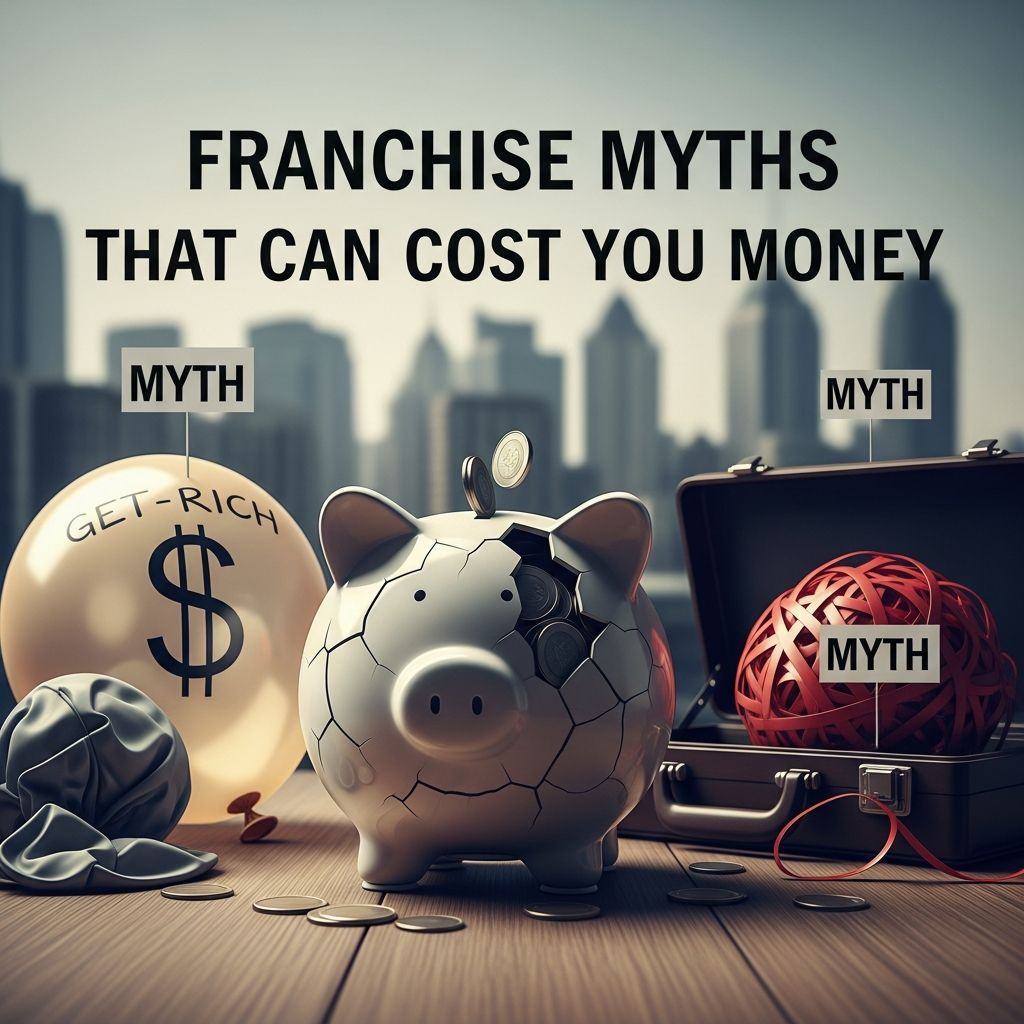
Buying a franchise can look like a safer, easier shortcut to business ownership. Marketing materials often highlight success stories, recognizable brands, and supposed step-by-step systems. But if you rely on headlines and hype instead of facts and documents, you risk investing your savings in a business that does not meet your expectations.
This guide explains the most common misconceptions about buying a franchise, what the law requires franchisors to tell you, and how to evaluate whether a franchise fits your goals and finances. It is inspired by consumer-protection guidance from the U.S. Federal Trade Commission (FTC), but is written in original language and organized to help you think critically before you sign a contract.
1. Why Franchises Look Safer Than They Really Are
Many people assume that buying a franchise is almost the same as buying a proven, pre-packaged success. Real-world outcomes are far more complicated.
1.1 The appeal of the franchise model
Common reasons people are drawn to franchises include:
- Brand recognition – Customers may already know and trust the logo or name.
- Established systems – Operations manuals, training, and procedures promise a clear playbook.
- Marketing support – National or regional advertising may create demand you could not afford alone.
- Ongoing assistance – Franchisors often emphasize coaching, site selection help, and operational support.
These factors can be genuinely valuable, but they do not eliminate business risk. You still face local competition, changing economic conditions, labor and supply costs, and the consequences of your own decisions and effort.
1.2 Franchise ownership vs. independent business: key differences
| Aspect | Franchise Business | Independent Business |
|---|---|---|
| Brand & name | Use of franchisor’s existing brand, subject to rules | You create and manage your own brand identity |
| Control over operations | Significant restrictions on products, pricing, and suppliers | Broad freedom to change strategy, menu, prices, or vendors |
| Upfront and ongoing fees | Franchise fee, royalties, and advertising contributions | No royalties; costs are tied only to your own operations |
| Support & guidance | Training and support promised in the contract and disclosure | Must create your own systems or hire consultants |
| Exit options | Resale, transfer, and renewal tightly controlled by franchisor | You decide when and how to sell or close, subject to local law |
Understanding these trade-offs is the first step to seeing through myths that franchises are automatically easier or safer than other forms of entrepreneurship.
2. Myth One: “If the Brand Is Big, My Profits Are Guaranteed”
One of the most dangerous assumptions is that a recognizable name guarantees strong earnings. Neither U.S. law nor standard franchise contracts promise profit or even survival.
2.1 What franchisors have to disclose about money
Under the FTC’s Franchise Rule, franchisors must give you a Franchise Disclosure Document (FDD) at least 14 days before you sign or pay any money. The FDD is a detailed legal document covering 23 required items, including:
- Background and experience of the franchisor and its key executives
- All upfront and ongoing fees you must pay
- Litigation and bankruptcy history of the company
- Information about franchise closures, transfers, and ownership changes
- Financial statements for the franchisor
Franchisors do not have to provide earnings projections. If they choose to share sales or income claims, they must include them in a specific FDD section often called financial performance representations. If projections or promises about income appear only in verbal conversations, ads, or informal emails—and not in the FDD—that is a warning sign.
2.2 Why identical logos do not mean identical results
Even within the same system, franchise outcomes vary widely. Factors that heavily influence your earnings include:
- Location quality – Traffic patterns, nearby competitors, visibility, and local demand.
- Local economy – Employment levels, income, and consumer spending in your area.
- Operating costs – Rent, wages, utilities, insurance, and supplies.
- Your skill and effort – Hiring, training, marketing, and day-to-day management.
- System changes – New products, required remodels, or pricing strategies introduced by the franchisor.
Government small-business guidance emphasizes that you should carefully analyze revenue potential and costs before buying any business, including a franchise, and not assume past performance elsewhere will be repeated in your territory.
3. Myth Two: “The Franchisor Will Handle the Hard Parts for Me”
Many buyers believe they are paying a franchise fee in exchange for the franchisor solving most difficult problems. In reality, you are buying access to a system—not a substitute for your own management.
3.1 What support usually includes
While details vary by brand, a typical franchise package may include:
- Initial training on operations, technology, and basic marketing
- Guidance on site selection and store layout, if a physical location is involved
- Brand standards manuals and operating procedures
- Ongoing field support visits or remote coaching
- Access to approved vendors and negotiated supply chains
The FDD must describe the nature and extent of assistance the franchisor will provide before opening and during operation. You should compare those descriptions with what you hear from salespeople and from existing franchisees.
3.2 What support does not cover
Even with a strong support system, the franchisor usually does not:
- Guarantee your revenue or reimburse your losses
- Run your local hiring, scheduling, or training for you
- Pay your rent, utilities, payroll, or local marketing costs
- Customize the system extensively for your personal preferences
- Remove the need for long hours and active local management
Before you commit, talk to multiple current franchisees about what day-to-day support really looks like and how responsive the franchisor is when problems arise.
4. Myth Three: “If a Lender Approved Me, the Investment Must Be Safe”
Financing can create a false sense of security. Approval for a loan only means a lender thinks you are likely to repay, often based on collateral and your personal credit—not that the franchise is low-risk.
4.1 How lenders view franchise deals
When evaluating loans for buying a franchise or other small business, lenders examine:
- Your personal credit history and score
- Available collateral (such as a home or savings)
- Debt-to-income ratio and cash reserves
- Your business plan and projected cash flow
- Franchisor track record and overall system performance
Government-backed loan programs can make financing more accessible, but they do not guarantee business success; they primarily reduce the lender’s risk, not yours.
4.2 Over-leverage: a hidden danger
Even a strong franchise can fail for a particular owner if the debt burden is too heavy. Consider:
- How long you can cover loan payments, rent, and operating expenses if revenue grows more slowly than you expect.
- Whether your household can survive if you draw little or no income from the business during the first year or more.
- How interest-rate changes or cost increases could affect your break-even point.
Consumer and small-business guidance from agencies like the U.S. Small Business Administration stresses careful budgeting and stress-testing your assumptions before taking on large debts for any business purchase.
5. Myth Four: “The Contract Is Standard—There’s Nothing to Review”
Franchise agreements are often long, dense, and full of specialized terms. Assuming they are routine and skipping careful review can expose you to obligations and restrictions you did not expect.
5.1 Why the FDD and contract matter so much
The FDD and franchise agreement together define your legal relationship with the franchisor. Topics typically covered include:
- The length of your franchise term and renewal conditions
- Exactly what fees you must pay and when
- Restrictions on products, services, pricing, and suppliers
- Territorial rights and whether you get exclusivity
- Grounds for termination and what happens if the agreement ends
- Rules about selling or transferring your franchise
- Dispute resolution methods, such as arbitration requirements
Consumer-protection guidance recommends reading each required item in the FDD, asking questions about anything you do not understand, and seeking professional advice from a lawyer or accountant experienced with franchising.
5.2 Items many buyers overlook
Pay particular attention to:
- Litigation and bankruptcy history – Frequent lawsuits or financial distress can signal potential trouble.
- Closure and transfer data – High turnover among franchisees may indicate systemic problems.
- Mandatory upgrades – Requirements to remodel or buy new equipment can be expensive.
- Personal guarantees – You may be personally liable for debts and obligations.
- Post-termination restrictions – Non-compete clauses may limit your ability to work in the same industry later.
Understanding these elements helps you measure not only potential upside but also the worst-case scenarios if things do not go as planned.
6. Myth Five: “Talking to the Franchisor Is Enough Research”
Relying solely on information from salespeople or marketing materials is risky. The most valuable insights often come from people who are already running the franchise day to day.
6.1 Why conversations with franchisees are critical
The FDD must include contact information for current and, in many cases, former franchisees. Speaking with a diverse group allows you to:
- Compare real-world costs and earnings to any projections you have seen.
- Learn how long it took them to break even and draw a stable income.
- Assess the quality and responsiveness of franchisor support.
- Understand common operational challenges in the system.
- Hear why some owners left or sold their units.
Regulators and consumer advocates consistently recommend these interviews as one of the most important steps in franchise due diligence.
6.2 Questions to ask existing owners
When you contact franchisees, consider asking:
- What surprised you most after you opened your location?
- Which costs were higher than you expected?
- How helpful is the franchisor when you have a problem?
- If you could decide again, would you buy this franchise?
- What do you wish you had asked or known before signing?
Respect their time, but try to talk to owners in different markets, both newer and more experienced, to get a balanced view.
7. A Practical Checklist Before You Sign
To move from myths to informed decisions, use a structured approach. Government and consumer guidance on buying franchises and businesses suggest the following high-level steps.
- Clarify your personal goals
Ask yourself:
– How many hours per week can you realistically commit?
– Do you want to manage employees, or prefer a smaller operation?
– Are you aiming for one location or multiple units? - Assess your finances honestly
– Calculate how much you can afford to lose without jeopardizing your household.
– Estimate how long you can operate without drawing income.
– Consider consulting an accountant familiar with small-business start-ups. - Study the FDD in detail
– Review each of the 23 required items, highlighting questions.
– Compare written disclosures with verbal claims from the franchisor.
– Bring the documents to a qualified attorney for review. - Interview multiple franchisees
– Call owners listed in the FDD, not just those suggested by the franchisor.
– Seek out both satisfied and dissatisfied operators. - Research the market
– Visit local outlets and competitors.
– Analyze demographics and demand in your proposed territory.
– Consider whether trends favor or threaten the concept. - Plan for downside scenarios
– What if sales are 30% lower than projected?
– What if opening is delayed by several months?
– How will you respond if required fees or supply costs increase?
8. Frequently Asked Questions (FAQs)
Q: Does the law require franchisors to guarantee that I will earn a profit?
A: No. U.S. franchise regulations require detailed disclosure of important information, but they do not guarantee any level of sales or income. Even if a franchisor shares financial performance data, it describes past or typical outcomes, not a promise of future results.
Q: If a franchisor shows me impressive earnings numbers in a brochure, can I rely on them?
A: Treat any earnings claims with caution unless they appear in the FDD’s financial performance section. Disclosures in the FDD are regulated and must be based on documented data; glossy marketing materials and verbal statements are not a substitute for those official figures.
Q: Is a franchise always safer than starting my own independent business?
A: Not necessarily. A franchise may provide brand recognition and tested systems, but you still face market risk, competition, and operational challenges. Some independent businesses thrive while some franchised outlets fail; outcomes depend on concept quality, execution, and local conditions.
Q: What is the most important document I should review before buying a franchise?
A: The Franchise Disclosure Document is critical. It explains fees, support, litigation history, system performance data, and the terms that will govern your relationship with the franchisor. Reviewing it with a knowledgeable attorney or advisor greatly improves your ability to spot risks and hidden costs.
Q: How can I tell if a particular franchise system has high turnover or many failing locations?
A: The FDD includes data on the number of franchise openings, closings, transfers, and terminations over recent years. High rates of closure or resale may indicate that many owners are struggling. Speaking with current and former franchisees will help you understand the reasons behind those numbers.
References
- A Consumer’s Guide to Buying a Franchise — Federal Trade Commission. 2022-11-01. https://www.ftc.gov/business-guidance/resources/consumers-guide-buying-franchise
- Buy an existing business or franchise — U.S. Small Business Administration. 2023-06-15. https://www.sba.gov/business-guide/plan-your-business/buy-existing-business-or-franchise
- Franchise Rule Compliance Guide — Federal Trade Commission. 2020-05-13. https://www.ftc.gov/business-guidance/resources/franchise-rule-compliance-guide
- Small Business Finance FAQs — U.S. Small Business Administration Office of Advocacy. 2022-08-24. https://advocacy.sba.gov/2022/08/24/small-business-finance-faq-2022/
- Buying a Franchise: A Consumer Checklist — North American Securities Administrators Association. 2021-09-01. https://www.nasaa.org/industry-resources/franchise/buying-a-franchise-a-consumer-checklist/
Similar Articles








Read full bio of Sneha Tete


