
Foreclosure vs. Bankruptcy: Choosing the Right Path
Understand how foreclosure and bankruptcy compare, interact, and impact your finances before you decide your next move.
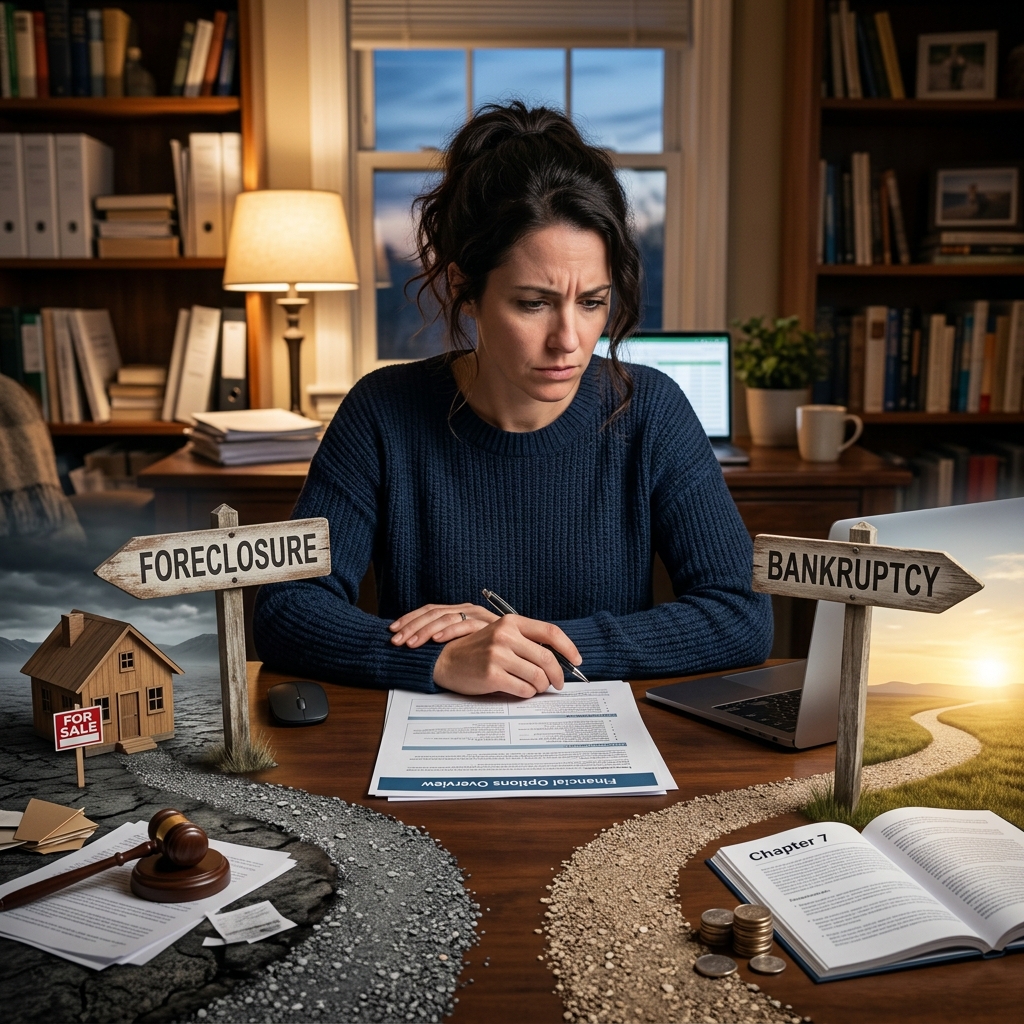
When mortgage payments fall behind and creditors start calling, many homeowners wonder whether filing for bankruptcy is a smart alternative to foreclosure. In reality, the choice is rarely simple. Bankruptcy can sometimes save your home or delay a foreclosure, but it can also be a serious step with long-term consequences for your credit and overall financial life. Understanding how these two processes work, how they interact, and what other options may be available is essential before making any decision.
Core Concepts: What Foreclosure and Bankruptcy Really Mean
What is Foreclosure?
Foreclosure is the legal process through which a mortgage lender takes possession of a property after the borrower has stopped making payments. The home is then sold, usually at auction, to recover the outstanding loan balance. Foreclosure laws vary by state, but common elements include:
- Multiple missed mortgage payments or a serious default.
- The lender providing formal notice of default and intent to foreclose.
- A court-supervised or non-judicial process that ends with the sale of the home.
- Potential pursuit of a deficiency judgment if the sale price does not cover the full debt.
Foreclosure typically damages your credit significantly and can remain on your credit report for years, making it more difficult and expensive to borrow in the future.
What is Bankruptcy?
Bankruptcy is a federal legal process designed to help individuals or businesses manage or discharge debts they cannot pay. In the consumer context, the two most common types are Chapter 7 and Chapter 13 bankruptcy.
- Chapter 7 bankruptcy involves liquidating certain non-exempt assets to pay creditors, followed by a discharge of remaining eligible debts.
- Chapter 13 bankruptcy creates a court-approved repayment plan, typically lasting three to five years, during which the debtor pays a portion of their income toward debts, including mortgage arrears.
Both chapters trigger an automatic stay as soon as the case is filed. This stay temporarily halts most collection activities, including foreclosure proceedings, wage garnishments, and debt collection lawsuits. The automatic stay offers breathing room, but the long-term outcome depends on the type of bankruptcy and the overall financial situation.
Is Bankruptcy a Good Alternative to Foreclosure?
Bankruptcy can be an alternative to foreclosure in some situations, but it is not a universal solution. It may help you keep your home, buy time to catch up on payments, or manage other debts that are making your mortgage unaffordable. However, bankruptcy also carries significant consequences for your credit and future borrowing capacity.
When Bankruptcy May Be Helpful
- You have substantial unsecured debt (credit cards, medical bills, personal loans) that makes it impossible to afford your mortgage.
- You can afford the mortgage going forward but need time and structure to catch up on missed payments.
- Your income is stable, and you can commit to a long-term repayment plan under Chapter 13.
- You need immediate relief from aggressive collection actions, including a pending foreclosure sale.
When Bankruptcy May Not Be Ideal
- Your only major financial problem is the mortgage, and you cannot realistically afford the home even after restructuring.
- You have limited income and cannot maintain ongoing mortgage payments plus a Chapter 13 plan.
- You are primarily concerned about short-term relief, without considering long-term credit impacts.
- You have assets that could be at risk of liquidation in Chapter 7.
Foreclosure vs. Bankruptcy: Key Differences
| Aspect | Foreclosure | Bankruptcy |
|---|---|---|
| Primary Focus | Enforces mortgage contract on a specific property | Addresses overall debt situation across all creditors |
| Effect on Home | Usually results in loss of home | Can sometimes save home (especially in Chapter 13) |
| Automatic Stay | Not available; process continues unless stopped by payment or agreement | Immediate stay halts most collection efforts and foreclosure |
| Credit Impact | Serious negative impact, focused on mortgage default | Broad negative impact, but may resolve multiple debts at once |
| Scope of Relief | Typically ends the mortgage relationship on that property | Can restructure or discharge various debts, not just the mortgage |
How Bankruptcy Interacts with Foreclosure
The Automatic Stay and Foreclosure
When you file for bankruptcy, the automatic stay generally stops a foreclosure in progress, at least temporarily. This means:
- Scheduled foreclosure sales must be postponed while the bankruptcy case is pending.
- Lenders cannot start new foreclosure actions without first obtaining permission from the bankruptcy court.
- You gain time to explore options such as loan modification, repayment plans, or selling the property.
However, the lender can ask the court to lift the stay, especially if you are not making ongoing mortgage payments or have no realistic way to catch up. The stay is a tool for temporary relief, not a guarantee that you will keep the home.
Chapter 13: A Path to Saving Your Home
Chapter 13 bankruptcy is often considered when homeowners want to keep their property and are behind on payments. In a Chapter 13 plan:
- Past-due mortgage amounts (arrears) are included in a structured repayment plan.
- You make regular payments to a trustee, who distributes funds to creditors, including your mortgage lender.
- If you make all required plan payments and current mortgage payments, you can cure the default over time and keep the home.
This approach can be effective when income is steady, but it requires discipline and the ability to maintain both plan and mortgage payments for several years.
Chapter 7: Delay, Not Long-Term Protection
Chapter 7 bankruptcy can also temporarily halt foreclosure through the automatic stay, but it usually does not provide a mechanism to catch up on past-due mortgage payments. Key points include:
- You may discharge unsecured debts, freeing up income to help pay the mortgage.
- The lender may eventually resume foreclosure, especially if you remain in default.
- Chapter 7 is more about eliminating unsecured debt than saving the home long term.
Alternatives to Foreclosure Beyond Bankruptcy
Before choosing bankruptcy, it is important to evaluate other foreclosure alternatives that may be less disruptive to your credit and overall financial life. Many lenders and housing agencies recognize that avoiding foreclosure can be beneficial for both borrowers and creditors.
Loan Modification
A loan modification changes the terms of your existing mortgage to make payments more affordable. Common modifications include lowering the interest rate, extending the repayment period, or capitalizing arrears into the principal balance.
- Can provide a long-term solution for borrowers with reduced income.
- Requires lender approval and documentation of hardship and ability to pay.
- Often preferable to both foreclosure and bankruptcy if the home is otherwise sustainable.
Forbearance and Repayment Plans
Forbearance and repayment plans offer structured ways to deal with short-term financial hardship:
- Forbearance temporarily reduces or suspends mortgage payments, with the understanding that missed amounts will be repaid later.
- Repayment plans allow you to catch up on missed payments by adding a portion of the arrears to future monthly payments over a defined period.
These options are often suitable when financial difficulties are temporary, such as a brief unemployment or medical event, and you expect your income to recover.
Short Sale
A short sale involves selling your home for less than the amount owed on the mortgage, with the lender’s approval. This can:
- Help you avoid the formal foreclosure process.
- Reduce damage to your credit compared to foreclosure.
- Sometimes allow the lender to waive the remaining balance, although policies vary.
Deed in Lieu of Foreclosure
In a deed in lieu of foreclosure, you voluntarily transfer the property’s title to the lender instead of going through the foreclosure process.
- Can be simpler and faster than foreclosure for both parties.
- May result in less credit damage than a full foreclosure.
- Typically requires the property to be free of other liens and encumbrances.
Refinancing and Reverse Mortgages
Depending on your credit and equity, you may be able to refinance your mortgage into a more affordable loan, or in some cases, use a reverse mortgage to pay off the existing debt if you are an older homeowner.
- Refinancing can lower your monthly payment through reduced interest rates or longer loan terms.
- Reverse mortgages, available to certain older homeowners, allow equity to be converted into cash, potentially paying off the original mortgage while deferring repayment until later.
Strategic Considerations Before Deciding
The best solution depends on your overall financial picture, not just the mortgage. Before deciding between foreclosure, bankruptcy, or another alternative, consider the following:
Key Questions to Ask Yourself
- Can I realistically afford this home long term, even with modified payments?
- Is my financial hardship temporary or ongoing?
- How much unsecured debt do I have, and is it driving my mortgage problems?
- Do I have assets that could be at risk in bankruptcy?
- How important is it to stay in this specific property versus moving to a more affordable home?
Role of Professional Advice
Foreclosure and bankruptcy law are complex, and the consequences of each choice can be significant. Many legal aid organizations, nonprofit housing counselors, and private attorneys provide guidance tailored to individual circumstances, and official resources such as the U.S. Department of Housing and Urban Development (HUD) offer information on avoiding foreclosure and understanding available programs.
Practical Steps if You Are Facing Foreclosure
If you are already behind on mortgage payments or have received a notice of default, swift, informed action is critical. Consider the following steps:
- Contact your lender immediately to discuss hardship and request information on loss mitigation options.
- Gather financial documents including proof of income, tax returns, and a list of all debts and assets.
- Consult a housing counselor or attorney experienced in foreclosure and bankruptcy.
- Evaluate all alternatives, including loan modification, forbearance, short sale, deed in lieu, and refinancing.
- Consider bankruptcy only in context of your entire debt situation, not as a single-issue solution.
FAQs: Foreclosure, Bankruptcy, and Your Options
Does filing for bankruptcy always stop foreclosure?
Filing for bankruptcy triggers an automatic stay that generally stops foreclosure proceedings temporarily. However, lenders can request permission from the bankruptcy court to resume foreclosure if you are unable to maintain current payments or if there is no feasible way to cure the default. The stay offers time to act, not an automatic guarantee that you will keep the home.
Can Chapter 13 bankruptcy help me save my home?
Chapter 13 can help many homeowners catch up on missed mortgage payments through a structured repayment plan while keeping the property. Success depends on having enough income to cover both ongoing mortgage payments and the Chapter 13 plan. If you complete the plan as required, you may be able to cure the default and avoid foreclosure.
Is bankruptcy better or worse for my credit than foreclosure?
Both foreclosure and bankruptcy have serious negative effects on credit, and the impact can vary by individual circumstances and credit reporting practices. Bankruptcy tends to affect your entire credit profile, while foreclosure is more focused on mortgage history. In some cases, using bankruptcy to manage broader debt problems and avoid multiple defaults may be more strategic than experiencing an isolated foreclosure, but this must be evaluated case-by-case.
Should I consider a short sale instead of foreclosure?
A short sale can be a useful alternative when you cannot keep the home but wish to reduce the long-term damage to your credit and financial stability. With lender approval, selling the property for less than the outstanding mortgage can avoid the formal foreclosure process, and the lender may sometimes agree not to pursue any remaining balance. It is important to understand the specific terms and potential tax implications.
What if my only problem is the mortgage and I have no other major debts?
If the mortgage is your only serious financial issue, it may be better to explore foreclosure alternatives directly with your lender—such as modification, forbearance, or repayment plans—rather than filing for bankruptcy. Bankruptcy is designed to address broader debt problems and may be unnecessarily disruptive if your finances are otherwise manageable.
References
- Alternatives to Foreclosure — Justia. 2023-05-01. https://www.justia.com/foreclosure/alternatives-to-foreclosure/
- You Have Alternatives to Foreclosure — 995HOPE (Homeownership Preservation Foundation). 2022-09-15. https://995hope.org/homeowners-renters/alternatives-to-foreclosure/
- Foreclosure Attorneys – Chicago, IL — Suburban Legal Group PC. 2022-01-20. https://www.suburbanlegalgroup.com/what-are-your-foreclosure-alternatives
- Alternatives to Bankruptcy — TexasLawHelp.org. 2023-03-10. https://texaslawhelp.org/article/alternatives-to-bankruptcy
- 6 Alternatives to Foreclosure — Brenner Spiller & Archer. 2021-11-05. https://spillerarcherlaw.com/6-alternatives-to-foreclosure/
Similar Articles








Read full bio of medha deb




