
Consuming Food Behind the Wheel: Legal Status and Safety Implications
Understanding the legality and risks of eating while operating a vehicle on public roads.
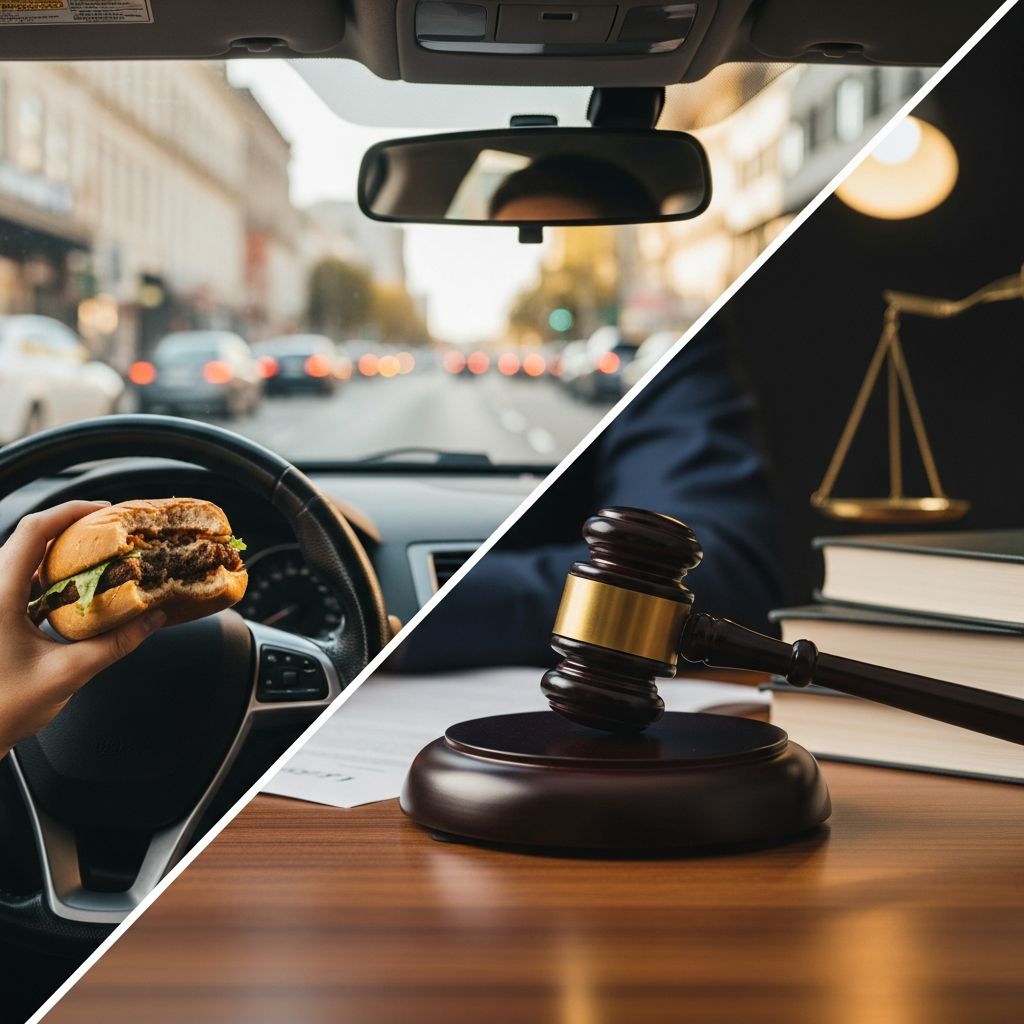
The Intersection of Convenience and Responsibility: Eating While Driving
In today’s fast-paced world, many drivers find themselves reaching for a sandwich, sipping coffee, or grabbing a snack while navigating traffic. The prevalence of drive-thru restaurants and quick-service eateries has normalized the practice of consuming food behind the wheel. However, the question of whether this behavior is legally permissible—and more importantly, whether it is safe—deserves careful examination. The answer is more nuanced than a simple yes or no, requiring an understanding of both the legal landscape and the scientific evidence regarding the dangers of divided attention while operating a vehicle.
Understanding the Current Legal Framework
A common misconception exists that eating while driving is universally illegal across the United States. The reality, however, is considerably different. Most states and municipalities have not enacted specific statutes that explicitly prohibit the act of consuming food or non-alcoholic beverages while operating a motor vehicle. This absence of direct legal prohibition might suggest that the behavior is entirely acceptable, but this interpretation overlooks the broader legal context in which such activity occurs.
The Distracted Driving Umbrella
Although eating while driving is not typically subject to its own dedicated criminal statute, it falls squarely within the broader framework of distracted driving laws that exist in virtually every jurisdiction. These laws are designed to address any activity that diverts a driver’s attention, vision, or manual control from the primary task of safely operating a vehicle. When a police officer observes a driver eating and determines that this behavior has compromised the driver’s focus or created a safety hazard, that officer possesses the authority to issue citations for distracted driving, reckless operation, or careless driving—depending on the specific terminology used in that jurisdiction.
The distinction is important: you will not be ticketed for “eating while driving” per se, but rather for the unsafe driving behavior that results from the distraction caused by eating. This legal framework means that the culpability depends not just on the act of eating itself, but on the observable consequences of that eating on the driver’s performance and attention.
Regional Variations in Enforcement
Different states approach the enforcement of distracted driving laws with varying degrees of rigor. In some jurisdictions, such as Texas, law enforcement agencies maintain broad authority to cite drivers for careless or reckless driving when eating contributes to unsafe vehicle operation. In other areas, the threshold for citation may be higher, requiring more egregious evidence that the eating directly caused a traffic violation or unsafe condition. Some states have also begun to implement graduated enforcement systems, where officers must first observe a traffic violation or safety infraction before they can cite a driver for distracted driving behaviors.
The Science Behind the Danger: Why Eating Impairs Driving
Understanding why eating while driving presents such a significant hazard requires examining how the human brain allocates attention and motor control. Driving a vehicle safely is a cognitively demanding task that requires continuous monitoring of the road environment, other vehicles, pedestrians, and road signs. When a driver attempts to simultaneously consume food, the brain must divide its cognitive resources between multiple competing tasks.
Attention and Visual Focus
One of the most critical resources consumed by eating while driving is visual attention. The human field of vision has both a central focus area and peripheral awareness zones. When a driver looks down at their food, lap, or drink, they lose sight of the road ahead. Even for brief moments—perhaps one or two seconds—this loss of vision can be catastrophic. Research conducted by the National Highway Traffic Safety Administration (NHTSA) has found that eating while driving can increase the likelihood of a vehicular accident by up to 80%, a statistic that underscores the severity of this distraction.
The danger is compounded by the fact that eating is not a discrete, momentary action like glancing at a phone. Rather, it is an extended activity that can occupy a driver’s visual attention for multiple seconds or even minutes, depending on the food being consumed.
Manual Control and Hand Availability
Beyond the attentional demands of eating, there is a critical physical component: the loss of manual control over the steering wheel. Most eating activities require at least one hand to be occupied with holding food, a drink, a utensil, or a napkin. This reduces the driver’s ability to perform emergency maneuvers, maintain proper steering control, or respond quickly to unexpected obstacles or hazards. In situations requiring sudden directional changes—such as avoiding a pedestrian or responding to debris on the roadway—the temporary loss of hand control can be the difference between safety and catastrophe.
Reaction Time Impairment
Research has quantified the specific impact of eating on a driver’s reaction time. A comprehensive study cited by multiple transportation safety organizations found that while eating, a driver’s reaction speed is reduced by approximately 44%. To contextualize this impairment, consider that at highway speeds of 60 miles per hour, a vehicle travels approximately 88 feet per second. A reduction in reaction time by nearly half means that a driver eating while driving may require an additional 40 or 50 feet to respond to a sudden hazard compared to an attentive driver. This additional distance can easily be the space between a safe avoidance maneuver and a collision.
Cognitive Load and Decision-Making
The human brain has a finite capacity for processing information and making decisions simultaneously. When a driver is eating, a portion of their cognitive resources is devoted to the logistics of the eating process: balancing the food item, chewing, swallowing, and managing any spills or drips. This cognitive load reduces the mental capacity available for monitoring the driving environment, anticipating other drivers’ behaviors, and making rapid tactical decisions about vehicle positioning and speed adjustments.
Types of Foods and Drinks That Pose Greater Risks
Not all foods present equivalent levels of distraction while driving. The relative risk depends on several factors related to how the food is consumed and the potential for accidents during consumption.
High-Risk Consumption Items
Certain foods and beverages are particularly problematic while driving:
- Hot beverages such as coffee or tea pose the risk of spill-related burns and the distraction associated with managing heat exposure
- Messy foods like burgers, tacos, and sandwiches with loose fillings require constant attention to prevent dropping or spilling components
- Foods requiring utensils such as pasta, salads, or yogurt necessitate the use of both hands or significant concentration to eat without mess
- Sticky foods like donuts or chocolate pastries can adhere to hands and clothing, creating additional cleanup distraction
- Carbonated beverages present the dual hazard of spill risk and the need for both hands to stabilize the container
Lower-Risk Items
Conversely, some foods present comparatively lower distraction risks: foods that can be held securely in one hand, foods that do not require sustained chewing that diverts attention, and foods that have low spillage potential. However, it is important to emphasize that even “lower-risk” foods still present measurable safety hazards when consumed while operating a vehicle, and the safest practice remains refraining from eating entirely until the vehicle is stopped.
Liability and Legal Consequences Following an Accident
While eating while driving may not result in a citation in many situations, the consequences escalate dramatically if an accident occurs. In the context of personal injury litigation, evidence that a driver was eating at the time of an accident becomes powerful proof of negligence and distraction.
Negligence and Fault Determination
In civil liability cases arising from motor vehicle accidents, courts apply the legal standard of negligence. A driver has a duty to exercise reasonable care and attention while operating a vehicle. If evidence demonstrates that a driver was eating and that this eating caused or contributed to an accident, the driver’s behavior constitutes a breach of this duty of care. Eyewitness testimony, vehicle damage patterns, surveillance footage, or the presence of food remnants in the vehicle can all serve as evidence of eating at the time of impact.
Insurance Implications
Insurance companies investigating accident claims frequently examine whether distracted driving—including eating—played a role in the incident. If an insurer determines that eating was a contributing factor to an accident caused by the policyholder, it may affect claim coverage, increase premiums significantly, or potentially result in policy cancellation. Additionally, involvement in multiple accidents involving distracted driving can lead to classification as a high-risk driver, resulting in substantially elevated insurance costs or difficulty obtaining coverage.
Criminal Negligence and Enhanced Penalties
In cases where eating while driving results in serious injury or death, prosecutors may pursue criminal charges such as reckless driving, negligent operation, or—in the most severe cases—vehicular assault or vehicular homicide. The presence of evidence that the driver was eating can strengthen these criminal prosecutions by demonstrating willful disregard for safety and the well-being of others on the roadway.
Comparative Risk Assessment: Eating Versus Other Distractions
Understanding how eating compares to other known distracted driving hazards provides perspective on the magnitude of the risk.
| Distraction Type | Reaction Time Impact | Attention Diversion | Manual Control Loss | Overall Risk Profile |
|---|---|---|---|---|
| Eating | 44% reduction | Sustained and moderate | One or both hands | High |
| Drinking | 22% reduction | Brief and minimal | One hand temporarily | Moderate |
| Text messaging | 63% reduction (estimated) | Sustained and severe | Both hands required | Very High |
| Phone conversation | 20-30% reduction | Sustained but variable | One hand if handheld | Moderate to High |
| Radio adjustment | Minimal reduction | Brief and focused | One hand momentarily | Low |
This comparison demonstrates that while eating is indeed a significant distraction, it falls within a middle range of dangerous driving behaviors. The 44% reduction in reaction time is substantial and warrants serious concern, even if it is less severe than the documented impacts of text messaging. The fact that eating is legal does not make it safe—it merely reflects the reality that legislators have not yet criminalized the behavior through explicit statute.
Practical Strategies for Managing Hunger While Driving
For individuals who must travel for extended periods, managing hunger while maintaining focus on the road requires planning and disciplined choices.
Pre-Trip Preparation
The safest approach involves eating a substantial meal before beginning a journey, ensuring that hunger does not emerge as an urgent distraction mid-drive. For longer trips, drivers can plan rest stops in advance, scheduling meal breaks at specific intervals. This approach allows for full attention to eating without the competing demands of vehicle operation.
Selecting Appropriate Road Foods
If eating during a drive is unavoidable, selecting foods that require minimal attention is advisable. Options that can be consumed with one hand, that do not require utensils, and that have minimal spillage potential reduce—though do not eliminate—the associated risks. Nuts, granola bars, fruit, and similar items present lower hazards than complex meals.
Timing and Frequency
Limiting food consumption to brief, infrequent occasions rather than continuous snacking reduces cumulative distraction time. A driver might consume a small snack during a moment of lighter traffic, then refrain from further eating until a dedicated rest break. This approach segments the distraction rather than extending it throughout the journey.
Guidance for Accident Victims Injured by Distracted Eating Drivers
If you have been injured in an accident caused by a driver eating while operating their vehicle, you may have rights to pursue compensation for your injuries and damages.
Establishing Liability
The foundation of a successful personal injury claim requires demonstrating that the other driver’s eating behavior constituted negligence and that this negligence directly caused your injuries. Evidence supporting this connection can include witness statements, police accident reports, photographs of food or food containers in the at-fault driver’s vehicle, video footage from traffic cameras or dash cams, and expert testimony regarding the cognitive and reaction-time impacts of eating while driving.
Recoverable Damages
If you successfully establish liability, you may recover compensation for medical expenses related to your injuries, lost wages during recovery periods, pain and suffering, permanent disability or disfigurement, and damage to your vehicle. In cases involving severe injury or death, additional damages such as punitive damages—designed to punish egregious behavior—may be available depending on your jurisdiction’s laws.
Consulting Legal Counsel
Given the complexity of personal injury litigation and the varying standards applied across different jurisdictions, consulting with an experienced motor vehicle accident attorney is advisable. Such professionals can evaluate the specifics of your case, gather supporting evidence, negotiate with insurance companies, and represent your interests in court if litigation becomes necessary.
Frequently Asked Questions
Is eating while driving legal everywhere in the United States?
Eating while driving is not explicitly illegal in most U.S. states. However, it falls under distracted driving laws and can result in citations if it causes unsafe operation. Specific enforcement varies by jurisdiction and individual officer discretion.
What should I do if I witnessed another driver eating and driving recklessly?
If you observe dangerous driving behavior, you can report it to law enforcement by providing the vehicle’s description, license plate number, location, and description of the unsafe behavior. If you were injured or your vehicle was damaged, filing a police report creates an official record that can support insurance claims or legal action.
Does eating while driving affect my insurance rates?
If you are cited for distracted driving (including eating-related citations) or if an accident investigation reveals you were eating, your insurance company may increase your rates, classify you as higher risk, or—in some cases—decline to renew your policy. The impact depends on your insurer’s policies and your driving history.
Can I sue a driver who hit me while eating?
Yes. If evidence demonstrates that a driver was eating and that this contributed to the accident that injured you, you can pursue a personal injury lawsuit. The eating behavior strengthens your negligence claim by providing evidence of distraction and breach of the duty to drive safely.
What types of food are safest to eat while driving, if I must eat?
If eating during driving is unavoidable, foods that require one hand, no utensils, minimal chewing time, and low spillage potential are relatively safer. Examples include nuts, granola bars, and fruit. However, completely refraining from eating while driving remains the safest option.
How much does eating while driving increase accident risk?
Research from the National Highway Traffic Safety Administration indicates that eating while driving increases the risk of accidents by approximately 80%. This statistic underscores the substantial—though perhaps underappreciated—hazard posed by this behavior.
Conclusion: Balancing Convenience and Safety
The legality of eating while driving masks a critical safety reality: the behavior substantially increases accident risk through multiple mechanisms including reduced attention, impaired reaction time, and loss of manual vehicle control. While most jurisdictions have not enacted specific statutes prohibiting eating while driving, this legal permissiveness should not be interpreted as safety endorsement. Instead, drivers should recognize that the absence of explicit legal prohibition reflects legislative focus on textual prohibitions for clearly identified hazards, not tacit approval of the behavior itself.
The convergence of scientific evidence demonstrating substantial risk, potential legal liability in the event of accidents, insurance implications, and the availability of alternatives—such as planning rest stops or pre-trip meals—suggests that the prudent approach is to refrain from eating while operating a vehicle. For those who find this challenging in their daily routines, the solution lies not in rationalizing the risks, but in restructuring schedules and travel plans to accommodate safe eating practices separate from driving responsibilities. The few minutes saved by eating while driving are insignificant compared to the potential consequences of distracted driving incidents.
References
- Distracted Driving Dangers and Statistics — National Highway Traffic Safety Administration (NHTSA). Accessed December 2025. https://www.nhtsa.gov/risky-driving/distracted-driving
- Eating and Driving: How Dangerous Is It Really? — Get Drivers Ed. Accessed December 2025. https://getdriversed.com/blog-details/eating-and-driving-dangers-and-safety-tips
- Is Driving While Eating Legal? — Bordas Law. Accessed December 2025. https://www.bordaslaw.com/blog-posts/is-driving-while-eating-legal/
- Is Eating While Driving Legal? Understanding Distracted Driving — Kistler Law Firm. Accessed December 2025. https://www.kistlerlawfirm.com/eating-while-driving-legal/
- Eating While Driving: Why It’s More Dangerous Than You Think — John Michael Bailey Injury Lawyers. Accessed December 2025. https://calljmb.com/motor-vehicle-accident-lawyers/causes-of-accidents/distracted-driving/eating-while-driving/
- Is It Legal to Eat While Driving? — Law Offices of Marion M. Moses, LLC. Accessed December 2025. https://www.moseslawsc.com/blog/2022/october/is-it-legal-to-eat-while-driving-/
- Eating While Driving: Accidents & Legal Help — Kiley Law Group. Accessed December 2025. https://tomkileylaw.com/eating-while-driving/
Similar Articles








Read full bio of Sneha Tete


