
Florida Tampon Search Claims Raise Civil Rights Questions
A contested traffic stop became a broader debate over bodily privacy, police conduct, and constitutional limits.
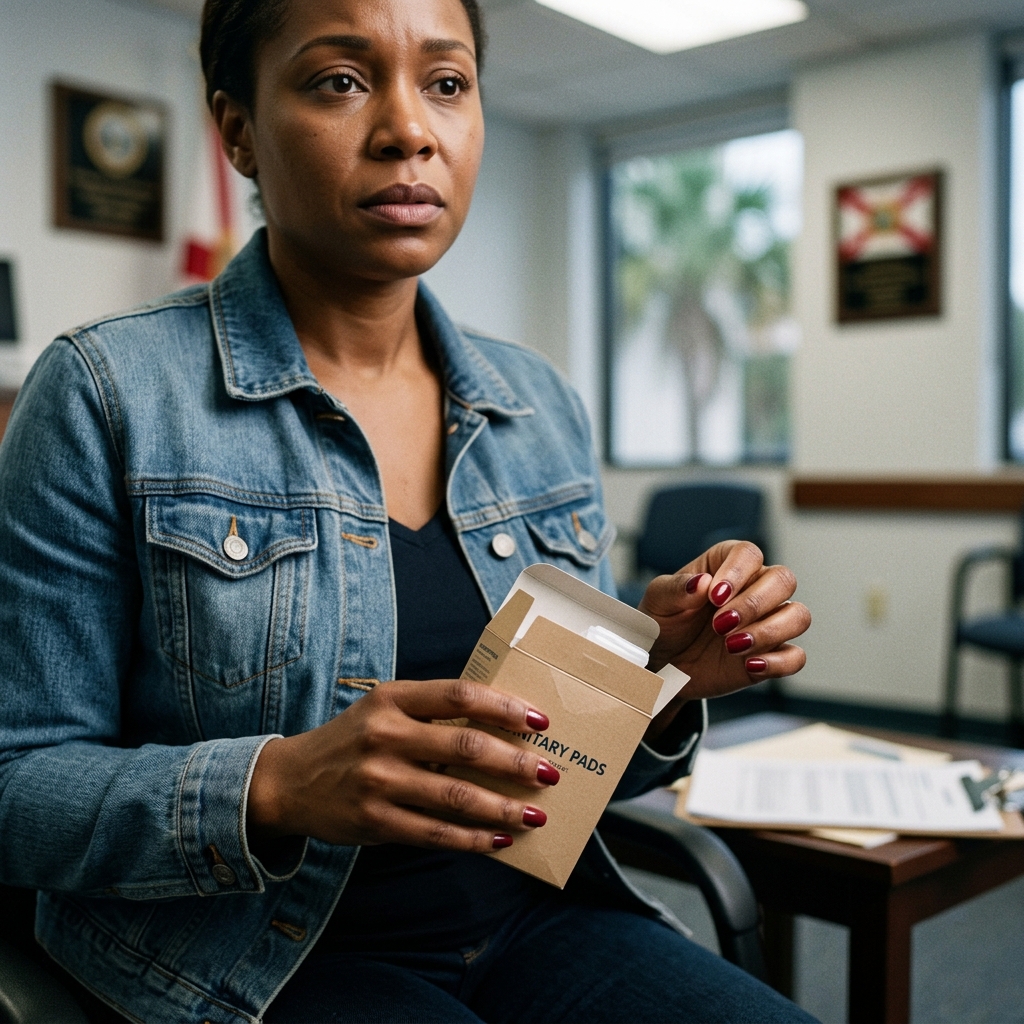
A Florida traffic-stop dispute drew national attention after a woman claimed an officer forcibly removed her tampon during a search for drugs. The allegation triggered public debate about police authority, bodily privacy, and the legal boundaries that apply when officers suspect concealed contraband.
Whether the claim is proven in court or not, the controversy highlights a larger issue: searches involving intimate body areas raise some of the most serious Fourth Amendment concerns in American law. Courts generally treat these encounters as highly invasive and require a strong justification, careful procedures, and respect for human dignity.
What the dispute was about
The incident described in reporting involved a Florida woman who said she was stopped by law enforcement and later subjected to an intrusive search. According to the account, officers believed drugs may have been hidden on her person. The woman’s version of events alleges that a female officer removed a tampon during the search, while the sheriff’s department denied wrongdoing and disputed the characterization of the encounter.
That disagreement matters legally because civil rights claims often turn on what actually happened, what officers believed, and whether the methods used were reasonable under the Constitution. In cases like this, the facts are usually contested, and both sides may rely on witness statements, reports, body-camera footage, medical records, and testimony about departmental practices.
Why intimate searches draw immediate scrutiny
Searches involving the body are treated differently from ordinary pat-downs or vehicle inspections. Even when police have lawful grounds to investigate, courts have long recognized that the more personal the search, the stronger the privacy interests at stake. Intrusive searches can be traumatizing, humiliating, and medically risky if handled carelessly.
For that reason, law enforcement agencies typically need more than a vague suspicion before conducting a highly invasive search. The level of justification, the setting, the manner of the search, and whether medical personnel are involved can all affect whether the search is lawful.
- Ordinary searches are usually judged by reasonableness.
- More intrusive searches require stronger justification.
- Searches of body cavities or intimate areas may raise special constitutional concerns.
- Improper methods can support claims for damages under civil rights law.
The constitutional issues raised by the allegation
The central legal question is whether the search, as described, was reasonable under the Fourth Amendment, which protects against unreasonable searches and seizures. Courts evaluate reasonableness by balancing government interests against the seriousness of the privacy intrusion. A drug investigation may justify a search in some circumstances, but the government usually must show that the method used was proportionate to the suspected offense and supported by adequate facts.
Another issue is whether the encounter amounted to an unlawful strip search or body search without proper safeguards. If an officer removed an item of clothing or sanitary product in a way that exposed intimate areas without a strong and lawful basis, that could increase the risk of constitutional liability. The exact legal outcome would depend on the jurisdiction, the facts, and the evidence presented.
| Legal issue | Why it matters |
|---|---|
| Reasonableness of the search | Police conduct must be proportionate to the suspicion and circumstances. |
| Level of suspicion | More intrusive searches usually require stronger factual support. |
| Manner of execution | How a search is performed can determine whether it was lawful. |
| Possible civil rights violation | Unreasonable or degrading searches may support damages claims. |
How law enforcement may defend a search
In disputes like this, police often argue that officers were acting on suspicion of hidden drugs and followed the chain of command or departmental policy. They may contend that the search was authorized, that the woman consented in some way, or that the officers used the least invasive option they believed available at the time.
Police departments may also deny that a search occurred in the manner alleged. That can shift the case from a legal debate over reasonableness to a factual dispute over whether the claim is accurate at all. Internal reports, testimony from the officers, and any video evidence can become decisive.
Even so, legal defenses do not automatically resolve the issue. Consent must be voluntary, policies must comply with constitutional requirements, and a belief that drugs might be hidden does not by itself justify every form of physical search.
The role of evidence in a civil rights lawsuit
Cases involving police searches often depend on the quality of the evidence. If a plaintiff brings a lawsuit, the court may consider body-camera footage, booking records, witness accounts, medical documentation, and expert testimony about searches and medical safety. The absence of video or contemporaneous records can make the case harder to prove, but it does not end the claim.
Evidence also helps determine whether the alleged search was an isolated mistake or part of a broader pattern. A plaintiff may argue that the incident reflects poor training or unconstitutional department practices. A defendant agency may respond that officers acted within policy or that the complaint misstates what happened.
- Body-camera footage can confirm timing and officer conduct.
- Medical evidence may show whether harm occurred.
- Written reports can reveal the officers’ stated justification.
- Witness statements can support or undermine credibility.
What damages might be available
If a court finds a constitutional violation, the plaintiff may seek compensation for physical pain, emotional distress, humiliation, and any related medical costs. In some cases, a plaintiff may also seek punitive damages against individual officers if the conduct was especially reckless or malicious, although such awards are more limited and depend on the governing law.
Beyond personal damages, these cases can also lead to broader consequences. A department may revise search policies, increase training, or change oversight procedures. Even when a claim does not end in a judgment, a lawsuit can force public scrutiny of how officers handle highly sensitive encounters.
Public reaction and the privacy debate
Incidents involving alleged intimate searches often spark a wider public debate than the individual case itself. Many readers focus on the human impact: the embarrassment, fear, and sense of powerlessness a person may feel during a stop or arrest. Others focus on whether police must have enough discretion to search aggressively when they suspect hidden drugs or evidence.
That tension is central to modern policing. Communities want effective enforcement, but they also expect officers to respect bodily integrity. The law tries to balance those interests, yet cases like this show that the balance can break down when procedures are unclear, supervision is weak, or the search becomes unnecessarily invasive.
How courts usually evaluate intrusive police searches
Courts often look at several practical questions when reviewing an intrusive search. Was there a legitimate reason to search? Was the search conducted in a private setting? Was the search performed by an officer of the same sex when appropriate? Was medical assistance considered when the search involved a body cavity or another sensitive area?
These questions matter because the Constitution is not only concerned with whether the police had a reason to investigate. It also asks whether the government used a method that was reasonable in light of the intrusion. A search may be lawful in concept but unlawful in execution if it is degrading, unsafe, or unnecessarily exposed to others.
Practical lessons for drivers and officers
For drivers, the lesson is that a traffic stop can quickly become complicated when officers suspect contraband. Individuals should understand that they have rights, but the safest response is usually to remain calm, ask whether they are free to leave, and avoid physical resistance that could escalate the encounter. Any objection to a search should be stated clearly if possible.
For officers, the lesson is that intimate searches require exceptional care. Clear documentation, lawful authorization, privacy protections, and adherence to policy are essential. If there is any doubt, the safer course is often to involve supervisors, seek medical personnel when appropriate, and avoid improvised methods that can later appear abusive or unconstitutional.
Common questions about searches like this
Can police search a person during a traffic stop? Yes, but the scope of the search depends on the facts. Officers generally need a lawful basis, and more intrusive searches require stronger justification.
Is consent enough? Consent can authorize a search, but it must be voluntary and informed. Pressure, confusion, or coercion can undermine it.
Does suspicion of drugs allow an intimate search? Not automatically. Suspected drug possession does not give officers unlimited authority over the body or intimate clothing.
Can a person sue after an intrusive search? Yes. A person may bring a civil rights claim if the search violated constitutional protections or caused compensable harm.
Why do these cases matter beyond one person? They often influence police training, public confidence, and how courts define the limits of lawful searches.
Why the story remains legally significant
The lasting importance of the Florida allegation is not only the shocking nature of the claim but the legal questions it raises. When law enforcement crosses the line from investigation into deeply intrusive treatment, courts must decide whether the conduct was justified or unconstitutional. That review can shape future cases, agency policy, and public expectations about police behavior.
At its core, the dispute is about dignity and power. Traffic stops are already stressful; searches that touch intimate areas add a layer of vulnerability that the law treats seriously. Whether the allegation is ultimately proven or rejected, the case serves as a reminder that the authority to search comes with a duty to do so lawfully, carefully, and with respect for personal privacy.
References
- Florida mom claims cop ‘forcibly’ removed her tampon during traffic stop — NBC News. 2012-08-03. https://www.nbcnews.com/news/us-news/florida-mom-claims-cop-forcibly-removed-her-tampon-during-traffic-flna939990
- Florida woman suing cops after ‘tampon forcibly removed’ during arrest — The World. 2012-07-31. https://theworld.org/stories/2016/07/31/florida-woman-suing-cops-after-tampon-forcibly-removed-during-arrest
- Florida Woman Claims Cops Pulled Out Her Tampon During Strip Search — Business Insider. 2012-08-03. https://www.businessinsider.com/florida-women-claims-cops-pulled-out-her-tampon-during-strip-search-2012-8
- Fourth Amendment—Searches and Seizures — U.S. Constitution Annotated, Legal Information Institute. 2026-07-09. https://www.law.cornell.edu/constitution/fourth_amendment
- Searches of the Person — American Civil Liberties Union. 2026-07-09. https://www.aclu.org/
Similar Articles








Read full bio of medha deb




