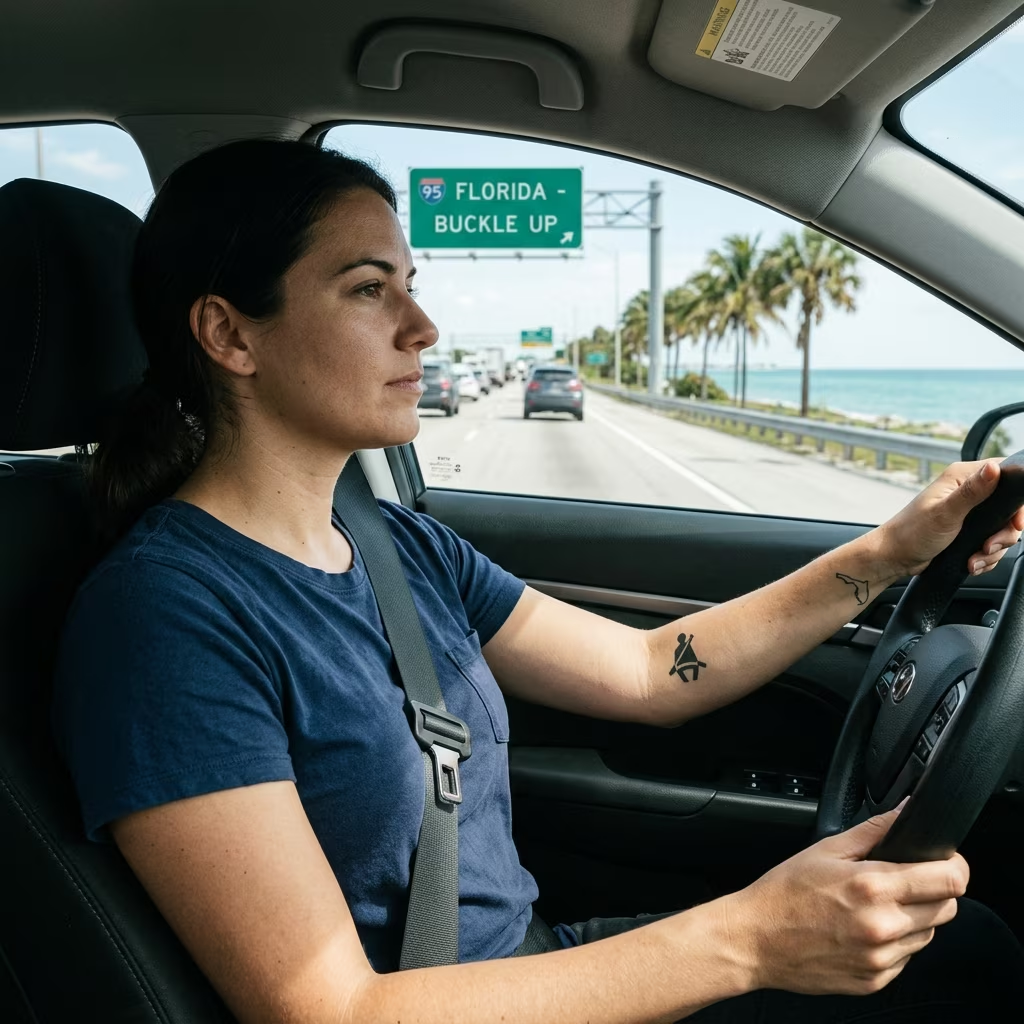
Florida treats seat belt use as a serious safety issue and a legally enforceable obligation. Understanding how the state’s seat belt law works, especially the difference between primary and secondary enforcement, can help you avoid tickets, protect your passengers, and make informed decisions if you are stopped by law enforcement.
Why Seat Belt Enforcement Matters in Florida
Florida’s seat belt requirements are not just a formality. The law is designed to reduce fatalities and serious injuries by ensuring occupants are properly restrained whenever a vehicle is in motion. Because the state uses primary enforcement, officers can pull you over solely for observing a seat belt violation, without needing any other traffic offense. This makes it especially important to know what is required and what your rights are.
- Safety: Proper restraint significantly reduces the risk of death and serious injury in crashes.
- Legal consequences: Violations can lead to fines, court costs, and potential implications for your driving record.
- Liability: In some situations, failure to wear a seat belt can affect civil damages in an accident case.
Primary vs. Secondary Seat Belt Enforcement
Seat belt laws in the United States are generally categorized as either primary or secondary enforcement, and the distinction directly affects when and how police can stop drivers.
What Is Primary Enforcement?
Under a primary enforcement seat belt law, an officer may stop a vehicle and issue a citation if they observe a seat belt violation, even if no other traffic offense has occurred. The seat belt violation itself is enough to justify a traffic stop.
- Officers can initiate a stop based solely on visible non-use of a seat belt.
- Seat belt violations are treated similarly to other primary traffic offenses like speeding or failing to obey a stop sign.
- This type of enforcement is associated with higher seat belt usage rates compared with secondary laws.
What Is Secondary Enforcement?
By contrast, in states with secondary enforcement, law enforcement cannot stop a vehicle solely because someone is not wearing a seat belt. They must first observe a different, primary traffic violation, and only then can they add a seat belt citation to the stop.
- The officer may issue a seat belt ticket only after stopping a driver for another violation.
- Non-use of a seat belt on its own does not justify a traffic stop.
- Secondary enforcement often leads to lower compliance rates compared with primary enforcement.
Florida’s Choice: Primary Enforcement
Florida uses primary enforcement for seat belt laws. The state formally adopted primary enforcement with the Dori Slosberg and Katie Marchetti Safety Belt Law, making seat belt non-use an independent basis for a traffic stop. This policy reflects a deliberate decision to treat seat belt compliance as a central safety priority.
| Feature | Primary Enforcement (Florida) | Secondary Enforcement |
|---|---|---|
| Can police stop you solely for a seat belt violation? | Yes | No |
| Is a separate traffic offense required first? | No | Yes |
| Typical impact on usage rates | Higher usage, stronger deterrence | Lower usage compared to primary |
| Common in states prioritizing occupant safety | Yes | Varies |
Who Must Wear a Seat Belt in Florida?
Florida law clearly outlines which drivers and passengers must be restrained. These rules are primarily found in section 316.614 of the Florida Statutes, often referred to as the state’s safety belt law.
Basic Occupant Requirements
Under Florida law, the following requirements apply when a motor vehicle or autocycle is in motion:
- Drivers: Every driver must be restrained by a seat belt.
- Front-seat passengers 18 and older: Any adult passenger in the front seat must wear a seat belt.
- All passengers under 18: Every occupant younger than 18 must be restrained by a seat belt or appropriate child restraint, regardless of seating position.
In practice, this means that if you are driving, or riding in the front seat as an adult, you are legally required to buckle up. Any minor in the vehicle must also be properly restrained, whether they are in the front or rear seat.
Child Restraint and Booster Seat Rules
Florida law works together with federal safety standards to require age-appropriate restraint systems for children.
- Children 3 and under: Must be secured in a federally approved child restraint device (typically a rear-facing or forward-facing child seat).
- Ages 4–5: Must be in a federally approved child safety seat or a booster combined with a seat belt, depending on size and manufacturer guidance.
- Ages 6–17: Must use a seat belt, and may still benefit from a booster seat until they properly fit adult belts.
Drivers are legally responsible for ensuring that children in their vehicles are properly restrained. Violations involving minors can carry higher penalties and may also affect driver’s license points in some circumstances.
Recognized Exemptions Under Florida Law
Although seat belt use is generally mandatory, Florida recognizes limited exemptions. These are mostly tied to occupational needs or specific vehicle types, and they are set out in section 316.614 and related guidance.
Personal and Occupational Exemptions
- Medical condition: A person certified by a physician as having a medical condition that makes seat belt use unsafe or inappropriate is exempt, but must carry the certification while driving or being driven.
- Newspaper delivery workers: Employees delivering newspapers on home delivery routes are not required to wear seat belts while performing those duties.
- Certain utility, waste, and delivery workers: Employees whose work involves frequent stops and exits from the vehicle may be exempt under state or local rules.
Vehicle-Based Exemptions
Some vehicles are not subject to the seat belt law, usually because they were not originally required to be equipped with belts under federal standards or because of their design.
- Certain buses: Buses used to transport people for compensation, and older school buses purchased before specific manufacturing cut-off dates, may be exempt.
- Farm tractors and agricultural equipment: Vehicles used exclusively for field work are generally not required to have belts.
- Large trucks: Trucks with a net weight over 26,000 pounds that were not originally equipped with belts may be exempt.
For most private drivers and everyday passenger vehicles, these exemptions will not apply. If you are operating a standard car, SUV, or light truck for personal use, you should assume the seat belt law fully applies to you and your passengers.
Penalties and Legal Consequences of Violations
A seat belt violation in Florida is treated as a nonmoving traffic infraction under chapter 318 of the Florida Statutes. While it does not carry the same weight as a moving violation like speeding or reckless driving, it still has financial and potential collateral consequences.
Fines and Court Costs
The base fine for an adult seat belt violation is set by statute, but the total amount you pay often includes surcharges, court costs, and local assessments.
- Adult seat belt violations: Typically carry a base fine around $30, with total costs frequently exceeding $100 once all fees are added.
- Violations involving minors: Fines may be higher, and there can be additional consequences such as points on the driver’s record.
Because seat belt offenses are nonmoving violations, they are generally less severe than moving violations. However, repeated infractions can still negatively affect your driving history, and unpaid tickets can lead to license suspensions or collection actions.
Civil and Insurance Implications
Beyond the immediate ticket, failing to wear a seat belt may affect your civil case if you are injured in an accident. Florida allows the reduction of damages in certain circumstances based on non-use of seat belts. Insurers may also consider violation history when evaluating risk, although practices vary.
- Non-use of a seat belt can be raised as an issue in personal injury litigation.
- Some insurers may view repeated safety-related infractions negatively.
- Compliance with seat belt laws can strengthen your position in any future claims.
How Florida Law Applies to Different Seating Positions
The obligations and risks associated with seat belt use differ depending on where a person is seated in the vehicle.
Front Seat Occupants
Florida makes seat belt use in the front seat mandatory for both drivers and adult passengers. Because front-seat occupants face significant crash forces, this requirement is tightly enforced.
- Every front-seat occupant 18 or older must wear a seat belt.
- Officers can easily observe front-seat non-use and initiate a traffic stop under primary enforcement.
- Front-seat compliance is critical for reducing severe injury and death rates.
Rear Seat Occupants
Florida law treats rear seat occupants differently depending on age:
- Under 18: Must be properly restrained by a seat belt or child restraint device, regardless of seating position.
- 18 and older: Adult rear-seat passengers are not always required by statute to wear a seat belt in every situation, although use is strongly encouraged for safety.
Even where the law does not explicitly mandate rear-seat belt use for adults, the safety benefits are substantial. Unrestrained rear-seat passengers can become projectiles in a crash, posing serious risks to themselves and to front-seat occupants.
Responding to a Seat Belt Ticket in Florida
If you receive a seat belt citation, you have several potential options. While every case is unique and you should consider seeking legal advice, the following steps outline common approaches.
Immediate Steps After a Citation
- Review the ticket carefully: Note the statute cited, the alleged behavior, and whether the violation involves a minor.
- Check your deadline: Traffic citations often have specific time frames for paying, contesting, or requesting a hearing.
- Document the circumstances: If you believe the citation is incorrect, write down what happened as soon as possible while details are fresh.
Options for Addressing the Citation
- Pay the fine: Accepting the violation and paying the associated costs is the most straightforward option, but may have record consequences.
- Request a hearing: You may challenge the citation in court, presenting evidence such as photos, witness statements, or medical documentation if an exemption applies.
- Consult an attorney: In cases involving minors, disputed facts, or potential insurance and liability concerns, legal counsel can help you understand your rights and possible defenses.
Seat belt citations may seem minor, but they often arise during traffic stops that can lead to additional findings or charges. Knowing the law and responding appropriately can help protect your legal position.
Practical Tips to Stay Compliant and Safe
Beyond avoiding tickets, consistent seat belt use is one of the simplest and most effective ways to reduce crash-related harm.
- Always buckle up before moving: Make fastening your seat belt the first step after starting the engine.
- Check all passengers: Confirm that front and rear passengers are properly restrained, especially minors.
- Use child seats correctly: Follow manufacturer instructions and age/size guidelines for child seats and boosters.
- Wear belts properly: Lap belts should sit low across the hips and shoulder belts should cross the chest, not the neck or face.
- Know your exemptions: If you rely on a valid exemption, ensure documentation is current and accessible.
FAQs About Florida’s Seat Belt Law
Can police stop me just because I am not wearing a seat belt?
Yes. Florida uses primary enforcement, which allows officers to stop and cite drivers or passengers solely for a seat belt violation, without any other traffic offense.
Are back seat passengers required to wear seat belts?
All passengers under 18 must be restrained regardless of where they sit. Adult rear-seat passengers may not be explicitly required by statute in every scenario, but seat belt use is strongly recommended and may be enforced in certain contexts.
What happens if a child in my car is not wearing a seat belt?
The driver is typically held responsible for ensuring minors are properly restrained. Violations involving children can lead to higher fines and additional penalties compared with adult-only infractions.
Is a seat belt ticket a criminal offense?
No. A seat belt violation is classified as a nonmoving traffic infraction under Florida law. It is not a criminal charge, although unpaid tickets and repeated violations can lead to further administrative consequences.
Can I claim a medical exemption to avoid wearing a seat belt?
Only if a physician certifies that you have a medical condition making seat belt use unsafe or inappropriate, and you carry documentation of that certification while driving or riding.
References
- Buckle Up Florida, It’s the Law! — Florida Department of Highway Safety and Motor Vehicles. 2023-03-01. https://www.flhsmv.gov/safety-center/vehicle-safety/buckle-up-florida-its-the-law/
- Primary Enforcement Seat Belt Use Laws — National Highway Traffic Safety Administration. 2020-08-01. https://www.nhtsa.gov/book/countermeasures-that-work/seat-belts-and-child-restraints/countermeasures/legislation-and
- Seat Belt Use — Governors Highway Safety Association. 2024-01-15. https://www.ghsa.org/state-laws-issues/seat-belt-use
- The 2025 Florida Statutes — Section 316.614 — Florida Legislature (Online Sunshine). 2025-01-01. https://www.leg.state.fl.us/statutes/index.cfm?App_mode=Display_Statute&URL=0300-0399/0316/Sections/0316.614.html
- Seat belt laws in the United States — U.S. Legal Overview (civil damages section). 2019-06-01. https://rosap.ntl.bts.gov/view/dot/1939
- Florida Seat Belt Law Exemptions and Penalties — RTRLAW. 2023-02-10. https://rtrlaw.com/car-accidents/what-are-floridas-seat-belt-law-exemptions/
- Florida Seat Belt Laws Explained — Florin|Roebig Injury Lawyers. 2023-05-20. https://www.injurylawyers.com/blog/florida-seatbelt-laws-explained/