
Florida Probate: A Practical Guide for Families
Understand how Florida probate works, who is involved, which assets are affected, and how to navigate or reduce the impact of the court-supervised process.
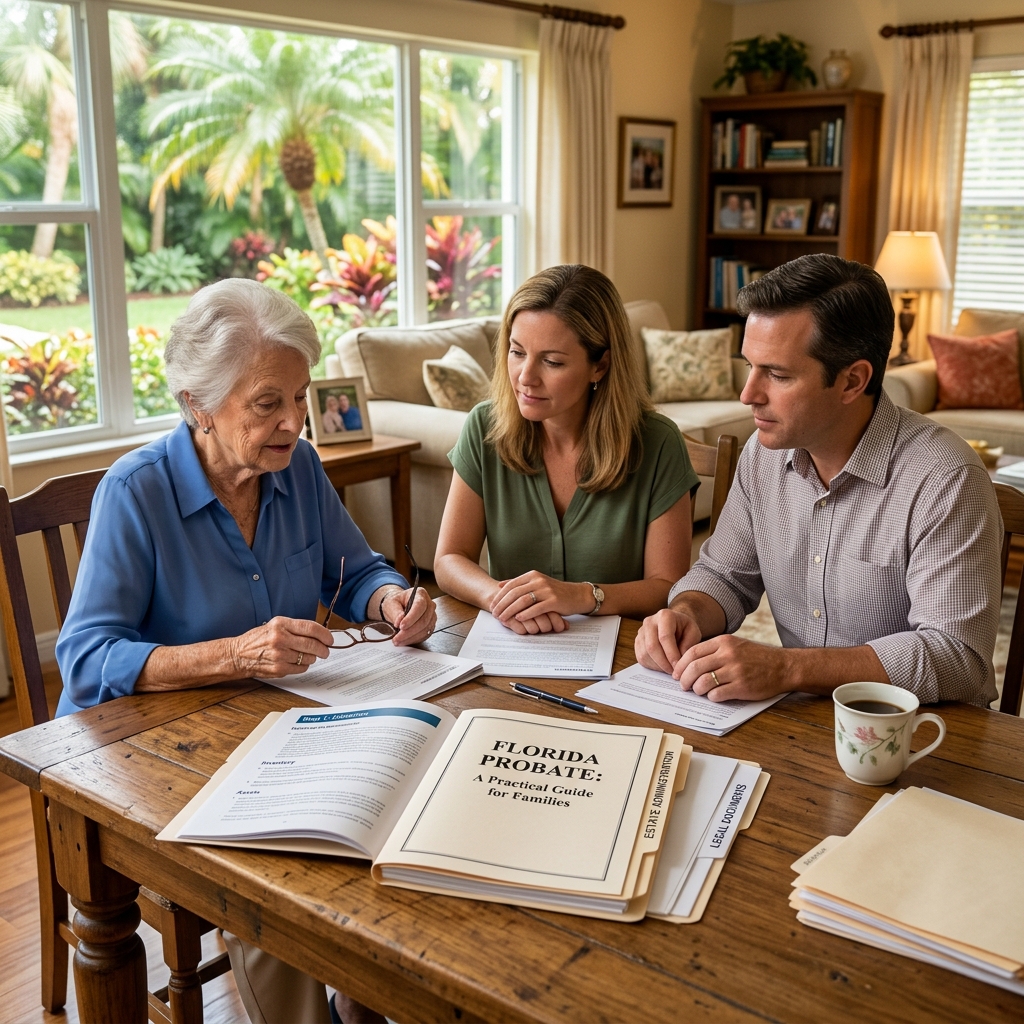
Probate in Florida is the court-supervised process used to gather a deceased person’s assets, pay their outstanding debts, and transfer what remains to heirs or beneficiaries. Understanding how this system works can help families avoid confusion, reduce delays, and make informed decisions about estate planning.
This guide explains when probate is required, the main types of Florida probate, the role of the personal representative, how creditors are treated, and practical strategies to simplify or even avoid probate for certain assets.
Foundations of Florida Probate Law
Probate in Florida is governed by a combination of statutes and court rules designed to protect heirs, beneficiaries, and creditors while ensuring orderly transfer of property after death.
- Florida Probate Code: Located in Chapters 731–735 of the Florida Statutes, it sets out substantive probate law, including definitions, rights of heirs, and procedures for administering estates.
- Florida Probate Rules: Found in Rules 5.010–5.530, these rules govern how cases proceed in court, including filings, notices, and hearings.
- Circuit Court jurisdiction: Probate is handled by the circuit court in the county where the decedent resided, or where they owned property if they lived out of state.
Because probate laws are state-specific, guidance that applies in another state may not match Florida’s requirements. Florida residents and those owning Florida property should pay particular attention to these local rules.
What Is Probate and Why Does It Matter?
Probate serves several important purposes beyond simply handing out inheritances.
- Validating the will: The court confirms that a will was properly executed and is legally enforceable, or determines that no valid will exists.
- Identifying assets: The estate’s property is located, documented, and valued so that it can be distributed correctly.
- Paying debts and expenses: Legitimate claims, taxes, and costs of administration must be resolved before heirs receive their share.
- Protecting beneficiaries and creditors: Court supervision provides a transparent structure, reducing the risk of mismanagement or unfair treatment.
In short, probate is the legal bridge between a person’s ownership of property during life and the lawful transfer of that property after death.
When Is Probate Required in Florida?
Not every asset, and not every estate, must go through probate. Whether probate is required depends on how property was owned and whether any automatic transfer mechanisms were in place.
Common Situations That Trigger Probate
- Real estate solely in the decedent’s name without a survivorship or transfer-on-death feature.
- Bank or investment accounts titled only in the decedent’s name and lacking beneficiary designations.
- Vehicles and significant personal property owned individually.
Florida courts can only transfer property located within the state and owned by the decedent at death. Assets outside Florida usually require proceedings in the state or country where they are located.
Assets That Typically Bypass Probate
Certain categories of property may pass directly to another person or entity without probate:
- Jointly held property with rights of survivorship – Ownership passes automatically to the surviving joint owner.
- Accounts with named beneficiaries – Life insurance, retirement accounts, and payable-on-death (POD) or transfer-on-death (TOD) accounts usually pay directly to the designated beneficiary.
- Assets in a revocable living trust – Property properly titled in a trust is managed and distributed by the trustee under trust terms, typically outside probate.
Even when most assets avoid probate, a small probate case might still be needed to handle items that were not fully titled or designated appropriately.
Types of Probate Proceedings in Florida
Florida provides multiple probate pathways, each suited to different estate sizes and circumstances. Choosing the appropriate type can significantly affect time, cost, and complexity.
| Type of proceeding | Typical use | Key features |
|---|---|---|
| Formal administration | Most standard estates, generally larger or more complex | Full court supervision, personal representative appointed, detailed notices and accounting required. |
| Summary administration | Smaller estates or those where the decedent has been deceased more than two years | Shorter, simplified process; no ongoing estate administration; appropriate when probate estate value is modest. |
| Disposition of personal property without administration | Very limited situations with small personal property and specific expenses | Informal request to the court for release of funds or personal items without opening a full estate. |
Formal administration remains the default route for many estates, especially where multiple heirs, real estate, or substantial debts are involved.
Starting a Probate Case
Florida law sets clear expectations for what must be done soon after someone passes away, particularly relating to the will and initial filings.
Filing the Will
- Who must file: Anyone in possession of the original will has a duty to file it with the local circuit court.
- Timing: The will must be filed within 10 days after learning of the death.
- Location: Filing occurs in the county circuit court where the decedent last resided, or where they owned property if not a Florida resident.
If the will is written in a foreign language, the statute requires an accurate English translation before the will can be admitted to probate.
Initial Court Documents
To open a probate estate, the following are typically needed:
- Certified copy of the death certificate.
- The original will, if one exists.
- A petition asking the court to open the estate and appoint a personal representative.
- Information about known heirs and a preliminary list of assets.
Once the court is satisfied that the petition meets legal requirements, it issues orders and documents authorizing the personal representative to act on behalf of the estate.
The Role and Duties of the Personal Representative
The personal representative (often called an executor in other states) is the central figure in a Florida probate case, responsible for managing and ultimately closing the estate under court supervision.
Core Responsibilities
- Secure and inventory assets: Locate, safeguard, and list all probate property, including bank accounts, real estate, vehicles, and valuables.
- Notify beneficiaries and heirs: Provide required legal notices so interested parties know the estate is open and can assert rights.
- Notify creditors: Publish and deliver notices to allow creditors to file claims within specified time frames.
- Pay valid claims and expenses: Use estate funds to pay taxes, administration costs, and legitimate debts in the proper order of priority.
- Maintain records and accounting: Keep detailed records of receipts, payments, and asset transfers, then file a formal accounting with the court.
- Distribute remaining assets: Allocate property to beneficiaries according to the will or, if there is no will, Florida’s intestacy rules.
- Close the estate: After distributions, file receipts and ask the court to issue an order discharging the personal representative.
The personal representative owes a legal duty of loyalty and care to the estate and beneficiaries. Mismanagement can result in personal liability or removal by the court.
Creditor Claims and Insolvent Estates
One of the main reasons probate exists is to ensure that creditors have a fair opportunity to seek payment and that debts are handled in an organized way.
How Creditors Are Notified
- The personal representative publishes notice to creditors and may send direct notice to known or reasonably ascertainable creditors.
- Creditors have limited time—often measured in months—to file claims with the court.
- Claims can be allowed, compromised, or contested, depending on validity and supporting documentation.
Priority of Payments in Insolvent Estates
When an estate is insolvent, meaning debts exceed available assets, Florida law sets an order of priority for payment so that certain categories of expenses are protected:
- Administrative expenses – Court costs, personal representative fees, and professional services needed to administer the estate.
- Funeral and burial costs – Within statutory limits.
- Taxes and government claims – Including certain federal and state obligations.
- Other creditor claims – Paid in descending order of priority.
Lower-priority claims may receive only partial payment, or none at all, if estate assets are insufficient.
Rights of Surviving Spouses and Children
Florida law gives surviving spouses and certain children special protections that may override or supplement the terms of a will.
Elective Share
A surviving spouse can claim an elective share, usually amounting to 30% of the decedent’s elective estate, which includes both probate and designated non-probate assets. This prevents complete disinheritance, even if the will leaves the spouse little or nothing.
Homestead and Family Allowances
- Homestead rights: Special protections apply to the family home, influencing who can inherit and limiting how homestead property may be devised in a will.
- Family allowance: Surviving spouse and certain children may receive a temporary allowance from estate funds while probate is in progress.
- Exempt property: Some property is reserved for the surviving spouse or children, being paid to them instead of to creditors for claims against the estate.
Additionally, a spouse or child omitted from an earlier will because of marriage or birth after execution may still have rights in the estate as an “omitted” family member.
Timeframe and Costs
Most formal probate proceedings in Florida take several months to more than a year, depending on complexity, disputes, and the nature of assets involved. Summary administration and very small estates can sometimes be completed more quickly, but there is no fixed timeline.
Attorney fees for probate in Florida are often based on percentages of the estate’s value, with typical schedules increasing as the estate size grows. Additional professional fees—for appraisers, accountants, and other experts—may apply.
Planning to Reduce Probate Complexity
While probate cannot always be eliminated, careful planning can substantially reduce how much property must pass through the court system.
- Use beneficiary designations on life insurance, retirement plans, and financial accounts.
- Consider joint ownership with rights of survivorship where appropriate.
- Establish and fund a revocable living trust for major assets.
- Keep asset titles and beneficiary forms updated after major life changes.
- Consult a Florida-licensed attorney for strategies consistent with state law and family needs.
For many families, a combination of these tools can limit the size of the probate estate, speed up access to funds for dependents, and maintain greater privacy than a fully probated estate.
Frequently Asked Questions About Florida Probate
Do all Florida estates have to go through probate?
No. Only assets that are owned solely in the decedent’s name and lack beneficiary designations or survivorship rights generally require probate. If every significant asset has a valid transfer mechanism, probate may be minimal or unnecessary.
Can I handle Florida probate without an attorney?
Florida allows certain small estates or very limited proceedings to move forward without extensive legal representation. However, formal administration often requires a lawyer, and the Florida Bar strongly recommends using counsel because of complex procedural and substantive rules.
What happens if there is no will?
If someone dies without a will, their assets are distributed according to Florida’s intestate succession laws. These statutes prioritize spouses, children, and other relatives based on predefined formulas, rather than personal preferences.
How long does a Florida probate case usually take?
A typical formal probate can take about six months to a year or more. Delays often stem from disputes among heirs, difficulty locating assets, tax issues, or contested creditor claims.
Is probate a public process?
Yes. Many probate filings, including inventories and accountings, are part of the public record. This is one reason some people use trusts and other planning techniques to keep certain financial details private.
References
- Consumer Pamphlet: Probate in Florida — The Florida Bar. 2024-01-01. https://www.floridabar.org/public/consumer/pamphlet026/
- Florida Probate Laws – An Overview — Nolo. 2023-06-15. https://www.nolo.com/legal-encyclopedia/florida-probatean-overview.html
- The Complete Guide to Florida Probate — Florida Probate Law Group. 2026-02-10. https://www.floridaprobatelawgroup.com/blog/the-complete-guide-to-florida-probate/
- Florida Probate Explained: What It Is and When It’s Required — Pyle Law. 2025-09-20. https://pylelegal.com/florida-probate-explained-what-it-is-and-when-its-required/
- The 2025 Florida Statutes, Chapter 733 — Florida Legislature (Online Sunshine). 2025-07-01. https://www.leg.state.fl.us/Statutes/index.cfm?App_mode=Display_Statute&URL=0700-0799/0733/0733.html
- Probate in Florida: What You Need to Know — Sarasota County Bar Association. 2024-03-10. https://sarasotalaw.org/trust-and-estate-law/probate-in-florida-what-you-need-to-know/
Similar Articles








Read full bio of Sneha Tete


