
Florida Motorcycle Insurance Rules Explained
Understand Florida motorcycle coverage, helmet exceptions, and legal rider requirements.
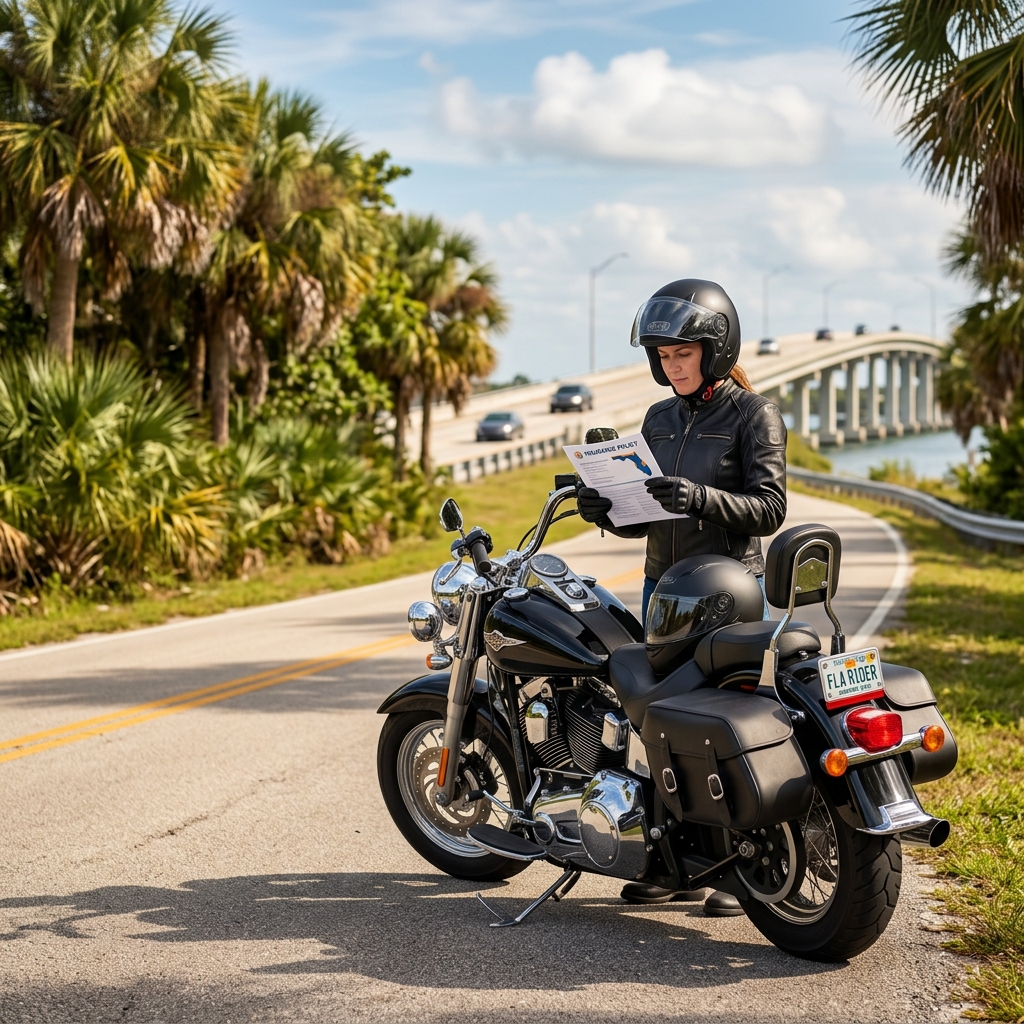
Florida Motorcycle Insurance: What Riders Need to Know
Florida is different from many other states because it does not require a standard motorcycle insurance policy before you can register or operate a motorcycle. That does not mean riders can ignore insurance altogether. Florida still expects motorcyclists to meet financial responsibility rules, and the state also connects insurance to helmet choices and crash-related obligations. In practice, riders need to understand both the legal minimums and the practical risks of riding without coverage.
For many riders, the most important issue is that motorcycle rules in Florida are not the same as the rules for passenger vehicles. Cars are subject to Florida’s no-fault insurance system, but motorcycles are treated differently. That difference affects registration, bodily injury exposure, helmet use, and what happens after a crash.
The Basic Insurance Framework for Motorcycles
Unlike four-wheeled vehicles, motorcycles in Florida are not subject to the same mandatory personal injury protection requirements that apply to most cars. Instead, a rider must be prepared to show financial responsibility if required by law. In many cases, riders satisfy this expectation by carrying liability insurance, which helps pay for injuries or property damage caused to others in a crash.
Florida riders often choose insurance even when it is not required in the same way it is for cars, because motorcycle crashes can produce significant medical and property losses. A policy can also help create a clearer path to legal compliance if an officer, insurer, or court later asks for proof of responsibility.
Common minimum coverage levels
Motorcycle policies sold for Florida riders commonly include minimum liability limits such as bodily injury liability and property damage liability. The exact structure can vary by insurer and policy, but the general idea is that the rider should have enough coverage to address harm caused to other people or their property.
- Bodily injury liability helps pay for injuries you cause to others.
- Property damage liability helps pay for damage to another person’s vehicle or property.
- Guest passenger coverage may be relevant if a passenger is injured while riding with you.
- Medical coverage may matter if you want to qualify for Florida’s helmet exception.
How Florida’s Helmet Rule Connects to Insurance
Florida allows some adult riders to go without a helmet, but the exception is not automatic. Riders who are at least 21 years old may ride without a helmet only if they carry insurance or medical benefits that meet the state’s minimum medical coverage requirement. That means insurance is tied directly to helmet choice in Florida.
If a rider does not meet the medical coverage threshold, a helmet is required. Younger riders must wear helmets regardless of insurance status. This makes the Florida rule a hybrid system: the helmet law is partly age-based and partly coverage-based.
What the helmet exception means in practice
The helmet exception is best understood as a conditional privilege. A rider who is over 21 and has the required medical protection may choose to ride without a helmet. A rider who lacks that coverage cannot rely on the exception, even if they are otherwise fully licensed and insured for liability purposes.
That distinction matters because some riders assume any motorcycle policy is enough. In reality, the policy must provide the type and amount of coverage the law expects for the helmet exemption. Riders should check whether their coverage is medical benefits, medical payments coverage, or another qualifying form of protection before assuming they are exempt.
Why Liability Coverage Still Matters
Even though Florida does not use a standard motorcycle insurance mandate like some other states, liability coverage remains highly important. A motorcycle can cause serious damage in a crash, and riders can be held financially responsible for injuries to others or damage to vehicles, buildings, guardrails, or other property.
Without insurance, a rider may have to pay those costs out of pocket. For many people, that risk is far greater than the cost of a policy. In addition, liability coverage can make it easier to satisfy proof-of-responsibility demands after a crash or traffic stop.
| Coverage Type | What It Helps Pay For | Why It Matters |
|---|---|---|
| Bodily injury liability | Injuries you cause to others | Helps protect you from personal financial exposure |
| Property damage liability | Damage to another person’s property | Useful when a crash involves vehicles, fences, signs, or structures |
| Medical benefits | Your own qualifying medical costs | May be needed to ride without a helmet if you are over 21 |
| Passenger coverage | Injuries to someone riding with you | Important if you regularly carry passengers |
Other Motorcycle Rules Riders Should Know
Insurance is only one part of lawful motorcycle operation in Florida. Riders also need to comply with equipment rules, roadway rules, and licensing rules. These requirements may not be as visible as insurance paperwork, but they are equally important for staying legal and avoiding citations.
- Riders must have the proper motorcycle endorsement or motorcycle-only license.
- Motorcycles generally must use a headlight during the day.
- Florida prohibits lane splitting, which means riders cannot travel between lanes of traffic.
- Passengers must have a proper seat and footrests.
- Handlebars cannot be positioned above the rider’s shoulders.
- Eye protection is required unless the rider has a lawful shield or other qualifying protection.
These rules reflect Florida’s effort to balance rider freedom with safety. They also show why motorcycle compliance is more than just buying a policy. A rider may be insured and still violate state law if the bike is improperly equipped or the rider lacks the correct endorsement.
Licensing and Training Requirements
To legally ride a motorcycle in Florida, a person generally needs a motorcycle endorsement on a driver license or a motorcycle-only license. The state expects riders to demonstrate the skills and knowledge necessary to operate a two-wheel vehicle safely. In many cases, completing an approved motorcycle safety course is the easiest path to endorsement.
Training is more than a formality. A motorcycle is less stable and less protected than a car, so rider education can affect both legal compliance and crash risk. Insurance companies may also view training favorably when evaluating a rider’s profile.
What Happens After a Crash
After a motorcycle crash in Florida, insurance becomes more than a paperwork issue. Riders may need to prove financial responsibility, respond to police inquiries, and deal with medical bills, repair costs, or claims from other drivers. If another person was injured, liability coverage may be the difference between a manageable claim and long-term personal debt.
Crashes can also trigger questions about helmet use. If a rider was not wearing a helmet and did not have qualifying medical coverage, that can complicate the legal and insurance review. Even when helmet use is lawful, the absence of insurance may still create serious financial exposure.
Possible post-crash issues
- Requests to show proof of insurance or financial responsibility
- Disputes over who caused the crash
- Medical bills that exceed available coverage
- Claims for damage to another vehicle or property
- Questions about helmet compliance and lawful riding status
Choosing Coverage That Fits Your Riding Habits
The right coverage depends on how often you ride, where you ride, whether you carry passengers, and how much financial risk you are willing to accept. A weekend rider who stays local may think differently from someone who commutes daily or takes long highway trips. The more you ride, the more valuable broader protection usually becomes.
When comparing policies, riders should focus on the coverage categories rather than only the premium. A lower monthly price may leave you underprotected if the policy excludes key risks or provides too little medical support. For many riders, the best plan is one that balances affordability with enough coverage to handle a serious crash.
Questions to ask before buying a policy
- Does the policy include the coverage needed for helmet exemption?
- What are the liability limits for injuries and property damage?
- Does it cover passengers?
- Are custom parts or accessories protected?
- Does it offer roadside assistance or towing options?
Frequently Asked Questions
Do you need motorcycle insurance to register a bike in Florida?
Florida does not treat motorcycle registration the same way it treats registration for most passenger vehicles. Riders are not automatically required to carry a standard motorcycle policy for registration, but they still need to meet the state’s financial responsibility rules.
Can you ride without a helmet in Florida?
Yes, but only if you are at least 21 years old and have the required medical coverage. If you are under 21, or if you do not carry qualifying coverage, you must wear a helmet.
Is liability insurance enough?
Liability insurance may satisfy the state’s financial responsibility expectation, but it does not necessarily protect your own injuries or losses. Many riders add medical or comprehensive protections for broader security.
Does Florida’s no-fault car insurance system cover motorcycles?
No. Motorcycles are treated differently from four-wheeled vehicles, so riders should not assume car insurance rules apply to them.
Do passengers need special protection?
Passengers are subject to safety and equipment rules, and riders should confirm that their policy addresses passenger injuries if they regularly carry someone on the bike.
Final Thoughts for Florida Riders
Florida motorcycle law gives riders more flexibility than many states, but that flexibility comes with responsibility. You may be able to register and ride without a traditional motorcycle insurance mandate, yet you still need to think carefully about liability, medical coverage, helmet compliance, and legal proof of responsibility. The safest approach is to treat insurance as part of your overall riding plan rather than as an optional afterthought.
A well-chosen policy can help protect your finances, support helmet-law compliance, and reduce the stress that follows a crash. For most riders, that protection is worth far more than the minimum required to get on the road.
References
- Motorcycle Insurance in Florida — Dairyland Insurance. 2026-07-10. https://www.dairylandinsurance.com/motorcycle/florida-insurance-requirements
- FAQ’s – Florida Department of Highway Safety and Motor Vehicles — Florida Department of Highway Safety and Motor Vehicles. 2026-07-10. https://www.flhsmv.gov/driver-licenses-id-cards/motorcycle-rider-education-endorsements/faqs/
- Florida Insurance Requirements — Florida Department of Highway Safety and Motor Vehicles. 2026-07-10. https://www.flhsmv.gov/insurance/
- Motorcycle Laws in Florida — Town of St. Lucie County. 2026-07-10. https://tcslc.com/DocumentCenter/View/522/Motorcycle-Laws-in-Florida-PDF
- Do You Need Motorcycle Insurance In Florida? — Beers and Gordon, P.A. 2026-07-10. https://beersandgordonlaw.com/do-you-need-motorcycle-insurance-in-florida/
Similar Articles








Read full bio of Sneha Tete




