
Florida Living Wills: Requirements and Practical Guidance
Understand how Florida living wills work, what the law requires, and how to clearly document your end-of-life medical choices.
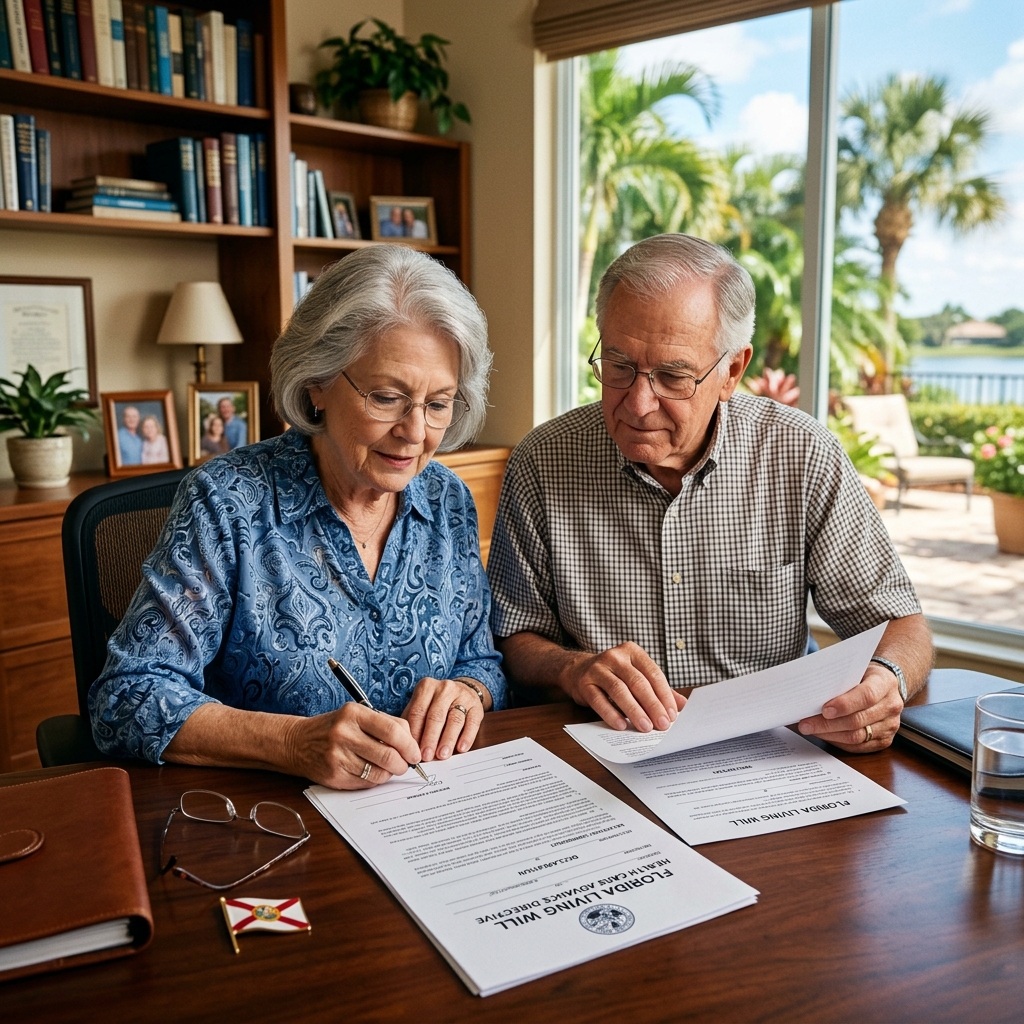
A living will in Florida is a powerful legal tool that lets you decide in advance what medical care you want if you can no longer communicate, especially in serious, end-of-life situations. By documenting your wishes, you help doctors and loved ones make decisions that respect your values and reduce uncertainty in a medical crisis.
What Is a Florida Living Will?
Under Florida law, a living will is a written declaration in which a competent adult directs whether life-prolonging procedures should be provided, withheld, or withdrawn if they develop a terminal condition, end-stage condition, or enter a persistent vegetative state. Unlike a traditional will that deals with property after death, a living will focuses entirely on medical treatment while you are still alive.
- Purpose: To express your choices about life-prolonging medical procedures and related care.
- When it applies: When you are unable to express informed consent and meet specific medical conditions defined by Florida law.
- Who can create it: Any competent adult in Florida may create a living will at any time.
Key Situations Covered by a Living Will
Florida Statutes recognize several medical conditions where a living will often becomes relevant. In your document, you may address what you want if you are diagnosed with any of the following:
| Condition | Legal Meaning in Florida | Typical Role of a Living Will |
|---|---|---|
| Terminal condition | An incurable condition caused by disease, illness, or injury that will result in death despite treatment. | Guides whether to continue or withdraw life-prolonging procedures when recovery is not expected. |
| End-stage condition | Irreversible condition that is progressive and fatal, with no reasonable medical probability of improvement. | Helps clarify how aggressively you want doctors to treat when the disease has reached its final stage. |
| Persistent vegetative state | State of permanent unconsciousness with no awareness of self or surroundings, confirmed by physicians. | Indicates whether artificial measures should be withheld or withdrawn if consciousness is not expected to return. |
Florida law allows you to direct that life-prolonging procedures be withheld or withdrawn when they would only artificially prolong the process of dying, while still permitting comfort care and pain relief.
Legal Requirements for a Valid Florida Living Will
To be legally effective, a Florida living will must comply with specific requirements found in Chapter 765 of the Florida Statutes. These requirements are designed to ensure the document truly reflects your intentions.
Who Can Make a Living Will?
- You must be a competent adult at the time you create the document.
- “Competent” generally means that you understand the nature of the document and the decisions you are making.
Signature and Witness Rules
Florida law is very specific about how a living will must be signed and witnessed.
- The document must be signed by you (the principal).
- You must sign in the presence of two subscribing witnesses.
- At least one witness cannot be your spouse or a blood relative.
- If you are physically unable to sign, one of the witnesses may sign at your direction and in your presence.
These formalities help establish that the living will is truly your informed and voluntary choice, and they create a rebuttable presumption of clear and convincing evidence of your wishes.
Notarization: Is It Required?
Florida law does not require a living will to be notarized for it to be valid. However, many attorneys recommend notarization because health care providers may treat notarized documents as more reliable and easier to accept.
- Not legally mandatory: Your living will is valid if signed and properly witnessed, even without a notary.
- Often recommended: Notarization can add an extra layer of credibility and help prevent challenges.
What Should You Address in Your Florida Living Will?
A clear living will goes beyond broad statements and deals with specific types of medical care. Florida resources and legal practitioners commonly recommend thinking through several key topics when drafting your document.
Life-Prolonging Procedures
You can state whether you want doctors to withhold, continue, or withdraw certain treatments when there is no reasonable chance of recovery.
- Use of ventilators or breathing machines
- Cardiopulmonary resuscitation (CPR)
- Dialysis for kidney failure
- Artificial nutrition and hydration (feeding tubes, IV fluids)
- Other intensive care interventions aimed at prolonging life rather than comfort
Pain Management and Comfort Care
Most living wills also address comfort-focused treatment, sometimes referred to as palliative or hospice care.
- Whether you want aggressive pain relief even if it may indirectly shorten life
- Preference for comfort care when cure is no longer attainable
- Use of hospice services to support you and your family
Organ and Tissue Donation
Your living will can include instructions about organ or tissue donation, sometimes called anatomical gifts. While this is often addressed separately through donor registries or driver’s licenses, having it in your advance directives can reinforce your wishes.
Additional Personal Values
Beyond specific procedures, you may want your living will to reflect broader values that guide your medical decisions.
- Desire to avoid prolonged suffering when recovery is not expected
- Preference to remain at home versus being in a hospital, if medically feasible
- Religious or cultural beliefs that influence end-of-life choices
Living Will vs. Health Care Surrogate in Florida
Florida law recognizes several types of advance directives, including living wills and designation of a health care surrogate. These tools serve different but complementary roles.
| Document Type | Main Function | When It Applies |
|---|---|---|
| Living will | States your choices about life-prolonging procedures and certain medical treatments. | When you are unable to give express and informed consent and meet set medical criteria. |
| Health care surrogate designation | Appoints someone to make medical decisions for you if you cannot, consistent with your wishes. | Whenever you lack capacity to make health decisions, not limited to end-of-life situations. |
Many Floridians choose to have both documents: the living will sets out specific treatment preferences, while the surrogate has authority to interpret and implement those preferences in real time with your medical team.
Steps to Create a Florida Living Will
Although Florida provides a statutory form that may be used, you are not required to use that exact language, and you may personalize your document to better reflect your goals. The following practical steps are commonly recommended for Floridians who want to create a living will.
1. Reflect on Your Medical and Personal Priorities
- Consider how you feel about aggressive treatment when recovery is unlikely.
- Think about past experiences with serious illness in your family and what you learned from them.
- Discuss your values with trusted family members, your faith leaders, or medical providers if needed.
2. Learn the Basics of Florida Law
- Review relevant provisions of Florida Statutes Chapter 765, including sections on living wills and health care surrogates.
- Understand the required witnessing and the medical conditions under which your directives apply.
3. Write Clear, Specific Instructions
- Use plain language to describe which treatments you do or do not want.
- Address different scenarios: terminal illness, persistent vegetative state, and end-stage conditions.
- Include any preferences for pain relief, comfort care, and location of care.
4. Execute the Document Properly
- Sign your living will in front of two adult witnesses.
- Ensure that at least one witness is neither your spouse nor a blood relative.
- Consider having the document notarized even though it is not legally required.
5. Communicate and Distribute Copies
Florida law places responsibility on the principal to notify medical providers that a living will exists.
- Provide copies to your primary doctor and any specialist involved in your long-term care.
- Share copies with your designated health care surrogate and close family members.
- Keep a copy in an accessible location rather than a locked drawer or safe deposit box.
6. Review and Update Periodically
- Revisit your living will after major life events, such as marriage, divorce, or a new diagnosis.
- Update the document if your preferences or health circumstances change.
- Make sure new versions are signed, witnessed, and distributed just like the original.
How Doctors and Hospitals Use Your Living Will
Once a living will is properly executed and delivered to a health care provider, Florida law requires that the document be made part of your medical record. Physicians then use it as evidence of your intentions when you cannot communicate.
- Your attending or treating physician must promptly add your living will or a copy to your medical file when notified.
- The document creates a presumption of your wishes, guiding decisions about life-prolonging procedures.
- In complex cases, doctors may consult with your health care surrogate, ethics committees, and legal counsel to ensure your rights are respected.
Common Misunderstandings About Florida Living Wills
Despite being widely recommended, living wills are often misunderstood. Clarifying these points can help you make better decisions.
- “A living will is the same as a last will.” In reality, they serve different purposes: one governs medical care while you are alive, the other deals with property after your death.
- “If I have a living will, doctors will stop treating me.” A living will does not prevent routine or curative treatment; it only addresses life-prolonging procedures when specific conditions exist and recovery is not expected.
- “My family can just decide; I do not need a document.” Without written directions, families may disagree or feel burdened by tough choices. A living will provides guidance and reduces conflict.
- “Only older adults need living wills.” Any adult can face sudden illness or injury; advance directives are relevant at every stage of adulthood.
Frequently Asked Questions (FAQs)
Is a Florida living will mandatory?
No. Florida law allows, but does not require, you to create a living will. However, many legal and medical professionals encourage adults to have one as part of a broader advance directive plan.
Can I use a standard form for my living will?
Yes. Florida Statute section 765.303 provides a sample form that may be used, though it is not the only acceptable format. Many people choose to adapt this language or work with an attorney to tailor the document to their specific values and preferences.
Who should I choose as my health care surrogate?
You should choose someone you trust to follow your wishes, communicate calmly under pressure, and work effectively with medical professionals. This is often a close family member or friend, but it does not have to be a relative.
Can I revoke or change my living will?
Yes. As long as you remain competent, you may revoke or amend your living will at any time. It is important to notify your health care providers and surrogates when you make any changes so they rely on the most current document.
Do doctors have to follow my living will?
Living wills that are properly executed and applicable to your condition create a strong presumption that doctors must follow your stated wishes. However, if there is uncertainty about the document or your condition, providers may seek clarification from your surrogate, ethics boards, or courts.
Why Planning Ahead Matters in Florida
A Florida living will is more than a legal form; it is a structured way to protect your autonomy, relieve your family’s burden, and ensure that medical decisions align with your values. By taking time now to understand the law, articulate your wishes, and communicate them clearly, you give yourself and your loved ones greater peace of mind in the face of serious illness.
References
- Florida Statutes Chapter 765, Section 765.302 — The Florida Senate. 2013-01-01. https://www.flsenate.gov/Laws/Statutes/2013/765.302
- Florida Statutes Chapter 765, Section 765.303 — Florida Legislature, Online Sunshine. 2013-01-01. https://www.leg.state.fl.us/statutes/index.cfm?App_mode=Display_Statute&URL=0700-0799/0765/Sections/0765.303.html
- Living Wills, Health Care Surrogates, and Advance Directives — The Florida Bar. 2021-01-01. https://www.floridabar.org/public/consumer/consumer003/
- Living Will — Florida Law Help. 2022-05-01. https://www.floridalawhelp.org/income-finances/wills-estates/living-will
- Florida Living Wills and Healthcare Surrogates: What’s Legally Required? — Kelley & Grant, Attorneys at Law. 2020-06-01. https://kelleygrantlaw.com/florida-living-wills-and-healthcare-surrogates-whats-legally-required/
- What Is a Living Will and Why Does It Matter? — Melvin D. Stack, Attorney at Law. 2021-04-01. https://everystackattorneys.com/what-is-a-living-will-and-why-does-it-matter/
- Living Will Form — Agency for Health Care Administration (Florida). 2018-01-01. https://ahca.myflorida.com/content/download/10476/file/TabC1-HospiceForms.pdf
Similar Articles








Read full bio of Sneha Tete


