
Fence Disputes In Florida: 5 Practical Steps To Avoid Lawsuits
A practical guide to Florida fence conflicts, boundary lines, and the legal tools that help neighbors resolve encroachments.
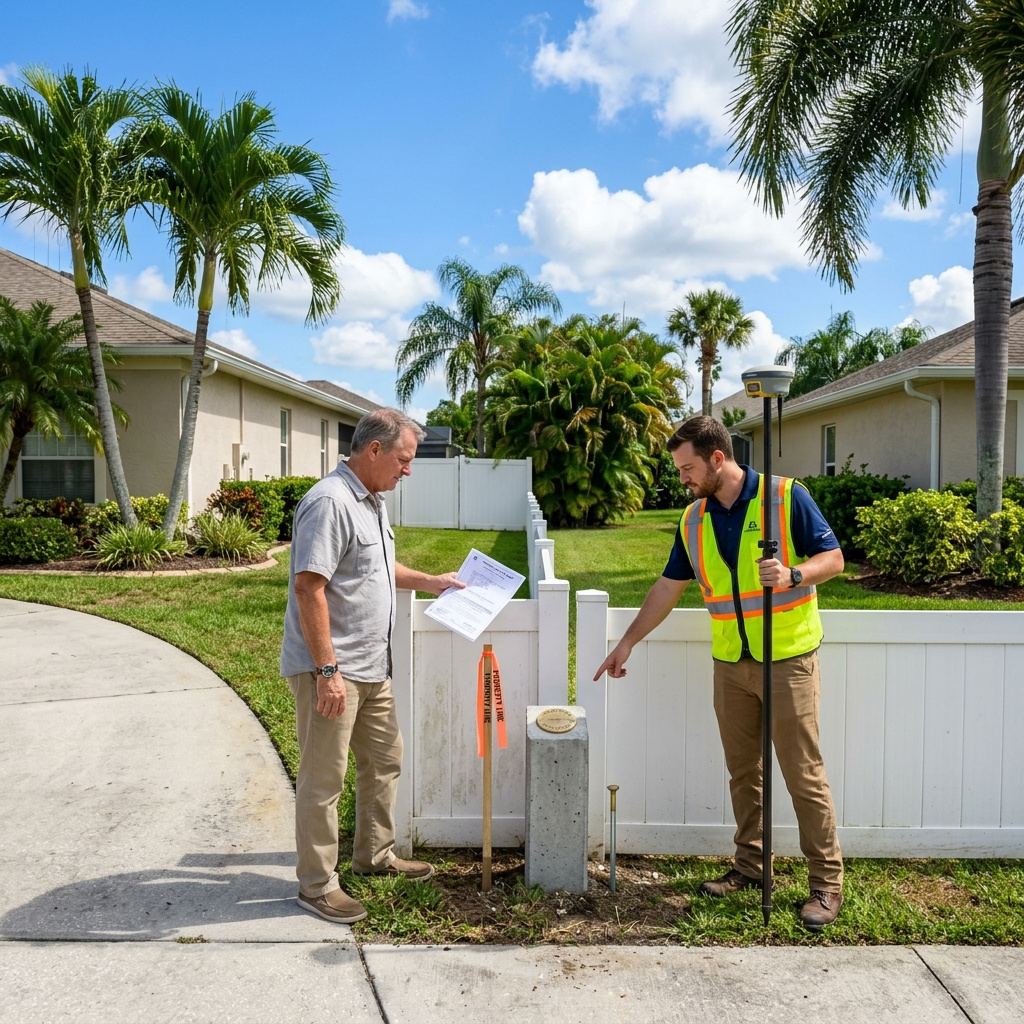
Fence disputes in Florida often begin with a simple question: where does one property end and the next begin? When the answer is unclear, a fence can become more than a practical barrier. It may trigger a boundary conflict, a claim of encroachment, or a larger disagreement about who has the right to use a strip of land.
Florida law gives property owners several ways to address these disputes, but the correct response depends on whether the line is truly uncertain or whether a fence was placed on land that clearly belongs to someone else. A survey, the deed language, and the history of use all matter. In many cases, the best outcome comes from prompt communication and written documentation before the disagreement escalates into litigation.
Why fence disputes happen
Property owners usually install fences for privacy, security, pets, or appearance. Problems arise when the fence does not match the legal boundary. Sometimes the error is caused by an old survey, a misplaced marker, or a misunderstanding between neighbors. In other situations, one owner assumes that an existing fence marks the property line even though no formal agreement ever established it.
Florida courts look carefully at the difference between a mistaken assumption and a genuine boundary question. That distinction matters because a fence alone does not automatically prove that both neighbors believed the line was in dispute. The existence of a fence may be relevant evidence, but it is not enough by itself to prove uncertainty about the boundary.
When a fence crosses onto another property
If a survey shows that a fence clearly extends onto a neighbor’s land, the situation is generally treated as an encroachment. In that circumstance, the landowner whose property is affected should notify the other party in writing and identify the problem as soon as possible. Florida’s property law guidance explains that when there is no real uncertainty about the boundary and a fence plainly crosses the line, the person who built the fence is expected to remove it.
That does not mean every dispute ends with immediate removal. Some neighbors negotiate a relocation plan, a written license, or another practical arrangement. Still, written notice is important because it creates a record and may help prevent later arguments about delay, consent, or acquiescence.
The legal meaning of boundary uncertainty
Florida recognizes that boundaries are not always obvious on the ground. Trees move, markers vanish, plats become hard to interpret, and older improvements may have been built long before the current owners arrived. In these cases, the law may treat the location of the dividing line as uncertain.
That uncertainty can matter because Florida cases recognize doctrines that may validate a line other than the one shown on paper when neighbors have acted as if a different line were correct for a long enough period. The key idea is not simply that a fence exists, but that both sides may have accepted it as the practical boundary under circumstances showing real doubt or agreement.
Two doctrines that can affect the outcome
Florida property disputes involving fences often turn on two related ideas: boundary by agreement and boundary by acquiescence. These concepts are similar, but they are not identical, and each has its own elements.
Boundary by agreement generally requires uncertainty about the true line, an actual understanding that a certain line will be treated as the boundary, and later possession consistent with that understanding for a period long enough to show a settled recognition of the line. Boundary by acquiescence also depends on uncertainty, but focuses on continued occupation and acceptance of a line other than the true one for the statutory period, which Florida materials describe as more than seven years.
The practical lesson is that a fence may help show how the parties behaved, but it does not automatically prove a new boundary. Evidence of discussion, conduct, maintenance, and long-term acceptance usually matters more than the fence itself.
| Issue | What matters most | Typical result |
|---|---|---|
| Clear encroachment | Survey and deed show the fence is on the wrong side | Written notice and possible removal |
| Boundary by agreement | Uncertainty plus an agreement on a line | Court may uphold the agreed line |
| Boundary by acquiescence | Long-term acceptance of a different line | Longstanding practical boundary may be recognized |
Why a professional survey is usually the starting point
A licensed surveyor is often the most reliable way to determine where the boundary actually lies. Deeds, plats, and old neighborhood assumptions can be useful, but they do not replace a current survey. If the recorded description and the physical fence do not match, the survey can clarify whether the issue is a minor overlap, a misplaced corner, or a deeper title problem.
For that reason, many boundary disputes become easier to resolve once the parties have the same factual baseline. A survey can also prevent unnecessary conflict, especially if one neighbor is willing to move a fence before the disagreement becomes expensive.
How neighbors can resolve the issue without court
Litigation is not the only path. In fact, many fence disputes are handled more efficiently through direct discussion. A calm conversation after reviewing survey results may lead to several workable solutions. One neighbor may agree to move the fence. Both parties may split the cost of relocation. Or they may decide to document a shared arrangement that reflects how the land is actually being used.
Mediation is another useful option. A neutral third party can help the neighbors narrow the issues and focus on practical outcomes rather than blame. If the parties reach an agreement in mediation, the result can be put into writing and enforced later if needed.
Some owners also choose a written boundary line agreement. This type of agreement helps define the line with clarity and reduces the risk of future disputes. Recording the agreement can make it easier for later buyers to understand what was decided.
What to do if the neighbor refuses to move the fence
If informal efforts fail, the affected owner may need to move to formal remedies. The right remedy depends on the facts, but Florida property owners commonly consider a demand letter, an action for removal, a quiet title claim, or an injunction requiring the fence to be taken down.
At that stage, documentation becomes critical. Owners should keep copies of surveys, deeds, photographs, dated correspondence, and any messages that show how the issue developed. Evidence of delay, consent, or prior discussion may become important if either side later argues that the boundary was accepted.
- Get a current survey and keep the results with the property records.
- Send written notice if the fence is clearly on your land.
- Save photos showing the location of the fence and any markers.
- Do not remove or alter the fence before understanding the legal risk.
- Consider mediation before filing suit.
Why acting quickly matters
Delay can complicate a dispute. If a landowner knows about an encroachment and does nothing for an extended period, the other side may argue that the existing line was accepted or treated as the practical boundary. Florida law also places time limits on many real-property claims, so waiting too long can reduce available options.
Acting quickly does not mean rushing into court. It means confirming the boundary, notifying the other party in writing when appropriate, and preserving the evidence needed to protect ownership rights. Prompt action may also help preserve goodwill between neighbors, which is valuable even when the legal issue is serious.
How title records and property history can matter
A fence dispute is rarely solved by looking at the fence alone. The deed, prior surveys, subdivision plat, and recorded agreements may all help explain why the fence ended up where it is. If the property has changed hands several times, earlier owners may have made arrangements that were never fully understood by later buyers.
That is one reason title review is so important. A title search may uncover easements, recorded agreements, or exceptions that affect the property line or the use of the affected area. Buyers who discover a fence issue after closing may also want to review title insurance coverage to determine whether the policy addresses the problem.
Common mistakes property owners should avoid
Fence disputes often worsen because one side assumes the law will automatically favor the visible structure. That assumption can lead to unnecessary conflict. It is also risky to cut, move, or remove a fence without understanding ownership rights and local requirements.
Another common mistake is treating a casual conversation as if it were a binding agreement. In property disputes, clarity matters. If the neighbors reach a resolution, it should usually be written down and, when appropriate, recorded. Verbal understandings can be forgotten or disputed later.
Property owners should also avoid ignoring old signs of disagreement. If previous owners had problems over the same line, the history may be relevant to the current case. Understanding that history early can shape a better strategy.
When legal help is worth considering
Many fence issues are straightforward, but others involve overlapping surveys, long-standing use, or competing claims of ownership. In those cases, a Florida real estate attorney can help evaluate whether the matter is a simple encroachment, a possible boundary by acquiescence issue, or a more complicated title dispute.
Legal counsel can also help choose the most practical path forward. Sometimes that means a demand letter and negotiation. Sometimes it means mediation. In more difficult cases, filing suit may be necessary to protect the property and prevent future claims.
Frequently asked questions
Does a fence automatically prove the property line? No. Florida guidance indicates that a fence can be evidence of uncertainty, but it is not enough by itself to prove a boundary dispute or a new legal line.
What if the survey shows the fence is on my land? If the boundary is clear and the fence encroaches, the owner should generally send written notice and ask for removal or relocation.
Can neighbors agree to keep the fence where it is? Yes, but the agreement should be written and, in many cases, recorded so future owners know what was decided.
Is mediation useful in fence disputes? Yes. Mediation can help neighbors reach a practical resolution without the cost and stress of a court case.
Why is timing important? Because long-term acceptance, delay, and recorded history can affect later legal claims and defenses.
References
- Handbook of Florida Fence and Property Law: Boundaries and Encroachments — University of Florida IFAS Extension. 2024. https://ask.ifas.ufl.edu/publication/FE107
- Handbook of Florida Fence and Property Law: Boundaries and Encroachments — University of Florida IFAS Extension / FLVC PDF. 2024. https://journals.flvc.org/edis/article/download/118760/version/69360/137122/244432
- Boundary Lines — Jimerson Birr. 2025. https://www.jimersonfirm.com/services/real-estate-transactions-disputes/boundary-lines/
- Handling Boundary Disputes With Neighbors in Florida — Lulich & Attorneys. 2025. https://www.lulich.com/how-to-handle-boundary-disputes-with-neighbors-and-how-a-real-estate-lawyer-can-help/
Similar Articles








Read full bio of Sneha Tete


