
Florida Adoption Laws: A Practical Guide for Families
Understand who can adopt, how Florida adoptions work, and the legal steps to build your family with confidence and compliance.
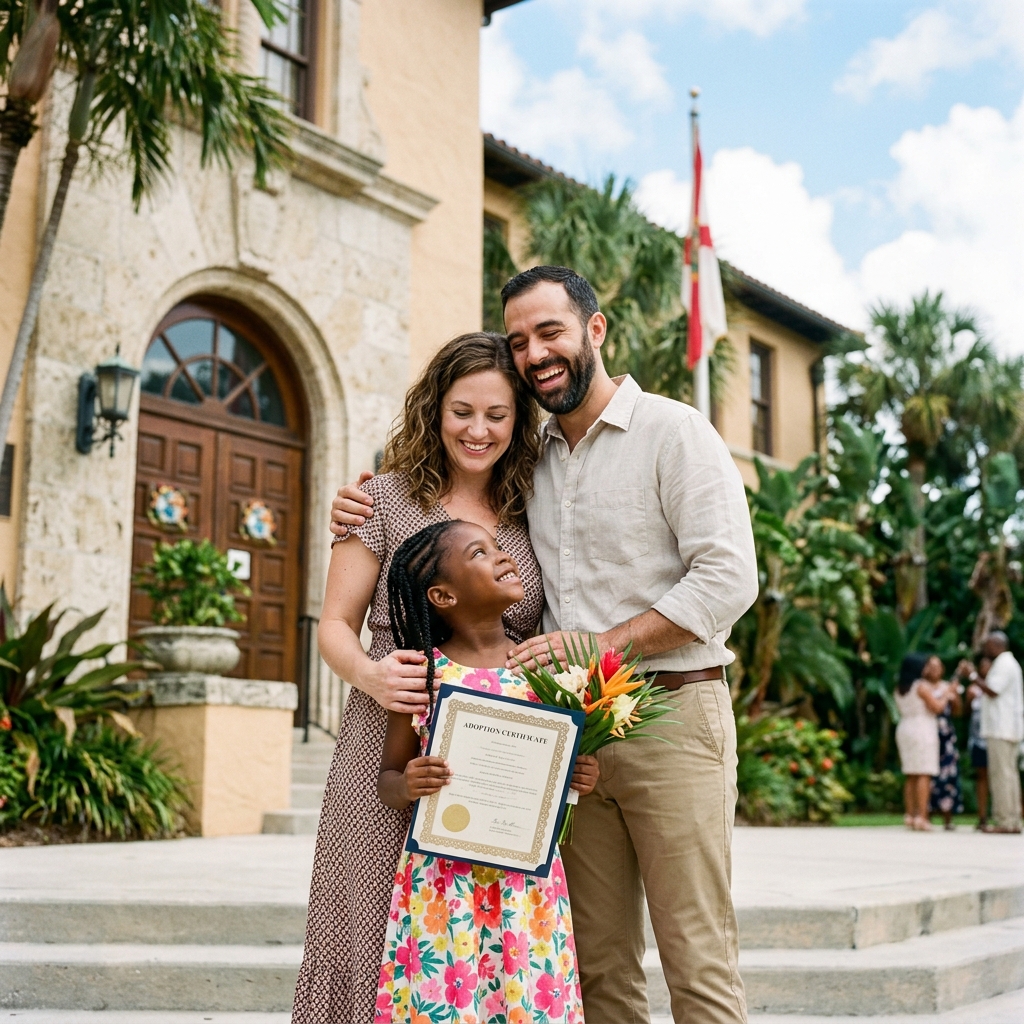
Adoption in Florida is governed primarily by Chapter 63 of the Florida Statutes, which sets out who can adopt, who may be adopted, and how the process must be carried out from first contact with an adoption professional to final court approval. Understanding these rules helps prospective parents, birth parents, and relatives make informed decisions and avoid costly delays or legal complications.
This guide explains Florida adoption laws in straightforward language, walking through eligibility rules, consent requirements, the home study, court procedures, adoption expenses, and special types of adoptions. It is informational only and is not a substitute for advice from a licensed Florida attorney.
1. Who Can Adopt and Who Can Be Adopted in Florida?
Florida law is relatively flexible about who may adopt, while still requiring that the placement be in the child’s best interests.
1.1 Eligibility to Adopt
Under Florida law and common practice in Florida courts:
- Adults age 18 or older are generally eligible to petition for adoption.
- Married couples usually adopt jointly, unless one spouse is adopting a stepchild or the court excuses joint adoption for a specific reason.
- Single adults may adopt as individual parents; there is no requirement to be married to adopt.
- Courts evaluate whether applicants are emotionally and financially able to care for a child, but there is no fixed income level imposed by statute.
- Florida law does not impose a strict upper age limit for adoptive parents, but age may be considered as part of the overall best-interest analysis.
In addition, the court must be satisfied that the adoption is not being sought for an improper purpose and that all statutory requirements (such as background checks and home study approval) have been met.
1.2 Who May Be Adopted
Florida law is broad on this point: any person may be adopted, including infants, older children, and adults. However, special rules apply depending on the person’s age:
- Children under 12 can be adopted without their formal written consent, though their wishes may still be considered.
- Children age 12 or older typically must give written consent to the adoption unless a court finds that waiving consent is in the child’s best interests.
- Adults may be adopted through adult adoption procedures, which have tailored consent and notice requirements under Chapter 63.
| Age of person being adopted | Is the person’s consent usually required? | Key legal note |
|---|---|---|
| Under 12 | No written consent required | Court still considers the child’s welfare and may listen to the child’s preferences. |
| 12–17 | Yes, usually required | Child must typically consent unless the judge finds a waiver is in the child’s best interests. |
| 18 and older | Yes | Adult adoption has its own consent and notice rules under Florida law. |
2. Types of Adoptions Recognized in Florida
Florida law and practice recognize several common adoption paths, each with its own legal nuances.
- Agency adoptions – A licensed child-placing agency matches birth parents and adoptive parents and helps navigate consents, placement, and post-placement supervision.
- Private or independent adoptions – Often coordinated by licensed Florida adoption attorneys, these typically involve a direct match between birth parents and adoptive parents.
- Stepparent adoptions – A stepparent adopts a spouse’s child, frequently with simplified requirements where the other parent’s rights are voluntarily surrendered or legally terminated.
- Relative adoptions – Grandparents, aunts, uncles, or other relatives adopt a child already within the family network, often after dependency or guardianship proceedings.
- Intercountry adoptions – Florida courts recognize certain foreign adoptions and may issue a domestic adoption decree or re-adoption for children adopted abroad, subject to state and federal law.
Regardless of type, all adoptions must follow the core requirements of Chapter 63, including consent, notice to necessary parties, and court approval.
3. Consent to Adoption and Termination of Parental Rights
A central feature of Florida adoption law is the requirement that parental rights be legally terminated before a child can become legally free for adoption. This can happen through voluntary consent or an involuntary termination ordered by the court.
3.1 Who Must Consent
Depending on the circumstances, Florida law may require consent from:
- The child’s legal mother.
- The child’s legal father, which may include a presumed, adjudicated, or registered putative father, as applicable.
- The child age 12 or older, except where the court finds that waiving consent serves the child’s best interests.
- Sometimes, a legal guardian or the Department of Children and Families (DCF) when the child is in state care.
When consent cannot be obtained, the court can terminate parental rights if statutory grounds are met and there is clear and convincing evidence that termination is in the child’s best interests.
3.2 Timing and Formalities for Consent
Florida law imposes strict rules about when and how consent may be given:
- A birth mother may generally sign consent no earlier than 48 hours after birth or upon discharge from the hospital or birth center, whichever occurs first.
- Consents must be written, signed before appropriate witnesses, and acknowledged before a notary or other authorized officer.
- The consenting party must be informed of the final nature of the consent, subject only to very limited grounds for revocation such as fraud or duress.
Because these documents are tightly regulated, most families work with a Florida adoption attorney or licensed agency to ensure compliance.
3.3 Rights of Unmarried Biological Fathers
Florida law gives certain rights to unmarried biological fathers who take specific steps to preserve those rights under the state’s putative father registry and related provisions.
- To protect the right to notice and consent, an unmarried father may need to timely register his paternity and demonstrate a commitment to support and care for the child.
- Florida law requires that adoption entities make diligent efforts to locate and notify known, locatable biological fathers before their rights can be terminated.
Failure to act within legal deadlines can result in the loss of rights, so prompt legal advice is crucial for unmarried fathers who wish to assert parental rights.
4. Home Study, Background Checks, and Pre-Adoption Requirements
Florida requires prospective adoptive parents to undergo a home study evaluation and various background checks before a child can be placed or an adoption can be finalized.
4.1 Home Study Basics
A Florida adoption home study is an in-depth review carried out by a licensed child-placing agency, a licensed social worker, or another qualified professional. It typically includes:
- Criminal and abuse registry background checks for all adult household members.
- Interviews with the prospective adoptive parents and sometimes other household members.
- A review of the home environment to confirm it is safe, suitable, and stable.
- Evaluation of the family’s financial stability, health, and support network.
- Education about adoption, trauma, and parenting an adopted child.
Recent legislative updates have aligned Florida background check requirements with federal standards and require fingerprinting for household members and certain frequent visitors in the home.
4.2 Post-Placement Supervision
After the child is placed, Florida requires a period of post-placement supervision before the adoption becomes final.
- A licensed agency or social worker visits the home and prepares post-placement reports describing the child’s adjustment, parent-child bonding, and any services needed.
- Florida law often uses a supervision period of approximately 90 days after placement before a final hearing can be scheduled, though timelines can vary.
These reports are submitted to the court and must generally be favorable before a judge will issue a final judgment of adoption.
5. Adoption Expenses and Financial Regulations
Florida tightly controls what payments may be made in connection with an adoption to prevent baby-selling and other abuses.
5.1 Permitted Expenses
Prospective adoptive parents may pay certain reasonable and necessary expenses related to the pregnancy and adoption, including:
- Medical costs for the pregnancy and birth.
- Reasonable living expenses for the expectant parent during pregnancy and for a limited period after birth (such as rent, food, utilities, and transportation).
- Court filing fees and other court costs.
- Fees for adoption-related professional services, such as attorneys, licensed agencies, counseling, and home studies.
These expenses must be documented and disclosed to the court, often in a sworn affidavit filed by the adoptive parents or their attorney.
5.2 Limits and Court Approval
Florida law and recent reforms impose limits and oversight on adoption payments:
- Expenses must be itemized and may be subject to court review if they exceed certain thresholds (for example, higher levels of legal fees or living expenses typically require explicit court approval).
- Payments that could be viewed as compensation for placing a child – as opposed to reimbursing actual expenses – are prohibited.
- Recent legislation introduced tighter caps and requires courts to issue written determinations when approving fees above statutory limits.
Additionally, only properly licensed entities may advertise adoption services in Florida, and all ads must clearly display the agency license number or attorney Bar number, reinforcing oversight of the process.
6. Court Procedures and Finalization
Every Florida adoption must be completed through a court process that culminates in a final judgment of adoption.
6.1 Filing the Adoption Petition
Once a child is legally free for adoption and pre-placement requirements are met, the adoptive parent(s) file a petition for adoption in the appropriate Florida circuit court.
- The petition usually includes detailed information about the adoptive parents, the child, the type of adoption, and the circumstances of placement.
- Supporting documents may include the home study, background check results, proof of consents or orders terminating parental rights, and expense affidavits.
- Florida law generally requires the petition to be filed within a certain period after the judgment terminating parental rights, often within about 60 days in many cases.
6.2 The Final Adoption Hearing
After all statutory requirements have been met and post-placement reports filed, the court schedules a final hearing.
- The hearing typically cannot occur until a minimum waiting period has passed after termination of parental rights and after the child has lived with the adoptive parents for the required supervision period.
- Adoptive parents must usually attend, sometimes with the child, either in person or with court permission by remote means.
- The judge reviews the file, may ask a few questions, and if satisfied, signs a final judgment of adoption that legally establishes the parent-child relationship.
Once the judgment is entered, the adoptive parents gain full parental rights and responsibilities, and a new birth certificate listing them as parents can be issued through Florida’s vital records system.
7. Frequently Asked Questions About Florida Adoption Laws
7.1 Do I need to live in Florida to adopt under Florida law?
Florida law does not require every adoptive parent to be a Florida resident, but residency and where the child lives can affect which court has jurisdiction and what procedures apply. Many cases involving non-residents still proceed under Chapter 63 if the child is born or placed in Florida, but interstate and federal law (such as the Interstate Compact on the Placement of Children) may also apply.
7.2 Can a same-sex couple adopt in Florida?
Yes. Past statutory restrictions have been invalidated, and Florida now permits qualified individuals and couples, including same-sex couples, to adopt, provided they meet the same requirements as any other applicants and the court finds the adoption is in the child’s best interests.
7.3 How long does a typical Florida adoption take?
The timeline varies based on the type of adoption, how quickly consents are obtained, and the court’s schedule. Many private infant adoptions finalize within several months after placement, while agency and foster care adoptions can take longer due to additional procedures and case histories. Florida law requires a waiting period after termination of parental rights and a post-placement supervision period before the final hearing, which together often result in finalization occurring several months after placement.
7.4 Is an attorney required for adoption in Florida?
The statutes do not always require an attorney in every situation, but Florida’s adoption laws are complex and most families use a Florida-licensed adoption attorney or licensed agency to ensure that consents, notices, and court filings are done correctly. The Florida Bar specifically recommends consulting a lawyer for adoption matters due to the high stakes and technical legal requirements.
7.5 Can adoption be undone after it is finalized?
Final judgments of adoption are intended to be permanent. After finalization, the parent-child relationship has the same legal status as if the child were born to the adoptive parents. Challenging a finalized adoption is possible only in rare circumstances, such as fraud, serious procedural defects, or lack of jurisdiction, and requires court action. Because challenges are difficult and disruptive, courts and statutes strongly favor finality once all requirements are met.
References
- Chapter 63 – Adoption — The Florida Senate. 2022. https://www.flsenate.gov/Laws/Statutes/2022/Chapter63
- Title VI, Civil Practice and Procedure, Chapter 63 — Online Sunshine, The 2025 Florida Statutes. 2025. https://www.leg.state.fl.us/statutes/index.cfm?App_mode=Display_Statute&URL=0000-0099/0063/0063.html
- Consumer Pamphlet: Adoption in Florida — The Florida Bar. 2023. https://www.floridabar.org/public/consumer/pamphlet002/
- Adopting a Child: Legal Steps Every Florida Family Should Know — Frank Family Law. 2025. https://www.frankfamilylaw.com/blog/2025/adopting-a-child-legal-steps-every-florida-family-should-know.html
- Your Complete Guide to Florida Adoption Laws — American Adoptions. 2024. https://www.americanadoptions.com/florida-adoption/florida-adoption-laws
- Legal Guidance for Adoptive Parents in Florida — Jeanne T. Tate, P.A. 2023. https://floridaadoptionattorney.com/adoptive-parents/
- How Florida’s New Adoption Laws Affect Prospective Parents — Tupper Law. 2024. https://www.tupperlawjax.com/how-floridas-new-adoption-laws-affect-prospective-parents/
Similar Articles








Read full bio of Sneha Tete


