
Flash Mobs and the Law: What Organizers Need to Know
A practical legal guide to planning, joining, or responding to flash mobs without crossing the line into criminal conduct.
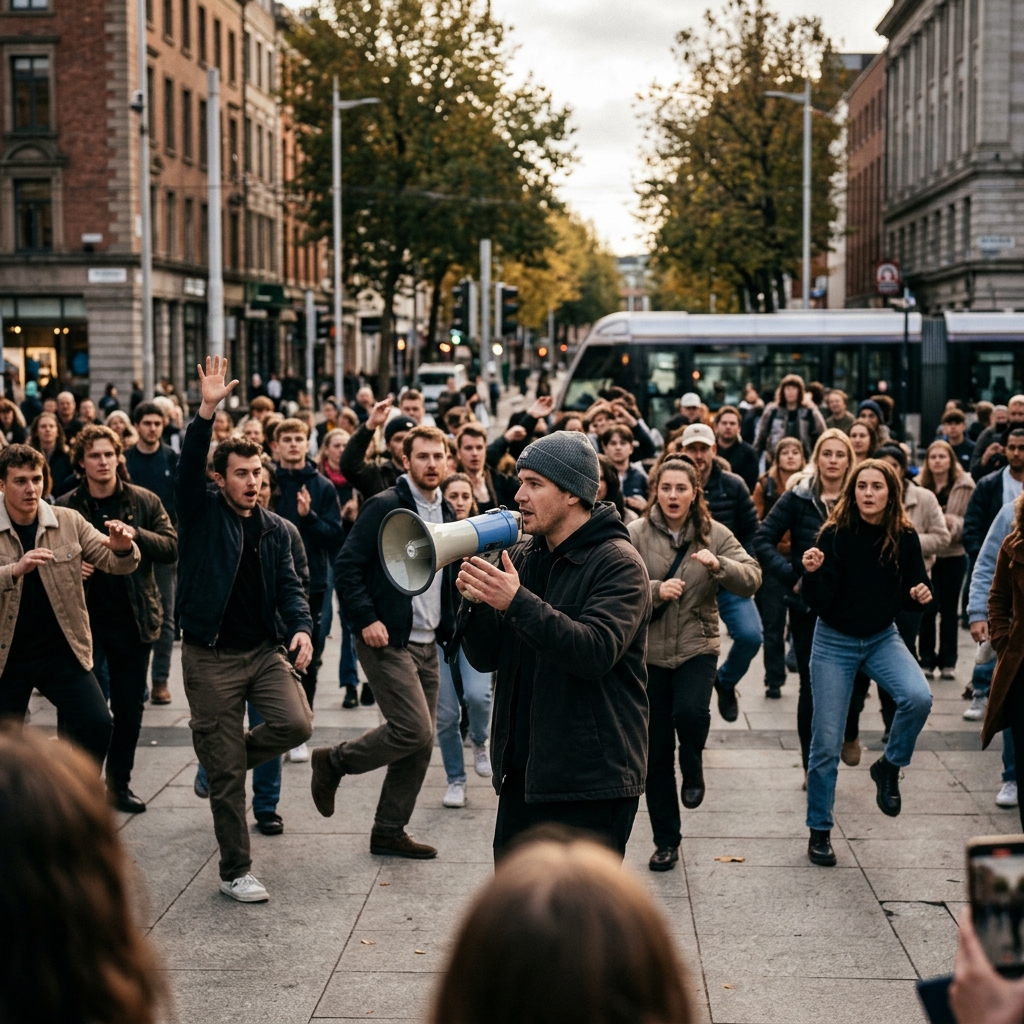
Flash mobs began as playful, spontaneous-looking gatherings where strangers meet in a public place, perform a short, unusual act, and then rapidly disperse. Today they range from light-hearted dance routines to coordinated social protests and even criminal “smash-and-grab” events. Whether a flash mob is legal depends less on the label and more on what participants actually do, where they do it, and which laws apply.
This guide explains how flash mobs intersect with criminal, property, and constitutional law, and offers practical steps for planning or joining one without ending up in legal trouble.
Understanding What Counts as a Flash Mob
A typical flash mob involves a large group assembling suddenly in a public space, performing an unusual action—such as dancing, singing, or staged stillness—and dispersing shortly afterward. Organizers usually coordinate the event through text messages, social media, or email. Security experts note that flash mobs can attract hundreds or even thousands of people, sometimes overwhelming normal crowd management measures.
- Surprise element: Participants appear to gather spontaneously, even though the event is planned in advance.
- Short duration: Most performances last only a few minutes before the crowd disperses.
- Unusual conduct: The group typically does something out of the ordinary—singing, dancing, pillow fights, or frozen poses.
- Organized online: Coordination usually happens through digital communication channels, making it easy to reach a large audience quickly.
Not every sudden, organized gathering is described as a flash mob. Some protests, marketing stunts, or paid performances are more accurately considered smart mobs, especially when they have an obvious commercial or political purpose. Regardless of terminology, similar legal rules typically apply.
Are Flash Mobs Illegal by Default?
There is no universal law that simply declares “flash mobs” illegal. Instead, authorities look at the underlying behavior: whether the group blocks traffic, trespasses, damages property, assaults someone, or violates permit rules. In some jurisdictions, officials have used existing laws to effectively ban or restrict flash mobs by enforcing permit requirements for public gatherings.
Security guidance for businesses notes that while many flash mobs are designed for entertainment, they can be illegal in some areas or become dangerous when they grow too large or disorderly. The legality of a particular event depends on local statutes and ordinances.
| Type of Flash Mob | Typical Purpose | Legal Risk Level (Generalized) |
|---|---|---|
| Artistic or dance performance | Entertainment, creative expression | Low, if permitted and non-disruptive |
| Political demonstration | Protest, advocacy | Moderate, due to crowd control and permit rules |
| Commercial promotion | Marketing, publicity | Moderate, especially if staged on private property without consent |
| Criminal “flash mob” theft or vandalism | Group shoplifting, looting, assaults | Very high; clearly illegal and often aggressively prosecuted |
In short, a flash mob can be perfectly lawful, borderline, or blatantly illegal. The label offers no protection if participants break criminal or civil laws.
Major Legal Areas That Affect Flash Mobs
Lawyers who work with flash mob organizers emphasize that these events often implicate multiple legal fields at the same time: criminal law, property and tort law, intellectual property, constitutional rights, and sometimes entertainment industry regulations.
Criminal Law: When a Fun Idea Becomes a Crime
Criminal liability can arise from the actions of individual participants or, in some cases, from coordination of group misconduct. Key criminal law issues include:
- Disorderly conduct and public nuisance: Loud, disruptive behavior, blocking streets, or interfering with public services can violate disorderly conduct or nuisance statutes.
- Assault, battery, and harassment: Intimidating bystanders, unwanted physical contact, or aggressive behavior can lead to assault or harassment charges.
- Vandalism and property damage: Writing on walls, damaging fixtures, or leaving extensive litter may be charged as criminal mischief or vandalism.
- Theft and burglary: Coordinated shoplifting incidents, sometimes described as “flash mob thefts,” raise serious felony charges and can trigger enhanced penalties for organized retail crime.
Businesses and security professionals warn that large, uncontrolled groups can quickly become hazardous to workers and customers, exemplifying why law enforcement sometimes responds aggressively when crowds appear to be forming without prior notice.
Property and Trespass: Where You Perform Matters
Flash mobs often take place in spaces that feel public but are legally private, such as shopping malls, transit stations, or corporate plazas. Property law and trespass rules govern whether organizers may use those locations without permission.
- Private property: Owners may bar unapproved events, remove participants, or seek civil damages if the gathering interferes with business operations or causes harm.
- Public property: Even parks and streets usually require permits for organized events, especially those involving large crowds, amplified sound, or structures.
- Liability exposure: If someone is injured during the event, questions arise about who is responsible—the property owner, the organizers, or individual participants.
Some safety guidelines recommend that employees lock doors and contact authorities if they see an unusually large crowd forming, underscoring the concern property owners have about unexpected gatherings.
Civil Liability and Tort Law
Beyond criminal charges, civil lawsuits may follow if the flash mob causes injury or financial loss. Potential claims include:
- Negligence: Failing to take reasonable steps to prevent foreseeable harm, such as overcrowding or unsafe stunts.
- Defamation or invasion of privacy: Recording and posting bystanders without consent in sensitive situations could trigger privacy or reputational claims in some jurisdictions.
- Business interruption: Shops and restaurants may seek damages if an event disrupts operations or scares away customers.
Intellectual Property and Creative Rights
Many flash mobs involve music, choreography, or branded imagery. This raises intellectual property concerns:
- Copyright: Using recorded music in public may require licenses from rights organizations; choreography may also be protected in some contexts.
- Trademarks: Incorporating logos or brand names without permission can lead to trademark disputes, particularly when the event is commercial.
Lawyers caution that intellectual property is a core component of “flash mob law,” especially for events designed as entertainment or promotion.
Free Speech and Assembly: Constitutional Dimensions
In the United States, many flash mobs are framed as expressive conduct. The First Amendment protects speech, peaceful assembly, and in many cases artistic expression. However, constitutional rights do not exempt participants from reasonable time, place, and manner restrictions. Cities can require permits, set noise limits, or regulate where gatherings occur, as long as they do not unfairly target particular viewpoints.
Legal commentary on protest-style flash mobs emphasizes the need to balance expressive rights with public safety, and suggests that organizers understand how local rules may affect demonstrations, especially if they involve controversial content or partial nudity.
Permits, Approvals, and Working with Authorities
One of the most decisive factors in flash mob legality is whether organizers obtain required permits or approvals for use of public space. Some municipalities have effectively shut down flash mobs by strictly enforcing permit rules for events in public squares and streets. In practice, this means that even a brief performance can be treated like a traditional event if it is organized and expected to draw a crowd.
- Event permits: Many cities require permits for organized gatherings above a certain size or when public infrastructure, such as roads or parks, is used for non-routine activities.
- Coordination with local government: Organizers may need to submit a plan detailing crowd size, timing, and any equipment (e.g., sound systems), and pay fees.
- Private property clearances: Events staged in malls or corporate plazas often require written permission or contracts with property owners.
Guidance for flash mob creators stresses that they should never assume their event is legal, but instead research state and local rules and, when uncertain, consult an attorney. That caution is equally relevant to participants who join large, organized activities in unfamiliar locations.
Decency, Safety, and Crowd Management Concerns
Beyond permits, organizers must pay attention to public decency standards and safety requirements. Officials may intervene if the event includes partial nudity, explicit content, or creates hazards for pedestrians and drivers. Some commentary on flash mobs highlights potential conflicts with decency laws, including events involving minimal clothing.
Security professionals warn that flash mobs can become unsafe, especially near workplaces and busy commercial areas, and recommend proactive steps for people who may be affected.
- Arrive early and identify safe areas if you know a flash mob is planned nearby.
- Stay clear of dense crowds and avoid trying to physically break up a mob.
- Lock doors and notify authorities if a large group appears around your workplace.
- Have a plan for employee and customer safety if your business is near likely gathering points.
These safety considerations also illustrate why some local governments take a cautious stance toward flash mobs, even when the underlying intent is entertainment.
Practical Tips for Organizers and Participants
Whether you are planning a flash mob or considering joining one, a few practical steps can significantly reduce legal risk.
For Organizers
- Research local laws: Learn the rules on public gatherings, permits, noise, and decency in the specific city or town where the event will occur.
- Secure permissions: Obtain written consent for private property and required permits for public spaces.
- Plan for safety: Consider crowd size, emergency access, and clear entry/exit routes.
- Brief participants: Provide clear instructions on acceptable behavior, including a ban on vandalism, harassment, or blocking emergency services.
- Prepare for police interaction: Understand what law enforcement may ask or require, and designate a point person to communicate respectfully with officers.
For Participants
- Know the plan: Understand the intended actions and location before joining; avoid events that seem geared toward theft or vandalism.
- Follow instructions: Adhere to organizer guidance on when to assemble, how to behave, and when to leave.
- Respect bystanders: Do not block exits or harass passersby; avoid filming people who clearly do not wish to be recorded.
- Take law enforcement seriously: If approached by police, remain calm and polite. If arrested, you generally have the right to remain silent and request an attorney before answering questions.
FAQs About Flash Mobs and Legality
Are flash mobs always legal if they are for entertainment?
No. Entertainment does not automatically make an event lawful. If participants trespass, create serious safety risks, damage property, or ignore permit rules, they may face criminal or civil consequences, even if their primary goal was fun.
Can I be arrested just for being present at a flash mob?
It depends on the circumstances and local law. Merely standing in a public place is generally lawful, but if authorities declare an unlawful assembly, or if the crowd is engaged in criminal activity, individuals who remain may be detained or arrested. Organizers and participants should pay attention to lawful orders from police.
Do online invitations to a flash mob create legal liability?
Inviting people to participate in lawful expressive conduct is typically protected speech. However, promoting or coordinating criminal acts—such as theft or vandalism—can create liability for conspiracy or aiding and abetting. The content and intent of the invitation matter.
Are political flash mobs treated differently than artistic ones?
Political expression receives strong constitutional protection in many countries, including the United States, but that protection is balanced against public safety and order. Authorities may impose neutral, content-independent limits on where and how such gatherings occur, including permits and time restrictions.
Should I talk to a lawyer before organizing a flash mob?
While not legally required, consulting a lawyer familiar with local regulations, especially if you expect a large crowd or controversial content, can help you avoid unintentional violations. Legal professionals repeatedly advise checking state and local rules rather than assuming the event is allowed.
References
- Legal Rules for Creating Flash Mobs and Performances — Spin Sucks (Ruth Carter). 2013-06-13. https://spinsucks.com/social-media/legal-rules-for-creating-flash-mobs-and-performances/
- Top 5 Legal Considerations Before Launching Your Next Flash Mob — Attorney Steve® YouTube Channel. 2015-03-02. https://www.youtube.com/watch?v=abjCSf-QXA4
- Flash Mob — Wikipedia (for background terminology; primary references within). Last updated 2024-03-20. https://en.wikipedia.org/wiki/Flash_mob
- Flash Mob Law — Ruth Carter Law. 2014-01-01. https://carterlawaz.com/practice-areas/flash-mob-law/
- Flash Mob Safety — Allied Universal Security Services, Technology and Solutions. 2013-06-01. https://www.aus.com/sites/default/files/inline-files/Flash%20Mob%20Safety.pdf
Similar Articles








Read full bio of medha deb




