Credit card billing mistakes can cost you money, damage your credit, and create long‑term financial headaches if you ignore them. The good news is that federal law gives you specific rights to dispute many types of errors, and credit card companies must investigate and respond within defined timelines.
This guide walks you through how to recognize common billing problems, how to contact your card issuer, what to include in a formal dispute letter, and what to expect as your case is investigated. You will also learn when you must pay undisputed charges and how to escalate your complaint if the company does not fix the mistake.
Why It Matters to Check Every Credit Card Statement
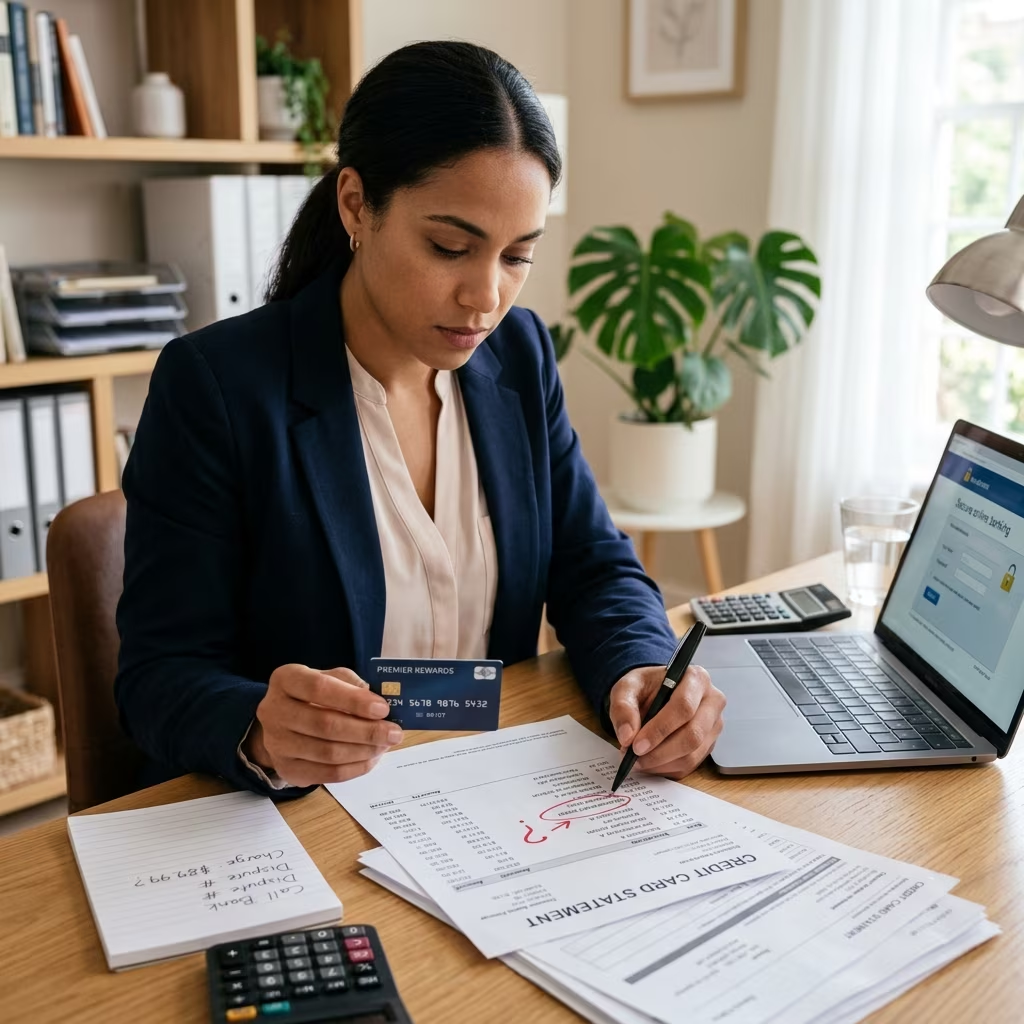
Credit card statements contain a detailed record of what you owe, how much interest you are being charged, and any fees assessed during the billing cycle. Regular review is the only reliable way to spot errors early enough to use your legal dispute rights, which typically require you to act within about 60 days of the statement date.
Even if you use automatic payments or mobile alerts, you should not assume that every charge or fee is correct. Data entry mistakes, merchant errors, duplicate transactions, and even fraudulent activity can appear on your bill without an obvious warning.
Key Items to Review Each Month
- Starting balance: Compare the starting balance to your previous statement to confirm it matches what you expected.
- New purchases: Scan each transaction for unfamiliar merchants, amounts that look too high, or charges for things you did not buy.
- Fees: Look for late fees, over‑limit fees, annual fees, and fees for optional add‑on products that you did not authorize.
- Interest charges: Check your interest rate and finance charges and confirm they align with your card agreement.
- Payments and credits: Verify that your payments and any refunds or credits appear correctly and on the right dates.
Common Types of Billing Errors
Federal law, including the Fair Credit Billing Act (FCBA), recognizes several categories of billing mistakes that consumers can dispute. While specific definitions come from the statute, many errors fall into practical everyday patterns.
| Type of Error | Examples | What It Might Look Like on Your Statement |
|---|---|---|
| Unauthorized charges | Fraud; someone else using your card without permission | Transactions from unfamiliar merchants, locations, or for items you never bought |
| Incorrect amounts | Merchant keyed in the wrong price; wrong tip; wrong currency conversion | Charge amount is higher than your receipt or what you agreed to pay |
| Duplicate charges | Same purchase appears twice; system error at the merchant | Two identical transactions on the same date or close dates |
| Failure to post credits | Refund for a returned item never processed; canceled service not credited | Missing refund you were promised by the merchant |
| Incorrect fees | Late fee added when you paid on time; fee for services you did not agree to | Unexpected fees, add‑on product charges, or service plans you never enrolled in |
| Billing to the wrong person or address | Account activity attributed to the wrong cardholder | Account number or personal details on the statement do not match yours |
First Steps When You Spot a Possible Mistake
When you see something that looks wrong, act quickly. In many cases, the easiest path is to start with the merchant, especially if the problem involves a specific purchase rather than a general fee or systemic error.
Try Resolving the Issue with the Merchant
If the error relates to a particular transaction, contact the store, service provider, or online seller first. Merchants can often reverse a duplicate charge, correct an amount, or issue a refund without requiring a formal dispute with your card issuer.
- Have your receipt, order confirmation, and any emails or messages ready.
- Explain clearly what went wrong and what correction you are requesting.
- Ask for written confirmation (email or message) of any promised refund or adjustment.
If the merchant refuses to help, will not respond, or you suspect fraud, your next step is to contact your credit card company immediately.
Contact Your Credit Card Company
Every credit card statement lists a customer service number, and the number also appears on the back of the card. Many issuers also allow you to initiate disputes through secure online banking or mobile apps.
- Call the customer service number on your statement or card.
- Use secure message or online dispute features if available.
- Clearly describe the charge or fee you believe is wrong, including dates, amounts, and the merchant name.
This initial contact serves two purposes: it alerts the issuer to the problem and may lead to an immediate temporary credit or freeze on the disputed amount. However, to fully protect your rights under federal law, you typically must follow up with a written dispute within the time limit described on your statement.
Preparing to File a Formal Billing Dispute
A formal dispute letter is often required to trigger the strongest legal protections, including limits on what you must pay while the investigation proceeds. Preparation is key; the more organized and detailed your documentation, the easier it is for the issuer to evaluate your claim.
Gather Supporting Documents
- Statements: The statement showing the alleged error and the prior statement for comparison.
- Receipts and invoices: Any proof of the correct purchase amount, date, and merchant.
- Contracts or terms: Copies of agreements, cancellation policies, or service terms relevant to the charge.
- Correspondence: Emails, chats, or letters between you and the merchant or card issuer.
- Screenshots: Images of order confirmations or account pages showing expected charges.
Find the Correct Dispute Address
Credit card statements include instructions for sending billing dispute notices and often list a specific mailing address separate from the payment address.
- Carefully read the fine print on the back or second page of your statement.
- Look for wording referring to “billing inquiries” or “disputes” and note that address.
- Do not assume the address where you send payments is also used for disputes.
Understand Time Limits
To keep your rights under federal law, you generally must send your written dispute within 60 days after the card issuer sent the statement that first showed the error.
If you miss this window, the company may treat the disputed amount as valid, and you may lose certain protections. Therefore, send your letter as soon as you discover the mistake and keep evidence of when it was mailed.
How to Write an Effective Dispute Letter
Your dispute letter should be clear, specific, and complete. The goal is to give the credit card company enough information to identify the problem quickly and compare your claim against their records.
Information to Include
- Your personal details: Full name and mailing address as they appear on your account.
- Account number: The credit card account number or a shortened form requested by your issuer.
- Description of the error: The amount, date, and merchant name for each disputed charge or fee.
- Explanation: Why you believe the charge is wrong (e.g., unauthorized, incorrect amount, duplicate, no refund, fee not agreed to).
- Requested correction: What you want the company to do (remove the charge, correct the amount, post a credit, remove a fee).
- Supporting documents: Copies (not originals) of receipts, statements, or correspondence that support your case.
Mailing and Record‑Keeping Tips
To document that your dispute was sent on time and received, many consumer advocates recommend mailing your letter using a trackable method.
- Send the letter by certified mail or another service that provides delivery confirmation.
- Keep a copy of the letter and all attachments for your records.
- Save the mailing receipt and any tracking information.
What Happens After You Send Your Dispute
Once the credit card company receives your written dispute, federal law requires them to respond within specific time frames. These timelines are designed to ensure that you are not left in uncertainty indefinitely.
Company Acknowledgment of Your Dispute
The card issuer must send you a written acknowledgment within about 30 days of receiving your dispute letter, confirming that they are looking into the matter.
If they correct the error quickly, the acknowledgment and resolution may be combined in one notice. Otherwise, you should receive confirmation that an investigation is underway.
Investigation Period
The issuer normally has up to two billing cycles (but not more than 90 days in many cases) to complete the investigation and send you a final written decision.
During this time, they may contact the merchant, review transaction records, and compare your documentation with their own system data. They may also ask you for additional information if something is unclear.
Your Payment Obligations During the Dispute
While the dispute is under investigation, you generally do not have to pay the specific amount you are contesting or related finance charges. However, you must continue to pay all undisputed charges on time to avoid late fees and damage to your credit.
- Pay at least the minimum amount due, excluding the disputed portion, as instructed by your issuer.
- Consider paying more toward non‑disputed balances to minimize interest.
- Keep copies of your payment records in case there is any confusion later.
Possible Outcomes and Next Steps
After the investigation, the credit card company must send you a written explanation of its decision. The outcome can be either a full or partial correction or a finding that the bill was accurate.
If the Company Agrees There Was an Error
- The issuer must remove or correct the inaccurate charge or fee from your account.
- Any related finance charges or late fees linked to the incorrect amount must typically be adjusted.
- You should receive an updated statement showing the corrected balance.
If the Company Says the Bill Is Correct
If the investigation concludes that the charge was valid, the issuer will explain in writing how they reached that conclusion. At that point, the disputed amount, along with any finance charges that accrued, may become payable.
- Review the explanation carefully to see whether it addresses all the evidence you provided.
- If you still believe the decision is wrong, consider contacting the issuer again, asking for a supervisor or specialized dispute department.
- Check whether you can file a complaint with a government agency, such as a consumer protection office or financial regulator.
Escalating Unresolved Problems
When you cannot resolve the error directly with your credit card company, external help may be appropriate. Government consumer protection agencies can take complaints and may intervene or use the information to enforce laws.
- Consider filing a complaint with a federal consumer financial regulator or your state consumer protection agency.
- Consult legal aid or a consumer law attorney if a large amount of money or serious credit damage is involved.
- Monitor your credit reports to see whether negative information appears based on the disputed charges.
Protecting Yourself Going Forward
Fixing one mistake is important, but preventing future problems is equally valuable. Ongoing monitoring of both your credit card statements and credit reports can help you catch issues early.
Good Habits for Ongoing Monitoring
- Set a monthly reminder to read each statement line by line before the due date.
- Enable transaction alerts via text or email to spot unexpected activity quickly.
- Review your credit reports from major credit reporting companies regularly to catch accounts or balances that do not look right.
- Keep copies of important receipts, especially for large or unusual purchases.
- Immediately report lost or stolen cards and suspicious activity to your issuer.
Frequently Asked Questions About Billing Errors
1. How long do I have to dispute a mistake on my credit card bill?
In many situations covered by federal billing error rules, you must send a written dispute within 60 days after the issuer sends the statement that first shows the error. Check the fine print on your statement for the specific timeline and instructions.
2. Do I have to keep paying my card while a dispute is investigated?
You typically do not have to pay the specific amount you are disputing or related finance charges while the company investigates, but you must continue paying undisputed charges on time. Failing to pay the undisputed portion can result in late fees and negative credit reporting.
3. Is calling customer service enough to protect my legal rights?
A phone call or online notice may start the process, but to secure your strongest legal protections you usually need to send a written dispute to the address designated for billing inquiries within the required time frame. Always follow the instructions on your statement.
4. What if the error appears on my credit report instead of just my statement?
If a billing problem leads to incorrect information on your credit report, you may need to dispute it both with the credit reporting company and with the business that supplied the data. Each credit reporting company has its own dispute process, and you should provide detailed documentation in writing or through their online systems.
5. Can I dispute fees for optional services I never agreed to?
Yes. Charges for add‑on products or optional services that you did not authorize or that were misrepresented can be disputed as billing errors. Be sure to explain that you never agreed to the service and include any marketing materials or communications that support your position.
References
- How to fix mistakes in your credit card bill — Consumer Financial Protection Bureau. 2023-10-05. https://www.consumerfinance.gov/consumer-tools/credit-cards/how-to-fix-mistakes-in-your-credit-card-bill/
- How to Fix Mistakes on Your Credit Card Bill — Texas Law Help. 2022-08-01. https://texaslawhelp.org/article/how-to-fix-mistakes-on-your-credit-card-bill
- Mistakes on Credit Card Bills — Maryland People’s Law Library. 2021-05-10. https://www.peoples-law.org/mistakes-credit-card-bills
- How do I dispute an error on my credit report? — Consumer Financial Protection Bureau. 2023-06-21. https://www.consumerfinance.gov/ask-cfpb/how-do-i-dispute-an-error-on-my-credit-report-en-314/
- Disputing Errors on Your Credit Reports — Federal Trade Commission. 2023-01-25. https://consumer.ftc.gov/articles/disputing-errors-your-credit-reports-0