
Wearable Fitness Trackers As Evidence: 7 Legal Issues And Risks
How data from wearables like Fitbit is reshaping criminal investigations, raising new legal questions about privacy, reliability, and digital footprints.
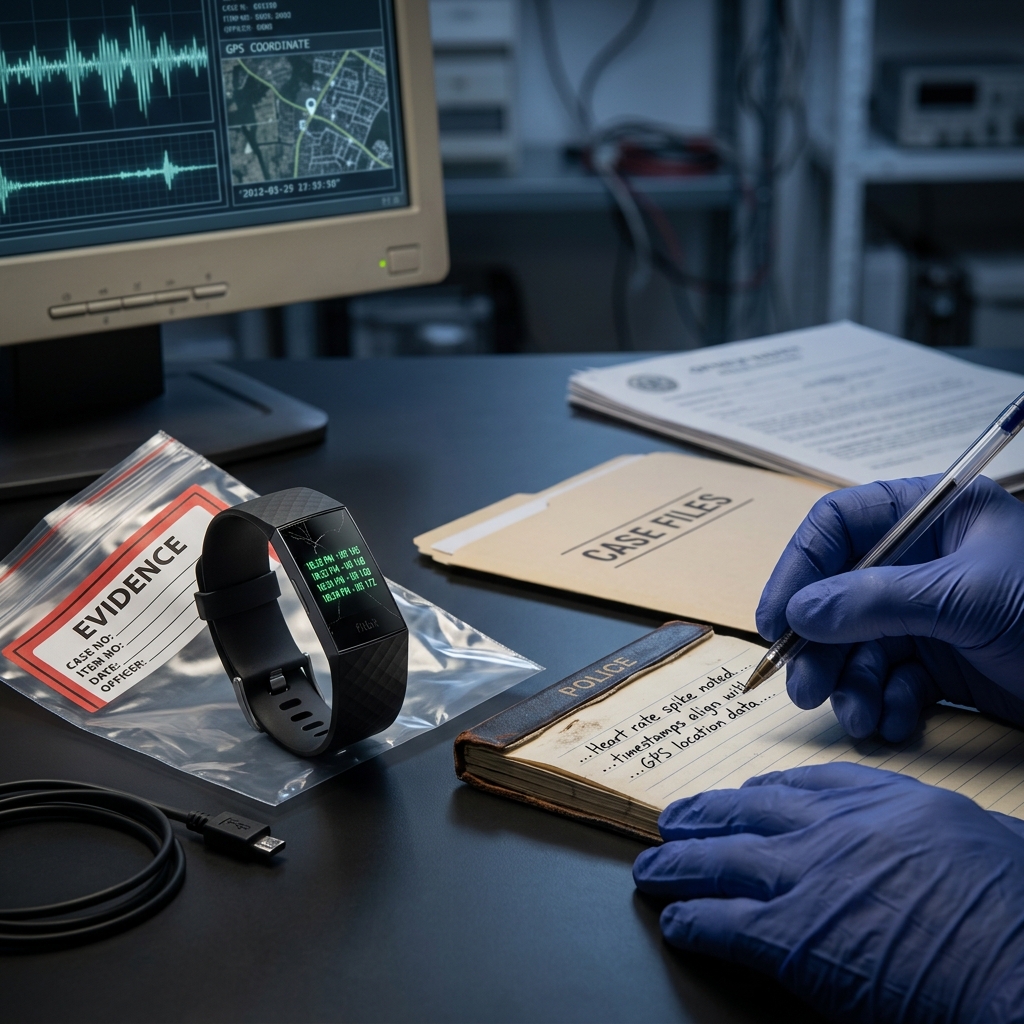
Wearable fitness trackers were designed to count our steps and monitor our sleep, not to appear on the witness stand. Yet, in several high-profile homicide investigations in the United States, data from devices like Fitbit has been used to challenge alibis, reconstruct timelines, and support charges against suspects. As police and prosecutors increasingly look to digital footprints, courts must decide how far this new form of evidence can go and what safeguards are needed.
The Rise of Wearables as Digital Witnesses
Fitness trackers such as Fitbit, Apple Watch, and other wearables collect continuous streams of data—movement, heart rate, location (in some models), and sleep patterns. When investigators obtain that information, it can become a powerful tool for confirming or contradicting statements about where someone was and what they were doing at a particular time.
Several murder investigations have highlighted this trend:
- Cases where Fitbit step counts showed the victim moving after a suspect claimed she was already dead.
- Homicide charges brought after police compared a victim’s last recorded activity on a Fitbit with security video and a suspect’s claims, revealing serious inconsistencies.
- Investigations where a suspect’s own Fitbit data supported an alibi by demonstrating he was largely inactive and apparently asleep when the crime occurred.
These examples demonstrate that digital health data is no longer confined to personal wellness. It now occupies a growing role in forensic science and courtroom strategy.
How Fitbit Data Can Shape a Murder Investigation
Investigators do not rely on Fitbit data in isolation. Instead, they typically combine information from multiple digital sources to build a timeline:
- Wearable activity logs – steps, heart rate, and movement patterns.
- Mobile phone records – call logs, text messages, app usage, and location history.
- Smart home systems – door sensors, alarm logs, and video feeds.
- Surveillance footage – CCTV and private camera recordings.
By cross-referencing these data streams, investigators can reconstruct minute-by-minute events on the day of a crime. For example, if a suspect claims to have left home at 8:00 a.m., but a victim’s Fitbit shows vigorous movement inside the house at 8:45 a.m., along with smart-home logs showing doors opening and closing, that discrepancy can become a central point of contention in court.
| Investigative Goal | Type of Fitbit Data Used | Example Application |
|---|---|---|
| Establish activity timeline | Step counts, movement logs | Determine last time victim was physically active. |
| Challenge an alibi | Continuous monitoring data | Show victim moving when suspect says she was already dead. |
| Estimate possible time window of death | Sudden stop in activity or heart rate | Narrow timeframe, when no further movement or physiological data are recorded. |
| Corroborate or contradict witness accounts | Activity and location where available | Check if the victim was at home, at the gym, or elsewhere when a witness says they saw her. |
However, even where data appears clear, investigators must remember that wearables offer only part of the story. As one prosecutor noted in a case involving a fitness tracker, such data may help estimate a time of death but does not identify the cause of death or the killer.
Legal Standards for Admitting Wearable Data
For Fitbit records to be used in court, they must satisfy traditional rules of evidence. In the United States, judges look to well-established standards to determine whether scientific or technical evidence is reliable enough to be presented to a jury. Under the Daubert framework used in federal courts and many states, judges examine factors such as testability, error rates, peer review, and general acceptance in the relevant scientific community.
Applied to Fitbit data, key questions include:
- Is the device’s method of measuring steps and heart rate sufficiently validated and accurate?
- What is the margin of error, and can it significantly affect the timeline of events?
- How is the data stored and transmitted, and can its integrity be verified?
- Has the information been altered, deleted, or overwritten since collection?
Courts have accepted digital records such as phone logs and GPS data for years, but wearables add another layer of complexity because they involve physiological metrics and proprietary algorithms. Demonstrating the reliability of these systems often requires expert testimony by technologists, forensic analysts, or medical professionals.
Authenticity, Chain of Custody, and Risk of Tampering
Any digital evidence must be authenticated—meaning the proponent must show that the data is what they claim it to be and has not been improperly changed. For Fitbit data, this usually involves technical and procedural safeguards:
- Verified source – records obtained directly from the manufacturer or service provider, rather than screenshots or user exports, when possible.
- Documented chain of custody – detailed logs of who handled the device or data, when, and for what purpose.
- Forensic imaging – creating bit-by-bit digital copies of devices so that analysts can work on duplicates while preserving the original.
- Hash values and checksums – cryptographic fingerprints that help detect if data has been altered.
Defense attorneys may challenge wearable evidence by questioning whether the device was properly worn, whether the user’s account was secure from unauthorized access, or whether the software had glitches affecting data accuracy. These challenges mirror broader concerns about digital evidence and underscore the need for rigorous forensic protocols.
Privacy Laws and Access to Health-Related Device Data
Wearable data exists at the intersection of technology, health, and law. In the United States, constitutional and statutory protections influence how police can obtain and use this information:
- Fourth Amendment – protects against unreasonable searches and seizures. Courts have increasingly required warrants for access to certain digital records, such as cell-site location data.
- Electronic Communications Privacy Act – regulates government access to stored electronic communications and subscriber records.
- Health privacy regimes – laws such as HIPAA govern medical records in clinical settings, though many consumer wearables fall outside traditional health privacy rules because they are not covered entities.[10]
As homicide investigations begin to rely on heart-rate trends and physical activity logs, critics question whether this sort of intimate data should receive heightened protections similar to medical records. Policymakers and courts continue to grapple with how to apply older privacy statutes to emerging technologies that blur the line between wellness gadgets and quasi-medical devices.
Benefits and Limitations of Fitbit Evidence
Like any investigative tool, Fitbit data has strengths and weaknesses that must be understood to avoid misuse.
Potential Benefits
- Granular timelines – continuous monitoring can reveal precisely when a victim stopped moving or when a suspect left home.
- Independent records – unlike witness testimony, digital logs do not forget or misperceive events.
- Corroboration of other evidence – wearable data can strengthen or weaken the conclusions drawn from phone records, surveillance footage, and forensic analysis.
- Exculpatory use – in some cases, Fitbit data has helped show that a suspect’s body activity was inconsistent with committing a violent crime at the alleged time.
Key Limitations
- Device accuracy – consumer wearables are not calibrated as medical-grade instruments; step counts or heart-rate readings may be off by a margin that matters in close cases.[10]
- User behavior – the device may not be worn all the time, may be removed, or may be worn by someone else, introducing uncertainty.
- Technical anomalies – battery failures, connectivity issues, or software bugs can create gaps or distortions in the record.
- Interpretation challenges – a sudden drop in heart rate or activity does not automatically prove the exact time or mechanism of death.
Recognizing these limitations is crucial to preventing overconfidence in digital metrics and ensuring that wearable evidence is treated as one piece of a larger evidentiary puzzle.
Ethical and Policy Debates Around Digital Health Evidence
Beyond admissibility and reliability, the use of Fitbit data in murder cases raises deeper ethical questions:
- Function creep – data collected for health and fitness purposes gradually being repurposed for surveillance or law enforcement, sometimes without users fully realizing the implications.
- Informed consent – users may agree to data collection for wellness tracking, but they rarely anticipate that the same data could be scrutinized in a criminal trial years later.
- Equity concerns – individuals who use more technology may have their lives more heavily documented and thus more exposed to investigation than those who do not.
- Data security – breaches of wearable platforms could expose highly sensitive information not only to police but also to criminals, advertisers, or other third parties.[10]
Privacy advocates argue that robust safeguards, clear warrant requirements, and transparency from technology companies are essential to maintaining public trust as law enforcement gains access to increasingly intimate digital records.
Practical Guidance for Legal Practitioners
Lawyers, investigators, and judges dealing with wearable evidence can benefit from a structured approach. While practices will vary by jurisdiction, several general strategies are emerging:
- For prosecutors
Carefully document how wearable data was obtained, preserved, and analyzed. Be prepared to offer expert testimony about device reliability and limitations, and avoid overstating what the data can prove. - For defense counsel
Scrutinize the chain of custody, question the accuracy of consumer-grade devices, and explore alternative explanations for activity logs, such as device sharing or removal. - For judges
Apply established evidence rules and scientific reliability standards to wearable data, ensuring that juries hear clear explanations of both strengths and weaknesses.
Courts that handle these issues carefully will help shape how future cases use digital health information while balancing probative value against privacy and fairness concerns.
Frequently Asked Questions
Can police access Fitbit data without a warrant?
Access rules depend on jurisdiction and the specific type of data. In the United States, courts have increasingly recognized strong privacy interests in certain digital records and may require a warrant for detailed information about a user’s activities or location, particularly where the data builds a comprehensive picture of their life. However, basic subscriber information or limited metadata may sometimes be obtainable with less stringent legal process.
Is Fitbit evidence enough to convict someone of murder?
Generally, no. Fitbit data is rarely the sole basis for a conviction. Instead, it is typically combined with physical evidence, witness testimony, forensic analysis, and other digital records. Wearable data may play a critical role in confirming or challenging a narrative, but courts still rely on multiple forms of evidence before reaching a verdict.
How reliable are fitness trackers in determining the time of death?
Fitness trackers can indicate when activity or heart-rate data stopped, which may help narrow the timeline for a death. However, these devices are not medical-grade monitors, and their readings may have significant margins of error.[10] Therefore, they should be used alongside autopsy findings and traditional forensic techniques rather than as definitive proof.
Could wearable data also prove someone’s innocence?
Yes. In some investigations, a suspect’s own Fitbit data has been used to support an alibi, showing that their activity was consistent with being asleep or at home rather than at a crime scene. As with incriminating evidence, exculpatory wearable data must still be carefully authenticated and corroborated.
What should users know about the legal risks of wearing fitness trackers?
Users should be aware that data collected by wearables may be accessible to law enforcement under certain conditions and could be used in legal proceedings. This does not mean avoiding technology altogether, but it does highlight the importance of understanding privacy settings, terms of service, and how data is stored and shared.
References
- Fitbit data used to charge US man with murder — BBC News. 2018-10-03. https://www.bbc.com/news/technology-45745366
- The Fitbit Murder: Digital Evidence Solves Homicide — Dakota Digital Review (North Dakota University System). 2019-01-15. https://dda.ndus.edu/ddreview/the-fitbit-murder-digital-evidence-solves-homicide/
- Fitbit evidence used in murder investigation — Schneier on Security. 2017-05-10. https://www.schneier.com/blog/archives/2017/05/fitbit_evidence.html
- Police Use Murder Victim’s Fitbit Data To Catch Her Killer — NBC News (YouTube segment). 2018-09-20. https://www.youtube.com/watch?v=kXmAhXyn3Hg
- The Fitbit Alibi | 48 Hours — CBS News (YouTube episode). 2017-10-21. https://www.youtube.com/watch?v=YCbfUvx39nw
- Guide to New Federal Rules of Evidence on Expert Testimony — Federal Judicial Center. 2011-01-01. https://www.fjc.gov/content/guide-new-federal-rules-evidence-expert-testimony
- Carpenter v. United States — Supreme Court of the United States, 585 U.S. ___ (2018). 2018-06-22. https://www.supremecourt.gov/opinions/17pdf/16-402_h315.pdf
- Wearable Devices in Healthcare — U.S. Food and Drug Administration (FDA). 2023-04-12. https://www.fda.gov/medical-devices/digital-health-center-excellence/wearable-devices
Similar Articles








Read full bio of Sneha Tete


