
First Amendment and the Right to Record Police
How federal courts protect the public’s right to record police while balancing safety, privacy and reasonable limits.
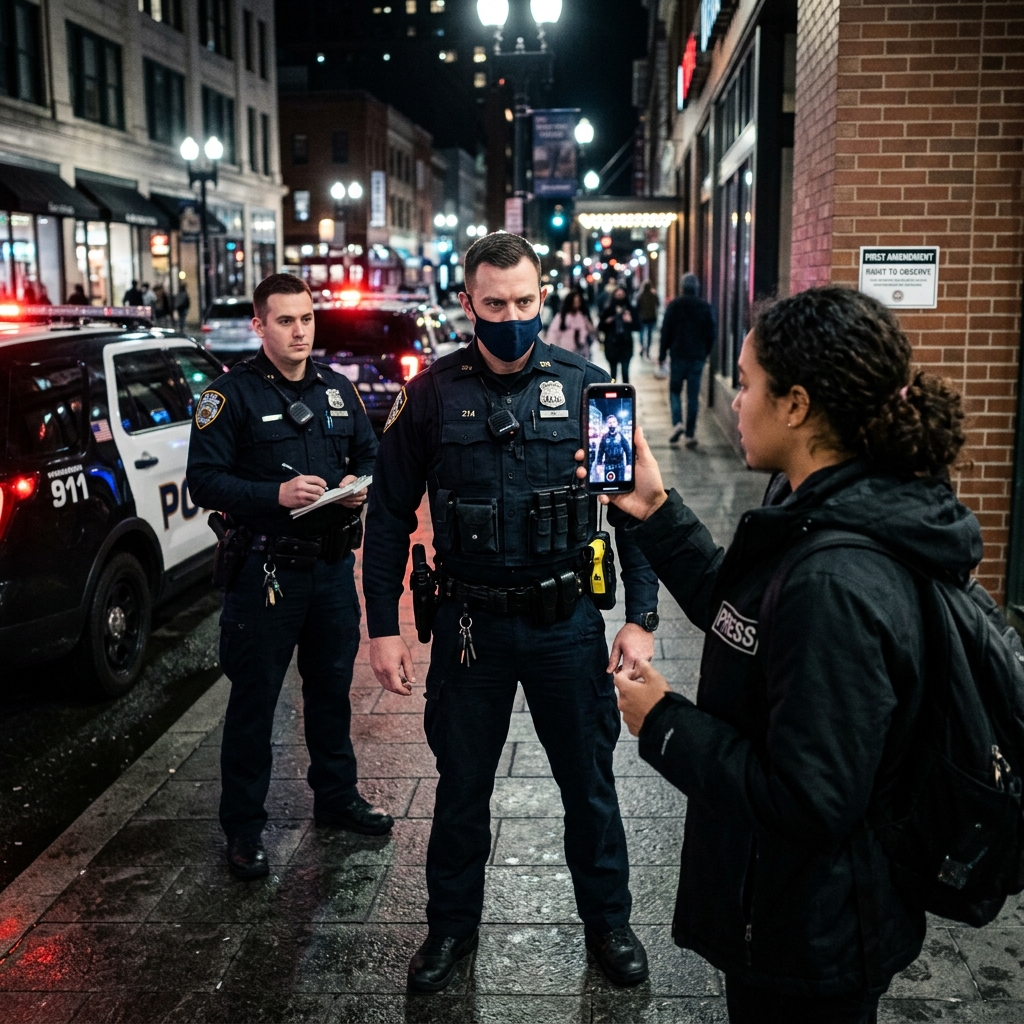
The ability of ordinary people to record police officers has become one of the most important tools for public accountability in the United States. In the past two decades, federal appellate courts across the country have repeatedly affirmed that the First Amendment protects the public’s right to photograph, video record, and make audio recordings of law enforcement officers performing their official duties in public spaces, subject to reasonable limitations.
This article explains the legal foundations of that right, highlights major court decisions, explores the limits and responsibilities that come with it, and offers practical tips for exercising this right safely and effectively.
Why Recording Police Matters for a Constitutional Democracy
Recordings of police encounters have exposed misconduct, corroborated legitimate uses of force, and helped courts, policymakers, and communities understand what happens during street-level policing. Civil liberties organizations emphasize that documenting official behavior is a critical part of monitoring government and ensuring transparency.
From a constitutional perspective, the right to record police connects to two central First Amendment values:
- Free speech and expression – Recording is part of creating and sharing information about government activity with others.
- Freedom of the press – Gathering news, including visual and audio documentation of public officials, is protected as a press function that individuals and journalists alike can exercise.
Courts and commentators increasingly treat ordinary citizens as exercising press-like functions whenever they use phones, cameras, or other devices to document official conduct.
Legal Foundations: How the First Amendment Comes Into Play
The First Amendment bars government from abridging freedom of speech or of the press. Federal courts have interpreted this not only to protect the publication of information, but also to safeguard the process of gathering information about public officials on public property.
Two main ideas underlie judicial recognition of the right to record police:
- Right to gather information – Courts have held that citizens may observe, photograph, and record what public officials do in public, particularly when it involves matters of public concern, such as law enforcement activity.
- Watchdog function – In recent decisions, federal appellate courts describe citizen recording as functioning as a “watchdog of government activity,” a role squarely within the purposes of the First Amendment.
While the U.S. Supreme Court has not yet directly decided a case about a citizen’s right to record police, lower courts have used existing Supreme Court precedents on press freedoms and public access to information to support robust protection.
Federal Appeals Courts: Building a National Consensus
Every federal appeals court that has squarely addressed the question has recognized some form of First Amendment protection for recording police officers engaged in their duties in public spaces, although the exact scope varies somewhat by circuit.
Over time, a clear trend has emerged:
| Aspect | Judicial Trend |
|---|---|
| Nature of the activity | Recording (video, photo, audio) treated as protected expressive activity related to gathering and documenting information. |
| Who is protected | Both members of the press and ordinary citizens; the right is not limited to professional journalists. |
| Location | Strongest protection in public spaces (streets, parks, sidewalks) where the recorder is lawfully present. |
| Limitations | Subject to reasonable time, place, and manner restrictions to maintain safety and prevent interference with police duties. |
Recent scholarship notes that at least eight circuits explicitly acknowledge a First Amendment right to record police, and more circuits continue to weigh in. This growing consensus makes it increasingly difficult for government entities to defend blanket bans or broad criminalization of public recording.
The Role of Time, Place, and Manner Restrictions
The First Amendment does not give an unlimited license to record police in every situation. Courts consistently uphold the idea that government may impose reasonable time, place, and manner restrictions on protected expressive activity.
In the context of recording police, this typically means:
- Officers may require observers to stand at a safe distance during volatile encounters.
- Recorders may be directed away from physically interfering with arrests, searches, or emergency responses.
- Restrictions should be content-neutral and aimed at legitimate safety or operational concerns, not at suppressing criticism or documentation.
Importantly, any interference with recording must be tied to a genuine law enforcement need and should leave open reasonable alternative ways of documenting the event.
What Courts Consider Legitimate Limits
Civil liberties organizations and courts identify several situations where restrictions or enforcement actions may lawfully apply, even when recording is generally protected.
- Physical interference – Approaching too closely, obstructing officers, or inserting oneself into the scene in ways that hinder police functions can justify orders to move or, in some circumstances, arrest.
- Safety hazards – Recording that creates risk to officers, bystanders, or the recorder, such as standing in traffic or refusing to comply with crowd-control measures, may be limited.
- Inciting violence or crime – If the act of recording is used to incite a mob, encourage resistance to arrest, or facilitate criminal behavior, courts may support restrictions or enforcement.
- Sensitive operations – Recording undercover operations, surveillance activities, or certain legally justified sensitive law enforcement actions may be restricted to protect investigations and public safety.
State and local laws, including wiretapping, privacy, or obstruction statutes, may also affect specific scenarios, though these laws must still be applied consistently with the Constitution.
Public Spaces, Private Property, and Home Settings
The legal protections for recording police depend heavily on where the interaction takes place and whether the recorder is lawfully present.
Recording in Public Spaces
In traditional public forums like sidewalks, streets, and parks, courts provide strong protection to people who record officers carrying out official duties, so long as the person is not violating other laws or obstructing police activity.
- If you are legally allowed to be in a public space, you generally may record anything visible, including police officers.
- Police typically may not stop you solely because you are recording in such places.
Recording on Private Property
On private property, the owner or lawful controller of the space may set rules about photography or video, including recording police activity. Violating those rules can lead to removal or other consequences unrelated to the First Amendment, though your recordings may still be protected from government censorship.
Recording Inside Your Home
When officers enter a residence, courts and civil liberties groups state that residents retain the right to record, subject to the same safety and interference limits that apply in public. However, officers may lawfully control certain aspects of the environment during searches or arrests if necessary for officer safety or evidence preservation.
Audio Recording, Consent Laws, and Privacy Concerns
Audio recording raises additional issues because some states have consent requirements under their wiretapping or eavesdropping laws. These laws may demand one-party or all-party consent for recording conversations, though many states include exceptions for capturing public, non-confidential speech.
Key considerations include:
- Conversations in public spaces that can be overheard without special equipment are often treated as lacking reasonable expectations of privacy.
- Many courts have held that police officers performing official duties in public have diminished privacy expectations regarding recording.
- Even in stricter states, recording that is clearly visible and not secret may avoid criminal wiretapping implications.
Because state laws vary, people interested in audio recording should be aware of local statutes and any relevant court interpretations.
Practical Guidance: How to Record Police Safely and Lawfully
Civil liberties organizations provide detailed guidance for individuals who decide to document police activity. While specific recommendations may differ, several recurring best practices can help protect both your rights and your safety.
- Stay calm and respectful – Avoid physically resisting officers and keep your tone measured. Escalation can increase risk for everyone involved.
- Maintain a safe distance – Stand far enough away to avoid obstructing officers or interfering with their work, especially during arrests or emergencies.
- Make your recording obvious – Holding the device visibly can reduce claims of secret recording and clarify your peaceful intent.
- Do not interfere – Do not touch officers, block their movements, or enter restricted areas. Comply with lawful orders to move if they are clearly linked to safety or operational needs.
- Protect your device – Use a strong password and consider cloud backups; if officers seize the device, they typically need a warrant to access its contents.
- Document details – If you believe your rights were violated, write down badge numbers, agency names, vehicle identifiers, and contact information for witnesses as soon as possible.
After the Encounter: Complaints, Legal Remedies, and Advocacy
If you suspect that police unlawfully interfered with your right to record, deleted footage, or retaliated against you for documenting them, several options may be available:
- Internal complaints – Many departments have internal affairs units or oversight boards that accept written complaints about officer conduct.
- Civil rights lawsuits – People sometimes file lawsuits asserting violations of First Amendment and due process rights when officers arrest, threaten, or seize devices without lawful justification.
- Support from advocacy groups – Organizations such as the American Civil Liberties Union provide know-your-rights materials and, in some cases, legal assistance or referrals.
These mechanisms not only address individual harms but also help clarify the law and improve department policies over time.
Frequently Asked Questions About Recording Police
Do I always have a constitutional right to record police?
Courts widely recognize a First Amendment right to record officers performing their duties in public when you are lawfully present and not interfering with police work. However, the right is subject to reasonable limitations, and specific state laws may affect some situations.
Can officers order me to stop recording?
Officers generally may not order you to stop recording solely because they do not want to be recorded. They can issue lawful commands related to safety, crowd control, or preventing interference. If an order appears unrelated to those concerns, it may raise constitutional questions.
Can police take or delete my recordings?
Guidance from civil liberties groups states that officers normally may not confiscate or demand to view your recordings without a warrant, nor can they delete data under any circumstances. Seizing a device or destroying footage can give rise to constitutional claims.
Is there a difference between filming my own encounter and filming others?
Courts and advocacy organizations emphasize that you may record both as a bystander and during your own interactions with police, although trying to record your own arrest may sometimes interfere with officers’ duties. As with any recording, safety and non-interference remain crucial.
Does the right to record apply only to police?
The same principles typically extend to other government officers performing official duties in public, including immigration agents, federal law enforcement, and National Guard troops. The core idea is documenting government activity in spaces where you are lawfully present.
Key Takeaways for Citizens and Police Agencies
For citizens, understanding the constitutional basis and practical limits of the right to record police helps ensure that documentation efforts remain lawful, effective, and safe. For police agencies, clear policies that respect First Amendment protections can reduce litigation risk and build public trust.
- The First Amendment generally protects the right to record police officers carrying out official duties in public, subject to reasonable limits.
- Every federal appeals court to address the issue has recognized some form of this right, though its contours may vary by jurisdiction.
- Safety, non-interference, and respect for lawful orders rooted in legitimate law enforcement needs are essential for both recorders and officers.
As mobile technology and social media continue to evolve, the constitutional principles discussed here will remain central to debates about transparency, accountability, and civil rights in everyday policing.
References
- Citizens’ Right to Record the Police — University of Georgia School of Law, First Amendment Clinic. 2021-06-01. https://firstamendment.law.uga.edu/work/citizens-right-to-record-the-police/
- Video or Audio Recording of Police Officers & Your Legal Rights — Justia. 2020-08-10. https://www.justia.com/criminal/procedure/right-to-record-police-officers/
- Recording Police in Public: What You Need to Know — Foundation for Individual Rights and Expression (FIRE). 2023-04-05. https://www.fire.org/research-learn/recording-police-public-what-you-need-to-know
- Codifying the Right to Record Police — Columbia Human Rights Law Review (Rose). 2024-02-01. https://hrlr.law.columbia.edu/files/2025/09/Rose_Codifying-the-Right-to-Record-Police_55.3.pdf
- Recording Law Enforcement: First Amendment Right or Arrestable Offense? — Freedom Forum. 2022-11-15. https://www.freedomforum.org/recording-law-enforcement/
- Recording and Documenting Police and Federal Agents — American Civil Liberties Union (ACLU). 2020-06-15. https://www.aclu.org/know-your-rights/recording-and-documenting-police-and-federal-agents
- Responding to First Amendment Audits: Is Filming Protected by the First Amendment? — UNC School of Government. 2022-11-14. https://canons.sog.unc.edu/blog/2022/11/14/responding-to-first-amendment-audits-is-filming-protected-by-the-first-amendment/
Similar Articles








Read full bio of medha deb




