Terminating Staff for Personal Online Purchases During Work Hours
Navigate the legal boundaries of disciplining workers caught browsing personal sites on company time in at-will employment states.
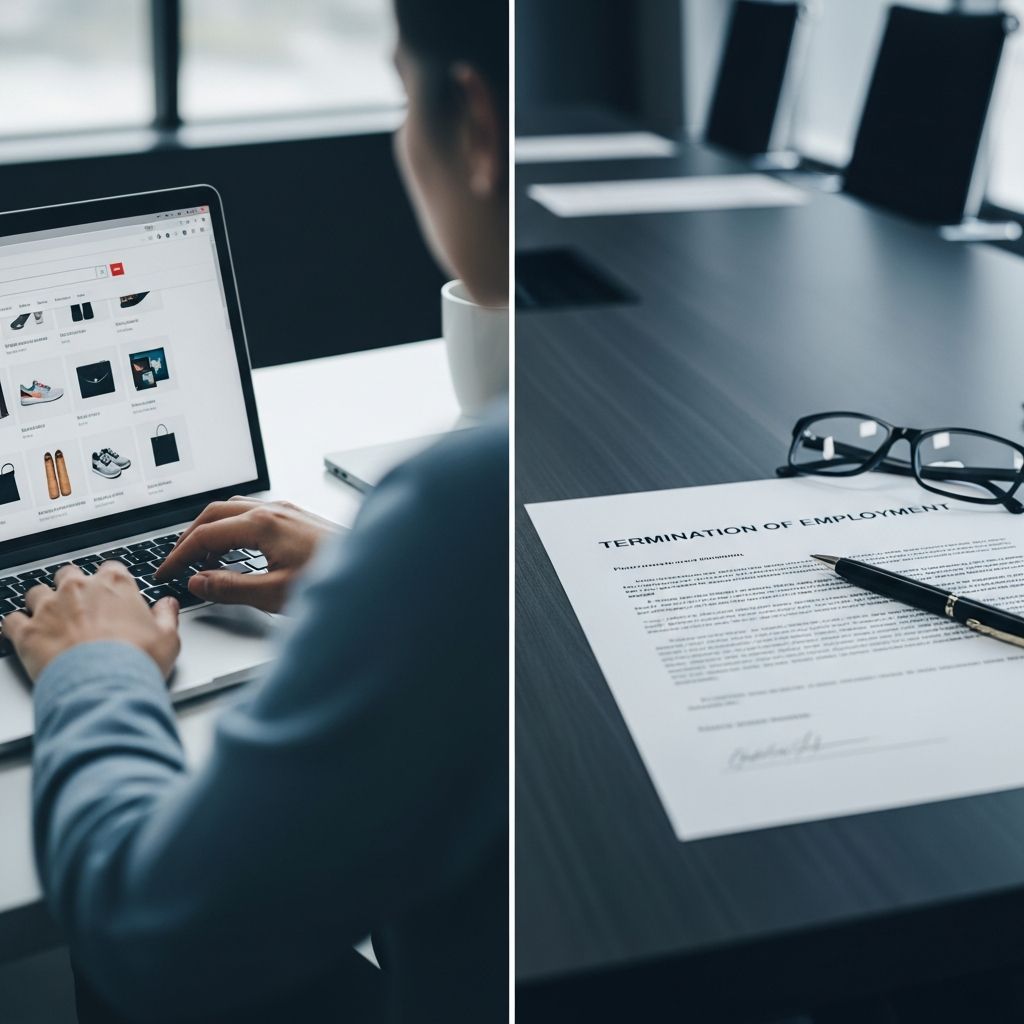
Employers often grapple with employees using work computers for personal online shopping, raising questions about productivity and discipline. In most U.S. states, at-will employment allows termination for such conduct, but exceptions and smart policy implementation are crucial to avoid lawsuits.
Understanding At-Will Employment Fundamentals
At-will employment means employers can end employment for any reason or no reason, provided it does not violate protected categories like race, gender, or disability under federal laws such as Title VII of the Civil Rights Act. This doctrine applies in 49 states except Montana, empowering businesses to address non-work activities like browsing retail sites during paid hours.
Personal internet use, including shopping, typically falls under manageable misconduct unless tied to breaks or remote work agreements. Courts generally uphold firings for excessive personal activity that impacts job performance, viewing it as a legitimate business interest.
Distinguishing Permissible Discipline from Legal Risks
Not all personal online activities warrant termination; context matters. Brief shopping during lunch differs from prolonged sessions during peak tasks. Employers must prove the behavior harmed operations, such as reduced output or security breaches from unsecured sites.
- Productivity Impact: Document how shopping diverts from duties, using time-tracking software evidence.
- Security Concerns: Personal sites may introduce malware, justifying swift action.
- Equity Issues: Consistent enforcement prevents discrimination claims.
Protected activities, like union organizing online or medical research, cannot trigger firings. Missteps here invite National Labor Relations Board scrutiny.
State Variations and Exceptions to At-Will Rules
While at-will dominates, states impose nuances. California requires good faith dealings, potentially challenging terminations seen as pretextual. New York upholds at-will but watches for public policy breaches.
| State | Key Exception | Implication for Online Shopping Firings |
|---|---|---|
| Montana | Just cause after probation | Requires documented progressive discipline |
| California | Implied covenant of good faith | Firing must align with business needs |
| Florida | Strict at-will | Broad termination rights |
| New York | Public policy limits | No firing for off-duty legal acts |
Montana’s unique statute demands cause post-probation, making shopping-related firings riskier without warnings. Federal overlays like the Fair Labor Standards Act ensure exempt status doesn’t inadvertently create overtime disputes.
Implementing Effective Workplace Internet Policies
Clear policies mitigate disputes. Outline acceptable use, monitoring rights, and consequences in employee handbooks signed at onboarding.
Essential policy elements include:
- Defining work hours as dedicated to job tasks.
- Permitting limited personal use during breaks.
- Requiring disclosure of non-work browsing.
- Specifying monitoring tools like network logs.
Train supervisors on uniform application. For remote workers, VPN policies extend oversight, balancing privacy with accountability.
Cases Highlighting Termination Boundaries
Real-world examples illustrate limits. In financial sectors, employees face strict rules against external trading sites due to insider risks, with terminations upheld. Retail employees reselling discounted goods have been fired for competing with employers, courts siding with business protection.
Conversely, off-hours shopping at competitors rarely justifies firing absent contracts. Forum discussions note at-will allows it, but unemployment eligibility persists if undocumented.
Progressive Discipline: A Safer Path
Rather than abrupt firings, use steps: verbal warning, written notice, performance plan, then termination. This builds records for defenses against wrongful dismissal suits.
- Observe and log incidents with timestamps.
- Meet privately to discuss impacts.
- Issue formal warnings with improvement timelines.
- Escalate if non-compliant, consulting HR/legal.
This approach fosters fairness, reducing retaliation claims under laws like the Occupational Safety and Health Act if stress-related.
Technology’s Role in Monitoring and Enforcement
Tools like keystroke loggers or bandwidth trackers quantify misuse. Disclose them upfront to dodge wiretap law violations under the Electronic Communications Privacy Act.
AI-driven analytics flag patterns, enabling proactive interventions. Balance with privacy notices to maintain trust.
Remote Work Complications
Hybrid setups blur lines. Home internet shopping during calls disrupts teams. Policies should specify device use—company laptops for work only—and audit trails.
Consider cultural norms; global teams may view brief personal checks differently, necessitating tailored rules.
Unemployment Insurance Ramifications
Fired for shopping, employees often qualify for benefits if misconduct lacks severity. States define misconduct narrowly—willful job neglect. Poor documentation dooms denials.
HR Best Practices for Prevention
Proactive steps include:
- Regular training on digital etiquette.
- Incentivizing focus via productivity bonuses.
- Providing break areas for personal devices.
- Auditing policies yearly for compliance.
Cultivate culture valuing time, reducing temptations.
Frequently Asked Questions
Can I fire an employee immediately for online shopping?
Yes, in at-will states without contracts mandating progressive steps, but documentation strengthens defenses.
Does personal shopping violate any federal law?
No, unless it involves protected activities like whistleblowing.
What if the employee shops on their phone?
On company premises during work time, it remains disciplinable; extend policies to all devices.
Can I block shopping sites entirely?
Yes, via firewalls, but inform employees to avoid privacy suits.
How does this apply to salaried exempt workers?
They expect full availability; personal use still erodes expectations under FLSA.
Conclusion: Balancing Rights and Productivity
Employers hold significant leeway to curb on-the-job shopping, but robust policies and fairness prevent backlash. Consult attorneys for state-specific advice to safeguard operations.
References
- 26 CFR § 1.132-3 – Qualified employee discounts — U.S. Government Publishing Office. 2023. https://www.law.cornell.edu/cfr/text/26/1.132-3
- Employee Discount: Understanding Its Legal Definition — USLegalForms (citing Internal Revenue Code). 2024. https://legal-resources.uslegalforms.com/e/employee-discount
- When Employers Turn Employees into Consumers — National Employment Law Project (NELP). 2023-10-01. https://www.nelp.org/when-employers-turn-employees-into-consumers-state-and-local-regulators-must-turn-to-consumer-protection-law/
Similar Articles







Read full bio of Sneha Tete