Fireworks Laws: Arrest Risks and State Rules
Understand fireworks possession and use laws across U.S. states to avoid arrests, fines, and serious penalties this holiday season.
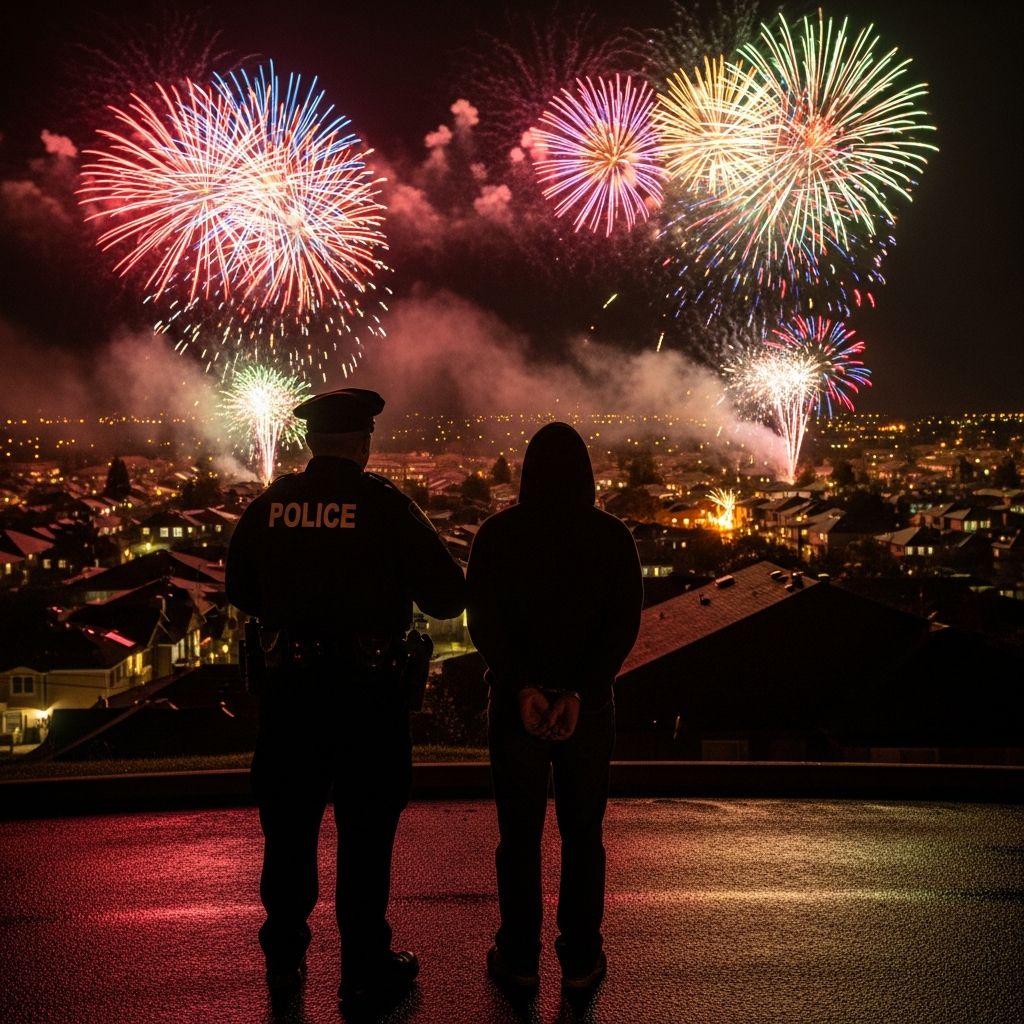
Possessing or igniting fireworks can lead to arrests in many U.S. jurisdictions due to strict state and federal regulations designed to protect public safety. While celebrations like Independence Day and New Year’s Eve often feature these explosives, mishandling them violates laws in nearly every state, with penalties ranging from fines to felony charges.
Understanding Federal Oversight of Fireworks
The federal government sets baseline rules for fireworks through agencies like the Bureau of Alcohol, Tobacco, Firearms and Explosives (ATF) and the Consumer Product Safety Commission (CPSC). ATF regulates display fireworks, requiring licenses for importing, manufacturing, distributing, storing, or receiving them under 27 CFR § 555. Businesses must obtain specific explosives permits for these activities.
The Federal Hazardous Substances Act (FHSA) bans sales of highly dangerous items like M-80s, cherry bombs, aerial shells, and firecrackers with more than two grains of pyrotechnic mix to consumers. Kits for building such devices are also prohibited, with exemptions for limited uses like wildlife management programs.
Additionally, 18 U.S.C. § 836 criminalizes transporting fireworks into states where their possession or use is banned, unless in continuous interstate transit. Violators face fines or up to one year in prison, highlighting the interstate risks for buyers sourcing from permissive states.
State-by-State Breakdown of Fireworks Restrictions
Fireworks laws vary dramatically across the U.S., with 49 states allowing some consumer fireworks sales but imposing tight controls on types, times, and locations. Only Massachusetts maintains a total ban on all consumer fireworks possession, sale, and use without permits.
| State | Consumer Fireworks Allowed? | Key Restrictions | Penalties for Violations |
|---|---|---|---|
| Connecticut | No (permit only) | All consumer and display fireworks illegal without permit. | Class C misdemeanor; up to 1 year jail/$2,000 fine for sales over $10K; felony if injury/death. |
| Massachusetts | No | Total ban on possession, use, sale by private citizens. | $10-$100 fine for possession/use; up to 1 year jail/$1,000 for sales. |
| New York | Limited | Fireworks possession/use without permit: violation; sales to minors felony risk. | Up to 15 days jail for possession; 1 year/$ fine for sales over $500 or to minors. |
| Rhode Island | Permit required for displays | Permits needed for sales/possession/use of display types. | Felony up to 1 year/$1,000; misdemeanor for small quantities. |
| Mississippi | Yes, seasonal | Sales May 23-July 12, Dec 5-Jan 9; no use near schools/churches. | Misdemeanor: $1K fine/1 year jail (first offense); escalates. |
This table summarizes select states; always check local ordinances, as cities often add restrictions like bans within city limits.
Recent 2025 Legislative Changes Shaping Fireworks Access
2025 saw significant updates to fireworks laws, reflecting ongoing debates over safety, revenue, and local control. In Mississippi, Senate Bill 2210 expanded sales windows to May 23-July 12 and December 5-January 9, while downgrading violations from felonies to misdemeanors. First offenses now carry up to $1,000 fines or one year in jail, with steeper penalties for repeats and civil liability for damages.
Missouri’s Senate Bill 81 adopted 2022 American Fireworks Standards Laboratory guidelines, enhanced State Fire Marshal powers for inspections and permit revocations, and limited certain fireworks sales to licensed entities with federal proof. It mandates site reviews and building plans for retailers.
Proposed changes didn’t all pass: Maryland’s House Bill 1002, aiming to legalize consumer fireworks for adults 18+ with local opt-outs and licensing, stalled. Pennsylvania’s House Bill 875 sought a statewide Class C consumer fireworks ban, eliminating licenses and imposing criminal penalties, but advanced little by mid-2025.
These shifts underscore evolving priorities: some states prioritize safety through restrictions, while others boost holiday sales with relaxed rules.
When Possession Alone Can Trigger Arrests
Simple possession of fireworks constitutes a crime in restrictive states, even without ignition. In Massachusetts, private possession is outright illegal, punishable by fines up to $100. Connecticut mirrors this, treating all consumer fireworks as contraband absent permits.
New York’s laws presume intent to sell if fireworks exceed $50 in value, escalating charges. Transporting banned fireworks into these states risks federal prosecution under 18 U.S.C. § 836. Police often discover violations during traffic stops or neighbor complaints, leading to confiscation, citations, or arrests—especially near holidays when enforcement ramps up.
- Common Triggers: Found in vehicles, homes, or storage without permits.
- Aggravators: Large quantities, proximity to schools/hospitals, or sales evidence.
- Safety Link: Laws target injury risks; U.S. fireworks cause thousands of injuries yearly.
Potential Penalties: From Fines to Felonies
Consequences depend on jurisdiction, quantity, prior offenses, and outcomes like fires or injuries. Minor possession might yield $100 fines, but sales or use causing harm can mean years in prison.
- Class C misdemeanors in Connecticut: Fines up to $2,000 or jail; felonies if death/injury (10 years max).
- Massachusetts sales: Up to 1 year imprisonment and $1,000 fines.
- New York escalations: Felony for repeat sales to minors (4 years).
- Mississippi 2025: Misdemeanor fines $1,000-$5,000 plus jail.
Federal involvement adds layers for interstate or display fireworks violations. Repeat offenders face license losses, higher fines, and civil suits for damages.
Permitted Uses and Safe Alternatives
Not all fireworks activities require dodging the law. Professional displays need local fire permits, ATF oversight for large events, and certified operators. Some states allow ‘safe and sane’ novelties like sparklers or fountains during set periods.
Alternatives include:
- Attending public shows by licensed pyrotechnicians.
- Novelty items exempt from bans (e.g., party poppers under certain grain weights).
- Drones or laser lights for celebrations.
Always verify with state fire marshals or sites like the American Pyrotechnics Association directory.
Legal Defenses and What to Do If Charged
If arrested for fireworks violations, consult a criminal defense attorney immediately. Common defenses include lack of knowledge (e.g., unaware of state bans when traveling), permit misunderstandings, or challenging probable cause for searches.
Evidence like receipts from legal states may help interstate cases, but federal transport laws are strict. Plea deals often reduce charges to fines for first-timers without harm. Courts consider injury absence favorably.
Fireworks Safety Tips to Avoid Legal and Injury Risks
Even in permissive states, follow rules:
- Use only on permitted dates/locations; never near structures, animals, or crowds.
- Age checks: No sales to minors (typically under 16-18).
- Storage: Keep dry, away from flammables; no vehicle transport without precautions.
- Sobriety: Alcohol/illicit substances at sites trigger permit denials.
- Extinguish fully; report issues to authorities.
These practices minimize both accidents and police attention.
Frequently Asked Questions (FAQs)
Can I buy fireworks in one state and use them in another?
No, if the destination state bans them. Federal law prohibits transport knowing it’s illegal there, risking fines or jail.
Are sparklers and fountains always legal?
Often yes as novelties, but check state definitions—some bans include them.
What if fireworks cause a fire or injury?
Expect felony charges, civil suits, and massive fines on top of criminal penalties.
Do local cities override state laws?
Yes, many municipalities ban all fireworks regardless of state permission.
How do I get a permit for a private display?
Contact local fire authorities weeks in advance; pros need ATF licenses.
References
- LAWS GOVERNING FIREWORKS IN SELECT STATES — Connecticut General Assembly. 2014-05-12. https://www.cga.ct.gov/2014/rpt/2014-R-0183.htm
- 2025 Fireworks Legislation: State Laws on Fireworks Sales and Use Across the U.S. — State Capital Lobbyist. 2025. https://statecapitallobbyist.com/consumer-protection/2025-fireworks-legislation-state-laws-on-fireworks-sales-and-use-across-the-u-s/
- 18 U.S. Code § 836 – Transportation of fireworks into State — Legal Information Institute, Cornell Law School. N/A. https://www.law.cornell.edu/uscode/text/18/836
- Fireworks | ATF — Bureau of Alcohol, Tobacco, Firearms and Explosives. N/A. https://www.atf.gov/explosives/tools-services-explosives-industry/explosive-products-and-devices/fireworks
- Fireworks Laws by State 2026 — World Population Review. 2026. https://worldpopulationreview.com/state-rankings/fireworks-laws-by-state
- State Law Directory — American Pyrotechnics Association. N/A. https://www.americanpyro.com/state-law-directory
Similar Articles






Read full bio of Sneha Tete