
Firearms in the U.S. and Their Impact on California Criminal Cases
Understand how common firearm types intersect with California’s strict gun laws, criminal prosecutions, and workplace-related cases.
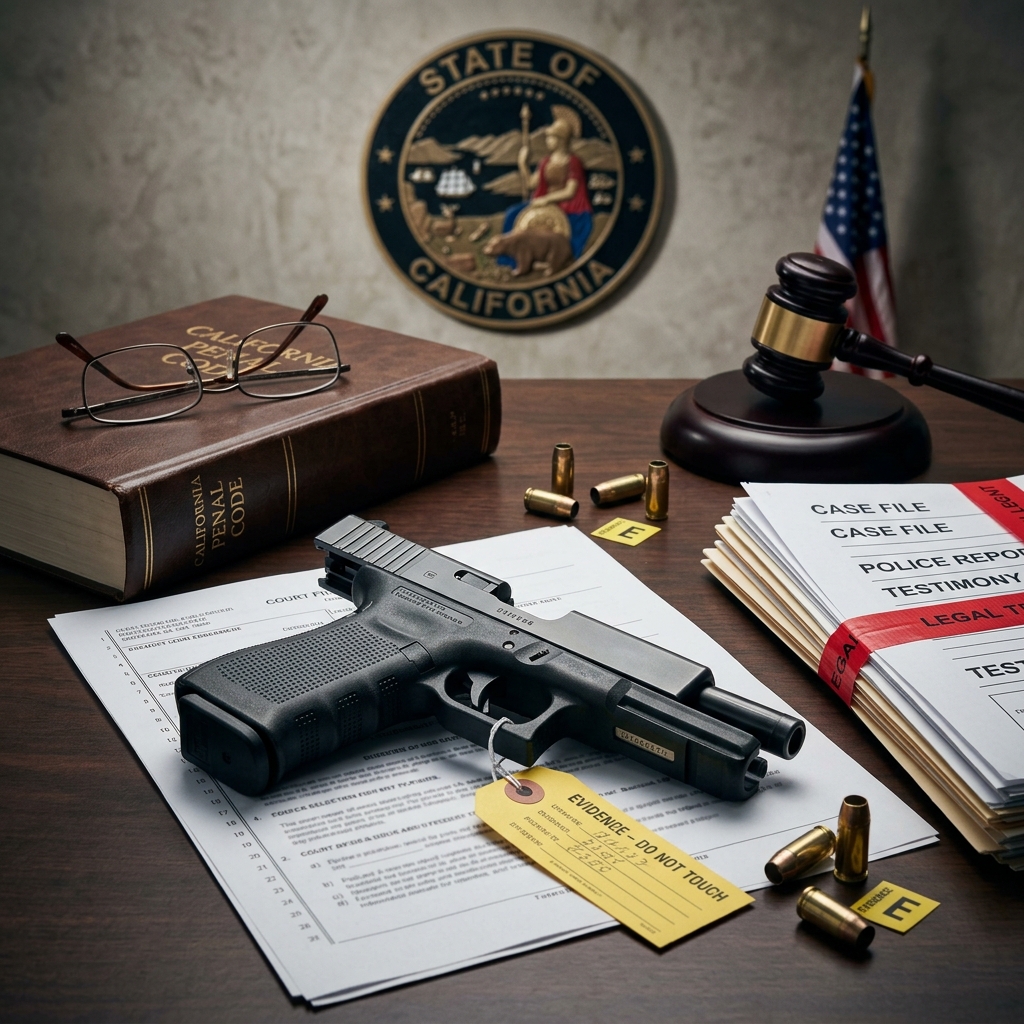
Firearms occupy a unique place in American law and culture. They are widespread, heavily regulated, and often central to serious criminal prosecutions, especially in states with strict rules like California. When a gun is involved in an incident, the type of firearm, how it was used, and how it was possessed can dramatically change the legal consequences for everyone involved, including employees, employers, and crime victims.
This article explains the major categories of firearms in the United States, outlines how California’s laws treat them, and shows how those differences affect criminal charges, sentencing, and workplace-related cases.
1. Core Firearm Types in U.S. Law and Practice
At the broadest level, a firearm is a device that launches a projectile by using the energy of an exploding propellant. In everyday U.S. legal practice, and under federal guidance, firearms are commonly grouped into three main families:
- Handguns — designed to be fired with one hand.
- Rifles — long guns with rifled barrels, meant to be shouldered.
- Shotguns — long guns that typically fire multiple pellets or slugs.
Each category has subtypes that matter in criminal cases, because laws often attach different rules and penalties to different kinds of weapons.
1.1 Handguns: Pistols and Revolvers
Handguns are common in both lawful ownership and criminal investigations; nationwide, most privately owned handguns are semi-automatic pistols, followed by revolvers. In California, handguns are tightly regulated, with strict purchase, registration, and carry requirements.
- Pistols — Semi-automatic handguns that use a magazine to feed ammunition and automatically chamber the next round with each shot.
- Revolvers — Handguns with a rotating cylinder that holds several rounds; each pull of the trigger indexes the cylinder to the next cartridge.
From a criminal law perspective, handguns are especially relevant because:
- They are relatively easy to conceal.
- They are frequently involved in robberies, assaults, and homicides.
- California imposes enhanced penalties for using or carrying a handgun during certain felonies.
1.2 Rifles: From Traditional Long Guns to Modern Configurations
A rifle is a shoulder-fired firearm with a rifled barrel designed to fire a single projectile per trigger pull. Rifles range from classic hunting rifles to modern semi-automatic platforms. Key legal distinctions include barrel length, overall length, and features that can bring a rifle under special regulation.
Important rifle-related categories under U.S. law and common practice include:
- Standard rifles — Typical long guns with barrels at or above the minimum length required for non-NFA status.
- Short-barreled rifles (SBRs) — Rifles with barrels under 16 inches or overall lengths under 26 inches, which are subject to federal registration and tax under the National Firearms Act.
- Military-style rifles — Often referred to in policy debates as “assault weapons,” though this term is defined differently from state to state.
California has its own statutory definitions and bans for certain rifle configurations, making the precise features of the weapon a central issue in many prosecutions.
1.3 Shotguns and Specialized Long Guns
A shotgun is a shoulder-fired firearm designed to fire ammunition loaded with multiple pellets (shot) or a single slug, usually through a smoothbore barrel. Shotguns are widely used for sport and hunting, but can also feature in criminal cases, especially in home-invasion, robbery, and domestic violence contexts.
In the U.S., and in California, shorter and more unusual shotgun configurations raise special legal concerns:
- Standard shotguns — Meet minimum barrel and overall length requirements and are treated similarly to other long guns.
- Short-barreled shotguns — Those with barrels below a specified length (often 18 inches federally) or with unusually short overall lengths; these are subject to strict federal control as NFA firearms.
Possession of a short-barreled shotgun without proper federal authorization can lead to serious felony charges that stack on top of state-law violations.
1.4 Automatic Weapons and National Firearms Act (NFA) Items
Under federal law, certain firearms are considered especially dangerous or unusual and are regulated under the National Firearms Act (NFA), including:
- Machine guns — Fully automatic firearms that continue firing while the trigger is depressed.
- Short-barreled rifles and shotguns — As described above.
- Destructive devices — Such as certain explosives and large-bore weapons.
These weapons must be registered with the federal Bureau of Alcohol, Tobacco, Firearms and Explosives (ATF), and transfers typically require ATF approval and tax payments. Unauthorized possession or use is a serious federal crime and, in California, can also trigger state-level charges.
1.5 Antique and Replica Firearms
Some older or replica weapons occupy a special category. Federal law and many state laws distinguish antique firearms and certain muzzle-loading guns from modern firearms.
- Federal definitions often exclude antique or replica guns that use obsolete ignition systems or black powder and cannot use modern fixed ammunition.
- Many states, including Texas and others, expressly exclude antiques and curios from their statutory definition of firearms; California applies its own definitions in penal and evidence codes.
Although antiques may be treated differently for ownership and transfer, their use as a weapon in a crime can still lead to serious charges, because criminal statutes often focus on how the weapon is used, not only how it is classified for regulatory purposes.
2. How California Regulates Firearms Compared to Federal Law
California is widely known for having some of the most restrictive gun laws in the United States. While federal law sets a baseline, California frequently goes further, especially in areas like background checks, registration, and the definition of banned configurations.
| Issue | Federal Baseline | California Approach |
|---|---|---|
| Background checks | Checks primarily through the National Instant Criminal Background Check System (NICS). | Additional state-level requirements, mandatory checks for most transfers, and waiting periods. |
| Assault weapon features | No nationwide definition; some regulation via import and NFA provisions. | State statutory definitions of banned features and models; feature-based bans more extensive than most states. |
| NFA items | Strict registration and tax for machine guns, SBRs, SBSs, suppressors, and destructive devices. | Layered state restrictions; some NFA items banned or functionally unavailable to civilians in practice. |
| Concealed carry | Primarily state-controlled; federal law sets certain minimum standards. | Permit system historically restrictive, with local discretion and many designated gun-free zones. |
These differences are crucial in criminal cases because a defendant may face:
- Federal charges for NFA or interstate violations, and
- Separate California charges for possession, transport, or use in violation of state law.
3. The Role of Firearm Type in California Criminal Cases
When prosecutors and defense attorneys analyze a case involving a firearm, they pay close attention to precisely what kind of firearm was involved. In California, the type, configuration, and status of the gun can affect:
- The classification of the offense (misdemeanor vs. felony)
- The range of potential prison terms
- Eligibility for enhancements and sentence add-ons
- Collateral consequences, including loss of gun rights and immigration impacts
3.1 How Weapon Characteristics Drive Charges
Consider several common patterns that appear in California criminal cases involving firearms:
- Possession of a concealed handgun without a permit can trigger charges even if the gun is never fired. The weapon’s status (loaded vs. unloaded, registered vs. unregistered) can affect the severity.
- Use of a firearm in a felony, such as robbery or assault, often activates sentence enhancements that add years to a prison term. The fact that the weapon is a gun, rather than a knife or other object, is central to these enhancements.
- Possession of a prohibited firearm type — such as a banned short-barreled rifle or an unregistered NFA-type weapon — can create separate felony exposure even apart from any underlying conduct.
In many prosecutions, the parties spend significant time examining the gun’s dimensions, serial numbers, and mechanical operation to determine whether it falls inside or outside a particular statutory category.
3.2 Sentencing Enhancements and Firearm Use
California law allows substantial sentencing enhancements when a firearm is used, brandished, or discharged during certain crimes. Key considerations include:
- Was the firearm present at the scene or simply possessed by the defendant?
- Was the firearm loaded or readily capable of being fired?
- Was the firearm used to threaten, strike, or shoot someone?
The more active and dangerous the use, the more severe the potential enhancement. While the type of firearm (handgun vs. rifle vs. shotgun) may not always change the base offense, it often influences the perception of dangerousness and the length of enhancements.
3.3 Federal Overlay in California Cases
Some California cases also involve federal agencies when:
- The firearm crosses state lines or involves suspected trafficking.
- The weapon falls under the jurisdiction of the NFA, such as machine guns or destructive devices.
- There is evidence of organized criminal activity or gang-related trafficking.
In those situations, defendants may face both state and federal prosecutions or, in some cases, see the matter removed to federal court entirely.
4. Firearms, the Workplace, and California Employment-Related Cases
Beyond traditional criminal cases, firearm incidents frequently intersect with employment law and workplace safety. California employers have obligations under occupational safety standards and can face liability when firearm-related violence occurs in or around the workplace.
4.1 Common Workplace Firearm Scenarios
Cases involving firearms and employment relationships often arise from situations such as:
- Workplace shootings involving current or former employees, customers, or domestic partners.
- Threats made with a firearm on company property, including parking lots.
- Unauthorized firearms brought to work in violation of company policy.
- Security personnel misuse of firearms, including excessive force or accidental discharge.
In these scenarios, the type of firearm can influence risk assessments, insurance coverage, and potential liability. A concealed handgun, for example, presents different security issues than a long gun that is more difficult to hide.
4.2 Employer Policies and Firearm Restrictions
California employers generally have considerable discretion to regulate firearms on their premises, subject to certain legal limits. Typical policy elements include:
- Prohibiting employees from bringing firearms into the workplace, even if they hold a carry permit.
- Clarifying rules about firearms in vehicles in company parking areas.
- Requiring security staff to follow strict firearms handling protocols.
- Establishing reporting procedures when employees suspect another worker has brought a weapon to work.
If a workplace incident leads to criminal charges, the employer’s written policies and training records may become relevant evidence in subsequent litigation.
4.3 Firearm Incidents, Liability, and Employee Rights
When a firearm is used in a workplace incident in California, several legal questions can arise at once:
- Criminal liability for the individual who possessed or used the weapon, potentially including enhancements.
- Civil liability for the employer, if victims argue that the employer failed to take reasonable measures to prevent foreseeable violence.
- Workers’ compensation claims by employees injured in firearm incidents while on the job.
- Wrongful termination or retaliation claims by employees disciplined or fired after reporting firearm-related concerns.
Employees who are accused of firearm offenses may also face employment consequences independent of the criminal case, including immediate suspension, termination, or loss of professional licenses.
5. Evidence Issues: Proving What the Firearm Is and How It Was Used
From a litigation standpoint, a firearm is not just a physical object; it is a complex piece of evidence. Courts in California often hear expert testimony regarding what type of firearm is at issue and how it functioned.
5.1 Identifying and Classifying the Weapon
Prosecutors typically must prove that the object in question meets the legal definition of a firearm, and sometimes must show that it meets a narrower definition (such as a short-barreled rifle or assault weapon). To do this, they may rely on:
- ATF or local law enforcement firearms experts who can measure barrel length and overall length, test fire the weapon, and explain its operation.
- Manufacturer records and model designations.
- Serial number traces linking the weapon to prior purchases or theft reports.
Minor details can have major consequences. For example, a quarter-inch difference in barrel length can be the dividing line between an ordinary rifle and a tightly regulated short-barreled rifle.
5.2 Ballistics, Ammunition, and Crime Reconstruction
Beyond proving the weapon’s type, California prosecutors often use forensic techniques to show how a firearm was used in an incident. This can involve:
- Ballistic comparisons matching bullets and cartridge casings to a specific firearm based on unique markings.
- Trajectory analysis to reconstruct how shots were fired.
- Ammunition analysis to show whether the rounds used were standard, armor-piercing, or otherwise significant.
In some cases, the choice of ammunition — for example, using particularly destructive projectiles — can influence how a judge or jury views the defendant’s intent and the overall dangerousness of the conduct.
6. Practical Takeaways for Workers, Employers, and Defendants
Because firearms law is layered and technical, misunderstandings are common. A few general principles can help individuals and organizations navigate the intersection of firearms and California criminal law.
- Know that not all guns are treated the same. Handguns, rifles, shotguns, NFA items, and antique firearms each carry different legal risks and requirements.
- Recognize California’s added strictness. Even if a gun is lawful in another state, it may be illegal or heavily restricted in California.
- Understand that workplace policies matter. Employees can face termination or discipline for violating company firearm rules, even if no criminal charge is filed.
- Remember that enhancements can dwarf the underlying charge. In many cases, the firearm enhancement adds more prison time than the core offense itself.
- Seek legal counsel early. Anyone facing an investigation or charge involving a firearm in California should speak with an attorney who understands both state and federal firearms law.
Ultimately, the combination of weapon type, location (including workplaces), and conduct determines how California’s criminal justice system responds to firearm-related incidents.
7. Frequently Asked Questions (FAQs)
Is every gun automatically considered a firearm under California law?
Not necessarily. California statutes define “firearm” in specific ways, and some antique or non-functional weapons may fall outside that definition for certain purposes. However, using almost any gun-like device in a crime can expose a person to serious charges, so no one should assume a weapon is legally harmless simply because it is old or unusual.
Do federal firearm rules override California’s gun laws?
Federal law sets minimum standards, especially for background checks and NFA items, but states remain free to enact stricter regulations. California generally layers its own restrictions on top of federal rules, rather than being preempted by them.
Does the type of gun affect whether I can carry it for self-defense in California?
Yes. California’s carry laws distinguish between concealed and open carry, between handguns and long guns, and between prohibited and permitted areas. The type of gun, whether you have a permit, and where you carry it all affect legality. A handgun carried concealed without proper authorization is especially likely to result in charges.
How do firearms affect sentencing in violent crime cases?
Firearm involvement often triggers sentence enhancements that add years to a prison term. The degree of use — simple possession, brandishing, or discharging — and the surrounding circumstances (such as injury or death) substantially affect the outcome.
Can an employer in California completely ban firearms from the workplace?
In many situations, yes. Private employers commonly adopt policies prohibiting employees from bringing firearms into the workplace, even if they are licensed carriers. There may be limited exceptions based on specific roles (such as armed security), but clear written policies and training are crucial.
References
- Firearm — Wikipedia (summary of technical definitions and U.S. legal categories, referencing ATF and federal statutes). 2024-01-05. https://en.wikipedia.org/wiki/Firearm
- Types of Guns – Gun Laws – Guides at Texas State Law Library — Texas State Law Library. 2023-06-01. https://guides.sll.texas.gov/gun-laws/types-of-guns
- Types Of Firearms: Beginner’s Guide To Guns — Recoil Magazine. 2023-03-15. https://www.recoilweb.com/types-of-firearms-beginners-guide-to-guns-180822.html
- The Number and Type of Private Firearms in the United States — Matthew Miller et al., The ANNALS of the American Academy of Political and Social Science. 2023-07-01. https://doi.org/10.1177/00027162231164855
- Common Firearms Types — United Nations Office on Drugs and Crime, Education for Justice Initiative. 2020-09-10. https://www.unodc.org/e4j/en/firearms/module-2/key-issues/common-firearms-types.html
Similar Articles








Read full bio of medha deb




