
Firearms and the Legal Profession: Rights vs. Responsibilities
Examining whether attorneys should carry guns amid evolving laws, ethical dilemmas, and workplace safety concerns in legal practice.
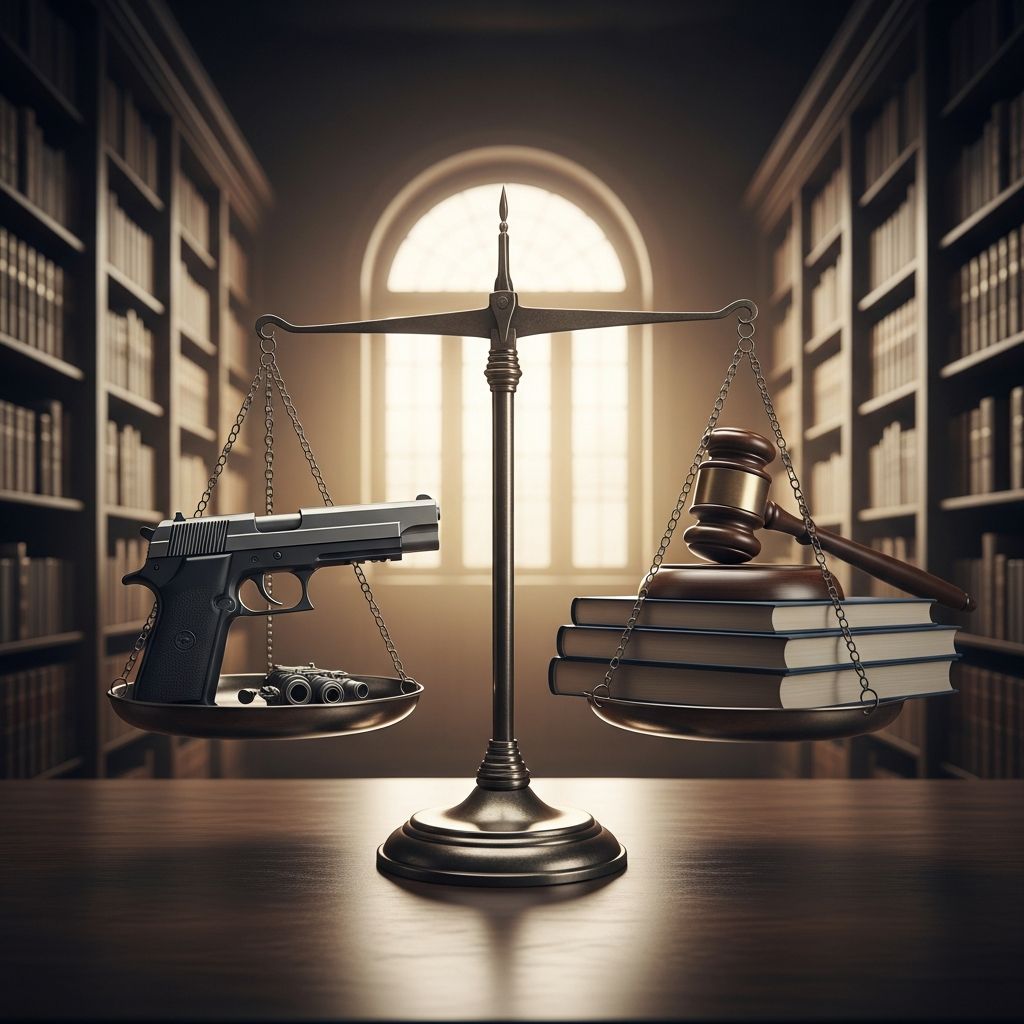
In an era of expanding concealed and open carry laws across the United States, attorneys face a unique dilemma: whether to arm themselves for personal protection while fulfilling professional duties. This tension pits individual Second Amendment protections against core ethical obligations to maintain fairness, avoid intimidation, and uphold the integrity of legal proceedings. As states relax restrictions on firearms in public spaces, including near courthouses, lawyers must weigh personal safety against the potential to undermine trust in the adversarial process.
The Rising Tide of Gun Permissiveness and Lawyer Concerns
Recent legislative shifts have liberalized firearm carry laws in numerous jurisdictions, allowing permitless carry in more venues. For lawyers, this raises practical questions about self-defense during client meetings, depositions, negotiations, and court appearances. While some attorneys view carrying a weapon as a prudent safeguard against volatile situations—such as dealing with agitated clients or hostile witnesses—others argue it introduces unnecessary risks and ethical pitfalls.
Workplace violence statistics underscore the rationale for caution. Legal professionals encounter high-stress environments where disputes can escalate. However, data from the U.S. Department of Labor’s Bureau of Labor Statistics indicates that while protective services face elevated risks, professional occupations like law have lower incidence rates of violence, suggesting that firearms may not be the panacea some presume.
Ethical Frameworks Governing Attorney Conduct with Weapons
The American Bar Association’s (ABA) Model Rules of Professional Conduct provide the bedrock for attorney behavior, emphasizing duties like fairness (Rule 3.4), respect for rights of third parties (Rule 4.4), and misconduct prohibitions (Rule 8.4). Openly carrying a firearm into adversarial settings, such as settlement talks or witness interviews, can be interpreted as conduct prejudicial to the administration of justice under Rule 8.4(d).
Visible weapons risk creating an atmosphere of coercion. Opposing counsel, parties, or witnesses may perceive the armed lawyer as aggressive, skewing negotiations or testimony. This dynamic disproportionately affects vulnerable individuals, including those from marginalized communities, amplifying power imbalances inherent in legal representation.
- Intimidation Potential: A holstered gun signals readiness for conflict, potentially pressuring concessions unrelated to merits.
- Misinterpretation Risks: Unarmed participants might feel unsafe, leading to complaints or halted proceedings.
- Professional Image: Courts and clients expect decorum; weapons clash with this expectation.
Real-World Incidents Highlighting the Dangers
Documented cases illustrate the perils. In one Nevada disciplinary matter, an attorney brandished a firearm during a deposition, resulting in a suspension for unethical intimidation. Such events not only harm the individual lawyer’s career but erode public confidence in the bar.
Other scenarios involve concealed carry discoveries mid-proceeding, prompting motions for mistrials or sanctions. These incidents coincide with broader trends: as open carry becomes normalized, encounters outside formal courtrooms—like parking lots or conference rooms—increase ethical scrutiny.
Self-Defense Realities: Myths and Moral Hazards
Proponents of attorney carry cite self-defense, but research tempers this enthusiasm. Studies from the Centers for Disease Control and Prevention (CDC) reveal that firearms in defensive scenarios often escalate rather than de-escalate. Lawyers, trained in de-escalation and negotiation, may overestimate their proficiency in high-stakes confrontations.
A moral hazard emerges: awareness of being armed could embolden riskier behaviors, inviting conflicts that unarmed attorneys might avoid. Training mitigates but does not eliminate this; even law enforcement professionals face accountability for firearm use.
| Factor | Pro-Carry Argument | Counterargument |
|---|---|---|
| Effectiveness | Deterrence against threats | Escalation statistics show mixed outcomes |
| Training Needs | CCW permits suffice | Lawyers lack tactical expertise |
| Ethical Impact | Personal right | Professional duty supersedes |
| Legal Venue | Protected speech | Contextual restrictions valid |
Navigating Firearms in Sensitive Legal Contexts
Beyond adversarial meetings, handling client-provided weapons poses distinct challenges. Ethics opinions from state bars, such as Colorado’s, mandate immediate turnover of incriminating evidence like crime-scene guns to authorities, balancing confidentiality with evidentiary duties.
In Maine, similar guidance advises against possessing potentially criminal evidence to avoid ethical violations or prosecution risks. These rules stem from precedents like California’s People v. Lee, affirming that attorney-client privilege does not shield contraband.
Courthouse and Surrounding Area Policies
Courthouses remain largely gun-free zones, with federal and state laws prohibiting weapons inside. The ABA has advocated for expanded bans, citing safety imperatives. Adjacent areas, like lobbies or parking garages, present gray zones where open carry might occur en route to hearings.
Some states permit armed attorneys with permits, but local rules often override. For instance, heightened security post-incidents has led to stricter screenings, with violations risking contempt charges.
Second Amendment Considerations for Regulated Professions
The U.S. Supreme Court’s New York State Rifle & Pistol Association v. Bruen (2022) expanded public carry rights, but upheld ‘sensitive places’ exceptions, including courts. Legal ethics rules, as time-place-manner restrictions on conduct, likely survive scrutiny, akin to bans for judges or jurors.
Professional regulations enjoy deference; the Supreme Court has sustained limits on commercial speech and conduct in regulated fields. Thus, bar associations can impose firearm curbs without infringing core rights.
Recommendations for Bar Associations and Attorneys
To clarify ambiguities, the ABA should issue a formal opinion or amend Model Rule comments explicitly discouraging open carry in lawyering contexts. State bars could follow with tailored guidance, perhaps prohibiting it outright during representations.
- Adopt ethics opinions deeming open carry improper under Rule 8.4.
- Extend to agents: Lawyers must counsel staff against weapons in professional settings.
- Promote alternatives: Security consultations, de-escalation training, venue choices.
Individual attorneys should prioritize non-lethal options, assess venue policies, and document safety rationales if carrying discreetly where permitted.
Frequently Asked Questions (FAQs)
Can lawyers ethically carry concealed weapons to depositions?
Concealed carry may comply with laws but risks discovery and ethical complaints if perceived as intimidating. Best practice: Avoid in adversarial settings.
What if a client hands me a gun as evidence?
Immediately advise turnover to authorities without revealing client identity; possession violates evidence concealment rules.
Do open carry laws override bar ethics?
No; professional conduct standards supersede general rights in law practice contexts.
Are there safe alternatives to firearms for lawyer protection?
Yes: Panic buttons, firm security, neutral venues, and conflict resolution training reduce risks effectively.
Has the ABA addressed lawyer firearms directly?
Not explicitly beyond courthouse resolutions; formal guidance is recommended.
Broader Implications for the Justice System
The debate transcends individual choice, touching justice accessibility. An armed attorney might deter pro se litigants or low-income clients from engaging, perpetuating inequalities. Conversely, unchecked violence threats demand safeguards. A balanced approach—clear ethics rules paired with enhanced security—preserves equity.
In transactional practice, weapons at deal closings could sour business relationships, portraying counsel as untrustworthy. Litigation demands even stricter neutrality.
Surveys of attorneys reveal divided opinions: urban practitioners favor restrictions, while rural ones emphasize self-reliance. Consensus builds around context-specific prohibitions.
Future Outlook Amid Evolving Laws
As constitutional carry expands, expect more clashes. Post-Bruen, challenges to bar rules may arise, but historical analogies support regulation. Legislative responses could include attorney carve-outs or mandates.
Ultimately, the profession’s hallmark—reason over force—counsels restraint. Lawyers wield the pen as mightier than the sword; introducing the latter dilutes this authority.
References
- Ethical Issues with Lawyers Openly Carrying Firearms — Dru Stevenson, St. Mary’s Journal on Legal Malpractice & Ethics. 2023. https://commons.stmarytx.edu/lmej/vol10/iss2/4/
- Ethical Issues with Lawyers Openly Carrying Firearms [PDF] — Dru Stevenson, St. Mary’s Journal on Legal Malpractice & Ethics. 2023. https://commons.stmarytx.edu/cgi/viewcontent.cgi?article=1053&context=lmej
- Duty With Respect to Client’s Incriminating Evidence — Colorado Bar Association. 2023-01-23. https://www.cobar.org/Portals/COBAR/Repository/1.23.23/Revised%20Opinion%2060_FINAL.pdf?ver=zw7GgZ1Zi_lI7KE7J_gwaQ%3D%3D
- Board of Overseers of the Bar: Attorney Services – Ethics Opinions — Maine Board of Overseers of the Bar. N/A. https://www.mebaroverseers.org/attorney_services/opinion.html?id=91079
Similar Articles








Read full bio of medha deb


