Firearms and Intoxication: Legal Risks Explained
Understand the serious legal consequences of carrying or using firearms while under the influence of alcohol or drugs across U.S. states.
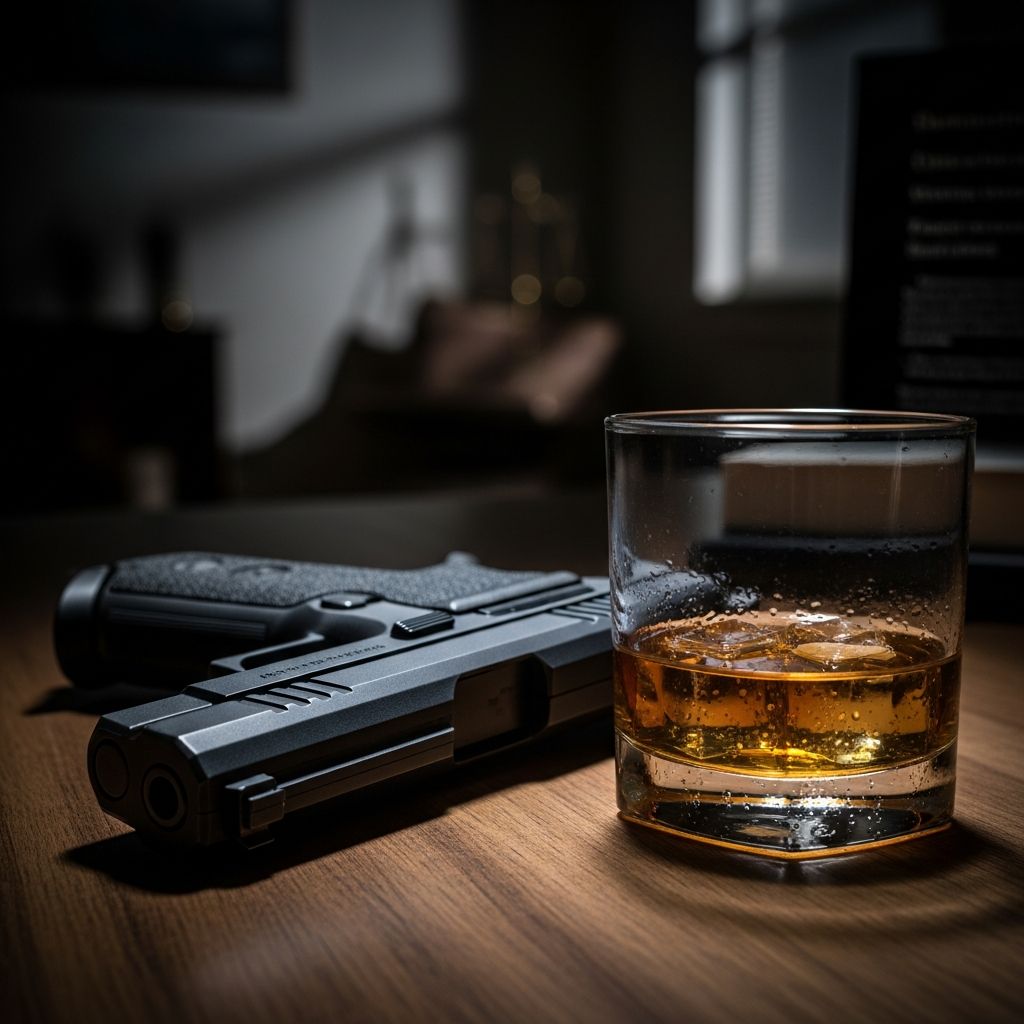
Across the United States, laws strictly regulate the combination of firearms and intoxicating substances to prevent accidents and violence. Carrying or using a gun while under the influence of alcohol or drugs is prohibited in numerous states, often leading to misdemeanor or felony charges depending on circumstances like discharge or injury. These rules aim to protect public safety by recognizing that impaired judgment heightens the lethality of firearms, similar to driving under the influence regulations.
Why Intoxication and Guns Don’t Mix: Public Safety Concerns
Impairment from alcohol or controlled substances drastically reduces coordination, decision-making, and reaction times, turning a firearm into an unpredictable hazard. Common risks include accidental discharges, poor aim during self-defense scenarios, escalation of minor disputes into shootings, and vulnerability to theft due to negligence. For instance, an intoxicated person might leave a loaded weapon accessible to children or fire into what they perceive as an empty area, endangering bystanders with stray bullets.
Statistics and legal precedents underscore these dangers. Studies show that alcohol involvement correlates with higher rates of firearm-related incidents, prompting lawmakers to enact targeted prohibitions. In practice, these laws mirror DUI statutes, where even possession without use can trigger arrests if impairment is evident.
Defining Intoxication in Firearm Laws
State definitions of intoxication vary but typically include visible impairment, specific blood alcohol concentration (BAC) thresholds, or presence of controlled substances. In Michigan, for example, a person is considered under the influence if their ability to handle a firearm is visibly impaired by alcohol, drugs, or a BAC of 0.08 or higher. San Francisco municipal code sets a stricter 0.10% BAC limit for carrying any firearm, extending bans to those under the combined influence of alcohol and drugs or addicted to narcotics (with exceptions for approved methadone programs).
Nationally, 26 states restrict firearm possession, carrying, sale, or discharge by intoxicated individuals, per a comprehensive review of legislation. This includes 20 states targeting possession/discharge directly, four limiting concealed carry, and six curbing sales/transfers to impaired persons.
State Variations in Prohibitions
Laws differ significantly by jurisdiction, reflecting local priorities on gun rights and public safety. Most states criminalize carrying firearms while intoxicated, regardless of permit status, with penalties escalating for discharge or establishments serving alcohol.
| State Example | Key Restriction | BAC Threshold (if specified) | Additional Notes |
|---|---|---|---|
| Michigan | Possession while impaired | 0.08% | Misdemeanor base; felony if injury caused |
| California (San Francisco) | Carrying under influence | 0.10% | Includes drug addiction; public streets ban |
| Oklahoma | Carrying under influence | N/A | 6-month CCW suspension |
| Minnesota | Carrying under influence | N/A | 1-year CCW revocation |
| Ohio | Possession in bars | N/A | Felony if concealed |
This table highlights select examples; comprehensive state-by-state research is essential, as some locales extend bans to cannabis dispensaries or restaurants serving liquor.
Penalties for Violations: From Fines to Felonies
Basic offenses are often misdemeanors, carrying jail time up to 93 days and fines from $100 to $500, as in Michigan for simple possession. Discharging the weapon escalates consequences: fines rise, and if serious injury results—defined as loss of limbs, organs, brain damage, or prolonged coma—charges become felonies with up to five years imprisonment and $1,000-$5,000 fines.
- Misdemeanor Baseline: Possession alone – short jail, modest fines.
- Aggravated Cases: Discharge causing impairment – felony, longer sentences.
- Fatal Outcomes: Death from discharge – up to 15 years prison, $2,500-$10,000 fines, plus homicide charges.
Bar possession adds layers: Ohio treats it as a fifth-degree felony (third-degree if concealed), New Mexico and New York as fourth- or class E felonies. Federal implications arise if substance abuse history prohibits possession entirely.
Impact on Concealed Carry Permits
Even permitted carriers face automatic suspensions or revocations. Oklahoma suspends handgun licenses for six months post-conviction; Minnesota bars reapplication for a year. Maine revokes for five years on bar violations; Tennessee suspends enhanced permits for three. California Penal Code § 26230 further restricts CCW holders from carrying in alcohol-serving venues.
Loss of permits compounds criminal records, affecting employment, housing, and future firearm rights. Convictions may classify individuals as prohibited possessors under federal law (18 U.S.C. § 922(g)).
How Law Enforcement Detects Violations
Officers rely on probable cause from slurred speech, unsteady gait, alcohol odor, or witness reports of erratic behavior with a firearm. Field sobriety tests adapt from DUI protocols, followed by breath, blood, or urine analysis. Refusal can lead to separate charges, though medical conditions like diabetes may exempt blood draws.
In public incidents, visible intoxication suffices for arrest under statutes like Michigan’s § 750.237.
Broader Restrictions: Bars, Dispensaries, and Sales
Most states bar firearms in liquor-serving establishments, even for non-drinkers with permits. Prohibitions cover restaurants, clubs, and increasingly cannabis sites. Six states block sales/transfers to intoxicated buyers, preventing impulse acquisitions.
These venue-specific rules underscore zero-tolerance policies, with felonies in states like New York for possession amid on-site alcohol consumption.
Defenses and Legal Strategies
Challenging charges requires proving lack of impairment, lawful possession on private property, or medical necessity for substances. Experienced attorneys scrutinize BAC tests, officer observations, and intent. Diversion programs may apply for first offenses, emphasizing sobriety education.
Courts consider context: home storage versus public carry. However, discharge always intensifies scrutiny.
Frequently Asked Questions (FAQs)
Is it ever legal to have a gun at home while drinking?
Private property possession may skirt public carry laws, but discharge or visible impairment risks charges in many states. Check local statutes.
What BAC level triggers charges nationwide?
No uniform federal BAC; states set thresholds like 0.08% or 0.10%, or use impairment standards.
Does marijuana count as intoxication for gun laws?
Yes, as a controlled substance in most jurisdictions, even where recreationally legal federally it’s prohibited.
Can I lose my CCW for one violation?
Often yes—suspensions range from months to years, with revocation possible.
What if I’m prescribed medication affecting judgment?
Disclosure and medical evidence may defend, but laws target impairment regardless of source.
Responsible Gun Ownership Tips
To avoid violations:
- Secure firearms before consuming substances.
- Avoid carry in alcohol venues.
- Use safe storage, especially around family.
- Know state-specific codes via official resources.
- Seek counseling for substance issues to prevent habitual risks.
Education empowers compliance, safeguarding rights and lives.
References
- Possessing A Firearm While Under The Influence Attorney — Dallo Law. Accessed 2026. https://dallolaw.com/criminal-defense/firearm-crimes/possessing-a-firearm-while-under-the-influence/
- Is It Illegal to Carry a Firearm While Intoxicated? — CriminalDefenseLawyer.com. 2024. https://www.criminaldefenselawyer.com/resources/is-it-illegal-possess-a-firearm-while-under-influence
- SEC. 3602. CARRYING OF FIREARMS PROHIBITED WHILE… — San Francisco Police Code. Accessed 2026. https://codelibrary.amlegal.com/codes/san_francisco/latest/sf_police/0-0-0-7523
- A Review of Legislation Restricting the Intersection of Firearms and… — PMC (NCBI). 2010. https://pmc.ncbi.nlm.nih.gov/articles/PMC2925003/
Similar Articles






Read full bio of medha deb