Firearm Self-Defense: Legal Standards and State Variations
Navigate firearm self-defense laws: understand deadly force, state doctrines, and legal consequences.
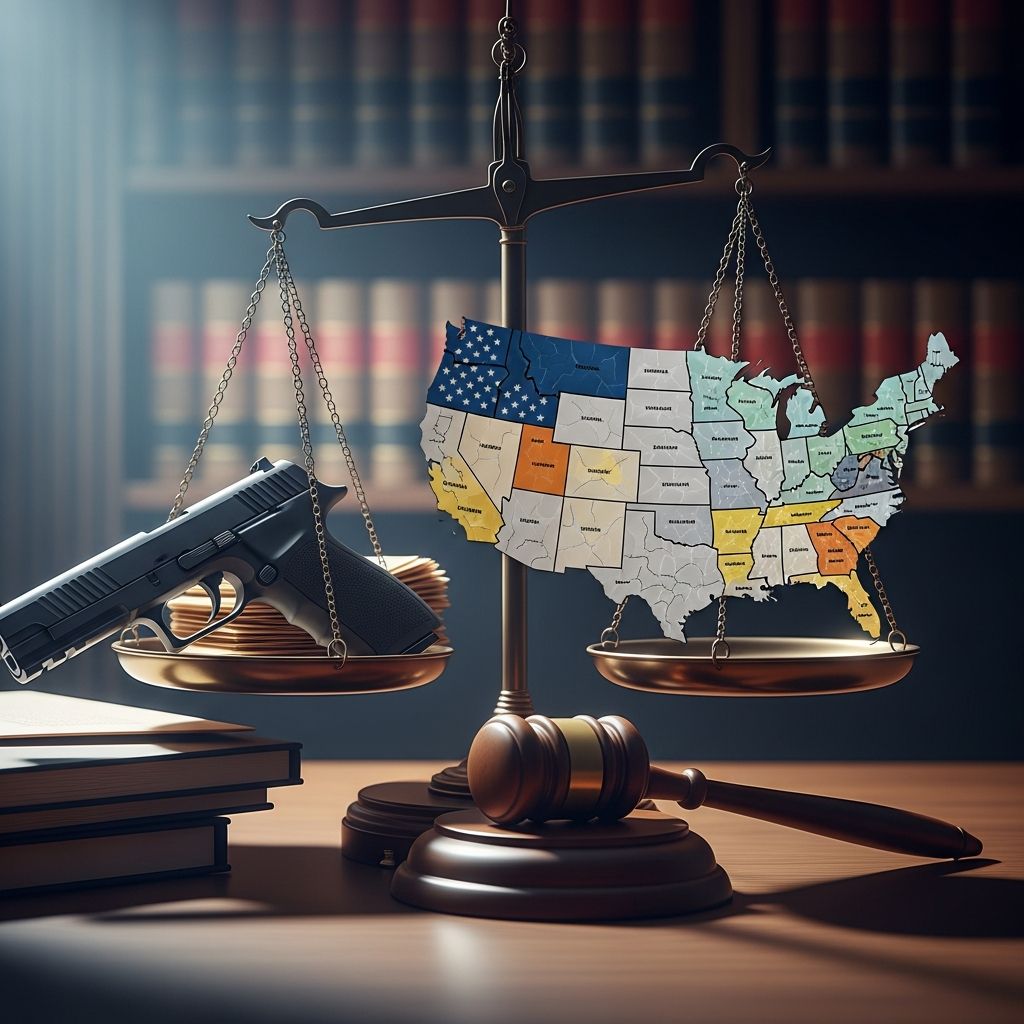
Understanding Firearm Self-Defense in the American Legal System
The constitutional right to bear arms, as affirmed by the U.S. Supreme Court, exists alongside comprehensive state-level regulations governing when and how individuals may use firearms for self-protection. This framework creates a complex legal landscape where firearm ownership does not automatically translate to unlimited self-defense privileges. Every state maintains specific statutes that define the boundaries of legally permissible defensive force, and understanding these boundaries is essential for anyone who carries or maintains a firearm for protection purposes.
The fundamental principle underlying all self-defense law is proportionality—the defensive force employed must reasonably match the threat presented. An individual cannot invoke self-defense as justification for any violent act simply because another person initiated violence. Instead, courts evaluate whether the defender’s response was appropriate under the specific circumstances and whether less forceful alternatives existed.
The Foundation of Self-Defense Doctrine
Self-defense laws operate on the premise that individuals possess a basic right to protect themselves and others from imminent unlawful harm. However, this right is not absolute and comes with significant legal constraints. When a firearm is employed in a defensive situation, the same legal evaluation applies as with any other use of force—the critical question becomes whether using that weapon was reasonably necessary and proportionate to the threat faced.
The burden of establishing self-defense often falls on the defendant, particularly in jurisdictions that do not presume innocence in self-defense claims. This means that even if law enforcement determines a shooting was justified, criminal charges may still be filed, requiring the defendant to prove the defensive nature of their actions at trial.
Situations Where Firearm Use May Be Justified
Several factual scenarios can support the legal use of a firearm in self-defense, extending beyond situations where an attacker is armed with a comparable weapon. Understanding these circumstances helps clarify the scope of defensive firearm use.
- An attacker wielding a deadly weapon such as a knife, metal implement, or club—situations where a firearm represents a reasonable response when no other protective options are accessible
- An attacker with no weapon who poses a serious threat due to significant disparities in physical strength, size, or combat training between the attacker and victim
- Scenarios where brandishing a firearm and providing a warning may be legally justified to prevent an imminent attack, even when the aggressor lacks a weapon
- Situations where an individual’s home is invaded, invoking protections under castle doctrine principles
- Circumstances involving threats of death or serious bodily harm, even when the attacker is unarmed but appears capable of causing such harm
Castle Doctrine: Defending Your Residential Spaces
The castle doctrine represents a foundational principle in American self-defense law, establishing that a person’s home is a sanctuary where they possess enhanced rights to use defensive force. Under this doctrine, individuals facing a home invasion have no obligation to retreat before employing deadly force, distinguishing residential defense from confrontations in public spaces.
The scope of castle doctrine protection varies significantly across states. Some jurisdictions limit protection to traditional residences, while others extend these principles to vehicles and workplaces. This variation means that homeowners cannot assume identical protections apply across state lines. Additionally, castle doctrine typically requires that the person using force was lawfully present in the space—an intruder generally cannot claim castle doctrine protections while burglarizing someone else’s home.
Even within one’s own residence, the doctrine does not grant unlimited use of deadly force. Courts generally require that the defendant reasonably believed they faced death or serious bodily harm before deploying lethal protection. A homeowner cannot shoot an intruder simply for being present on the property; rather, the threat posed by that intruder must justify the response.
Stand Your Ground Laws: Expanding Defensive Options Beyond the Home
Stand your ground legislation represents a significant departure from traditional self-defense doctrine by eliminating the requirement that individuals attempt to retreat from danger before using deadly force. A majority of states have adopted some version of stand your ground law, though the specific provisions and scope vary considerably.
Under stand your ground principles, individuals lawfully present in a location possess the right to use defensive force—including lethal force—against threats without first attempting to escape. These laws fundamentally shift the legal obligation: rather than requiring defenders to flee, they permit defenders to stand their ground and respond to threats. Importantly, stand your ground protections only apply when the defender is lawfully present in the location where the confrontation occurs.
The expansion of castle doctrine concepts to public spaces through stand your ground laws has created substantial variations in how different states approach defensive shooting incidents. Some jurisdictions continue to enforce traditional duty-to-retreat requirements, creating a legal environment where standing firm and using force might result in criminal liability.
Duty to Retreat: The Traditional Self-Defense Framework
A minority of states maintain traditional duty-to-retreat requirements, obligating individuals to attempt escape before resorting to deadly force when confronted with threats in public locations. These laws reflect a legal philosophy prioritizing de-escalation and avoidance over confrontation.
However, duty-to-retreat laws operate within practical limitations. They typically permit defensive force when retreat is impossible or unsafe rather than merely inconvenient. If an individual is trapped, actively being attacked, or followed by an aggressor during an attempted retreat, the duty to retreat may not apply because complete safety cannot be achieved through withdrawal.
Understanding the critical distinction between duty-to-retreat and stand-your-ground jurisdictions is essential for firearm owners who travel across state lines. An action that constitutes lawful self-defense in one state could result in serious criminal charges in another jurisdiction with different defensive force requirements.
Essential Elements of Legally Defensible Firearm Use
Courts evaluating self-defense claims typically examine several key factors to determine whether firearm use was legally justified:
| Factor | Evaluation |
|---|---|
| Imminence of Threat | The danger must be immediate and pressing, not hypothetical or future-oriented |
| Proportionality of Response | The force used must reasonably match the severity of the threat presented |
| Necessity | Lethal force must have been reasonably necessary; less forceful alternatives should not have been available |
| Aggressor Status | The defendant cannot have initiated the confrontation or been the initial aggressor |
| Lawful Presence | The defendant must have had a right to be present in the location where force was used |
| Reasonable Belief | The defendant must have reasonably believed they faced death or serious bodily harm |
Firearm Possession and Legal Complications
An often-overlooked aspect of firearm self-defense law involves the legal status of the weapon itself. All states prohibit certain individuals—including convicted felons and domestic violence offenders—from possessing firearms. Some states further restrict access to specific weapon types, such as automatic rifles or firearms with silencers.
Possessing an illegally owned or carried firearm creates significant legal complications for anyone claiming self-defense. While illegal possession does not always preclude self-defense arguments, it substantially undermines credibility with judges and juries. A defendant might successfully establish they acted in self-defense while simultaneously facing conviction on weapons charges related to illegal firearm possession.
Additionally, concealed carry regulations vary by state. Some jurisdictions require permits or licenses for carrying concealed weapons, while others permit permitless carry. Anyone carrying a firearm for self-defense must ensure compliance with their state’s specific concealed carry regulations to avoid additional criminal liability.
Charges Following Non-Fatal Defensive Shootings
When an individual shoots someone without causing death, and prosecutors question whether the shooting constituted legitimate self-defense, multiple serious charges may be filed. These can include attempted murder, assault with a deadly weapon, aggravated assault, or mayhem charges. The severity of charges typically depends on the severity of injuries inflicted and prosecutorial assessment of whether self-defense justification existed.
Even if a defendant ultimately prevails in establishing self-defense at trial, the criminal justice process itself becomes lengthy and expensive. Defense costs, court appearances, and potential employment consequences accompany any firearms-related charge, regardless of eventual outcome.
Constitutional Foundations and State Regulation
The U.S. Supreme Court has repeatedly affirmed that self-defense represents a central component of Second Amendment rights, recognizing individual self-protection as a legitimate purpose for firearm ownership. This constitutional recognition, however, coexists with comprehensive state authority to regulate how, when, and where firearms may be used defensively.
States maintain significant latitude in defining self-defense doctrine, establishing requirements for legal firearm possession, and determining consequences for misusing defensive force. This federalism structure means that constitutional rights to bear arms do not override state-specific limitations on defensive force deployment.
Interstate Travel and Reciprocity Complications
Individuals who carry firearms across state lines often believe reciprocity agreements—which allow recognition of out-of-state concealed carry permits—extend to self-defense law standards. This represents a dangerous misconception. A valid concealed carry permit from one state provides no protection when applying that other state’s self-defense standards.
A defensive shooting legally justified under one state’s stand-your-ground law could constitute a serious felony in a duty-to-retreat jurisdiction. Firearm owners must actively research and understand the defensive force laws of any state they travel through, as ignorance of these distinctions provides no legal protection.
Practical Considerations for Firearm Owners
Responsible firearm ownership requires more than mechanical proficiency with weapons. Gun owners should invest in comprehensive training addressing both technical firearm operation and understanding local self-defense law. Many jurisdictions offer self-defense law courses specifically designed for firearm owners, helping ensure that defensive decisions remain within legal boundaries.
Additionally, consulting with a criminal defense attorney before carrying a firearm enables owners to understand precisely how their state’s laws operate. This advance preparation, though potentially expensive, can prevent catastrophic legal consequences following a defensive incident.
Critical Actions Following a Defensive Shooting
Anyone who brandishes or fires a firearm at another person should immediately contact a qualified criminal defense attorney, regardless of whether charges have been filed. This principle applies equally to situations where law enforcement or bystanders consider the shooting justified. Early legal consultation protects rights and ensures proper guidance through subsequent investigation and potential prosecution.
Individuals should avoid providing detailed statements to law enforcement without attorney guidance, as statements intended to justify self-defense can sometimes be reinterpreted to support criminal charges. Legal representation from the earliest stages maximizes the likelihood of a favorable outcome.
Frequently Asked Questions
Q: Can I use a firearm to defend myself if the attacker is unarmed?
A: Yes, in certain circumstances. If the unarmed attacker is significantly larger, stronger, or more skilled in combat, or if they pose a credible threat of death or serious bodily harm, using a firearm might be legally justified. The key is whether you reasonably believed you faced death or serious harm.
Q: Do stand your ground laws exist in every state?
A: No. While a majority of states have adopted stand your ground laws, some still maintain traditional duty-to-retreat requirements. You must research your specific state’s law before carrying a firearm for protection.
Q: If I legally own a firearm, am I automatically allowed to use it for self-defense?
A: Not necessarily. Legal ownership does not guarantee legal use in self-defense. The circumstances of any shooting, including the nature of the threat, must justify the use of deadly force under your state’s specific laws.
Q: Does castle doctrine apply to my vehicle?
A: This depends on your state. Some states extend castle doctrine protections to vehicles and workplaces, while others limit protections to residential spaces. Check your state’s specific statutes.
Q: What should I do immediately after a defensive shooting?
A: Contact a criminal defense attorney before providing statements to police. Exercise your right to remain silent and avoid detailed explanations without legal counsel present. This protects your legal interests regardless of whether charges are filed.
Q: Can I face criminal charges even if I acted in self-defense?
A: Yes. Prosecutors may file charges that you must then defend against by proving self-defense. The fact that you believed you were protecting yourself does not prevent arrest or prosecution.
References
- Using a Gun for Self-Defense: Laws and Consequences — Criminal Defense Lawyer. 2024. https://www.criminaldefenselawyer.com/resources/using-a-gun-self-defense-laws-and-consequences.htm
- Firearms and Self-Defense: How State Laws Differ and Why It Matters — Legal Heat. 2024. https://www.legalheat.com/blog/firearms-and-self-defense-how-state-laws-differ-and-why-it-matters/
- No Shoot First Law — Everytown Research & Policy. 2024. https://everytownresearch.org/rankings/law/no-shoot-first-law/
- Self-Defense and Stand Your Ground — National Conference of State Legislatures. 2024. https://www.ncsl.org/civil-and-criminal-justice/self-defense-and-stand-your-ground
- Self-Defense — Wex Legal Dictionary, Cornell Law School. 2024. https://www.law.cornell.edu/wex/self-defense
Similar Articles








Read full bio of Sneha Tete