
Financial Readiness Before Disaster Strikes
Practical steps to protect your money, documents, and peace of mind before a disaster or emergency turns life upside down.
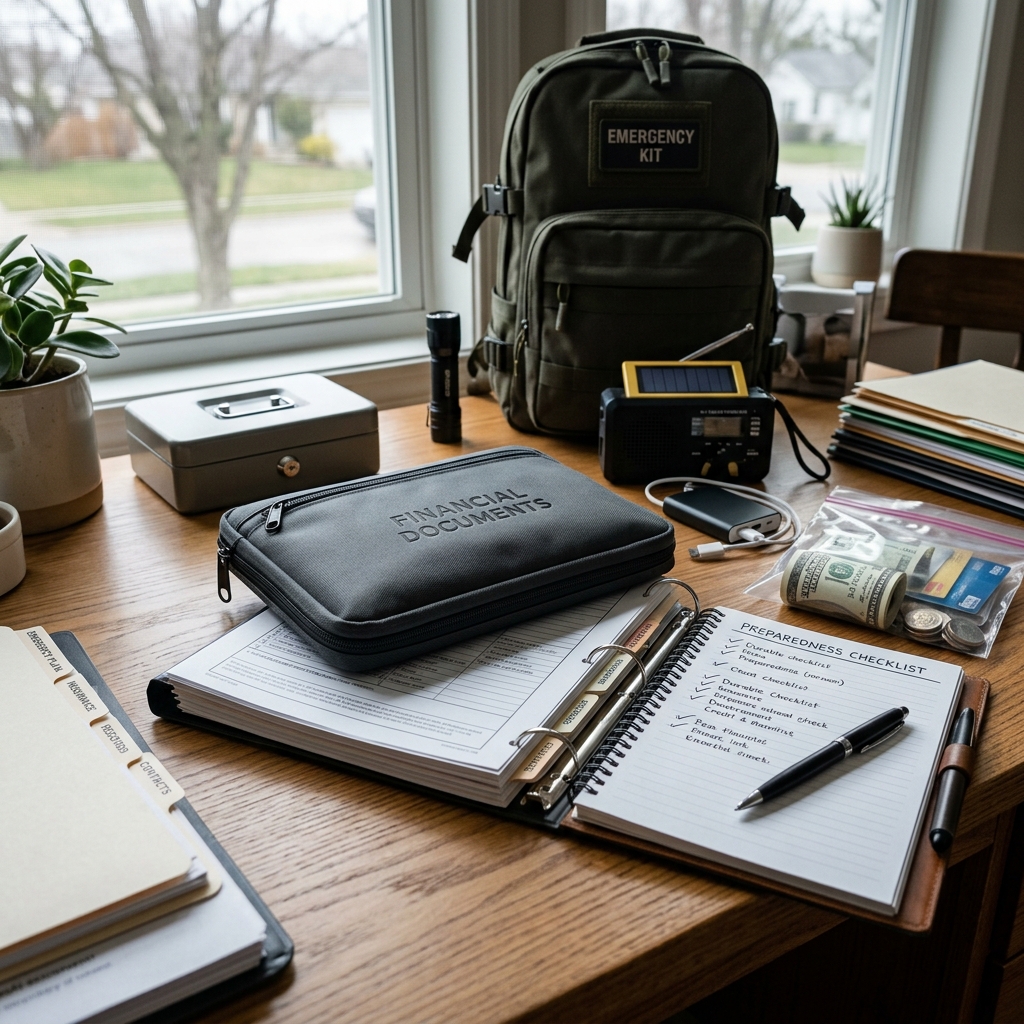
Storms, wildfires, floods, and other emergencies can arrive with little warning. While you cannot control when a disaster happens, you can control how prepared your finances are. Taking time now to organize your money, accounts, and documents can make the difference between a temporary setback and a long, stressful recovery.
This guide walks you through the key actions to take before a disaster or emergency, with a focus on protecting your financial life and making it easier to get help fast when you need it.
Why Financial Preparedness Matters in Disasters
Disaster planning often focuses on food, water, and shelter. Yet money and documents are just as critical. After a hurricane, wildfire, or other major event, people commonly face:
- Lost income because work is closed or hours are cut.
- Unexpected expenses such as temporary housing, transportation, or repairs.
- Limited access to banks, ATMs, or mail delivery.
- Difficulty proving identity or ownership if documents are damaged or destroyed.
- Debt problems and credit issues if bills cannot be paid on time.
U.S. emergency management agencies encourage individuals to build a plan that includes how to protect vital records, insure property, and maintain access to funds during disruptions.
Step 1: Know Your Risks and Likely Costs
Different locations face different hazards. Understanding what is most likely where you live helps you estimate potential costs and prioritize preparation.
- Research local hazards such as hurricanes, tornadoes, wildfires, floods, earthquakes, or winter storms using your state or local emergency management resources.
- Consider indirect emergencies like extended power outages, chemical spills, or major water main breaks that could disrupt income and daily life.
- Estimate potential expenses you might face, including deductibles, temporary housing, evacuation travel, and lost wages.
Once you have a general sense of the kinds of emergencies you may face, you can tailor your financial readiness plan to those specific threats.
Step 2: Build a Cash and Emergency Fund Strategy
After a disaster, electronic payment systems or ATMs may not work, and you may have to leave home quickly. Having multiple ways to pay for essential expenses is crucial.
Create an Emergency Savings Cushion
Emergency savings can help you cover rent, food, transportation, or medical costs if your income stops temporarily. Many government and consumer financial education programs recommend aiming for at least several weeks of essential expenses, and more if possible, especially in disaster-prone areas.
- Start with a small goal, such as saving enough for one week of critical bills.
- Set up automatic transfers to a dedicated savings account.
- Keep this money separate from daily spending so you are less tempted to use it.
Keep Some Cash on Hand
Even if you usually pay with cards or apps, cash may be the only option during widespread outages.
- Keep a modest amount of cash in small bills in a secure, waterproof place at home.
- Aim for enough to cover several days of food, fuel, and basic supplies.
- Do not store large amounts of cash where it could be stolen or lost; balance safety with accessibility.
Diversify Access to Money
To reduce the risk of being completely cut off from funds:
- Maintain at least one checking and one savings account, ideally with online access and mobile banking.
- Ensure you know how to use mobile check deposit and how to transfer money between accounts.
- If you use prepaid cards, understand any limits, fees, and how to replace them if lost.
Step 3: Protect and Organize Critical Documents
Replacing IDs and legal documents can be slow and stressful after a disaster. Safeguarding them in advance makes it easier to prove identity, access benefits, file insurance claims, and avoid fraud.
Documents You Should Protect
Consider gathering and protecting copies (or originals where appropriate) of the following:
- Government-issued IDs (driver’s licenses, passports, state ID cards).
- Social Security cards and immigration documents.
- Birth, marriage, adoption, and custody records.
- Homeownership or rental documents: deeds, mortgage records, leases.
- Insurance policies and recent statements (home, renters, flood, auto, health, life).
- Bank, credit union, and credit card account details.
- Vehicle titles and registration.
- Medical records, prescriptions lists, and health insurance cards.
- Wills, powers of attorney, and other estate or legal paperwork.
Storage Options: Physical and Digital
Use a combination of physical and digital strategies to protect documents:
- Fire- and water-resistant container at home for originals and key copies.
- Safe deposit box or off-site storage for documents that are difficult to replace.
- Secure digital backups (encrypted cloud storage or encrypted USB drive) for scanned copies.
- Use strong, unique passwords and enable multi-factor authentication for any online storage.
| Document Type | Physical Storage Tip | Digital Backup Tip |
|---|---|---|
| IDs & vital records | Keep originals in a fire- and water-resistant container | Scan and store in encrypted cloud folder |
| Insurance policies | Store recent policy and claims numbers in home safe | Download PDFs and back up to cloud and encrypted drive |
| Financial account info | Print a summary of key account numbers and contacts | Use a password manager for logins and notes |
| Legal & estate docs | Consider a safe deposit box for originals | Store scanned versions in a restricted-access folder |
Step 4: Prepare Your Accounts and Payment Obligations
When disaster strikes, you may not be able to reach your mailbox, your bank branch, or even your usual computer. Preparing now can help you keep paying essential bills, avoid late fees, and reduce the risk of fraud.
Set Up Online and Mobile Access
- Create online accounts for your bank, credit union, credit cards, utilities, and major loans.
- Download official mobile apps and test that you can log in and view balances.
- Update your contact information, especially email and mobile phone numbers, so companies can reach you with alerts.
Review Automatic Payments and Due Dates
Automatic payments can be helpful, but they can also cause overdrafts if your income stops suddenly.
- List all automatic payments and their dates.
- Identify which bills are critical (housing, utilities, insurance, car payments) and which are less urgent.
- Ask lenders or service providers if they offer hardship or disaster relief policies, such as deferred payments or waived late fees, and note contacts in your records.
Monitor for Fraud and Identity Theft
Disasters often lead to increased scams and identity theft attempts. Official agencies and consumer protection offices warn that fraudsters may pose as charities, contractors, or government officials to steal money or personal information.
- Enable alerts on your accounts for unusual activity or large transactions.
- Know how to quickly freeze or lock your debit and credit cards through your bank or card app.
- Keep contact numbers for your financial institutions in your emergency records in case you lose your wallet or phone.
Step 5: Review Insurance and Understand Your Coverage
Insurance can be one of the most important tools for financial recovery, but many people do not fully understand what their policies cover until after a disaster.
Key Insurance Types to Review
- Homeowners or renters insurance to cover personal belongings and, in many cases, additional living expenses if you cannot stay at home.
- Flood insurance, which is typically separate from standard home or renters policies and may be crucial if you live in or near a flood-prone area.
- Auto insurance that covers damage from disasters, such as comprehensive coverage for flooding or falling debris.
- Health and disability coverage in case of injury or lost ability to work.
- Life insurance if others rely on your income.
Questions to Ask Your Insurer
- What hazards are covered and what hazards are excluded (for example, flood, earthquake, or wind damage)?
- What is my deductible, and could I afford to pay it?
- Does my policy pay for temporary housing or additional living expenses if I must evacuate?
- What documentation will I need to file a claim quickly?
- How do I contact the company during an emergency if local offices are closed?
Update your coverage if major life events have changed your needs—such as moving, renovating, or acquiring valuable property.
Step 6: Plan for Family Communication and Decision-Making
Financial decisions during a disaster are often made under pressure. A simple family communication plan can reduce confusion and help you act quickly.
Designate Roles and Backup Contacts
- Identify who will be responsible for managing money and bills if the primary decision-maker is unavailable.
- Choose an out-of-area contact person who can help relay messages if local service is disrupted, following guidance from emergency preparedness organizations.
- Make sure adult household members know where key documents and passwords (or password manager access) are stored.
Create a Written Financial Emergency Plan
Write down essential information so it is available even if phones or computers fail:
- List of key accounts and institutions.
- Policy numbers and insurance contacts.
- Emergency contacts, including doctors, pharmacists, and employers.
- Steps to take right after a disaster (for example, contact insurer, notify landlord, check work status).
Store one copy in your home emergency kit and another in your digital backup.
Step 7: Prepare a Financially Smart “Go Bag”
Many emergency preparedness guides recommend having a basic supply kit with essentials like water, food, flashlights, and first aid. Alongside these items, include financial and documentation essentials.
Money-Related Items for Your Go Bag
- Small amount of cash in mixed bills.
- Copy of your ID and health insurance card.
- Printed list of important phone numbers and account contacts.
- Prepaid phone card or backup battery for your phone.
- List of prescriptions and dosages, plus necessary medical information.
- Key documents or a USB drive with encrypted copies, if safe to carry.
Personal and Household Considerations
Tailor your go bag to your household’s specific needs:
- Supplies for children, older adults, or people with disabilities in your household.
- Pet supplies and records if you have animals.
- Basic toiletries and comfort items to reduce stress.
Step 8: Anticipate Recovery Steps and Long-Term Needs
Planning ahead for the recovery phase can help you use resources wisely and avoid long-term financial damage.
Know Where to Seek Assistance
In the United States, federal, state, and local programs may offer assistance after major disasters, including temporary housing, grants, or low-interest loans.
- Familiarize yourself with national disaster recovery programs and how to apply.
- Identify local community organizations, charities, and housing agencies that may assist with food, shelter, or bills.
- Keep a list of these resources in your emergency records.
Plan to Protect Your Credit
Late payments and high balances can damage your credit score. To minimize harm:
- Contact lenders and creditors as soon as possible after a disaster to explain your situation and ask about hardship options.
- Document any agreements or relief terms in writing.
- Monitor your credit reports in the months following the event to spot errors or unauthorized accounts.
Think About Rebuilding and Future Resilience
Recovery is also an opportunity to build greater resilience for the future:
- Revisit your emergency savings and adjust your goals after you stabilize.
- Consider mitigation improvements to your home, such as strengthening roofs or elevating utilities, which some programs and insurers may support.
- Update your financial emergency plan based on what you learned.
Quick Financial Preparedness Checklist
Use this checklist as a starting point to track your progress:
- [ ] Identified likely local hazards and potential costs.
- [ ] Started or strengthened an emergency savings fund.
- [ ] Set aside a small amount of cash in a safe place.
- [ ] Collected and protected key financial and personal documents.
- [ ] Enabled online access and alerts for major accounts.
- [ ] Reviewed insurance policies and understood coverage and exclusions.
- [ ] Created a written financial emergency plan and shared key details with household members.
- [ ] Prepared a go bag that includes money-related items and copies of critical documents.
- [ ] Identified potential sources of assistance and recovery support.
Frequently Asked Questions
How much emergency savings do I need for disasters?
There is no single correct number, but many financial educators suggest aiming for at least several weeks of essential expenses, and more if you live in an area prone to severe disasters and can afford it. Start small with a one-week goal and build over time.
Where should I keep cash for emergencies?
Store a modest amount of cash in small bills in a secure, hidden, and waterproof location at home, not in plain sight. Avoid keeping very large sums; balance the risk of theft with the benefit of having cash if electronic systems fail.
What documents are most important to protect first?
If you are just starting, prioritize government IDs, Social Security and immigration documents, vital records (like birth certificates), insurance policies, and proof of homeownership or rental agreements. These are often needed quickly to apply for aid or file claims.
Do I really need separate flood insurance?
Standard homeowners and renters insurance policies typically do not cover flood damage. In many areas, you must buy separate flood coverage through a specialized program or insurer if you want protection from flooding. Check your risk and options, even if you do not live directly in a high-risk zone.
How can I protect myself from scams after a disaster?
Be cautious of unsolicited offers for repairs, financial help, or charity donations. Verify organizations through official channels, never pay large sums up front in cash, and do not share personal information with unknown callers or websites. Use official government and major nonprofit sources to confirm legitimate assistance programs.
References
- Disaster Preparedness Pocket Guide — QuickSeries Publishing. 2023-05-01. https://quickseries.com/content/product/disaster-preparedness-pocket-guide
- Make a Plan — American Red Cross. 2024-01-10. https://www.redcross.org/get-help/how-to-prepare-for-emergencies/make-a-plan.html
- Tips to Prepare for Natural Disasters — Nationwide Insurance. 2023-08-15. https://www.nationwide.com/lc/resources/emergency-preparedness/articles/natural-disaster-preparation
- Plan & Prepare — Florida Division of Emergency Management. 2023-06-30. https://www.floridadisaster.org/planprepare/
- Disaster Preparedness Tips — Virginia Association of Museums. 2022-09-12. https://www.vamuseums.org/news/disaster-preparedness-tips
- Emergency Preparedness and Response — Occupational Safety and Health Administration (OSHA). 2022-11-01. https://www.osha.gov/emergency-preparedness
- Pennsylvania Emergency Preparedness Guide — Ready PA, Commonwealth of Pennsylvania. 2023-04-05. https://www.pa.gov/agencies/ready/get-prepared/emergency-preparedness-guide
Similar Articles








Read full bio of Sneha Tete




