
Filming Police in Public: Rights, Lawsuits and Accountability
How citizen recordings of police encounters became a First Amendment battleground and reshaped accountability debates.
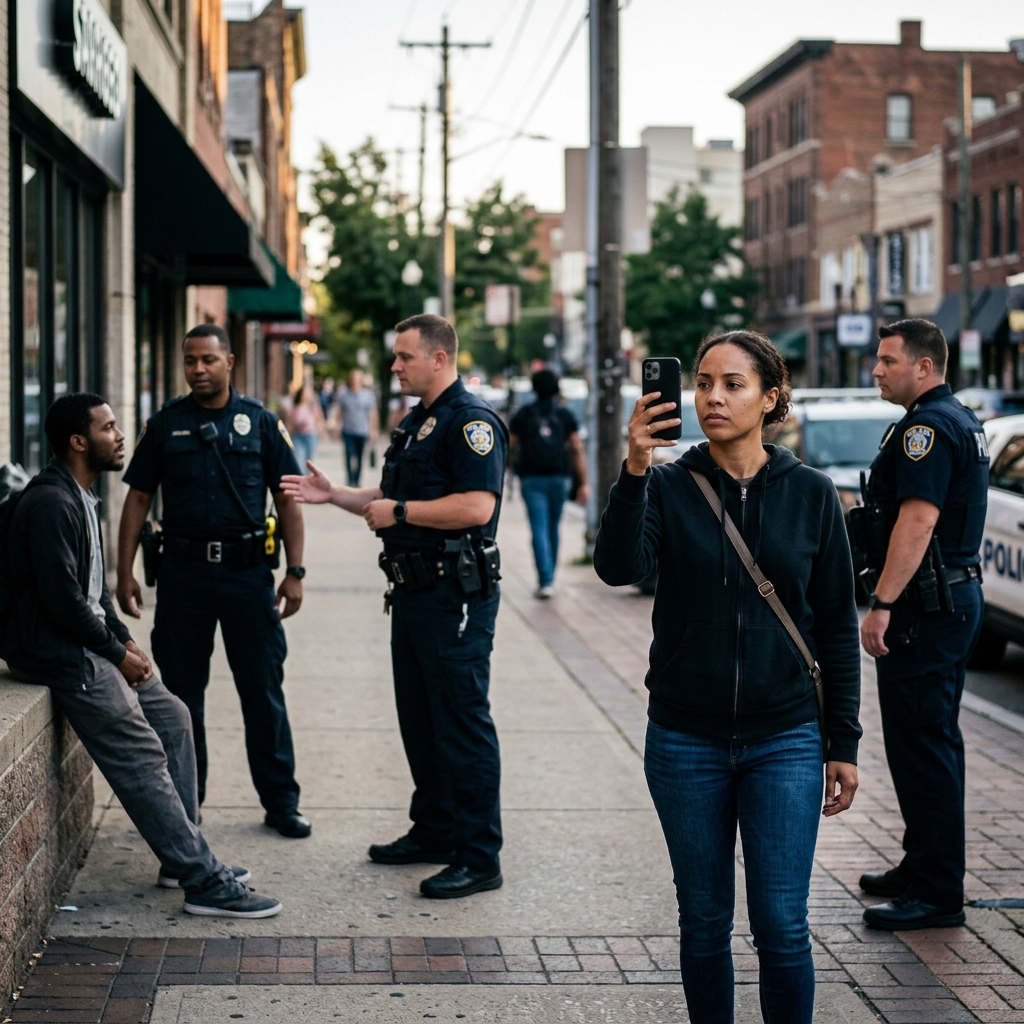
Across the United States, ordinary people increasingly use their phones to document police encounters. These videos have exposed serious misconduct, sparked national debates, and led to reforms. At the same time, some citizens have faced arrest, retaliation, or destruction of their recordings, triggering lawsuits that test the boundaries of the First Amendment and civil rights law.
This article examines the legal right to record police officers, why some departments still resist citizen filming, and how recent cases — including lawsuits involving the Philadelphia Police Department — are shaping the future of public oversight.
From Cell Phones to Civil Rights: Why Recording Police Matters
The widespread availability of smartphones has turned many bystanders into unofficial documentarians of public life. When police use force, make arrests, or conduct traffic stops, citizens now have the technical ability to capture what happens in real time. These recordings serve several critical functions:
- Evidence in court — Video can corroborate or contradict official reports, witness statements, and officer testimony.
- Public accountability — Graphic footage has fueled public debate and, in some cases, discipline for officers involved in misconduct.
- Protection for citizens and officers — Recording can deter abuse, while also documenting that officers acted lawfully in tense situations.
- Journalistic function — Many citizens share recordings with news organizations or on social media, performing a watchdog role traditionally reserved for professional journalists.
Because of these impacts, the right to record police is closely tied to longstanding First Amendment protections for news gathering, public oversight of government, and free expression.
The Legal Foundation: Is It Legal to Film Police in Public?
Courts have increasingly recognized that citizens have a constitutionally protected right to record police officers performing their duties in public spaces. This right arises primarily from the First Amendment, which protects not only speech but also the creation and dissemination of information about government activity.
First Amendment Protection
Federal courts have held that recording public officials, including police, is part of the freedom of speech and press. The logic is straightforward: it is difficult to comment meaningfully on government conduct without being able to observe and document it. Recording becomes a form of information gathering that precedes and enables expression.
As one example, litigation and policy debates in Pennsylvania have emphasized that filming police in public is not inherently criminal and that officers cannot rely on wiretapping laws to suppress recordings by citizens.
Wiretap and Privacy Laws: Why Police Can Be Recorded
Many states, including Pennsylvania, have laws requiring consent of all parties before audio recording of private conversations. However, courts and civil rights organizations have clarified that these statutes typically do not apply when recording police officers performing official duties in public.
Key points include:
- No reasonable expectation of privacy — Officers carrying out their duties on streets, parks, or other public areas cannot reasonably expect privacy in the same way private individuals might.
- Government officials exception — Civil liberties advocates have emphasized that wiretap rules are not meant to shield government officials from accountability when they act in public settings.
- Case law supporting recording — Decisions such as Kelly v. Borough of Carlisle helped clarify that Pennsylvanians may lawfully record police in public without violating state wiretap provisions.
These principles have been reinforced by memoranda and training within police departments. For example, the Philadelphia Police Commissioner has formally acknowledged that the public has the right to videotape officers engaged in their work, including during arrests.
Philadelphia as a Case Study: Arrests and Lawsuits Over Filming Police
Philadelphia offers a vivid illustration of tensions between citizen recording and police practice. Over the past decade, citizens who tried to film officers have reported being arrested or threatened, and several have filed lawsuits alleging violations of their constitutional rights.
Arrests Linked to Cell Phone Videotaping
Civil rights advocates in Pennsylvania have documented multiple incidents in which individuals were arrested or charged after using their phones to record police activity, such as:
- A college student recording officers escorting a woman out of a city park, who ended up arrested and later bringing suit.
- By-standers filming what they believed to be questionable arrest tactics, who were themselves taken into custody after capturing the encounter.
These incidents prompted the Pennsylvania office of the American Civil Liberties Union (ACLU) to plan and file lawsuits aimed at curbing what they describe as heavy-handed tactics used to discourage citizens from exercising their First Amendment rights.
The Montgomery Case and Public Attention
One high-profile case involved a Temple University photojournalism student, Christopher Montgomery, who was arrested while taping police activity in Philadelphia. His lawsuit alleged that officers violated his constitutional rights by treating lawful recording as grounds for arrest.
Coverage of Montgomery’s case helped draw attention to the broader pattern of arrests over filming, and to the gap between written policies, which recognized the right to record, and street-level practices, where officers sometimes reacted negatively to being filmed.
Allegations of Deleting Citizen Video
Beyond arresting those who film, some incidents have involved officers allegedly tampering with or deleting videos from citizens’ phones. In one recent case, body-worn camera footage appeared to show a Philadelphia officer picking up a suspect’s phone during an arrest and deleting a video from the device.
The suspect’s attorney filed a civil lawsuit, and the department opened an internal affairs investigation. The Police Commissioner stated that the officer had been placed on restrictive duty while the investigation proceeded. Allegations of destroying or altering video evidence raise serious questions about obstruction, due process, and transparency in policing.
What the Law Allows — And Where It Draws the Line
While citizens generally have the right to record police in public, that right is not unlimited. Understanding lawful boundaries can help avoid unnecessary conflict and, when violations occur, strengthen potential legal claims.
Typical Conditions for Lawful Recording
Courts and policy guidance usually emphasize that citizens may record police activity so long as they:
- Remain in a public place where they are legally allowed to be.
- Do not physically interfere with police operations, such as obstructing an arrest or entering a crime scene.
- Comply with lawful orders related to safety or scene control (for example, being directed to stand behind a barrier).
- Avoid incitement or threats that could themselves constitute criminal conduct.
Simply pointing a phone at officers, however unwelcome they may find it, is not in itself obstruction or disorderly conduct when done from a reasonable distance.
Situations That Can Lead to Legal Disputes
Many lawsuits arise when officers interpret citizen behavior differently, for example:
- Claiming a person filming is interfering, even when they are several feet away.
- Ordering citizens to stop recording even in public areas where they have a right to be.
- Threatening arrest or seizure of phones solely because citizens refuse to stop filming.
- Deleting or tampering with recorded video to prevent it from being used as evidence.
These actions may violate First Amendment protections and, when done under color of law, can form the basis of federal civil rights claims.
How Citizens Are Fighting Back: Civil Rights Lawsuits
Individuals who believe their rights were violated when filming police often turn to federal court, bringing claims under 42 U.S.C. § 1983. This statute allows people to sue state and local officials (including police officers) for violations of constitutional rights.
Common Legal Claims in Filming-Related Cases
| Type of Claim | Typical Allegation |
|---|---|
| First Amendment violation | Arresting, detaining, or threatening citizens to stop them from recording police activity. |
| Fourth Amendment violation | Seizing phones or deleting recordings without a warrant or lawful justification. |
| Retaliation | Targeting individuals for adverse treatment because they exercised free speech rights. |
| Monell claim | Arguing that a city’s policy, custom, or failure to train officers led to recurring rights violations. |
Role of Civil Rights Organizations
Groups like the ACLU frequently support or file these lawsuits to establish clearer protections for recording and to deter future misconduct. Their strategies include:
- Bringing test cases in federal court to create binding precedent.
- Challenging arrests that appear designed to punish citizens for filming.
- Publishing guidance on how to record safely and lawfully.
- Pressing departments to adopt training and explicit policies protecting citizen recording.
These efforts have contributed to a growing recognition, both in case law and in internal police memoranda, that videotaping officers in public is lawful and protected.
Police Departments Respond: Training, Policy and Internal Investigations
As lawsuits and public scrutiny have increased, many police agencies have updated their policies to acknowledge and protect citizen recording. Philadelphia provides an example of this shift.
Formal Recognition of the Right to Record
Faced with repeated incidents and looming litigation, the Philadelphia Police Commissioner circulated guidance instructing that the public does have a right to film officers on duty and that it is not illegal to do so. This memo was intended to reach all ranks and to reduce unnecessary confrontations.
Similar guidance has emerged in other jurisdictions, emphasizing that officers should not arrest or threaten individuals simply because they are recording from a lawful vantage point.
Internal Affairs and Disciplinary Measures
Cases involving alleged deletion of citizen video or interference with recording often trigger internal investigations. In the Philadelphia incident where an officer was recorded deleting a suspect’s phone video, the department confirmed an internal affairs investigation and placed the officer on restricted duty pending the outcome.
While internal discipline alone may not resolve broader constitutional questions, it plays a role in:
- Signaling that tampering with evidence is unacceptable.
- Encouraging officers to respect citizen recording as part of their daily practice.
- Building public trust when misconduct is acknowledged and addressed.
Practical Guidance for Citizens Who Want to Record Police
Understanding your rights is only part of the picture. Applying them safely during a tense encounter is equally important. The following best practices, drawn from civil liberties guidance and litigation experience, can help individuals record responsibly.
General Tips When Filming Police
- Stay calm and non-confrontational — Announce that you are recording and avoid escalating the situation.
- Keep a safe distance — Stand far enough away that you clearly are not physically interfering.
- Do not touch officers or suspects — Physical contact will almost certainly be treated as interference.
- Secure your footage — Consider apps or cloud backups that upload video in real time, in case your device is seized or damaged.
- Document context — Capture surroundings, timestamps, and dialogue where possible, as these details may matter later.
If You Are Threatened or Arrested for Filming
Even when you act lawfully, an officer may still object to being recorded. If you are threatened, ordered to stop recording without a clear safety rationale, or arrested, consider the following steps once you are safe:
- Write down everything — Include time, location, officer names or badge numbers, and what was said.
- Preserve all evidence — Back up your video, photos of injuries, and any paperwork provided (citations, property receipts).
- Consult a civil rights attorney — Legal professionals can assess whether your First or Fourth Amendment rights were violated and advise on next steps.
- Consider filing a complaint — Internal affairs units may investigate, particularly in cases involving alleged deletion or alteration of recordings.
Broader Implications: Filming, Body Cameras, and the Future of Accountability
Police departments increasingly use their own body-worn cameras, which can complement citizen recordings or, at times, contradict them. In the Philadelphia case involving alleged deletion of a suspect’s video, it was body camera footage that appeared to show the officer manipulating the citizen’s phone.
When both official and citizen videos exist, they create a multi-perspective record of events. This combination can:
- Improve accuracy in investigations and court proceedings.
- Reduce reliance on contested verbal accounts.
- Highlight inconsistencies where misconduct may have occurred.
As technology advances and recording becomes even more routine, the law will continue to evolve. What remains constant is the core principle: in a democracy, the public has a right to observe and document how government power is exercised, especially in moments when liberty and safety are at stake.
Frequently Asked Questions (FAQs)
1. Is it always legal to record police officers in public?
In most circumstances, yes. Courts and policy statements have recognized a First Amendment right to record police performing their duties in public, provided you do not interfere with their work or violate other laws. Local laws and specific situations may vary, so it is wise to know the rules in your jurisdiction.
2. Can police use wiretap laws to stop me from recording?
Generally, no, when officers are acting in public. In Pennsylvania, for example, courts have explained that police performing official duties in public do not have the same expectation of privacy as private individuals, and that wiretap statutes do not bar people from recording officers in public settings.
3. Are officers allowed to delete videos from my phone?
Deleting or altering your recordings without consent or legal authority can raise serious constitutional and evidentiary issues. Allegations that an officer deleted a suspect’s video during a Philadelphia arrest led to an internal affairs investigation and civil litigation, underscoring that such conduct may violate Fourth Amendment and due process protections.
4. What should I do if I am arrested for filming police?
After ensuring your safety, document as much as possible about the incident, preserve any video and paperwork, and consult a civil rights attorney. Many lawsuits over arrests for filming have alleged First Amendment retaliation and unlawful seizure, and some have led to policy changes and settlements.
5. Do I need to be a journalist to have the right to record police?
No. The First Amendment protects the rights of the general public as well as professional journalists. Courts and civil rights organizations emphasize that ordinary citizens performing a “news gathering” function by recording public officials are entitled to constitutional protection.
References
- Arrests over cell phone videotaping of police lead to increasing number of lawsuits — Legal Newsline / Pennsylvania Record. 2011-10-10. https://www.legalnewsline.com/pennsylvania-record/arrests-over-cell-phone-videotaping-of-police-lead-to-increasing-number-of-lawsuits/article_e017c8b1-059d-52f8-a20d-f519663dd1be.html
- Suit filed on behalf of student arrested for taping Philly police — WHYY. 2012-06-19. https://whyy.org/articles/man-arrested-for-taping-police-will-have-day-in-court/
- Philadelphia officer investigated for allegedly deleting suspect’s cellphone video during arrest — ABC News. 2021-10-30. https://abcnews.com/US/philadelphia-officer-investigated-allegedly-deleting-suspects-cell-phone/story?id=78195441
- Philly cop accused of deleting arrest video from man’s phone in lawsuit — Fox 29 Philadelphia. 2021-10-29. https://www.fox29.com/news/philly-cop-accused-of-deleting-arrest-video-from-mans-phone-in-lawsuit
- Police officer accused of deleting suspect’s video during arrest — 6ABC / WPVI video report. 2021-10-29. https://www.youtube.com/watch?v=yGalgXGZDrg
Similar Articles








Read full bio of medha deb




