
Filing a Police Report for Identity Theft
Learn when and how to file a police report for identity theft, and how that report supports your recovery with creditors and government agencies.
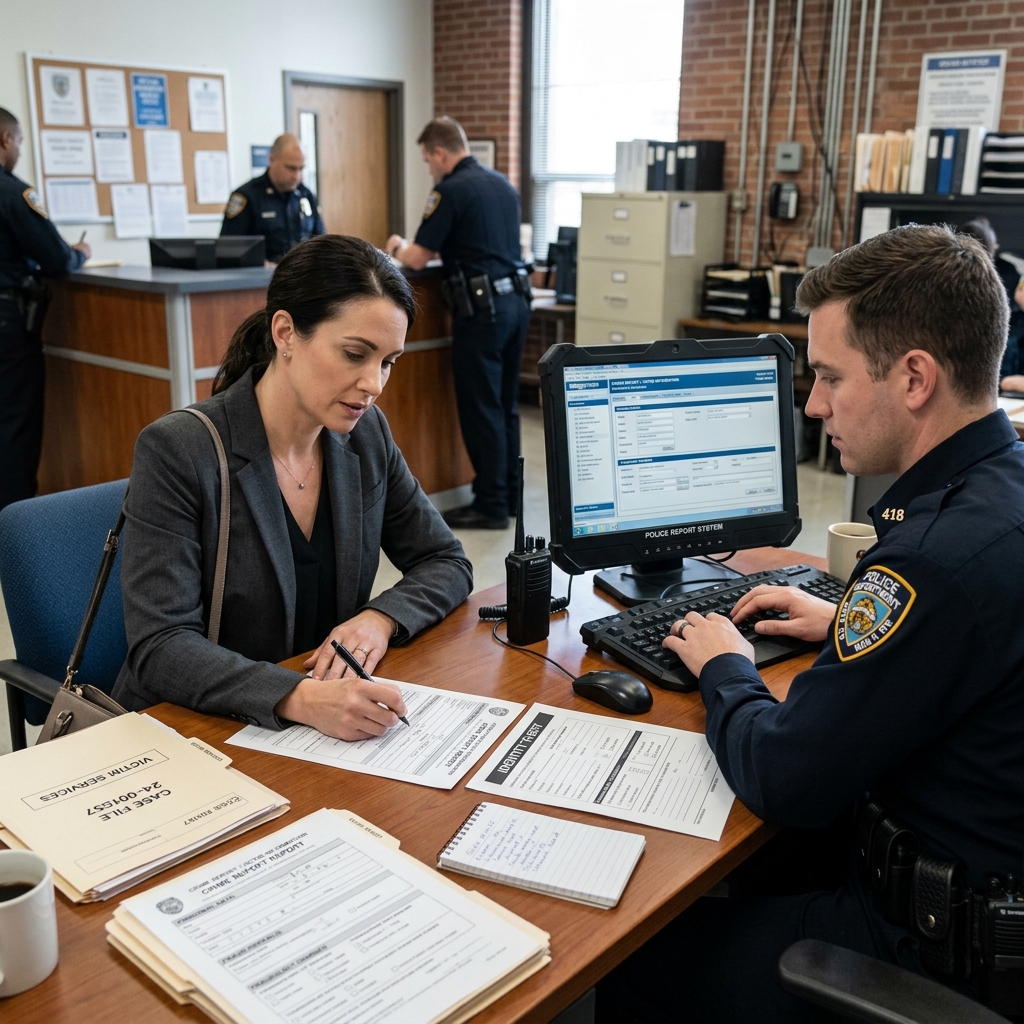
Identity theft can damage your finances, credit history, and sense of security. A police report is often a key document in proving that you are a victim and not responsible for fraudulent activity. This guide explains when a police report is useful, how to file one correctly, and how it fits into a broader identity theft recovery plan.
Why a Police Report Matters in Identity Theft Cases
Not every identity theft incident requires a police report, but having one can significantly strengthen your position when dealing with creditors, debt collectors, and government agencies.
- Proof for creditors and collectors – Many banks, card issuers, and collection agencies ask for a police report before writing off fraudulent debts or removing negative items from your file.
- Support for disputes on your credit report – Credit reporting agencies may take your disputes more seriously when you can provide an official report and an identity theft affidavit.
- Evidence for government agencies – If tax returns or Social Security records are affected, the IRS or Social Security Administration may request a police report along with other identity documents.
- Help for law enforcement – Accurate reporting can help police and federal authorities identify patterns, connect related cases, and investigate organized fraud.[10]
Police Report vs. FTC Identity Theft Report
Victims are sometimes confused about the difference between a local police report and a Federal Trade Commission (FTC) identity theft report. In many cases, you benefit from having both.
| Document | Who Issues It | Main Purpose | When It Is Used |
|---|---|---|---|
| Local police report | City or county law enforcement | Official record of a crime or incident involving your identity | Requested by creditors, collectors, and sometimes tax authorities |
| FTC identity theft report | Federal Trade Commission via IdentityTheft.gov | Centralized identity theft complaint and customized recovery plan | Used to dispute fraudulent charges and accounts, and to coordinate with law enforcement |
The FTC operates IdentityTheft.gov, a federal portal where victims can report identity theft and get a tailored recovery plan.[10] The FTC identity theft report is recognized nationwide and is frequently accepted by creditors as part of your proof.
When You Should Consider Filing a Police Report
A police report is most useful in situations where someone has committed a clear crime using your personal information. Typical scenarios include:
- New credit cards or loans opened in your name without your consent
- Unauthorized withdrawals or transfers from your bank accounts
- Large fraudulent purchases or cash advances on your existing cards
- Tax identity theft, such as someone filing a false tax return using your Social Security number
- Criminal identity theft, where someone uses your identity during an arrest or police encounter
- Cyber‑related identity theft involving online scams, hacked accounts, or data breaches
For minor issues, such as a single unauthorized charge that your card issuer quickly reverses, you may be able to resolve the problem without involving local law enforcement. However, if your information is being used repeatedly or across multiple accounts, filing a report is advisable.
Prepare Your Documentation Before You Go
Law enforcement agencies are more likely to take a thorough report when you arrive with organized evidence. Before visiting or contacting the police, gather:
- Government‑issued photo ID – Driver’s license, passport, or other official ID.
- Proof of address – Utility bill, lease, pay stub, or bank statement showing your current residence.
- Copies of statements or bills – Any account statements showing the fraudulent transactions or accounts.
- Credit reports – Highlight any accounts or inquiries you do not recognize.
- Collection letters or notices – Debt collection correspondence tied to fraudulent accounts.
- FTC identity theft report and affidavit – If you have already reported your case via IdentityTheft.gov, bring a copy of the report and the recovery plan.
- Any suspect information – If you know or suspect who used your identity, bring that information.
Organizing these documents in a folder or binder will help you clearly explain the timeline of events and reduce confusion.
Step‑by‑Step: How to File a Police Report for Identity Theft
The exact process can vary by jurisdiction, but most victims follow a similar path.
1. Start With the FTC and Credit Reporting Agencies
Although this guide focuses on police reports, the recommended first steps often involve federal reporting and protecting your credit profile:
- Report to the FTC – Use IdentityTheft.gov to submit details of the theft and create an identity theft report and recovery plan.[10]
- Place fraud alerts – Contact one of the three major credit reporting agencies (Equifax, Experian, TransUnion) and ask for a fraud alert to be placed on your file.
- Consider a credit freeze – A freeze restricts new creditors from accessing your credit report, which helps prevent new accounts from being opened.
- Notify financial institutions – Contact the fraud departments of banks, credit card issuers, and other impacted businesses to close or secure accounts.
2. Identify the Right Law Enforcement Agency
Usually, you can file an identity theft report with the police or sheriff’s office where you live. Some states specifically allow you to file in the county of residence or the county where the offense occurred.
- Check the website or non‑emergency phone number of your local police department for instructions.
- In some jurisdictions, you may be able to file online or by phone.
- If multiple locations are involved (for example, the crime happened in another state), you may be advised to contact agencies in both areas.
3. File the Report in Person, Online, or by Phone
When you are ready to file the report, be clear and concise about what happened:
- Explain that you are a victim of identity theft and need to file a report.
- Provide a chronological description of events, such as when you first noticed the problem and which accounts were affected.
- Share copies of your documentation, keeping the originals for your records.
- Mention any related FTC report or case number, if available.
4. Ask for a Copy and Case Number
Once the report is filed, request:
- A copy of the police report or instructions on how to obtain it later.
- The case number, which you can reference in letters, disputes, and phone calls with creditors and agencies.
Keep these details in a secure place. You will likely need them multiple times as you resolve fraudulent accounts and clear your name.
What If the Police Won’t Take Your Report?
Some victims are told that identity theft is a civil matter or that the police cannot help. That does not necessarily mean you must give up.
- Explain why the report is important – Many creditors and government agencies require a police report to remove fraudulent charges or adjust records.
- Ask about alternative report types – In some departments, you can file a “miscellaneous incident” or similar limited report to document the situation.
- Show your documentation – Organized evidence (credit reports, FTC affidavit, statements, letters) often convinces law enforcement that an official report is warranted.
- Consider reaching out to another agency – If your local department refuses, a sheriff’s office, state police, or another jurisdiction may be willing to take the report.
Using Your Police Report in the Recovery Process
After you have a police report, you can use it alongside your FTC identity theft report and other documents to resolve fraudulent activity.
- Disputing accounts with creditors – Provide copies of the report when you ask creditors to close fraudulent accounts and remove related charges.
- Correcting credit reports – Send the report with your written disputes to credit reporting agencies, along with a copy of your FTC identity theft affidavit.
- Responding to debt collectors – When collectors contact you about debts caused by identity theft, use a standardized letter referencing your police report and case number.
- Working with government agencies – For tax or Social Security issues, agencies may request proof that you have reported the crimes to law enforcement.
Additional Steps Beyond the Police Report
Filing a police report is only one part of an effective response to identity theft. Consider these additional actions:
- Monitor your credit – Regularly review your credit reports for new accounts or inquiries you do not recognize.
- Update account security – Change passwords, enable multi‑factor authentication, and update security questions across your important accounts.
- Check Social Security records – If you suspect misuse of your Social Security number, review your earnings statements for errors and contact the Social Security Administration.
- Review tax records – If you receive IRS notices indicating a duplicate tax return or unreported income, contact the IRS identity protection unit.
- Report cyber crime – For online scams and hacking incidents, you may also file complaints with the FBI’s Internet Crime Complaint Center (IC3).
Frequently Asked Questions (FAQ)
Do I always need a police report for identity theft?
No. Some issues can be resolved directly with your bank or card issuer, especially if they quickly reverse fraudulent charges. However, a police report becomes important when large debts, multiple accounts, or government records are involved, because many institutions require formal documentation.
What if the identity theft happened online?
Online or cyber‑related identity theft is still a crime. You can usually report it to your local law enforcement agency, and you may also submit a complaint to the FBI’s Internet Crime Complaint Center (IC3). Combining both reports can strengthen your case with creditors and help federal authorities track cybercrime trends.
Is the FTC identity theft report enough without a local police report?
The FTC identity theft report created through IdentityTheft.gov often carries significant weight and is accepted by many creditors as proof of identity theft.[10] Nevertheless, some organizations or agencies still ask for a local police report, so having both documents offers stronger protection.
Can I file a police report if the crime occurred in another state?
In many jurisdictions, you can file a report in the county or city where you reside, even if the fraudulent activity took place somewhere else. Law enforcement may coordinate with the authorities in the location of the offense, and your report still serves as important documentation.
What should I do after filing the police report?
After filing, keep a copy of the report and case number in a safe place. Continue working through your FTC recovery plan, follow up with creditors and credit reporting agencies, and maintain a log of all calls and letters related to the case. Ongoing documentation will help ensure that your identity is restored and fraudulent entries are removed.
References
- Identity theft — USAGov. 2024-02-15. https://www.usa.gov/identity-theft
- Report Identity Theft — Federal Trade Commission. 2023-09-12. https://www.ftc.gov/news-events/topics/identity-theft/report-identity-theft
- IdentityTheft.gov — Federal Trade Commission. 2023-11-01. https://www.identitytheft.gov/
- Identity Theft – Working with Law Enforcement — Office of the Attorney General, Florida. 2022-05-10. https://www.myfloridalegal.com/identity-theft/identity-theft-working-with-law-enforcement
- Identity Theft — Los Angeles Police Department. 2022-03-08. https://www.lapdonline.org/identity-theft/
- If you are a victim of identity theft — Santa Clara County Sheriff’s Office. 2021-09-30. https://sheriff.santaclaracounty.gov/crime-info/crime-prevention/identity-theft/if-you-are-victim-identity-theft
- What to do if you are a victim (Identity theft) — Louisville Metro Police Department. 2022-07-19. https://www.lmpd.gov/372/What-to-do-if-you-are-a-victim
Similar Articles








Read full bio of Sneha Tete




