
Filing a Flood Insurance Claim After Major Flooding
Learn how to safely return home, document flood damage, work with adjusters, and navigate the flood insurance claims process from start to payment.
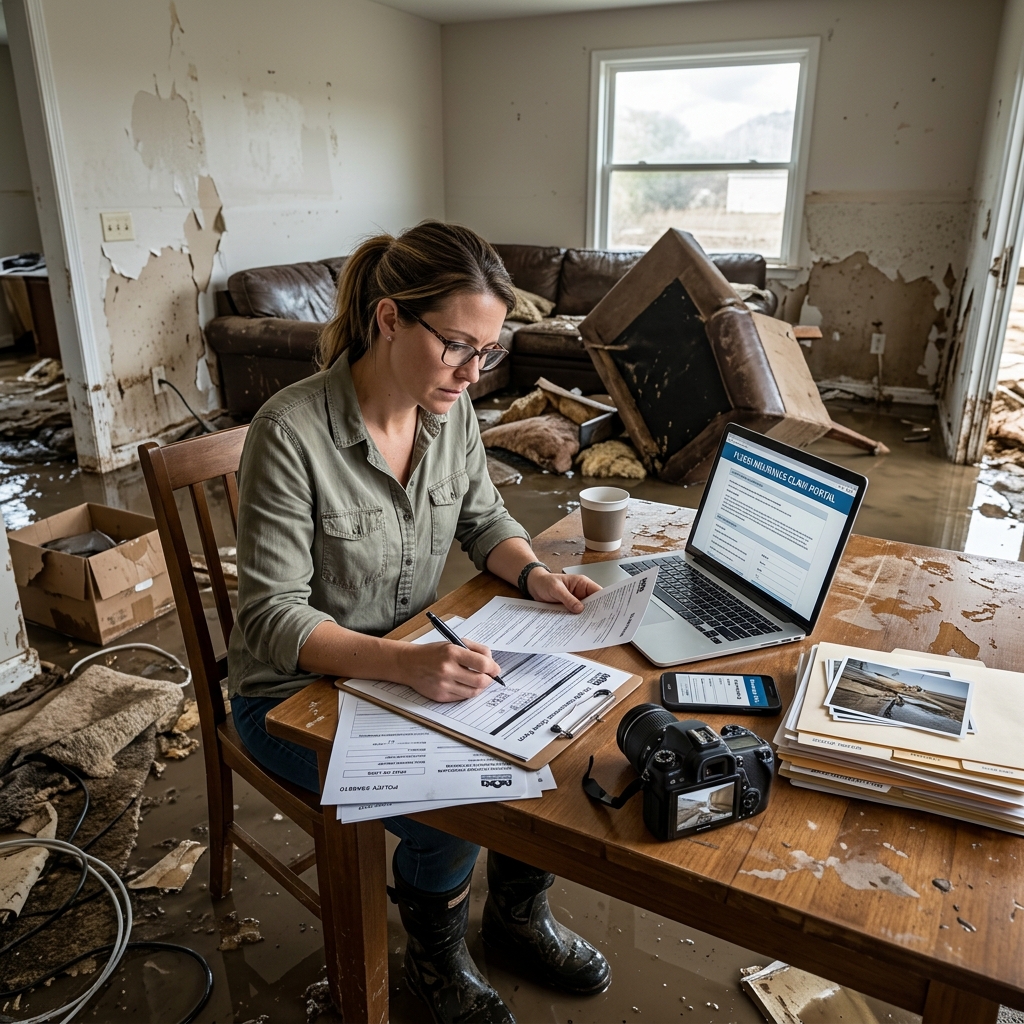
Major flooding can leave families and businesses facing extensive losses, complex paperwork, and tight deadlines. This guide explains how to safely return to your property, document flood damage, and file a flood insurance claim efficiently, whether your coverage is through the National Flood Insurance Program (NFIP) or a private insurer.
Understanding Flood Insurance Coverage
Before you begin the claims process, it helps to understand what flood insurance typically covers and how it differs from standard homeowners or commercial property policies.
- Flood insurance is separate from homeowners insurance. Most standard home policies exclude damage from flooding caused by rising water, storm surge, or river overflow.
- NFIP policies, backed by the U.S. Federal Emergency Management Agency (FEMA), cover building and sometimes contents, but do not cover every type of loss (for example, temporary housing is limited).
- Private flood insurers may offer different limits, deductibles, and coverage options, including additional living expenses or higher building limits.
Review your policy documents, including declarations pages and endorsements, to understand your limits, deductibles, and any exclusions before making major decisions or commitments on repairs.
Initial Safety and First Steps After a Flood
Your safety comes before property preservation. Floodwater can carry contaminants, electrical hazards, and structural risks, so take precautions before entering any flooded building.
- Follow instructions from local authorities on when it is safe to return.
- Assume floodwater could be contaminated and avoid direct contact as much as possible.
- Watch for downed power lines, gas leaks, weakened floors and walls, and animals or insects displaced by the flood.
Once you can safely access your property, you should promptly start the claims process. Many policies require you to report your loss as soon as reasonably possible after the event.
Contacting Your Insurer Quickly
Timely notice to your insurer is critical. Waiting too long can complicate or even jeopardize your claim.
- Call your flood insurance agent or company to report that a flood has damaged your property and to start your claim.
- Provide key details, such as your policy number, contact information, property address, and the date of the flood.
- If you are insured through NFIP and do not know your insurer or agent, you may obtain assistance via official NFIP contact channels.
In many NFIP policies, you must submit a written notice of loss to initiate the claim, followed by a formal Proof of Loss within a specified timeframe.
Documenting Flood Damage Thoroughly
Careful documentation is the backbone of a successful flood insurance claim. Photos, videos, and written inventories help demonstrate the scope and value of your losses.
Photographing and Filming the Damage
Before throwing away damaged items or beginning major cleanup, capture detailed visual evidence.
- Take wide‑angle photos of each room to show overall conditions.
- Photograph water lines on interior and exterior walls to show flood depth.
- Take close‑up images of damaged structural elements such as floors, walls, ceilings, foundations, and mechanical systems.
- Record videos walking through the property, narrating what was damaged and noting approximate locations.
When documenting appliances, electronics, and other high‑value items, include the make, model, and serial number where possible.
Creating an Inventory of Damaged Property
A written inventory helps the adjuster understand what was lost and supports your valuation of the claim.
- List each damaged item with a brief description (e.g., “sofa, three‑seat, fabric”).
- Include approximate purchase dates and prices where available.
- Note the condition of items before the flood and whether they can be repaired or must be replaced.
- Organize the list by room or area to make it easier to review with your adjuster.
Maintain copies of receipts, warranties, and previous appraisals or valuations that may help substantiate the value of your belongings.
Preserving Damaged Items for Inspection
Insurers generally expect that the adjuster will be able to inspect damaged property whenever feasible.
- Keep damaged items until the adjuster has seen them, unless they pose an immediate health hazard.
- If you must discard items for safety reasons, take detailed photos and videos before disposal.
- Save samples of materials such as carpet, flooring, and wall coverings to show damage and quality.
Balancing Cleanup and Claim Requirements
You have a responsibility to prevent further damage to your property, including mold growth and structural deterioration.
- Remove standing water and promote drying using fans and dehumidifiers, where safe.
- Board up broken windows, tarp damaged roofs, and take other reasonable steps to limit additional damage.
- Keep receipts for any emergency repairs or supplies, such as tarps, pumps, dehumidifiers, and contractor services.
Try to complete major documentation (photos, videos, inventory) before extensive cleanup. This balance between mitigation and evidence preservation is important for both safety and your financial recovery.
The Role of the Insurance Adjuster
After you report your loss, the insurance company will assign an adjuster to inspect your property and estimate the damage.
- Expect initial contact from the adjuster within a few days of reporting your claim, or within 24–48 hours in many NFIP situations.
- Confirm their identity and credentials, especially for NFIP claims.
- Schedule a time when you can be present to discuss the damage, provide your documentation, and ask questions.
During the visit, the adjuster will take measurements, photos, and notes on the damage, and may ask for copies of your inventory list, receipts, and any estimates you have obtained.
Preparing for the Adjuster Visit
Being organized and ready for the adjuster helps the process go more smoothly and can reduce delays in payment.
- Have your policy number, insurer contact information, and identification available.
- Print or neatly organize your photos, videos, and inventory list.
- Collect contractors’ estimates, repair invoices, and any engineering or structural reports you have obtained.
- Prepare a short list of priority questions about coverage, exclusions, and timelines.
After the inspection, the adjuster will prepare an estimate and report for the insurer, which helps determine your potential settlement.
Proof of Loss and Key Deadlines
Flood insurance claims—especially NFIP claims—are subject to specific documentation and strict deadlines.
| Step | Description | Typical Timeframe |
|---|---|---|
| Notice of Loss | Initial report of flood damage to insurer or NFIP. | As soon as possible after the flood. |
| Adjuster Inspection | On‑site or remote evaluation of damage. | Usually within a few days; often within 24–48 hours for NFIP. |
| Proof of Loss | Sworn statement of your claimed damages with documentation. | Typically must be submitted within 60 days of the loss for NFIP policies. |
The Proof of Loss is a formal, signed document summarizing your damages, supported by photos, inventories, and estimates. If you miss the NFIP deadline (commonly 60 days from the date of loss), your claim can be denied.
Completing the Proof of Loss
Work closely with your insurer or adjuster to complete this critical form.
- Use the official Proof of Loss form provided by NFIP or your WYO (Write‑Your‑Own) company.
- Fill out all required fields accurately; incomplete forms may be rejected.
- Attach supporting documentation, including photos, inventory lists, and estimates.
- Review the form carefully before signing, as it is a sworn statement of your claimed loss.
Submit the signed Proof of Loss to your insurer within the required timeframe and keep copies of everything you send.
Receiving Payment and Managing Repairs
Once your claim is approved, the insurer will issue payment based on the terms of your policy, the adjuster’s estimate, and your documented losses.
- Settlement funds may be issued to you and, if applicable, jointly to your mortgage lender depending on your loan documents.
- Use the funds to hire licensed contractors, purchase materials, and restore your property to a safe and habitable condition.
- Maintain communication with your insurer during repairs, particularly if you find additional damage or costs exceed initial estimates.
If you discover new damage or underestimated repair costs after the initial payment, contact your adjuster or insurer. In many cases, you may be able to request supplemental payments or reopen parts of the claim.
Disputes, Appeals, and Legal Options
Sometimes policyholders disagree with the adjuster’s findings or the settlement amount offered.
- Review the adjuster’s report and estimate in detail, comparing it with your documentation.
- Discuss discrepancies with your adjuster or claims examiner and provide additional evidence if needed.
- Many insurers offer internal appeals or dispute resolution mechanisms that allow you to challenge the decision.
- For NFIP claims, if you receive a notice of partial or total disallowance, you may have a limited period (often one year) to file suit in federal court.
Consultation with an attorney or a knowledgeable advocate can help you evaluate whether legal action is appropriate, especially for significant losses or complex disputes.
Practical Tips to Strengthen Your Flood Claim
Beyond basic steps, a few practical strategies can help you navigate the process more effectively and protect your financial recovery.
- Keep a claim diary documenting phone calls, emails, meetings, and decisions related to your loss.
- Stay polite and cooperative with adjusters and insurer representatives, even if you disagree. Professional communication can reduce friction.
- Obtain independent repair estimates from reputable contractors to compare with the adjuster’s figures.
- Store documents securely, including digital backups of photos, videos, and scans of important papers.
- Review coverage before rebuilding to avoid investing in features that are not covered or may complicate future claims.
Frequently Asked Questions About Flood Insurance Claims
How soon should I contact my flood insurer after a flood?
You should contact your flood insurance agent or company as soon as possible after the flood. NFIP and most private policies expect prompt notice of loss, and delaying can complicate your claim.
What if I cannot find my flood insurance policy or my agent?
If you are insured through the NFIP but cannot locate your agent or WYO company information, official NFIP resources can help you identify your insurer and provide guidance on starting a claim.
Do I need to wait for the adjuster before starting cleanup?
You do not have to wait to begin actions necessary to protect your health and prevent further damage, such as removing standing water and mold‑prone materials. However, document the damage with photos and videos first and keep samples or items whenever safely possible.
What is a Proof of Loss, and why is it important?
A Proof of Loss is a sworn statement that lists your claimed damages and is required under NFIP policies. It must be signed and submitted with supporting documentation, typically within 60 days of the flood event. Missing this deadline can result in denial of the claim.
Can I challenge the settlement amount if I think it is too low?
Yes. You can discuss concerns with your adjuster, provide additional documentation, request internal review or appeal, and, for NFIP claims, explore legal options if a notice of disallowance is issued.
What should I do if I discover new damage after repairs start?
Contact your adjuster or insurer immediately. In many cases, you can request supplemental payments or reopen parts of the claim when legitimate additional damage is found or costs exceed initial estimates.
References
- Flood Insurance Claim Basics — United Policyholders. 2023-03-01. https://uphelp.org/claim-guidance-publications/flood-insurance-claim-basics/
- Post Disaster Insurance Claim Processes (NFIP Claims Process and FAQs) — Florida Division of Emergency Management & FEMA. 2020-09-01. https://portal.floridadisaster.org/mitigation/SFMP/External/FDEM%20and%20FEMA%20Substantial%20Damage%20Post-Disaster%20Virtual%20Packet/NFIP%20Claims%20Process%20and%20FAQs%20about%20Flood%20Ins.pdf
- How to File a Flood Insurance Claim — Ohio Bankers Benefits Trust. 2022-06-15. https://www.anthemeap.com/ohio-bankers-benefits-trust/plan-finances/resources/insurance/articles/how-to-file-a-flood-insurance-claim
- How to start a flood insurance claim — FloodSmart.gov (FEMA). 2021-08-01. https://www.floodsmart.gov/recover/start-a-claim
- Insurance claim tips for Texas flood victims — Texas Department of Insurance. 2023-05-10. https://www.tdi.texas.gov/blog/insurance-claim-tips-for-texas-flood-victims.html
- Understanding the Flood Insurance Claims Process — Acrisure. 2023-02-20. https://www.acrisure.com/blog/understanding-flood-insurance-claims
- How the flood claims process works — Kin Insurance. 2022-09-15. https://www.kin.com/blog/flood-claims-process/
Similar Articles








Read full bio of medha deb




