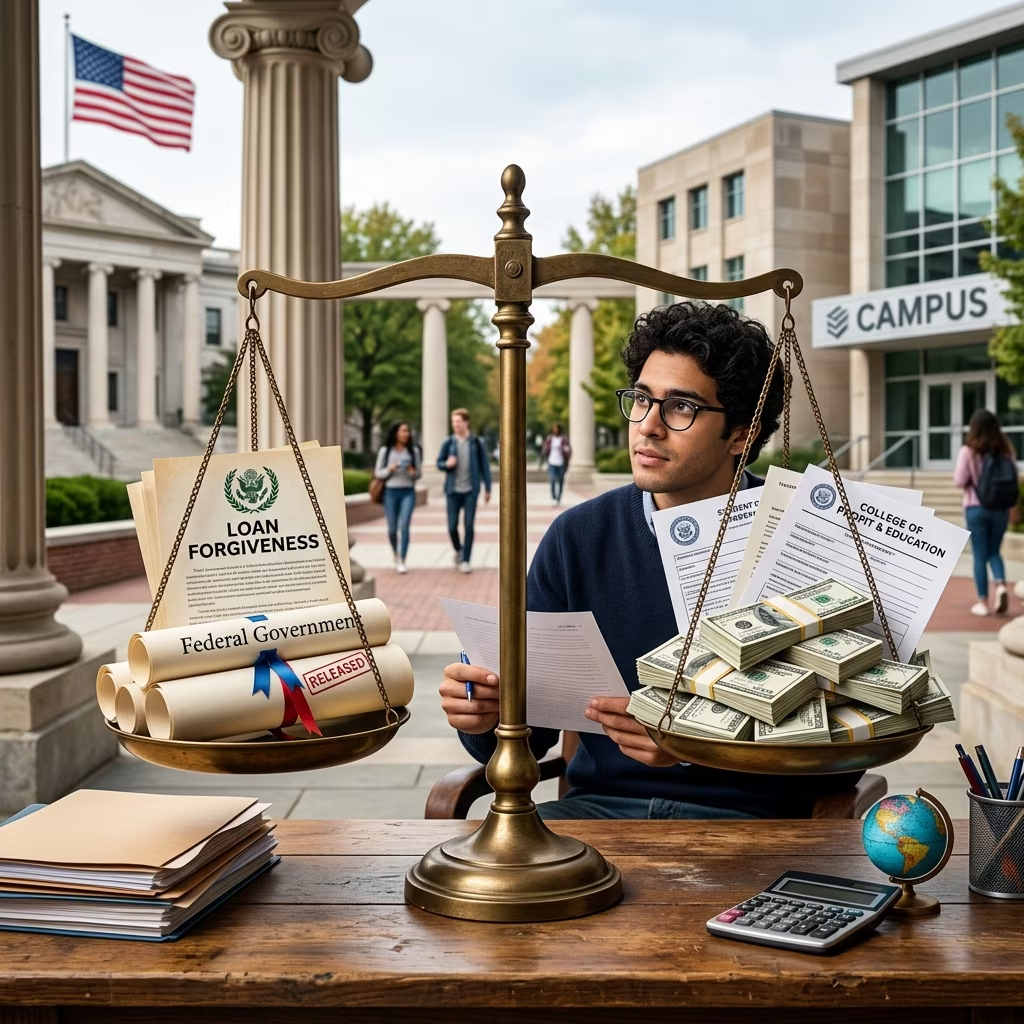
In recent years, the U.S. Department of Education has approved the cancellation of billions of dollars in federal student loans for borrowers who attended certain for-profit colleges and career schools. This relief is part of a broader effort to address misconduct in the higher education sector and to protect students who were misled, defrauded, or left stranded when their schools abruptly closed.
This article explains how these forgiveness initiatives work, why they focus so heavily on for-profit institutions, who may qualify, and what the long-term consequences are for students, schools, and taxpayers.
How For-Profit Colleges Became Central to the Debt Relief Debate
For-profit colleges occupy a unique place in the American higher education system. They are privately owned businesses that rely heavily on federal student aid dollars, yet they often market themselves as fast paths to stable careers and higher earnings.
Several trends pushed these schools to the center of the student debt relief debate:
- High reliance on federal loans and grants — Many for-profit institutions receive the bulk of their revenue from federal student aid programs.
- Aggressive recruitment practices — Investigations have repeatedly found misleading advertising about job placement rates, program quality, and accreditation.
- Elevated default rates — Data from federal education agencies show that default rates among borrowers who attended for-profit colleges are substantially higher than those for other sectors.
- School closures and sudden program shutdowns — Large chains such as ITT Technical Institute and Corinthian Colleges collapsed, often with little warning to students.
These factors created a population of borrowers who carried federal student debt for programs that did not deliver the promised value, leading to calls for targeted loan cancellation.
The Borrower Defense to Repayment Program
The central legal tool for canceling loans tied to misconduct by schools is Borrower Defense to Repayment, often shortened to borrower defense. This program allows federal student loan borrowers to seek discharge of their debt if their school violated certain laws or misrepresented key facts.
What Borrower Defense Covers
Under borrower defense rules, relief may be available when a school:
- Made false or misleading claims about job placement rates, earnings, or licensure.
- Misrepresented accreditation status or transferability of credits.
- Failed to deliver promised instructional quality or program components in ways that violate consumer protection laws.
- Engaged in other forms of substantial misrepresentation or unlawful conduct that affected students’ decisions to enroll or borrow.
Borrowers must generally show that the school’s conduct caused them financial harm, such as taking on loans for education that did not provide the advertised benefits.
How the Application Process Works
The Department of Education administers borrower defense through an application system on its Federal Student Aid website. A typical application requires borrowers to:
- Identify the school and program they attended.
- Describe the misleading statements or unlawful practices in detail.
- Explain how those actions influenced their decision to enroll or take out loans.
- Provide supporting documentation when available, such as advertisements, enrollment agreements, or communications from the school.
Applications are reviewed by the Department, which may approve full or partial relief. When loans are discharged, borrowers’ balances are reduced to zero, and certain prior payments may be refunded.
Class Settlements and Mass Loan Cancellations
Although borrower defense began as an individual complaint process, it has increasingly been used in large-scale settlements. Advocacy groups and borrowers filed lawsuits alleging that the Department of Education failed to timely process borrower defense claims or improperly denied relief. Some of those cases ended in agreements that canceled loans for entire categories of students.
One major settlement addressed loans held by borrowers who attended a long list of for-profit institutions alleged to have engaged in widespread misconduct. Under that agreement:
- Billions of dollars in federal student loans were ordered discharged for affected borrowers.
- Relief was based on evidence of systemic misrepresentation, not individual case-by-case findings.
- Borrowers needed to have submitted borrower defense applications by specified cutoff dates to benefit.
These mass discharges dramatically expanded the scope of borrower defense, transforming it from a niche remedy into a major channel for federal loan forgiveness tied to for-profit schools.
How Much Debt Has Been Forgiven?
Student loan cancellation related to for-profit colleges is part of a broader wave of federal debt relief. Independent analyses and official announcements report that the federal government has forgiven well over $100 billion in student loans through various programs.
| Type of Relief | Approx. Borrowers | Approx. Amount Forgiven | Connection to For-Profit Schools |
|---|---|---|---|
| Borrower Defense Discharges | Hundreds of thousands | Several billion dollars | Primarily borrowers from for-profit institutions.[10] |
| Income-Driven Repayment Fixes | Millions of borrowers | Tens of billions of dollars | Available to all eligible borrowers, including those from for-profits. |
| Public Service Loan Forgiveness | Over 1 million borrowers | More than $78 billion | Mostly public service workers; not limited to for-profit attendees. |
These figures illustrate that relief for for-profit college borrowers is significant but sits alongside other major cancellation efforts, such as for public service workers and borrowers in long-term income-driven plans.
Who Qualifies for Forgiveness Linked to For-Profit Schools?
Eligibility for federally backed forgiveness related to for-profit institutions depends on the specific program or settlement. In general, borrowers may qualify if they fall into one or more of the following categories:
- Defrauded borrowers — Students who can show that their schools misrepresented key facts and violated consumer protection laws may qualify under borrower defense.
- Borrowers from schools named in settlements — Loan holders who attended institutions listed in major class settlements can receive automatic or streamlined relief, if they submitted borrower defense applications by required deadlines.
- Students impacted by sudden school closures — When schools close before students can complete their programs, separate “closed school discharge” provisions may apply to federal loans.
- Borrowers in other federal relief programs — Even if school misconduct is not proven, borrowers may qualify for forgiveness through income-driven repayment fixes, public service loan forgiveness, or disability discharges.
Each pathway has distinct rules and documentation requirements, so borrowers often need to review federal guidance in detail before applying.
What Happens to the Schools and Who Pays?
A recurring question is whether the for-profit institutions themselves reimburse the federal government for the canceled loans. In most large borrower defense settlements, the cost of forgiveness is absorbed by the federal government, not the schools.
Several key points explain this outcome:
- Schools’ financial condition — Many implicated institutions have closed or are financially distressed, limiting the government’s practical ability to recover funds.
- Program design — Borrower defense and related relief provisions are structured as protections for borrowers in federal loan programs, with costs borne by taxpayers rather than institutions.
- Separate enforcement — In some cases, states or federal regulators pursue civil penalties or settlements with schools, but those actions do not always directly reimburse the loan programs.
While this approach offers meaningful relief to borrowers, it also raises policy questions about institutional accountability and the incentives for schools that continue to receive federal aid.
New Accountability Efforts and Policy Proposals
Forgiving loans after students have been harmed is only one aspect of reform. Policymakers have proposed and, in some cases, enacted new accountability rules designed to reduce the likelihood that students take out loans for low-value programs.
One approach is to measure whether graduates earn enough after completing a program to justify the cost of attendance. Under this type of policy, if graduates’ earnings are too low compared with a benchmark of what they might have earned without the degree, the program can lose eligibility for federal loans.
Key features of such accountability frameworks may include:
- Earnings tests applied to specific degree or certificate programs.
- Loss of loan eligibility when programs fail the tests in multiple years, while still allowing access to Pell Grants.
- Opportunities to regain eligibility if schools demonstrate improved outcomes after a period of ineligibility.
By preventing future loan disbursements to programs that offer poor returns, these rules aim to reduce both borrower harm and the need for costly forgiveness later on.
Implications for Borrowers and Taxpayers
The wave of loan forgiveness tied to for-profit colleges has significant implications for individual borrowers and the broader public.
Effects on Borrowers
For affected students, discharge of federal loans can be life-changing. It may:
- Eliminate monthly payments and reduce long-term financial stress.
- Improve credit profiles, especially where delinquency or default was connected to unaffordable loans.
- Allow borrowers to pursue new educational or career paths without the burden of prior debt.
However, borrowers may still experience lost time, missed job opportunities, and emotional strain stemming from their original programs, which forgiveness cannot fully repair.
Costs and Consequences for Taxpayers
From the public finance perspective, large-scale loan cancellation represents a substantial expenditure. Official and independent analyses estimate that recent reforms and forgiveness actions, including those targeting for-profit colleges, could cost hundreds of billions of dollars over time.
Supporters argue that these costs are justified because:
- Federal loan programs should include robust protections against fraud and abuse.
- Forgiveness corrects past mismanagement and regulatory failures.
- Debt relief can stimulate economic activity by reducing financial strain on millions of households.
Critics raise concerns about fairness to borrowers who repaid their loans, moral hazard for schools, and the fiscal impact on future budgets. These debates continue to shape new proposals for student loan policy.
Practical Steps for Borrowers Who Attended For-Profit Schools
Borrowers who attended for-profit colleges and are unsure whether they qualify for relief can take several practical steps:
- Review federal guidance on borrower defense and closed school discharge on the official Federal Student Aid website.
- Check whether their school appears in major settlement lists or enforcement actions, as this may influence eligibility for automatic or streamlined relief.[10]
- Gather documentation such as enrollment agreements, promotional materials, and communications that show potential misrepresentations.
- Consider other forgiveness programs like income-driven repayment, Public Service Loan Forgiveness, or disability discharges, particularly if misconduct is hard to prove.
Because rules and deadlines can change, borrowers benefit from consulting current federal materials rather than relying on outdated information.
Frequently Asked Questions
Does my loan automatically get canceled if I attended a problematic for-profit college?
No. Loan cancellation typically requires either an approved borrower defense application or inclusion in a specific settlement or discharge category established by the Department of Education. Borrowers usually must take action to confirm eligibility.
Can I get a refund of payments I already made?
When borrower defense or certain other discharges are granted, the Department may refund payments previously made on the discharged loans. The extent of refunds depends on the type of relief and the dates of the payments.
Is forgiveness available for private student loans?
The programs described here, including borrower defense and most large federal settlements, apply only to federal student loans. Private loans are governed by separate contracts and laws, and relief, if any, would generally come through private litigation or negotiation.
What if my school closed but I did not file a borrower defense application?
Even without a borrower defense claim, you may be eligible for a closed school discharge of your federal loans if the school shut down while you were enrolled or shortly afterward. Eligibility criteria and application procedures are detailed in federal guidance.
Will these forgiveness programs continue in the future?
Borrower defense and other statutory discharge provisions are established in federal law, but specific rules, deadlines, and enforcement priorities can change with new regulations and administrations. Future availability of similar mass settlements or automatic relief will depend on ongoing policy decisions.
References
- Billions in Federal Loans Involving For-Profit Schools to Be Forgiven — FindLaw. 2022-08-10. https://www.findlaw.com/legalblogs/greedy-associates/billions-in-federal-loans-involving-for-profit-schools-to-be-forgiven/
- How Many Student Loans Have Been Forgiven? (2025) — BestColleges. 2025-02-24. https://www.bestcolleges.com/research/student-loan-forgiveness-statistics/
- Biden Administration Announces Final Student Loan Debt Relief Approvals — NASFAA. 2025-01-13. https://www.nasfaa.org/news-item/35444/Biden_Administration_Announces_Final_Student_Loan_Debt_Relief_Approvals
- Borrower Defense Updates — Federal Student Aid, U.S. Department of Education. 2024-06-14. https://studentaid.gov/announcements-events/borrower-defense-update
- Student Loans in the United States — National Center for Education Statistics / U.S. Department of Education (via summary article). 2018-01-01 and later updates. https://en.wikipedia.org/wiki/Student_loans_in_the_United_States
- Public Service Loan Forgiveness — National Education Association. 2024-01-05. https://www.nea.org/pslf
- An Analysis of the One Big Beautiful Bill Act’s Effect on Student Loans — American Enterprise Institute. 2025-03-10. https://www.aei.org/research-products/report/an-analysis-of-the-one-big-beautiful-bill-acts-effect-on-student-loans/