
Federal Crackdown on AI-Generated Intimate Images
How new federal law and state rules are reshaping deepfake porn enforcement.
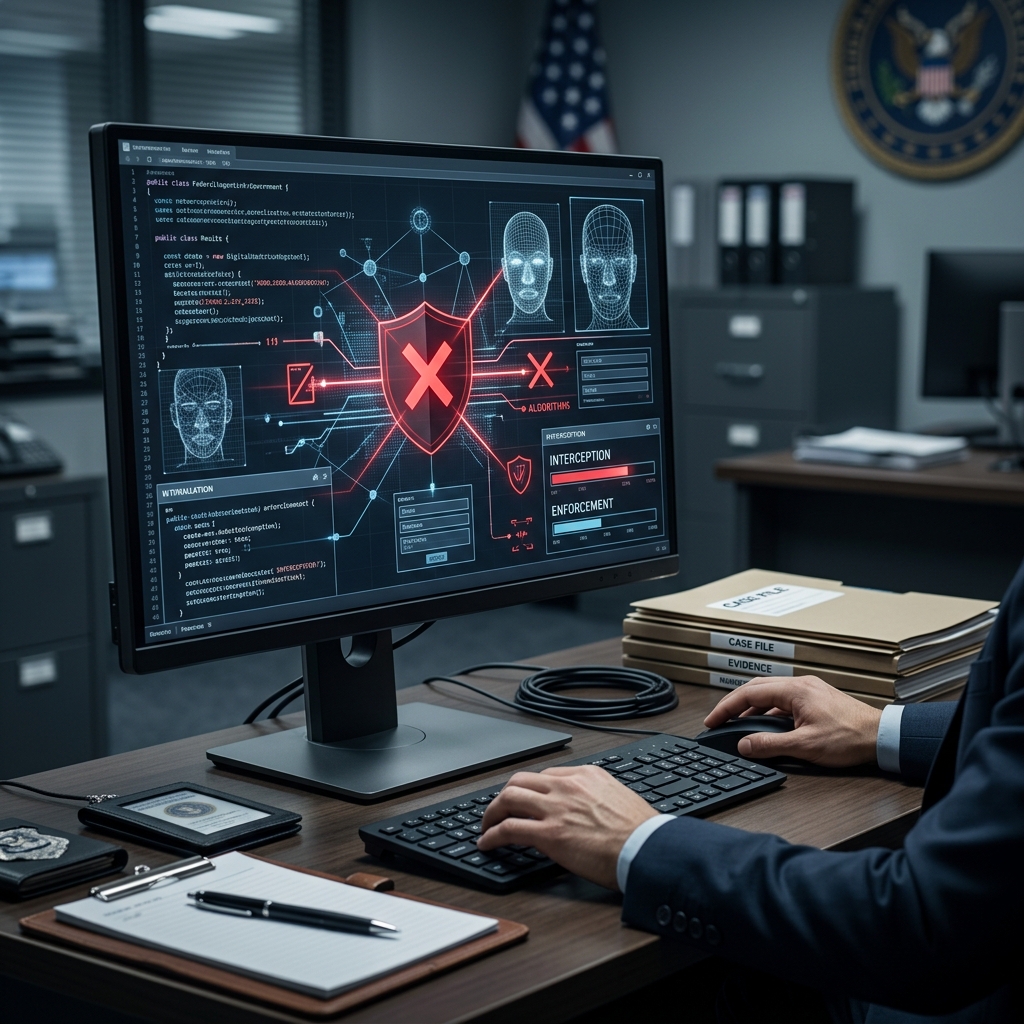
When AI-Generated Intimate Images Become a Crime
Artificial intelligence has made it possible to create realistic images and videos that look convincing at a glance. That same technology has also opened the door to serious abuse, especially when people are portrayed in sexually explicit content without permission. Recent federal enforcement against a Texas man accused of creating and posting nonconsensual sexual deepfakes shows that prosecutors are treating this conduct as more than an online prank or privacy violation. It can trigger criminal charges under new federal law, with separate consequences under state law depending on how the material was made, shared, or used.
The legal significance of these cases is not limited to the technology involved. Courts and prosecutors are focusing on consent, identifiability, distribution, and the harm caused to the person depicted. In practice, that means someone accused of making or uploading a deepfake image may face exposure even if no real sexual act occurred and even if the content was generated with software rather than a camera.
Why the Federal Case Matters
The federal complaint described in the FindLaw article reflects an early use of the Take It Down Act against alleged AI-generated sexual content. According to the reporting, prosecutors in the Eastern District of New York unsealed a complaint against Arturo Hernandez of Bedias, Texas, accusing him of creating and posting fake videos depicting intimate acts involving identifiable people. The reported charges are notable because they show how quickly federal law is being used to address synthetic sexual imagery that is distributed online without consent.
That matters for two reasons. First, federal law creates a nationwide enforcement tool, which is important when content is posted across platforms or reaches victims in multiple states. Second, the law signals that lawmakers view AI-generated nonconsensual intimate imagery as a distinct harm, not merely a variation of ordinary image-based harassment. The legal response is becoming more structured, and accused people can no longer assume the absence of a real recording makes the conduct lawful.
What Makes a Deepfake Case Legally Risky
Deepfake cases often turn on a combination of technical evidence and intent. Prosecutors generally try to show that the defendant knowingly produced or distributed the content, that the material depicts a real person or a person who can be identified, and that the person did not consent. If the content is posted to websites, shared through messaging apps, or organized into online albums, those facts can help prove distribution and knowledge.
Defendants, however, may challenge each of those points. They may argue that the material was not actually identifiable, that they did not create or upload it, that the platform attribution is unreliable, or that someone else had access to the account. In some cases, digital evidence may show editing, uploading, or file naming, but those clues still have to be tied to a specific person beyond a reasonable doubt.
How the Take It Down Act Changes the Legal Landscape
The Take It Down Act is designed to address nonconsensual intimate imagery, including AI-generated content. Based on reporting about the federal case, each deepfake image or video can carry a potential sentence of up to two years in federal prison. That penalty structure matters because it creates separate exposure for each item of content, rather than treating a batch of uploads as one isolated incident.
That approach is especially important in online cases. A defendant who uploads multiple files, places them in multiple albums, or posts them on several platforms can face far greater exposure than someone involved in a single transmission. It also gives prosecutors leverage in plea negotiations because the number of files can influence the sentencing picture.
Texas Law Still Plays a Major Role
Even when a case becomes federal, Texas law remains relevant if the conduct began there or involved Texas residents. According to Texas legal analyses, Texas Penal Code Section 21.165 prohibits the knowing production or distribution of nonconsensual sexually explicit deepfakes, and the law also covers threats to produce or distribute such material. The statute is aimed at content that appears to show a person with exposed intimate parts or engaged in sexual conduct that never occurred.
The penalties under Texas law vary. Producing or distributing this type of material is generally a Class A misdemeanor, but the charge can be enhanced to a third-degree felony in certain circumstances, such as when the depicted person is under 18 or when there is a prior conviction. Threatening to share deepfake sexual content is also criminalized, reflecting lawmakers’ view that coercion and intimidation can be as damaging as publication itself.
What Prosecutors Usually Need to Prove
Deepfake pornography prosecutions are not automatic simply because disturbing content exists online. Prosecutors still have to prove the elements of the offense. In broad terms, they must show that the defendant acted knowingly, that the content was nonconsensual, that it was sexually explicit, and that it depicted a real or identifiable person. The strongest cases often involve records from hosting platforms, device extractions, account logs, or admissions.
Intent is often the hardest issue. A person may claim they were experimenting with software, reposting content without knowing what it was, or viewing material rather than creating it. Those arguments do not guarantee dismissal, but they can force the government to build a more detailed timeline. In digital cases, timeline evidence can be decisive because it links downloads, edits, uploads, and account access to a particular user.
State and Federal Penalties Compared
| Law | Conduct Covered | Typical Penalty |
|---|---|---|
| Take It Down Act | Nonconsensual intimate imagery, including AI-generated sexual content | Potential federal prison time; reported up to 2 years per image or video |
| Texas Penal Code § 21.165 | Knowing production or distribution of sexually explicit deepfakes without consent | Usually Class A misdemeanor |
| Texas enhanced offenses | Cases involving minors or prior convictions | Can rise to third-degree felony |
| Texas threat provisions | Threats to produce or distribute deepfake sexual content | Criminal misdemeanor exposure |
Common Defenses in Deepfake Porn Investigations
People accused of creating or sharing deepfake sexual content may have several possible defenses, depending on the facts. A criminal defense lawyer may examine whether the alleged victim is actually identifiable, whether the accused had control of the account used to upload the material, and whether forensic evidence really shows intentional creation. In many cases, the defense will also test whether the government can prove lack of consent and whether the content falls within the exact wording of the statute.
Another issue is authentication. Screenshots alone may not be enough if there is no reliable record of how they were captured or whether they were altered. Likewise, cloud accounts, device backups, and browser histories may be incomplete or shared by multiple people. If investigators relied too heavily on assumptions, the defense can argue that the evidence does not establish personal responsibility beyond a reasonable doubt.
Why Victim Impact Matters So Much
Deepfake intimate imagery can cause reputational damage, emotional distress, safety concerns, and financial harm. That is one reason lawmakers and courts have moved quickly to expand remedies and penalties. The injury is not limited to the moment of posting. Once a file is online, it can be copied, reposted, downloaded, and indexed in ways that make removal difficult.
Because of that persistence, statutes addressing nonconsensual intimate imagery often focus on both removal and punishment. The legal system is trying to respond to a problem that can spread faster than a victim can react. A single upload can follow a person for years, affecting employment, relationships, and privacy long after the original post is taken down.
How Defense Lawyers Typically Approach These Cases
In a case involving alleged AI-generated sexual content, a defense attorney usually starts by preserving digital evidence and identifying every source the government may use. That may include phone records, cloud storage, metadata, chat logs, and platform reports. The goal is to determine whether the alleged creation or sharing can actually be tied to the accused person.
The next step is often to test the scope of the statute. Some cases may involve material that is offensive but not covered by the exact criminal law at issue. Others may involve content posted by a third party, reposted without context, or altered in ways that change its legal meaning. A careful defense can matter because digital evidence often looks stronger than it is when viewed without forensic analysis.
Frequently Asked Questions
Is it illegal to make an AI deepfake sexual image of someone?
Yes, if the content is nonconsensual and falls within the relevant federal or state statute. Both federal law and Texas law now treat certain sexually explicit deepfakes as criminal conduct.
Does it matter whether the image was fake?
Usually yes, but not in the way many people expect. The fact that no physical sexual act occurred does not eliminate liability if the law covers synthetic intimate imagery created or distributed without consent.
Can someone be charged for sharing the content instead of making it?
Yes. Distribution is often punished the same way as creation, and threatening to distribute may also be a separate offense under state law.
What if the person in the image is not clearly named?
Prosecutors may still proceed if the person is identifiable from the surrounding context, appearance, or associated information. Identifiability is often a central issue in these cases.
Can these charges lead to prison time?
Yes. Federal charges can carry significant prison exposure, and Texas law can also impose jail or felony penalties depending on the facts.
What the New Enforcement Trend Means Going Forward
The prosecution described in the FindLaw report suggests that authorities are moving quickly to test new legal tools against synthetic sexual content. That trend is likely to continue as more states refine their laws and federal investigators bring cases involving online distribution, repeated uploads, and identifiable victims. The message from lawmakers is clear: the use of AI does not shield a person from liability when the material invades another person’s privacy and sexual autonomy.
For anyone accused of creating or sharing this kind of content, the practical lesson is to treat the matter as a serious criminal case from the start. Early legal advice can help preserve evidence, narrow the issues, and challenge assumptions before they harden into charges. In deepfake cases, the technology may be new, but the stakes are very real.
References
- Texas Man Accused of Creating Nonconsensual Sex Videos in Early … — FindLaw. 2026-05-19. https://www.findlaw.com/legalblogs/criminal-defense/texas-man-accused-of-creating-nonconsensual-sex-videos-in-early-test-of-new-federal-deepfake-porn-law/
- Texas Man Accused of Taking Photos of Women He Knew and Turning Them Into AI Porn, FBI Says — 6ABC. 2026-05-19. https://6abc.com/post/texas-man-accused-taking-photos-women-he-knew-public-figures-turning-ai-porn-fbi-says/19144365/
- Senate Research Center Bill Analysis for S.B. 1361 — Texas Legislature. 2023-05-xx. https://capitol.texas.gov/tlodocs/88R/analysis/html/SB01361F.htm
- Congressional Research Service Legal Sidebar on the TAKE IT DOWN Act — Congress.gov. 2025-05-xx. https://www.congress.gov/crs-product/LSB11314
Similar Articles








Read full bio of medha deb


