
Can a Father Legally Change His Child’s Name?
Understanding when, how, and under what conditions a father can seek a legal name change for a child in the United States.
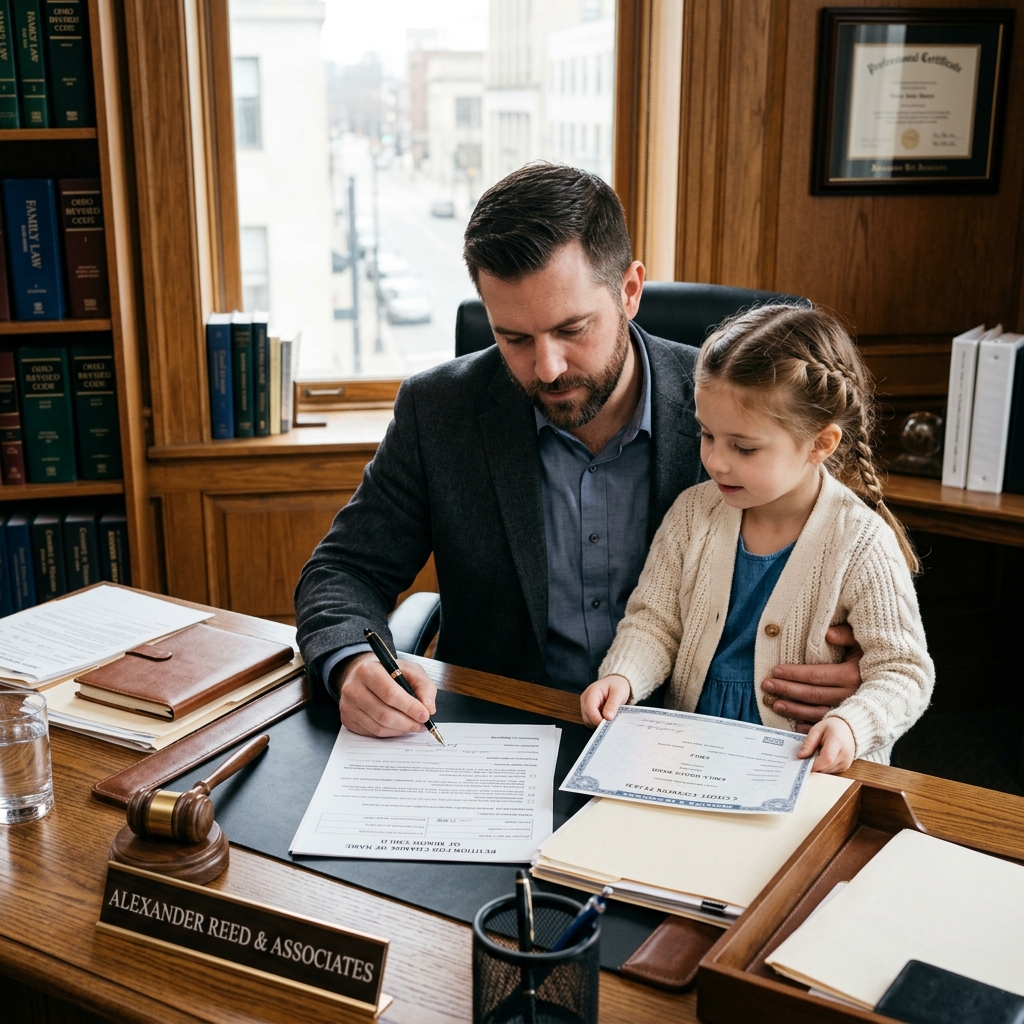
Changing a child’s legal name is a significant decision that affects identity, family relationships, and official records. In most U.S. jurisdictions, a father can ask to change his child’s name, but he usually cannot do it unilaterally and must go through a formal court process that considers the best interests of the child.
This article explains when a father may legally seek a name change, what role the mother and other caregivers play, how courts analyze these requests, and the practical steps involved in completing a child’s name change.
1. Naming Rights at Birth vs. Later Name Changes
It is helpful to distinguish between two moments in a child’s life:
- Initial naming at birth (when the birth certificate is first created).
- Legal name change later (through a court order or, for very young infants, limited administrative procedures).
At birth, both legal parents generally have the right to participate in naming their child. When parents disagree, hospital and vital records procedures usually follow state law on how to record the name, which often depends on marital status and whether paternity has been legally established.
After birth, changing that recorded name becomes a matter of state law and, in most cases, requires a court order. The father’s rights at this stage depend on whether he is a legal parent, his custody status, and whether the other parent consents.
2. Legal Paternity and Why It Matters
To have any enforceable say over a child’s legal name, a man must be recognized as a legal father. Legal paternity may be established through:
- Marriage to the mother: In many states, a husband is presumed to be the father of a child born to his spouse.
- Voluntary acknowledgment: Signing a paternity acknowledgment form, often at the hospital or later through the vital records office.
- Court order: A paternity case in which the court determines parentage, sometimes with genetic testing.
Without legal paternity, a man generally has no standing to ask the court to change a child’s name, nor to object if the mother proposes a change. A mother typically controls major decisions, including naming, until another legal parent’s rights are recognized.
Effect of Paternity on Name Decisions
- Once paternity is established, the father is usually entitled to participate in naming decisions.
- Courts are more likely to consider a father’s request for a name change when he is actively involved and has legal rights.
- Paternity itself does not guarantee the name will be changed; it only ensures the father’s request will be heard.
3. Is a Father’s Consent Required to Change a Child’s Name?
In many states, both legal parents must consent to a child’s name change, unless a court orders the change over one parent’s objection.
Common patterns across U.S. jurisdictions include:
- Two-parent consent as the default: When both legal parents are known and have parental rights, their consent is usually required.
- Consent can be overridden: If one parent refuses, the other may still ask the court to decide, but must show the change serves the child’s best interests.
- Terminated rights: If a parent’s rights have been legally terminated, the remaining parent or guardian may change the child’s name without that parent’s consent.
This framework cuts both ways. A father normally cannot force a name change without the mother’s consent, but the mother also cannot unilaterally change the name without legal notice to, and often consent from, the father when he has established legal rights.
4. When a Father Wants to Change the Child’s Name
Fathers request name changes for a variety of reasons, such as aligning the child’s surname with the father’s, removing a name associated with conflict, or correcting errors. Courts do not automatically grant these requests. Instead, judges weigh the reasons against the child’s overall welfare.
Typical Reasons Fathers Give
- Making the child’s surname match the father’s to reflect family unity.
- Correcting a misspelling or unintended name on the birth certificate.
- Removing a name tied to estrangement or misconduct of another parent.
- Adding or rearranging names to include both parents’ surnames.
Courts often show caution, especially when the change would disrupt the child’s established identity or relationship with the other parent. Some judges require a strong justification, emphasizing that a name change should clearly promote the child’s welfare and not merely satisfy parental preferences.
5. The “Best Interests of the Child” Standard
The core legal test in most states is whether the proposed name change is in the best interests of the child. This is the same standard used for custody and many other family law decisions, and it focuses on the child’s welfare rather than parental rights.
Judges may examine factors such as:
- Age of the child: Younger children may adapt more easily, while older children may have a stronger attachment to their current name.
- Child’s preference: Some states allow older minors to express an opinion or even file their own name-change petition.
- Relationship with each parent: Whether the child uses the father’s surname socially, and how the change might affect bonds with the mother or extended family.
- Length of time using the current name: Courts are reluctant to disrupt a long-established identity unless there is a compelling reason.
- Potential social or emotional impact: Including stigma, confusion, or association with serious misconduct.
- Any risk of fraud or deception: Names cannot be changed for fraudulent purposes, such as avoiding debts or criminal accountability.
Courts generally reject arguments based solely on a parent’s hurt feelings. For example, a judge has noted that “injury to a party’s sensibilities” alone is not enough to block a name change. The focus stays on concrete effects on the child, not on parental pride or disappointment.
6. Special Situations: Extreme Circumstances and Misconduct
In some states, a parent seeking a name change over the other parent’s objection must show extreme circumstances to justify the change. Examples may include:
- Abandonment: A parent has had no meaningful contact or support over a substantial period.
- Serious criminal misconduct: A parent’s offense is so serious that continued use of their surname may expose the child to stigma or emotional harm.
- Domestic violence or abuse: Situations where maintaining the surname could be traumatic for the child, though each case is evaluated individually.
Even in these cases, courts do not revoke parental rights through the name-change process alone. A name change affects the child’s legal identity on paper, but does not change parental duties and legal responsibilities, such as support obligations.
7. Step-by-Step: How a Father Starts a Child Name Change Case
Although procedures vary by state, a father typically must follow a structured court process to seek a name change.
General Process Overview
| Step | What Usually Happens |
|---|---|
| 1. File a petition | The father (or another legal parent/guardian) completes formal papers requesting a name change and files them in the appropriate court, usually in the county where the child lives. |
| 2. Explain reasons | The petition must state why the name change is requested and how it serves the child’s best interests. Some states require detailed explanations and supporting documents. |
| 3. Notify the other parent | The other parent must be served with legal notice of the case, unless their rights have been terminated or other limited exceptions apply. |
| 4. Publish notice | Many states require publication of a notice in a local newspaper, unless the judge waives this requirement in sensitive cases. |
| 5. Court hearing | If the other parent objects or the judge needs more information, a hearing is held. Both parents can present evidence and arguments. |
| 6. Judge’s decision | The court decides whether to grant the name change based on the best interests of the child and compliance with legal requirements. |
| 7. Updating records | If approved, the father must obtain certified copies of the court order and use them to update the child’s birth certificate, Social Security records, school registrations, and other documents. |
Key Documents Commonly Required
- Petition or application for change of a minor’s name.
- Copy of the child’s birth certificate or another official document proving the current name.
- Names and contact information for each parent, guardian, or custodian.
- Written consent of both parents or explanation why consent is not available.
8. Can One Parent Change the Child’s Name Without Approval?
One common question is whether a mother or father can simply change the child’s name on their own without involving the other parent. The answer is usually no when both parents have legal rights.
Typical rules include:
- Both parents with legal custody or rights: Major decisions like name changes generally require either mutual agreement or a court order after notice to the other parent.
- Terminated or unknown parent: When another legal parent does not exist in law, or rights have been terminated, the current legal parent or guardian may move forward with fewer consent requirements.
- Administrative change for infants: Some states allow minor name corrections or changes for infants under a certain age through the department of health or vital records office, if both parents agree.
If one parent secretly attempts to change a child’s name on school records, medical files, or social accounts without legal authority, the other parent may be able to challenge those changes and seek court intervention.
9. Impact of a Name Change on Parental Rights and Responsibilities
A legal name change alters how the child’s name appears on official documents, but it does not modify underlying parental rights or obligations.
- The father remains responsible for child support, regardless of the child’s surname.
- Custody and visitation orders remain in effect unless separately modified by the court.
- The name change does not affect inheritance laws or the ability to establish legal parentage.
Because rights and duties remain the same, courts sometimes view name changes as a symbolic issue. Judges may ask whether the symbolic benefit to the parent outweighs potential confusion or emotional impact on the child.
10. Practical Tips for Fathers Considering a Name Change
Before filing a name-change petition, fathers can improve their chances by preparing carefully.
- Document involvement: Keep records showing consistent contact, support, and participation in the child’s life; this can help demonstrate that aligning the name with the father reflects an existing relationship.
- Consider the child’s view: For older children, discuss the change and be prepared to show the court the child understands and supports it, where allowed.
- Avoid conflict-driven motives: Courts are wary of name changes sought purely to punish or exclude another parent; frame arguments around the child’s welfare, not parental disputes.
- Seek legal advice: Family law attorneys can explain local procedures and how judges in your area typically handle name-change requests.
11. Frequently Asked Questions (FAQs)
Can a father demand that the child take his last name?
No. A father can request a name change, but the court decides whether the change will promote the child’s welfare. Judges often resist changing a child’s surname without a strong reason.
What if the mother refuses to agree to the name change?
The father may still file a name-change case, but he must notify the mother and show the court that the change is in the child’s best interests. The mother has the right to appear and oppose the request.
Can a name change terminate the father’s legal responsibilities?
No. Changing a child’s name does not affect parental rights or responsibilities, including child support obligations.
Does the child have to agree to the name change?
In some states, older minors may express a preference or even file their own petitions. Courts may give weight to the child’s opinion, especially for teenagers.
Is publication in a newspaper always required?
Many states require publishing notice of the proposed name change, but judges can sometimes waive this requirement in sensitive cases or where publication would be harmful.
How long does the name-change process take?
Time frames vary by state and court workload. As an example, one state’s court system estimates up to about three months from filing to obtaining a decree, though this can be shorter or longer depending on circumstances.
References
- Father’s Right to Change His Child’s Name — FindLaw. 2023-08-21. https://www.findlaw.com/family/parental-rights-and-liability/father-s-right-to-change-his-child-s-name.html
- Can a father of a child legally demand the child’s last name to be his? — Avvo. 2014-06-12. https://www.avvo.com/legal-answers/can-a-father-of-a-child-legally-demand-the-childs–2016112.html
- Name Change for a Child — Maryland People’s Law Library. 2023-05-10. https://www.peoples-law.org/name-change-child
- Change Your Child’s Name (One Parent Asking) — Judicial Council of California. 2023-04-01. https://selfhelp.courts.ca.gov/name-change/name-child-one-parent
- Changing Your Minor Child’s Name — Michigan Legal Help. 2022-11-01. https://michiganlegalhelp.org/resources/ids-and-name-change/changing-your-minor-childs-name
- How to Change a Child’s Name — TexasLawHelp.org. 2023-03-15. https://texaslawhelp.org/article/how-to-change-a-childs-name
Similar Articles








Read full bio of Sneha Tete


