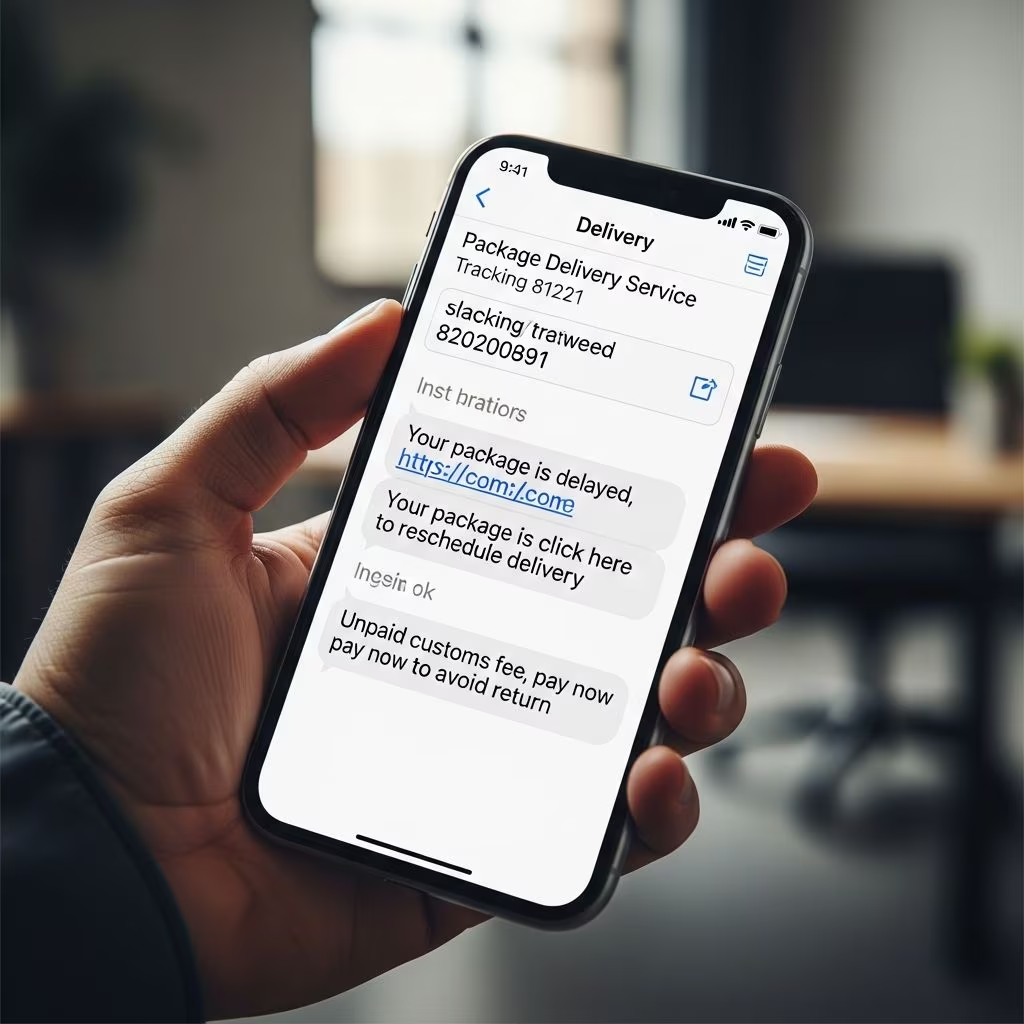
Text messages that look like they are from FedEx, UPS, or the U.S. Postal Service can be hard to ignore, especially if you are expecting a package. But many of these texts are scams designed to steal your money or personal information through fake tracking links and surveys.
This guide explains how these fake delivery texts work, the warning signs to look for, and what to do if you clicked a link or shared information. The goal is to help you recognize these scams quickly and respond safely.
Why Scammers Use Package Delivery Texts
Scammers know that online shopping and home delivery are now part of everyday life. That makes “package delivery problems” a believable story that people are likely to respond to.
- People often have a real order in transit, making a random tracking text seem plausible.
- Delivery messages usually feel urgent (“final attempt” or “action required”), pushing people to act fast.
- Text messages feel more personal and immediate than email, which scammers take advantage of.
Government agencies have warned that scammers increasingly use phishing text messages (smishing) to trick people into clicking malicious links or sending sensitive information.
Typical Anatomy of a Fake Package Text
Most fake delivery texts share a similar pattern, even when the details change. Understanding this pattern makes them easier to spot.
| Element | What It Looks Like | Why It’s Suspicious |
|---|---|---|
| Sender name | “FedEx”, “UPS”, “USPS”, or a random short code | Legitimate messages usually come from verified or known numbers and often match settings you opted into. |
| Tracking code | Random-looking mix of letters and numbers | Code may not match any shipment in your account or does not follow the format used by the real carrier. |
| Urgent claim | “Delivery failed”, “Final notice”, “Action needed” | Pressure to act immediately is a common fraud tactic. |
| Clickable link | Shortened or strange-looking URL | The link often leads to a fake website that steals data or installs malware. |
How the Scam Usually Unfolds
While each scammer can adjust the story, many fake delivery text schemes follow a similar step-by-step path.
1. The Surprise Text Appears
You receive an unexpected message that might say:
- There was a problem delivering your package.
- You must confirm or update your delivery address.
- You need to pay a small fee (often just a few dollars) to release the shipment.
The text includes a link supposedly to your shipping preferences or tracking page. In reality, it is controlled by the scammer.
2. The Fake Website Loads
When you tap the link, you may be taken to a site that looks similar to:
- a carrier’s tracking page,
- an online store such as a retailer’s “survey” or “reward” page, or
- a sign-in page for your account.
The logos, colors, and layout may closely imitate real brands, but the web address is slightly off or completely unrelated. The page may urge you to:
- enter your name, address, and phone number,
- provide payment card details “just for shipping”, or
- log in using your existing account credentials.
According to official guidance, scammers often use fake carrier or retailer sites to capture personal and financial data.
3. The “Free Gift” or “Fee” Trap
Sometimes, the scam turns from a delivery problem into a “reward” offer. You might see:
- A message claiming you have been selected to take a quick survey.
- A promise of a “free” gift or prize after answering a few questions.
- A requirement to pay only a small shipping or handling fee.
Once you enter your card number, the scammer can:
- charge you for bogus products or subscriptions, or
- sell or share your card details for additional fraud.
Regulators have repeatedly warned that so-called “free trials” and “free rewards” may hide recurring charges or unauthorized billing.
4. The Hidden Costs of a Single Click
The damage from one click can include:
- Identity theft if you provided personal details, such as your full name, address, birth date, or Social Security number.
- Account takeover if you entered login information that attackers can reuse on other accounts.
- Financial loss from unauthorized card charges or bank withdrawals.
- Malware infection if the site attempted to install malicious software on your device.
Red Flags: How to Quickly Spot a Fake Delivery Text
Before you tap anything, pause and ask a few targeted questions. Many scams can be spotted in seconds.
Questions to Ask Yourself
- Am I expecting a package? If you did not place an order or send a shipment, be extra cautious.
- Did I sign up for text alerts from this carrier? Most legitimate messages require you to opt in first.
- Does the text use my full legal name or just “customer”? Generic greetings can indicate bulk messages sent to thousands of numbers.
- Does the link look legitimate? Slight misspellings, unusual domains, or extra words in the URL are warning signs.
- Is there pressure to act immediately or pay a fee? Urgent payment requests tied to delivery are high-risk indicators.
Common Warning Signs in the Message
- Spelling or grammar errors, strange punctuation, or awkward phrasing.
- Requests for sensitive data (Social Security number, full card details, online banking login).
- Claims that a large sum of money, prize, or refund is waiting for you if you click.
- A link that clearly does not match the official website of the listed company.
How Real Carriers Handle Delivery Notifications
Knowing how legitimate shipping companies operate makes it easier to recognize fake messages. For example, FedEx publicly lists typical fraud warning signs and reporting channels on its official site.
- Real carriers usually only send text alerts if you or the sender have specifically requested them.
- They do not demand surprise payments via random links to release a package.
- Official tracking pages are accessed through the company’s main website or app, not from unfamiliar domains.
- Fraud guidance from carriers warns that sudden requests for money or personal data tied to a delivery are a red flag.
If a message claims to be from a shipping company, you can always bypass the link and go directly to the carrier’s official website by typing the address into your browser or using its official app.
Step-by-Step: What to Do When You Get a Suspicious Text
You do not need to respond directly to the scammer to handle a suspicious message safely. Follow these steps instead.
1. Do Not Click the Link
Avoid tapping or previewing the link. Even a quick visit can expose you to phishing or malicious downloads.
2. Verify Using Trusted Channels
- Sign in to your account with the carrier or retailer only by going to its official website or mobile app.
- Check your recent orders or shipments from within that account.
- If something seems off, contact customer service using the phone number listed on the official site.
3. Report the Text
Reporting helps enforcement agencies identify patterns and disrupt scams over time. Authorities have recommended several simple ways to report spam texts:
- Forward the message to 7726 (SPAM), a number used by many mobile carriers to collect spam reports.
- Submit a report to the appropriate consumer protection agency through its online fraud reporting portal.
- If the scam impersonates a specific carrier, follow that company’s instructions for reporting fraud, such as forwarding phishing emails to its official abuse address.
4. Delete the Message
After reporting, delete the text to avoid accidentally tapping the link later.
If You Already Clicked or Shared Information
If you have already interacted with a suspicious package text, quick action can limit the damage.
1. If You Entered Card or Bank Details
- Contact your bank or card issuer immediately and explain that you may have been targeted in a scam.
- Ask about blocking the card, reversing unauthorized charges, and monitoring for further fraud.
- Review recent statements and set up alerts for future transactions.
2. If You Provided Account Logins
- Change the password on any affected account right away.
- If you reused that password elsewhere, change it on those services as well.
- Turn on multi-factor authentication (MFA) wherever available to add an extra layer of security.
3. If Malware May Have Been Installed
- Run a full security scan using trusted antivirus or mobile security software.
- Install any pending security updates on your device.
- If the device continues to behave strangely, consult a professional or your device manufacturer’s support.
Practical Habits to Stay Safe from Delivery Text Scams
Building a few simple habits can dramatically reduce your risk of falling for these scams.
- Use official apps for major retailers and carriers to track your packages.
- Keep your contact information private and be cautious where you enter your phone number online.
- Avoid clicking links in unsolicited texts, even if they look like they are from a company you use.
- Enable security features on your phone, such as spam filtering and automatic blocking of suspected junk messages.
- Talk with family members, especially those who are less comfortable with technology, about how these scams work.
Frequently Asked Questions (FAQs)
Q: How can I tell if a FedEx (or other carrier) text is real?
A: A legitimate message usually matches a shipment you know about, uses language consistent with previous alerts, and sends you to the carrier’s official website or app. If you did not request text notifications or the link looks strange, treat it as suspicious and verify through the company’s official channels.
Q: Are carriers allowed to ask for extra payment by text?
A: Major carriers generally do not demand unexpected fees through random links in text messages. If a shipment requires duties, taxes, or other charges, those details are normally disclosed at the time of purchase or through secure, official portals. Unplanned payment requests via text are a strong red flag.
Q: Is a small shipping fee for a free prize always a scam?
A: Not every low-cost offer is fraudulent, but scammers commonly use “just pay shipping” language to capture your card number and enroll you in unwanted subscriptions or repeated charges. Treat any surprise free gift offer linked to a delivery notice with caution and research the company before providing payment information.
Q: What should I do if a family member clicked the link?
A: Help them: list what information they entered, contact their bank or card issuer if payment data was shared, change passwords on any relevant accounts, and consider running security scans on their devices. Encourage them to report the incident to the appropriate consumer protection authority so the scam can be tracked.
Q: Is it safer to call the phone number in the text instead of clicking?
A: No. A phone number in a scam text may connect directly to the scammer. Always look up contact details yourself using the carrier’s or retailer’s official website, statement, or app rather than relying on numbers or links contained in an unexpected message.
References
- Is that text message about your FedEx package really a scam? — Federal Trade Commission. 2020-02-21. https://consumer.ftc.gov/consumer-alerts/2020/02/text-message-about-your-fedex-package-really-scam
- How to Recognize and Help Prevent Fraud and Scams — FedEx. 2024-01-05 (last updated). https://www.fedex.com/en-us/report-fraud.html
- SCAM ALERT: Fake FedEx Delivery Messages Continue Circulating — WGNS Radio / Coffee County Sheriff’s Office summary. 2023-08-22. https://www.wgnsradio.com/article/94703/scam-alert-fake-fedex-delivery-messages-continue-circulating-in-rutherford-county-coffee-county-and-beyond
- Federal Trade Commission officials warn of phishing text message scam — ABC11 / WTVD, citing FTC guidance. 2020-12-03. https://abc11.com/phishing-text-messages-scam-fedex-shipment-online-shopping-fraud/6645567/