
Fake Courtrooms and Debt Collection Scams
How sham courtrooms and deceptive debt collection tactics trick consumers—and what you can do about it.
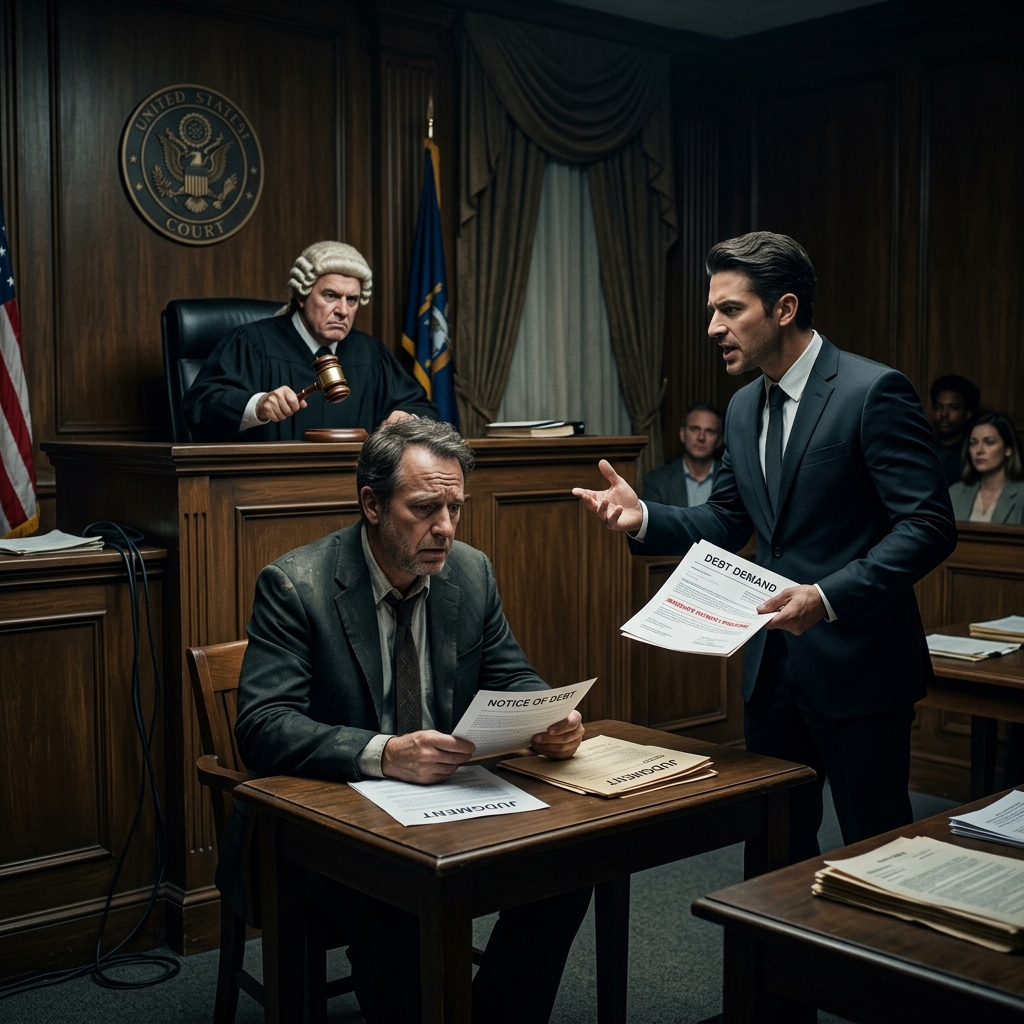
Some debt collectors have gone far beyond aggressive phone calls and letters, building fake courtrooms and staging sham hearings to pressure people into paying alleged debts. These practices exploit fear of the legal system and confuse consumers about what is, and is not, a real court proceeding. This guide explains how these schemes work, what federal law says about deceptive debt collection, and how you can protect yourself if you encounter a fake summons, sham hearing, or other misleading tactics.
Understanding the Fake Courtroom Scam
In one widely reported case, a debt collection company created a mock courtroom inside its office, complete with a raised bench, a person dressed like a judge, and staff posing as court officers. Debtors were summoned to this office and led to believe they were attending an official court hearing when, in reality, no court was involved and no judge had legal authority over their case.
According to enforcement officials, the company used this staged environment to induce people to sign payment agreements, believing that they were responding to a lawful court order rather than a private collection attempt. This type of behavior is not just unethical; it is typically illegal under federal consumer protection laws because it involves misrepresenting legal status and using deception to collect debts.
Key Features of Sham Courtroom Tactics
- Impersonated authority: Staff may dress like judges, sheriff’s deputies, or clerks to give the impression of official government power.
- Court-like setting: The room may include a bench, flags, or signs suggesting a judicial venue, even though no actual court operates there.
- Fake hearings: Debtors are told they have a hearing or must appear for a legal proceeding, despite no case being filed in any real court.
- Pressure to sign: Once inside, consumers may be urged to sign payment agreements, wage assignments, or other documents under the impression that compliance is legally mandatory.
These tactics are designed to trigger fear: fear of arrest, wage garnishment, or court judgments. Federal law, however, clearly limits what debt collectors can say and do.
What Federal Law Says About Deceptive Debt Collection
The primary federal law governing debt collection practices is the Fair Debt Collection Practices Act (FDCPA), enforced by the Federal Trade Commission (FTC) and the Consumer Financial Protection Bureau (CFPB). The FDCPA makes it illegal for debt collectors to use abusive, unfair, or deceptive practices when trying to collect consumer debts.
Core Protections Under the FDCPA
- No false representation of legal status: Collectors may not falsely claim to be attorneys or government representatives, or misrepresent that communications or facilities are part of a court system.
- No fake legal documents: Documents cannot be presented as official legal papers if they are not, such as bogus summonses or counterfeit court notices.
- No threats of actions they cannot or do not intend to take: Collectors may not threaten arrests, garnishments, or lawsuits if they lack legal authority or do not genuinely plan to pursue those actions.
- Limits on harassment: Repetitive calls intended to harass, use of profanity, or threats of violence are prohibited.
- Debt validation: Collectors must provide key information about the debt, including the creditor’s name and amount owed, and must send validation information shortly after first contact.
Because sham courtrooms and fake hearings rely on false impressions about legal proceedings and government authority, they typically constitute deceptive practices prohibited under the FDCPA and similar state laws.
Fake Summonses and Sham Hearings: How to Spot Them
Fake courtrooms often start with a fake summons or notice telling you to appear at a supposed hearing. Recognizing the warning signs can help you avoid being tricked into paying or signing documents under false pretenses.
Common Red Flags in Fake Summonses
- No case number: Real court documents list a case or docket number assigned by the court. A missing or obviously generic number is a serious warning sign.
- No court seal or clerk’s signature: Authentic summonses usually bear a court stamp or seal and the signature or name of a clerk or judicial official.
- Vague court identification: If the document does not clearly identify a specific court (with address and jurisdiction), or uses generic terms like “resolution center” instead of an actual court name, be cautious.
- Instructions to attend a private office: Legitimate hearings are held at courthouses or official court locations, not at a debt collector’s office or a generic business center.
- Overly threatening language: Statements implying immediate arrest or imprisonment without due process, or demands for payment to “avoid jail,” are strong indicators of deception.
Checklist: Verifying Whether a Summons Is Real
| Verification Step | What You Should See | Possible Warning Sign |
|---|---|---|
| Check the court name | Specific court (e.g., “County Court”), with address | Generic name, business center, or collection agency address |
| Look for case number | Unique docket or case number | Missing, blank, or obviously fake number |
| Inspect seal and clerk info | Official seal/stamp, clerk or judge name | No seal, no official signature, only company logos |
| Confirm with the court | Court verifies case details match the document | Court has no record of the case or parties |
Real Court Hearings vs. Fake Courtrooms
Understanding the difference between a legitimate court hearing and a fake proceeding inside a collector’s office can help you respond appropriately. Real hearings are governed by formal rules, involve impartial judges, and create enforceable court orders. Fake courtrooms, by contrast, are designed purely for leverage and have no actual legal authority.
What Happens in a Real Hearing
- Official venue: Hearings take place in a courthouse or official judicial facility, not in a private collection office.
- Independent judge: A real judge, bound by law and ethics, presides over the case.
- Opportunity to present information: You can explain your income, expenses, debts, and other facts that affect your ability to pay.
- Formal orders: Any payment plan or judgment must be approved by the judge and issued as an official court order.
In contrast, a sham courtroom uses the appearance of these elements to make you believe that you have already lost a case or that a judgment has been entered, even when no lawsuit exists.
Your Rights When Debt Collectors Misbehave
If a debt collector uses deceptive tactics—such as fake courtrooms, bogus summonses, or misleading threats—you have legal rights and potential remedies. Federal law and many state laws allow consumers to challenge unlawful collection practices and seek damages in court.
Protections and Remedies
- Right to dispute the debt: You can send a written dispute if you do not recognize the debt or believe the amount is wrong. Collectors must then note the debt as disputed in communications with others.
- Right to validation: Collectors must provide basic information about the debt and creditor so you can verify its legitimacy.
- Right to be free from deception: Misrepresenting legal status, pretending to be a court, or using fake legal documents may violate the FDCPA.
- Right to sue: You may file a lawsuit in state or federal court within a set time period (typically one year under the FDCPA) to seek damages for illegal collection practices.
In at least one case, a federal court allowed evidence of debt collector misconduct—including false reporting and ignoring dispute letters—to be presented at trial, illustrating that courts take deception and misrepresentation seriously.
Practical Steps If You Encounter Fake Courtroom Tactics
Responding calmly and methodically is critical if you receive a suspicious summons or are told to attend a “hearing” at a private office. Taking the right steps can protect both your rights and your finances.
Step-by-Step Action Plan
- 1. Verify with the court: Contact the court identified on the summons. Ask whether a case has been filed in your name and whether the document is genuine.
- 2. Preserve evidence: Keep copies of all documents, envelopes, emails, and notes from any conversations with the collector.
- 3. Document interactions: Record the dates, times, names, and content of phone calls or in-person meetings with the collector.
- 4. Learn your rights: Review FDCPA protections and any relevant state consumer protection laws so you can recognize unlawful conduct.
- 5. File complaints: Report suspected deception to the CFPB, FTC, and your state attorney general’s office.
- 6. Seek legal advice: Consider consulting an attorney experienced in consumer law or debt defense, especially if you are unsure how to proceed or believe you have suffered harm.
Best Practices to Avoid Being Misled
You cannot always control how a debt collector behaves, but you can adopt practices that reduce the chance of being misled by fake courtrooms or other scams.
- Stay skeptical of urgent threats: Immediate demands for payment to avoid arrest or jail are rarely legitimate and are often illegal.
- Always confirm with official sources: Before attending a “hearing” or paying under pressure, contact your local court or a trusted legal aid organization.
- Request written information: Ask for written validation of the debt and review it carefully.
- Do not sign under pressure: Avoid signing any agreements in a setting that feels coercive or confusing; insist on time to review documents or consult counsel.
- Know that information is power: Debt collectors rely on fear and misinformation. Understanding your rights significantly reduces their leverage.
FAQs About Fake Courtrooms and Debt Collection
Is it legal for a debt collector to create a court-like room in its office?
Creating a court-like setting by itself is not necessarily illegal, but using that setting to deceive consumers into believing they are in an official courtroom or subject to a lawful court order can violate the FDCPA and other consumer protection laws. Misrepresenting the nature of a proceeding or pretending to be a court or government official is generally prohibited.
What should I do if I receive a suspicious summons?
First, verify the summons directly with the court named in the document. If the court has no record of the case, keep the document, record all related interactions, and report the incident to the FTC, CFPB, and your state attorney general. Consider speaking with an attorney to assess whether your rights have been violated.
Can a debt collector threaten to arrest me if I don’t pay?
No. Debt collectors are not allowed to falsely claim you will be arrested or imprisoned if you do not pay a debt. While courts can issue orders related to judgments, including, in some states, contempt for disobeying certain court orders, routine nonpayment of consumer debts does not lead to arrest under ordinary circumstances.
How do I dispute a debt I don’t recognize?
Once you receive validation information from the collector, you may send a dispute letter stating that you do not owe some or all of the debt and requesting verification. The collector must then cease certain collection activities until it verifies the debt and must note the debt as disputed if it reports it to others.
Can I sue a debt collector for using a fake courtroom or deceptive summons?
Yes. If a debt collector violates the FDCPA or similar laws, you may have the option to file a lawsuit in state or federal court within the applicable time limit (often one year from the violation). Courts have allowed evidence of deceptive practices, such as false reporting and ignoring dispute letters, to be presented at trial, and consumers may seek damages for harm suffered.
References
- What is an unfair, deceptive or abusive practice by a debt collector? — Consumer Financial Protection Bureau. 2023-06-01. https://www.consumerfinance.gov/ask-cfpb/what-is-an-unfair-deceptive-or-abusive-practice-by-a-debt-collector-en-1401/
- Debt Collection FAQs — Federal Trade Commission. 2023-04-01. https://consumer.ftc.gov/articles/debt-collection-faqs
- Debt Collector Faked Court Hearings to Trick Consumers into Paying Up, Says AG — ABA Journal. 2010-07-26. https://www.abajournal.com/news/article/debt_collector_faked_court_hearings_to_trick_consumers_into_paying_up_says_
- Evidence of Debt Collector Misconduct Admitted in Court — Lawton & Cates. 2014-09-10. https://www.lawtoncates.com/blog/court-allows-evidence-at-trial-that-debt-collect/
- What To Do If You Receive Fake Summons From A Debt Collector — The Debt Defenders. 2022-05-01. https://www.thedebtdefenders.com/what-to-do-if-you-receive-fake-summons-from-a-debt-collector/
- What to expect at the hearing, and how to get ready — Pine Tree Legal Assistance. 2020-01-15. https://www.ptla.org/what-expect-hearing-and-how-get-ready
Similar Articles








Read full bio of Sneha Tete




