
Failed Drug Test and Workers’ Compensation Benefits
Understand how a failed or refused workplace drug test can affect your workers’ compensation benefits, and what options you may still have.
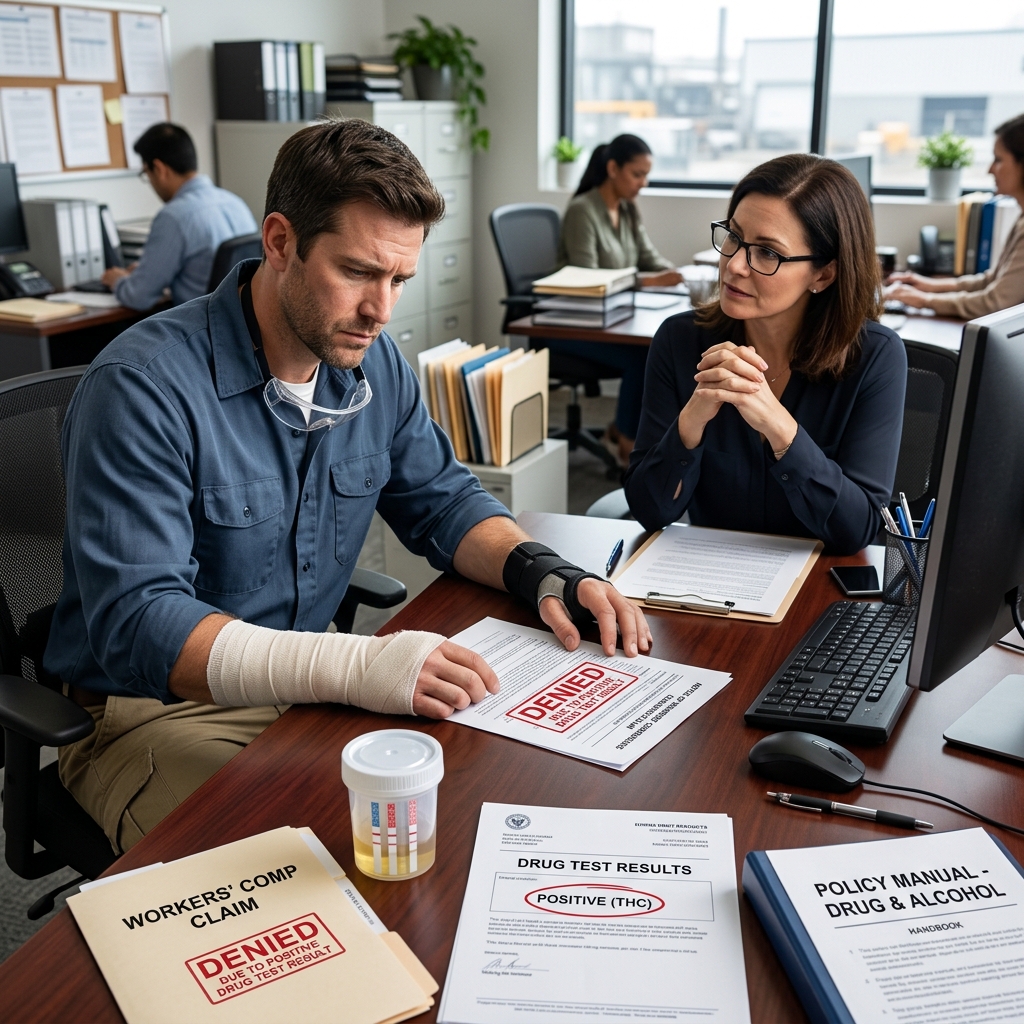
Drug and alcohol use at work is a serious safety concern, and many employers use workplace drug testing to discourage impairment on the job. When an injury happens and the worker fails a post-accident drug test, the question becomes whether they will still receive workers’ compensation benefits. The answer depends heavily on state law, the facts of the incident, and how the test was conducted.
This article explains how drug testing interacts with workers’ compensation systems, when a failed or refused test can affect your eligibility for benefits, and what practical steps an injured worker can take to protect their claim.
Why Employers Use Drug Testing After a Workplace Injury
Employers and insurers view post-accident drug testing as a way to determine whether intoxication or drug use contributed to a workplace injury. Many states allow employers to request a drug test after an accident, especially when there is reason to believe impairment was involved.
- Safety concerns: Workplaces involving heavy machinery, driving, or hazardous materials are particularly sensitive to impairment risks.
- Cost control: If an employer can prove the injury was caused by intoxication, they may avoid paying workers’ compensation benefits, lowering insurance costs.
- Drug-free workplace programs: Some states reward drug-free workplace policies with reduced premiums, encouraging employers to adopt testing protocols.
- Evidence gathering: A timely drug or alcohol test can provide evidence that becomes central to an intoxication defense in a workers’ compensation case.
However, the presence of drugs or alcohol in a test is rarely the end of the story. Most workers’ compensation laws focus not just on use, but on whether intoxication caused the injury.
Legal Basics: Intoxication and Workers’ Compensation
Workers’ compensation is designed to provide medical care and wage replacement when employees are injured in the course of employment, generally without regard to fault. Yet nearly every jurisdiction creates an exception when an injury was primarily caused by the worker’s intoxication or illegal drug use.
Key legal concepts
- Intoxication defense: Many state statutes allow employers or insurers to deny benefits if they prove that intoxication or drug use was the primary or proximate cause of the injury.
- Proximate cause: This legal term generally means that the impairment directly led to the accident — for example, a worker who falls from a ladder because they are too impaired to maintain balance.
- Rebuttable presumption: In some states, a properly administered test showing a certain level of alcohol or drugs in the worker’s system creates a presumption that the injury was caused by intoxication. The worker can still rebut this presumption with evidence.
- Burden of proof: Even with a positive test, the employer often must show both that the worker was impaired and that this impairment caused the injury. Presence alone may not be enough.
| Element | What it usually means |
|---|---|
| Intoxication or being under the influence | Consuming enough alcohol or drugs to significantly impair normal physical or mental faculties. |
| Proximate cause of injury | The impairment directly led to the accident; the injury would likely not have occurred without the intoxication. |
| Rebuttable presumption | A legal assumption that intoxication caused the injury, based on test results, that the worker can challenge with evidence. |
| Burden of proof | Responsibility placed on the employer/insurer (or sometimes on the worker) to prove or disprove the role of intoxication. |
Does a Failed Drug Test Automatically End Your Benefits?
In most states, a failed drug test does not automatically terminate or bar workers’ compensation benefits. Instead, the test result typically becomes a piece of evidence in determining whether intoxication caused the injury.
Several trends appear across state laws:
- Positive test alone is often insufficient: Some statutes and case law stress that proof of impairment and causation is required — showing drugs in the system does not, by itself, prove the worker was impaired at the time of the accident.
- Legal vs. illegal substances: Use of illegal drugs can weigh heavily against a claim, but even legal substances like prescribed medications or marijuana can complicate a case if they impair performance.
- Timing matters: Many laws specify how soon after the accident a test must be performed for presumptions to apply, recognizing that drug or alcohol levels change quickly.
- Case-by-case evaluation: Judges and administrative officers typically look at all the circumstances, including witness testimony, safety rules, and medical evidence, not just the test result.
However, a failed test can trigger a presumption against the worker or make it substantially harder to prove eligibility, especially in states with explicit intoxication exclusions in their workers’ compensation statutes.
Post-Accident Drug Testing Procedures and Worker Rights
While employers often have the right to request testing after an incident, they must follow state law and any written company policies. Proper procedures help ensure the test results are reliable and legally usable.
Common testing practices
- Written policy: Many states encourage or require employers to communicate drug testing rules in employee handbooks or posted policies, especially when linked to workers’ compensation programs.
- Reasonable suspicion or post-accident testing: Tests are commonly ordered after serious injuries, unusual accidents, or when supervisors observe signs of impairment.
- Testing windows: Laws may specify how quickly alcohol or drug tests must be performed after an incident for the results to carry particular legal weight.
- Certified laboratories: Employers typically use certified labs and standardized collection protocols to reduce errors and challenges.
Workers retain important rights in this process. For example, in some states a worker may request confirmation or retesting of the sample and may challenge improper collection or chain-of-custody issues.
What Happens If You Refuse a Drug Test?
Refusing a post-accident drug test can have significant consequences, but it does not always mean automatic loss of workers’ compensation benefits.
- Employment consequences: Employers may discipline or terminate workers who refuse testing, especially under a drug-free workplace policy.
- Impact on the claim: Some statutes treat refusal as evidence suggesting intoxication, sometimes creating a presumption that the injury was caused by drugs or alcohol unless the worker provides strong evidence to the contrary.
- No automatic disqualification in some states: Certain jurisdictions explicitly state that refusing a test after injury does not, by itself, bar benefits, although it may make the claim more difficult and invite closer scrutiny by insurers.
If a worker declines to test, they should be prepared to explain and document legitimate reasons, such as medical concerns or observable procedural violations in the testing process. Without such justification, refusal may be viewed as an admission of impairment.
Positive Test Results: When Benefits Can Be Denied
Where a worker tests positive for alcohol or controlled substances, the employer or insurer may assert an intoxication defense. Whether benefits are ultimately denied depends on several factors.
Key factors courts and boards consider
- Level of intoxication: Some statutes define intoxication or set thresholds (for example, a particular blood alcohol concentration) that trigger legal presumptions.
- Causation evidence: Did witnesses observe impaired behavior? Did the type of accident logically follow from the kind of impairment shown?
- Legal use vs. misuse: Use of prescribed medications or legal substances may be treated differently, especially if the worker followed medical instructions and employer policies.
- Workplace conditions: Hazardous or chaotic environments may contribute to accidents even when a worker has consumed substances, complicating causation analysis.
In many systems, compensation may be denied if the injury was “occasioned primarily” or “proximately caused” by intoxication or non-prescribed controlled substances. However, if the employer cannot show that the drug or alcohol use was the real cause of the injury, benefits may still be awarded.
Challenging a Failed Drug Test in a Workers’ Compensation Case
Workers who fail a drug test after an injury are not without recourse. There are several ways to challenge either the test itself or the conclusion that intoxication caused the accident.
Practical steps for injured workers
- Confirm and retest: Request that a portion of the original sample be retested at an independent, certified laboratory if permitted. This can reveal false positives or lab errors.
- Review testing procedures: Examine whether the test complied with legal and industry standards, including proper sample collection, labeling, and chain of custody. Deviations can undermine reliability.
- Gather medical documentation: If the positive result is due to prescribed medication or legally used substances, obtain medical records demonstrating lawful use and dosage instructions.
- Collect witness statements: Co-workers who observed the accident or your behavior can support your claim that you were not impaired or that other factors caused the injury.
- Preserve evidence of workplace hazards: Photographs, maintenance records, and safety reports may show that the injury resulted from environmental conditions, not intoxication.
- Consult a workers’ compensation attorney: Experienced counsel can evaluate statutes, case law, and evidence to build a strategy for rebutting intoxication presumptions.
Successfully challenging a failed test often involves demonstrating that impairment did not exist at the time of injury or, if it did, that it was not the primary cause of the accident.
The Role of State Law: Examples of Different Approaches
While specific rules vary, several state-level approaches illustrate common patterns in dealing with drug testing and workers’ compensation.
- Statutory intoxication exclusions: States such as New York explicitly allow denial of workers’ compensation when the injury is caused by intoxication from alcohol or drugs.
- Defined presumptions based on testing windows: Some jurisdictions specify time frames (for example, hours after injury) within which tests must be conducted and establish presumptions if results exceed certain levels.
- Detailed definitions of intoxication: Other states define intoxication in terms of loss of normal control of bodily or mental faculties and require proof that this state existed at the time of injury.
- No standard test, case-by-case analysis: In some places, there is no mandated test; individual employers may choose testing methods, and courts assess each case individually.
Because of these differences, workers should always consider local law and seek legal advice in their jurisdiction when a failed drug test threatens their benefits.
Best Practices for Workers and Employers
Both workers and employers can reduce conflicts and legal disputes by understanding their responsibilities and rights around drug testing and workplace injuries.
For workers
- Know your employer’s drug and alcohol policy and any post-accident testing rules.
- Avoid working while impaired by any substance, including legal medications that affect coordination or judgment.
- Report injuries promptly and accurately, and cooperate with reasonable testing when required by law and policy.
- Document the circumstances of the accident, including any equipment issues, environmental risks, or training gaps.
- Seek early legal advice if a failed or refused test threatens your claim.
For employers
- Maintain a clear, written drug-testing policy compliant with state law and communicate it to employees.
- Use certified laboratories and follow rigorous collection and documentation procedures.
- Limit testing to situations where it is legally permissible and justified, such as serious accidents or reasonable suspicion.
- Evaluate each injury case holistically, considering witness accounts, safety practices, and equipment conditions, not only test results.
- Train supervisors to recognize signs of impairment and to respond appropriately when injuries occur.
Frequently Asked Questions
Does a failed drug test always mean my workers’ compensation claim will be denied?
No. In most jurisdictions, a positive result does not automatically bar benefits. The employer or insurer usually must show that your intoxication or drug use caused the injury, not just that substances were present in your system.
Can I refuse a post-accident drug test?
In many states, you can legally refuse, but refusal may result in job discipline, and in some systems it can create a presumption that the injury was due to intoxication unless you produce convincing evidence otherwise.
What if I tested positive because of prescribed medication?
Lawful use of prescribed drugs does not automatically disqualify you from benefits. However, if the medication significantly impaired you and caused the accident, your claim may be challenged. Medical documentation and physician testimony can be critical in these cases.
How quickly must drug or alcohol tests be done after an injury?
Many statutes specify short timeframes—sometimes a few hours—to ensure that results accurately reflect your condition at the time of the accident. Tests conducted outside these windows may carry less legal weight or fail to trigger presumptions.
Should I speak to a lawyer after failing a drug test?
Yes, consulting a workers’ compensation attorney is often advisable. A lawyer can assess whether your employer followed proper testing procedures, explain local intoxication rules, and help you gather evidence to rebut claims that your injury was caused by impairment.
References
- Employer’s Right to Drug Test a Florida Employee After a Work Accident and Workers’ Compensation Claim — Miami Workers Compensation Lawyer. 2023-05-01. https://miamiworkcomplawyer.com/post/employer-s-right-to-drug-test-a-florida-employee-after-a-work-accident-and-workers-compensation-claim.html
- How Drug Testing Impacts Workers’ Compensation Claims — Stern & Cohen Law. 2022-09-15. https://sterncohenlaw.com/blog/how-drug-testing-impacts-workers-compensation-claims/
- North Carolina Workers’ Compensation and Drug Testing — NC Worker Comp. 2023-08-10. https://ncworkercomp.com/nc-workers-compensation-and-drug-testing/
- Workers’ Comp Drug Test Georgia: A Comprehensive Guide — The Moses & Rooth Law Firm (Win Big Law Firm). 2023-02-20. https://winbiglawfirm.com/blog/workers-comp-drug-test-georgia/
- Drug Testing and Workers’ Compensation in New York — Terry Katz & Associates. 2022-06-30. https://www.terrykatzandassociates.com/blog/drug-testing-workers-compensation
- How Can a Failed Drug Test Affect an Ohio Workers’ Compensation Claim? — Graham & Associates. 2023-04-12. https://grahamlpa.com/blog/failed-drug-test-ohio-workers-compensation/
- STATE OF NEW JERSEY S289 — New Jersey Legislature. 1996-01-08. https://pub.njleg.gov/bills/9697/S0500/289_i1.pdf
Similar Articles








Read full bio of medha deb




