
Facing Rioting Charges in Washington, DC
Understand DC rioting laws, your constitutional rights, and the critical steps to take if you are arrested during a protest or public disturbance.
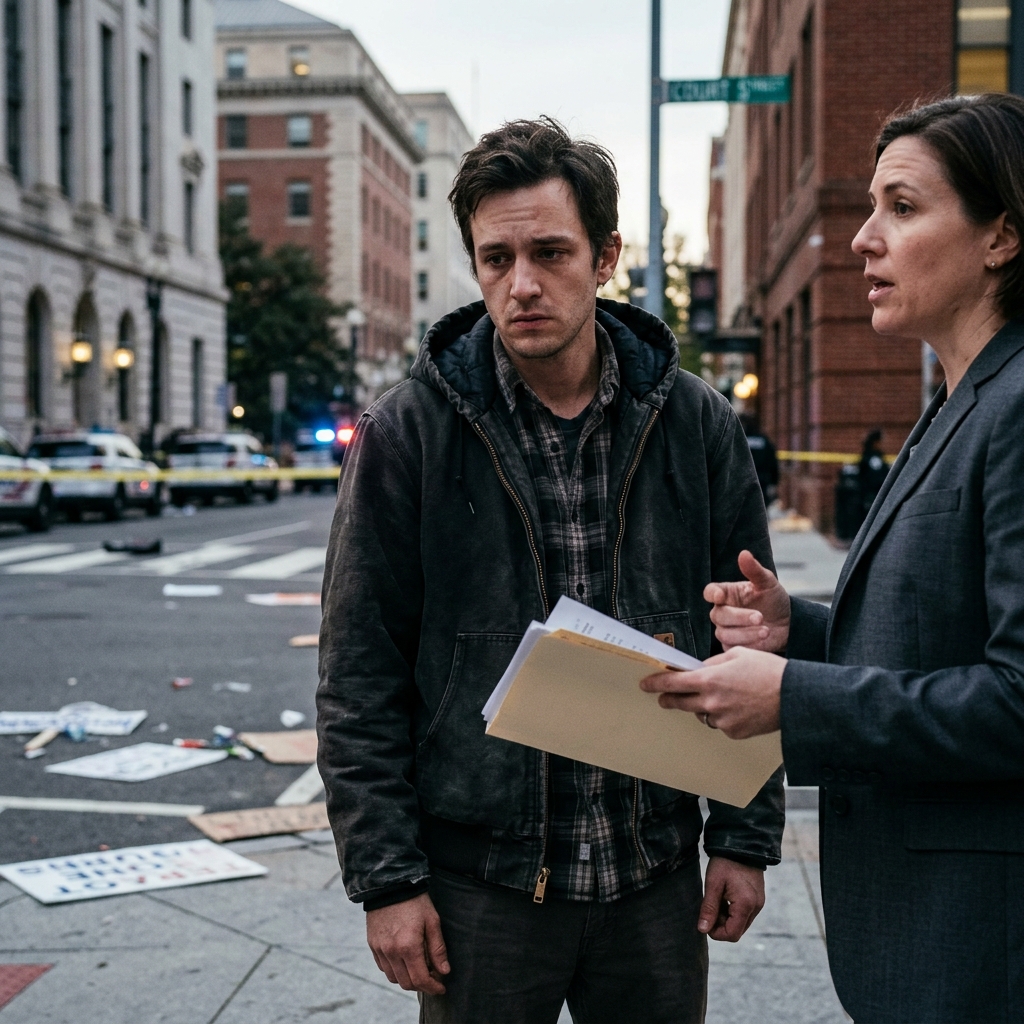
Allegations of rioting or inciting a riot in Washington, DC can arise quickly during protests, demonstrations, or large public gatherings. These charges carry significant criminal penalties under the District of Columbia code and, in some circumstances, can trigger serious federal consequences. Understanding the law, your rights, and how to respond after an arrest is critical to protecting your future.
Understanding What Counts as a Riot in DC
DC law provides a specific definition of what constitutes a riot. Under the Code of the District of Columbia, a riot is defined as a public disturbance involving an assemblage of five or more persons whose tumultuous or violent conduct, or the threat of such conduct, creates a grave danger of injury to people or damage to property.
In simple terms, law enforcement and prosecutors are looking for:
- A group of at least five people gathered in public.
- Violent actions or serious threats of violence.
- Real risk of harm to people or property, not just minor disorder.
The statute makes it a criminal offense to willfully engage in a riot, or to willfully incite or urge others to engage in a riot within the District. These are separate offenses, and the evidence required to prove each can be quite different.
Rioting vs. Inciting a Riot
DC law distinguishes between those who are actively participating in violent conduct and those who encourage others to engage in that conduct. This distinction matters because it can affect the charges, potential penalties, and available defenses.
| Offense | Core Conduct | Key Elements |
|---|---|---|
| Rioting | Personally taking part in a public disturbance involving violent or tumultuous conduct. | Willful participation in a riot as defined by DC law; presence and conduct that contribute to the disturbance. |
| Inciting to riot | Urging, encouraging, or provoking others to engage in riotous conduct. | Willful actions or words aimed at causing others to join or start a riot. |
Penalties and Aggravating Circumstances
Rioting offenses in Washington, DC are often treated as serious misdemeanors, but the law allows for much harsher penalties when certain aggravating factors are present.
Under DC Code § 22–1322:
- Basic rioting or inciting a riot is punishable by up to 180 days in jail, a fine, or both.
- When a riot leads to serious bodily harm or property damage over $5,000, anyone who willfully incited or urged others to engage in the riot may face up to 10 years of imprisonment and substantial fines.
These local penalties can be compounded by federal charges in more extreme situations, such as cases involving civil disorder, destruction of federal property, or assaults on federal officers. Federal rioting laws often require proof of interstate travel or use of interstate facilities (such as phones, internet, or broadcast media) with intent to incite or participate in a riot.
How Rioting Charges Commonly Arise During Protests
Peaceful demonstrators may be surprised to find themselves facing rioting charges after events escalate or police engage in mass arrests. Civil unrest, political protests, or large marches can shift rapidly when a small number of individuals engage in violence, property damage, or confrontations with law enforcement.
Typical pathways to rioting charges include:
- Group confrontations with police where officers allege that protestors used or threatened violence.
- Vandalism or property damage in the vicinity of protests, especially to government or commercial buildings.
- Use of fireworks, projectiles, or makeshift weapons during demonstrations.
- Mass arrest sweeps where many individuals are arrested together and charged with inciting or participating in a riot, sometimes without individualized probable cause.
Organizations focused on protest law have documented cases in which hundreds of demonstrators were charged with felony rioting despite limited evidence of individual wrongdoing, raising serious concerns about overbroad enforcement and civil liberties.
Immediate Steps to Take If You Are Arrested
Your actions in the minutes and hours after an arrest can significantly affect both the strength of the case against you and your ability to mount an effective defense. The law provides critical constitutional protections that you can and should invoke.
1. Do Not Resist or Escalate the Arrest
Even if you believe the arrest is unjustified, physically resisting officers or attempting to flee can lead to additional charges, including resisting arrest or assault on an officer, and may be used to portray you as violent or dangerous. Remaining calm and nonviolent reduces risk and preserves stronger arguments for your defense.
2. Assert Your Right to Remain Silent
The Fifth Amendment protects your right against self-incrimination, and you are not required to answer police questions beyond basic identifying information. Anything you say can be used in court to support rioting or related charges, sometimes out of context or misinterpreted.
Best practices include:
- Politely stating, “I want to remain silent” and then declining further questioning.
- Providing only your name and required identification information when lawfully requested.
- Refusing to give written or recorded statements without first consulting an attorney.
3. Request a Lawyer and Do Not Waive Your Rights
The Sixth Amendment guarantees the right to counsel in criminal prosecutions. Asking for an attorney should immediately halt custodial interrogation under constitutional standards; questioning that continues after clear invocation may lead to suppression of statements in court.
Once you are in custody:
- Clearly say, “I want to speak to a lawyer” and repeat it if questioning continues.
- Avoid signing waivers or consent forms without legal advice.
- Understand that even casual conversation with officers can become evidence.
Building an Effective Defense Strategy
Rioting cases often arise from chaotic environments and complex fact patterns. This can create opportunities for strong defenses, particularly regarding intent, identification, and constitutional violations.
Challenging the Elements of the Offense
Prosecutors must prove each element of rioting or inciting to riot beyond a reasonable doubt. Effective defense strategies often target these elements directly:
- Lack of willful participation: Demonstrating that you were present but did not engage in violent or tumultuous conduct.
- No intent to incite: Showing that your speech or actions were not directed at provoking a riot, but were protected expression or attempts to de-escalate.
- Insufficient group size or danger: Arguing that the circumstances did not meet the statutory definition of a riot.
First Amendment and Protected Speech
Both DC law and federal law recognize that pure advocacy or peaceful expression of ideas cannot be criminalized as rioting absent a specific intent to promote violence. Courts have held that writing, speaking, or protesting about controversial views is protected unless it crosses the line into inciting imminent lawless action.
Key points about protected speech include:
- Chanting slogans, carrying signs, or peacefully marching are normally protected by the First Amendment.
- Defendants cannot be convicted of federal rioting solely for expressing beliefs that do not explicitly support acts of violence or the right to commit violence.
- Defense counsel may seek to exclude or contextualize protest-related statements to emphasize their lawful nature.
Mistaken Identity and Chaos at the Scene
In large protests or fast-moving disturbances, mistaken identity is common. Witnesses may misremember faces; police may rely on limited video angles; and mass arrests may sweep in people who were not involved in criminal conduct.
Defenses based on identity and timeline may include:
- Demonstrating that you left before violence began or were in a different location when key incidents occurred.
- Using cell phone location data, transit records, or digital timestamps to corroborate your movements.
- Presenting independent witnesses or video footage showing noninvolvement.
Suppression of Unlawfully Obtained Evidence
If law enforcement violates constitutional rights during search, seizure, or interrogation, your attorney may move to suppress resulting evidence. Courts may exclude evidence obtained without probable cause, without a proper warrant, or through coercive questioning.
Common suppression issues include:
- Mass arrests without individualized probable cause or specific facts linking you to criminal conduct.
- Searches of phones, bags, or homes without a warrant or valid consent.
- Statements obtained after you invoked your right to remain silent or requested counsel.
Evidence That Can Help Your Case
Successful defenses in rioting cases often depend on quickly preserving evidence that might otherwise be lost, overwritten, or deleted. Early involvement by defense counsel is crucial.
Useful evidence may include:
- Video recordings from police body cameras, demonstration observers, news outlets, or bystanders.
- Social media posts and live streams capturing the timeline and nature of events.
- Surveillance footage from nearby businesses or public facilities.
- Medical records if you were injured, supporting your account of the incident.
Attorneys can issue preservation requests and subpoenas to ensure that crucial videos and records are not destroyed. These materials can clarify whether your conduct was peaceful, whether you tried to leave, or whether police misinterpreted the situation.
Local vs. Federal Exposure in Riot-Related Cases
While many cases remain in DC Superior Court under local rioting statutes, high-profile or severe incidents may lead to federal charges. Federal law addresses both rioting and civil disorder, and the consequences can be markedly more severe.
Common federal charges connected to protests include:
- Federal rioting under 18 U.S.C. § 2101.
- Obstruction of law enforcement during civil disorder under 18 U.S.C. § 231.
- Assault on a federal officer under 18 U.S.C. § 111.
- Destruction of federal property under 18 U.S.C. § 1361.
If your case appears to involve federal interests—such as damage to federal buildings, interference with federal officers, or multi-state coordination—you should consult counsel experienced in federal criminal defense as early as possible.
Practical Tips for Protesters in Washington, DC
Understanding your rights before attending protests can reduce your risk of arrest and improve your position if charges arise. Legal organizations focused on protest law regularly emphasize preparation and rights awareness.
- Know your rights: Familiarize yourself with your right to remain silent, to avoid consent to searches, and to request counsel.
- Carry basic information: Have contact details for a trusted attorney or legal hotline written down, not just stored on your phone.
- Document events carefully: If it is safe, record interactions with police and note badge numbers, locations, and times.
- Stay informed of local ordinances: DC has specific rules regarding protests, permits, and public spaces that may affect law enforcement responses.
Frequently Asked Questions About Rioting Charges in DC
Is peacefully protesting enough to be charged with rioting?
No. DC’s definition of a riot requires violent or tumultuous conduct, or threats that create grave danger to persons or property. Peaceful protest activity without such conduct should not meet this standard, though disputes may arise when police characterize events differently.
Can my social media posts be used to accuse me of inciting a riot?
Yes, prosecutors may rely on online posts, messages, or live streams to argue that you urged others to engage in violent conduct. However, advocacy of ideas alone—without explicit encouragement of violence or lawless action—may be protected speech under the First Amendment.
Do I have to answer police questions after I am arrested?
You are generally only required to identify yourself. You are not legally obligated to answer substantive questions about your activities, beliefs, or involvement in protests, and remaining silent is often the safest choice until you speak with a lawyer.
What happens if I am caught up in a mass arrest?
Mass arrests can result in blanket charges, including felony or misdemeanor rioting, against large groups of demonstrators. Defense attorneys may challenge the lack of individualized probable cause and seek dismissal or reduction of charges, particularly where evidence against specific individuals is weak.
When should I contact a criminal defense lawyer?
You should contact a lawyer as soon as you learn of an investigation or immediately after any arrest. Early legal intervention allows counsel to advise you on statements, preserve evidence, scrutinize police conduct, and start shaping a defense strategy tailored to local and federal law.
References
- § 22–1322. Rioting or inciting to riot. — D.C. Law Library. Accessed 2024-06-01. https://code.dccouncil.gov/us/dc/council/code/sections/22-1322
- Lawsuit Challenges DC Police Dept’s Unlawful Use of Chemical & Less Lethal Weapons & Felony Riot Charges on J20 — National Lawyers Guild. 2017-05-10. https://www.nlg.org/lawsuit-challenges-dc-police-depts-unlawful-use-of-chemical-less-lethal-weapons-felony-riot-charges-on-j20/
- What To Do if You Face Charges of Rioting in DC — Super Lawyers. Accessed 2024-06-01. https://www.superlawyers.com/resources/criminal-defense/washington-dc/what-to-do-if-you-face-charges-of-rioting-in-dc/
- Federal Rioting Charges & Civil Disorder — Spodek Law Group. Accessed 2024-06-01. https://www.nyccriminalattorneys.com/federal-rioting-charges-civil-unrest-prosecutions/
- 13 Defendants Facing Federal Rioting Charges — Bannon Law Group. Accessed 2024-06-01. https://bannonlawgroup.com/13-defendants-facing-federal-rioting-charges/
- About the Center for Protest Law & Litigation — Center for Protest Law & Litigation. Accessed 2024-06-01. https://www.protestlaw.org/what-we-do
Similar Articles








Read full bio of Sneha Tete




