
Facing Criminal Charges in a World of Constant Video
From phones to body cams, video now shapes most criminal cases. Know how it can help, hurt, and what to do if footage is involved.
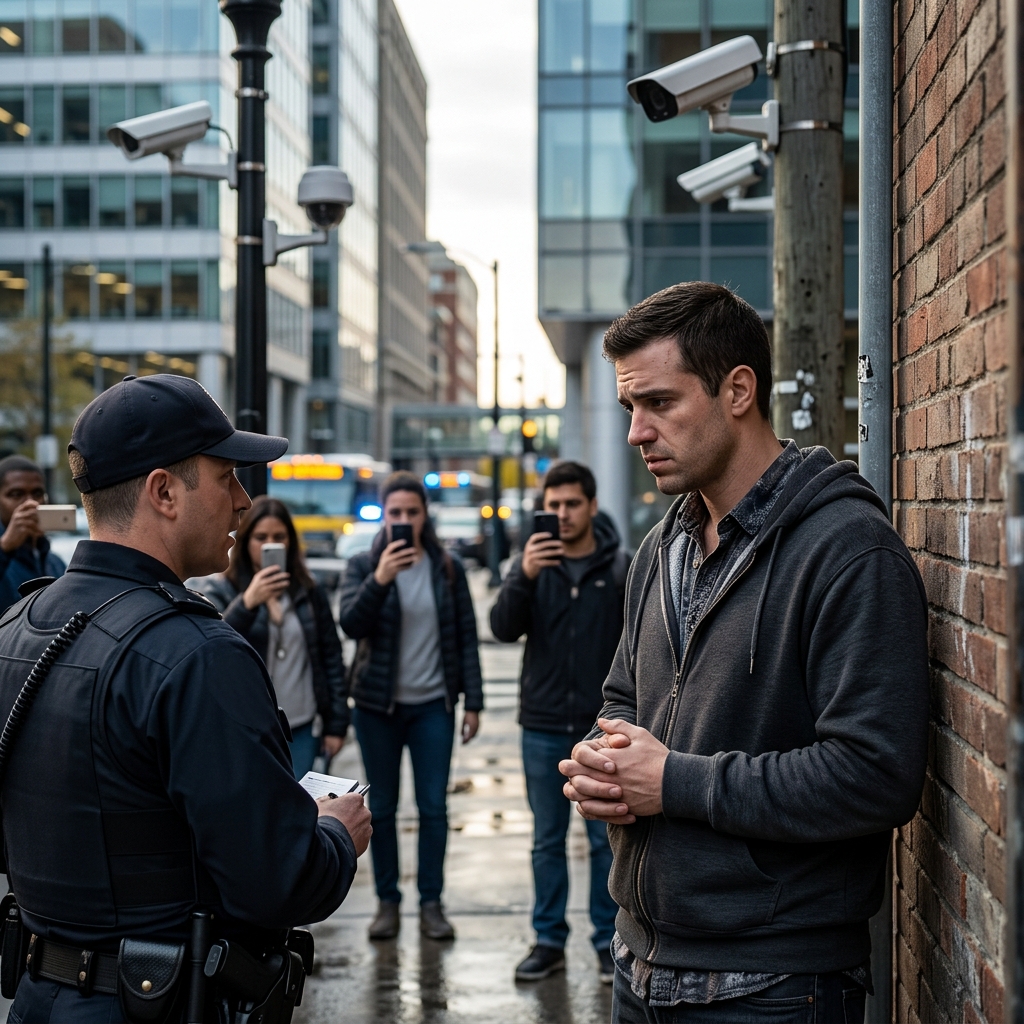
In today's digital world, it is increasingly rare for alleged criminal conduct to occur without some kind of camera nearby. From smartphones to doorbell cameras and police body-worn devices, video evidence now appears in the vast majority of criminal investigations and prosecutions. If you are accused of a crime, there is a significant chance that some video file will influence what happens in your case.
This article explains how video evidence is discovered, evaluated, and used in criminal proceedings, and what it means for someone facing charges. It focuses on practical concerns: how courts decide whether video can be shown to a jury, how lawyers attack or defend it, and what steps accused people should take when footage of an incident exists.
Why Video Has Become Central to Criminal Cases
For decades, criminal cases depended heavily on witness testimony and physical evidence such as fingerprints or documents. Today, cameras have added a powerful new category of proof. The Bureau of Justice Assistance has estimated that video is present in about 80% of criminal cases, underscoring how central it has become to modern justice systems.
Video is valuable because it can visually depict events, locations, and people in ways that jurors immediately understand. At the same time, it can create a false sense of certainty: if the jury believes the camera "never lies," they may overlook gaps, distortions, or technical issues. Courts and lawyers now must balance these strengths and weaknesses in nearly every serious prosecution.
Common Sources of Video in Criminal Investigations
Video can emerge from many different devices and locations. Typical sources include:
- Surveillance cameras inside stores, banks, office buildings, and residential complexes.
- Public safety cameras operated by cities or transport agencies in streets, subway stations, and transit hubs.
- Police body-worn cameras and dashboard cameras, which record interactions, traffic stops, and arrests.
- Private security systems such as home CCTV setups and internet-connected doorbell cameras.
- Smartphone recordings made by bystanders, alleged victims, or the accused themselves.
- Social media videos posted to platforms, sometimes publicly, sometimes in private messages.
Each of these sources presents different legal questions about whether and how the footage can be shown in court, and what weight judges and juries should give it.
When and How Video Enters a Criminal Case
Video evidence can appear at several phases of a criminal matter, from investigation through trial and appeal. Understanding these stages helps explain why footage often becomes decisive.
Video in the Investigation Stage
Law enforcement agencies routinely search for video as soon as a possible crime is reported. Investigators may:
- Request or seize footage from nearby businesses or public agencies.
- Ask residents for doorbell or home camera recordings.
- Seek warrants to obtain cloud-stored video or social media content.
- Review police body-camera recordings to reconstruct events.
Investigators use this material to identify suspects, confirm the time and location of events, or test witness statements. In some cases, the existence of clear video is the main reason charges are filed.
Video as Evidence in Court
Even when video exists, it does not automatically become part of the trial record. The party who wants to use the footage — usually the prosecution, sometimes the defense — must first convince the judge that the video is legally admissible.
Across jurisdictions, courts apply several core rules before allowing video to be shown to a jury:
- Relevance: the footage must relate to an issue in the case, such as identity, intent, or whether the alleged act occurred.
- Authenticity: someone must show that the video accurately depicts what it claims to show.
- Integrity: there must be no sign of tampering or improper editing.
These principles are similar to those applied to photographs and other demonstrative exhibits, but modern video adds complications such as metadata, compression artifacts, and editing software that courts are still learning to address.
Core Legal Requirements: Getting Video Admitted
To understand how video affects a particular criminal case, it helps to look at the legal building blocks: relevance, authenticity, and chain of custody. These rules determine whether the jury ever sees the footage.
Relevance: Does the Video Help Decide the Case?
Relevance is the simplest threshold and the easiest to meet. If footage:
- Shows part of the alleged crime,
- Depicts the location shortly before or after the incident, or
- Helps confirm or contradict a witness's story,
then it is usually considered relevant because it could make some disputed fact more or less likely. Judges can exclude footage that is only marginally connected to the issues, particularly if it risks unfair prejudice or confusion, but that is less common when the video directly depicts the events in question.
Authenticity: Proving the Video Is What It Claims to Be
Authenticity is often the most contested aspect of video evidence. Courts need confidence that the file presented in court truly reflects the recorded events, without misleading changes. Legal standards generally allow several ways to authenticate video.
| Authentication Method | Who Testifies | Typical Uses |
|---|---|---|
| Eyewitness verification | Person who saw the events depicted | Smartphone video of a fight, store camera of a robbery |
| Camera operator or technician | Person who installed or maintains the equipment | Fixed surveillance systems, traffic cameras |
| Expert analysis | Forensic video specialist | Footage with complex metadata, alleged editing, or questioned integrity |
Courts generally do not require the person who pressed the record button to testify, as long as someone can credibly say the video fairly and accurately represents what happened. In some cases, a witness who was present can confirm the video's accuracy even if the source of the recording is unknown.
Chain of Custody: Protecting Integrity from Camera to Courtroom
Chain of custody refers to documented proof of who handled the video from the moment it was created until it is shown in court. This is especially important for digital files, which are easy to copy, edit, or lose.
Courts look for evidence that:
- The original recording was properly saved and secured.
- Any transfers — for example, moving the file to a USB drive or server — were logged with dates and names.
- The file has not been altered, intentionally or accidentally, during storage or processing.
When chain of custody is weak, defense lawyers can argue that the footage might have been changed or that gaps in documentation should create reasonable doubt about its reliability.
Types of Video and Their Unique Legal Issues
Not all video is treated the same way. The source and nature of the recording often influence how judges and lawyers evaluate it.
Smartphone and Personal Camera Video
Phone recordings raise questions about privacy, context, and editing. Courts typically ask:
- Who recorded the video, and did they have a clear view?
- Has the file been cut, filtered, or enhanced?
- Is the audio clear enough to understand, or are subtitles needed?
Authentication often relies on testimony from the person who made the recording or from witnesses who saw the events and can confirm the video matches their observations.
Surveillance Systems and Security Cameras
Surveillance footage is common in theft, assault, and property crime cases. Typical issues include:
- Whether the time stamps are accurate.
- Whether gaps or missing minutes affect the narrative.
- How wide-angle lenses or poor lighting might distort distance or identity.
Authentication may come from store managers, building security staff, or technicians who installed the systems.
Police Body Cameras and Dashcams
Body-worn cameras are designed to document law enforcement activity, but they see only what the device is pointed toward and may fail to capture crucial context. Courts and investigators must consider:
- Activation policies: did officers turn cameras on when required?
- Whether audio or video was interrupted or obscured.
- How the perspective of the camera might miss what happens outside its frame.
Body-camera footage can be powerful in cases involving use of force, search and seizure disputes, or alleged police misconduct, but like any video, it is not a complete record of reality.
Limitations and Risks of Relying on Video
Despite its appeal, video evidence comes with significant limits. Lawyers and judges must guard against the assumption that a recording is always objective or complete.
Technical and Human Limitations
Common problems include:
- Poor image quality: grainy or low-resolution footage may make it difficult to identify faces or read license plates.
- Obstructed views: objects, crowds, or camera angles can hide crucial actions.
- Audio issues: background noise or distance can render conversations unintelligible.
- Compression and artifacts: digital processing may introduce visual distortions that mislead untrained viewers.
Additionally, viewers interpret video through their own expectations and biases, which can influence how they perceive ambiguous scenes.
Editing, Enhancement, and Misuse
Modern editing tools make it easy to alter footage, slow it down, zoom in, or add labels and arrows. While enhancement can help clarify important details, it can also create misleading impressions. Courts usually require parties to explain any adjustments made to the original and may call on experts to testify about how these changes affect reliability.
In some cases, defense lawyers argue that edited "highlight" videos unfairly focus on certain moments, leaving out context that could change how the events are understood. Judges have discretion to limit or exclude heavily edited compilations.
How Video Can Help or Hurt Someone Accused of a Crime
For a defendant, video can be both protection and risk. The strategic impact depends on what the footage shows and how it is presented.
Ways Video Can Support a Defense
Video evidence may assist the accused by:
- Confirming innocence: showing the defendant was somewhere else, acting lawfully, or not involved at all.
- Corroborating defense witnesses: aligning with testimony about self-defense, consent, or mistaken identity.
- Undermining prosecution witnesses: revealing inconsistencies in their descriptions of the event.
- Highlighting procedural violations: documenting unconstitutional searches, improper police conduct, or failure to provide warnings.
In some cases, strong exculpatory video can lead prosecutors to drop charges or offer significantly reduced pleas.
Ways Video Can Strengthen the Prosecution
On the other hand, video may:
- Show the alleged criminal act clearly and from multiple angles.
- Capture the defendant's own statements or admissions in real time.
- Depict conduct that contradicts later claims of self-defense or accident.
- Show the immediate impact on victims, influencing how jurors perceive harm.
When the footage appears straightforward and unambiguous, jurors may rely on it heavily, sometimes more than they do on witness testimony.
Defense Strategies for Handling Video Evidence
When video is part of a criminal case, defense attorneys follow a structured approach to protect their clients' rights. Typical strategies include careful review, technical analysis, and targeted challenges to admissibility or weight.
Early and Thorough Review of All Footage
Defense counsel will usually seek:
- Copies of all video in the prosecution's possession.
- Access to original files where possible, not just compressed or edited versions.
- Time to compare footage with police reports and witness statements.
This review may reveal inconsistencies between what officers wrote and what the recordings show, opening avenues for cross-examination or motions to suppress evidence.
Challenging Admissibility on Legal and Technical Grounds
Where appropriate, defense lawyers may file motions arguing that certain video should not be shown to the jury because:
- The footage is not sufficiently authenticated.
- Chain of custody is incomplete or questionable.
- Editing or enhancement has altered critical details.
- The risk of unfair prejudice outweighs its probative value.
Even when judges admit the footage, these challenges can set the stage for vigorous cross-examination and arguments about how much weight jurors should give what they see.
Using Expert Witnesses and Technical Analysis
In complex cases, both prosecution and defense may hire forensic video experts to examine files. These specialists can:
- Analyze metadata to detect editing or confirm original creation times.
- Explain how compression or enhancement affects what appears on screen.
- Reconstruct events using multiple camera feeds or frames.
Expert testimony can help jurors understand that video is a technical product, not a perfect window into reality.
Practical Steps if You Think Video Exists in Your Case
For anyone facing investigation or charges, the existence of video should shape immediate decisions. While specific legal advice must come from a qualified attorney, general practical steps include:
- Contact a criminal defense lawyer promptly to discuss possible sources of footage and legal rights.
- Avoid altering or deleting recordings that you control, as doing so can create separate charges or negative inferences.
- Tell your lawyer about all possible cameras near the incident, including businesses, traffic cameras, or private systems.
- Do not independently edit or publish video related to the case on social media, which can harm your defense and complicate evidence issues.
Early attention to video evidence can significantly change the course of a criminal matter, especially when time-sensitive footage might otherwise be overwritten or lost.
Frequently Asked Questions About Video Evidence
Is any video automatically allowed in court?
No. Judges must be satisfied that a video is relevant, properly authenticated, and has a reliable chain of custody before it can be admitted as evidence. Both sides may argue for or against the inclusion of particular footage.
Does the original file have to be used, or are copies acceptable?
In many jurisdictions, duplicates such as copied files or exported clips are admissible as long as there is no genuine question about their authenticity or fairness. However, parties often prefer original files because they contain full metadata and highest image quality.
Can a case rely on video without the person who filmed it?
Yes. Courts generally allow authentication by any witness who saw the events and can testify that the video accurately represents what happened, even if they did not record it themselves.
What if part of the video is missing or seems edited?
Missing segments or edits can become grounds for challenging the reliability and weight of the footage. Judges may require explanations, and defense attorneys can argue that gaps or changes create reasonable doubt.
How often does video evidence decide the outcome of a case?
There is no single percentage, but official guidance notes that video appears in most criminal cases and can be highly influential. The actual impact depends on what the footage shows and how convincingly each side addresses its strengths and weaknesses.
References
- The Role of Video Evidence in Modern Legal Practices — Marko Law. 2023-05-01. https://www.markolaw.com/post/the-role-of-video-evidence-in-modern-legal-practices
- 9.14 Video Recording (Evidence Guide) — New York State Unified Court System. 2018-01-01. https://www.nycourts.gov/judges/evidence/9-AUTHENTICITY/9.14_Video_Recording.pdf
- The unregulated approach to video evidence in U.S. courts and the need for a new procedural framework — First Monday (Zarsky, 2022). 2022-09-05. https://firstmonday.org/ojs/index.php/fm/article/view/13231
- Video Evidence: A Law Enforcement Guide to Resources and Best Practices — Bureau of Justice Assistance, U.S. DOJ. 2016-01-01. https://bja.ojp.gov/sites/g/files/xyckuh186/files/media/document/video_evidence_le_guide_to_resources_and_best_practices.pdf
- Is Cellphone Video Admissible in Court? — Axon. 2020-07-15. https://www.axon.com/resources/is-cellphone-video-admissible-in-court
- Video Evidence in New Jersey Criminal Defense Cases — Rosenblum Law. 2023-02-10. https://www.newjerseycriminallawattorney.com/criminal-process/evidence-in-nj-criminal-cases/video-evidence/
- Video, Photos, Evidence & Criminal Defense — Gambone Law. 2021-03-01. https://gambonelaw.com/faqs/video-photos-evidence-criminal-defense/
Similar Articles








Read full bio of medha deb




