
Facing an Outstanding Arrest Warrant: Practical Steps to Protect Yourself
Learn how to confirm, understand, and safely resolve an outstanding arrest warrant while protecting your rights and limiting disruption to your life.
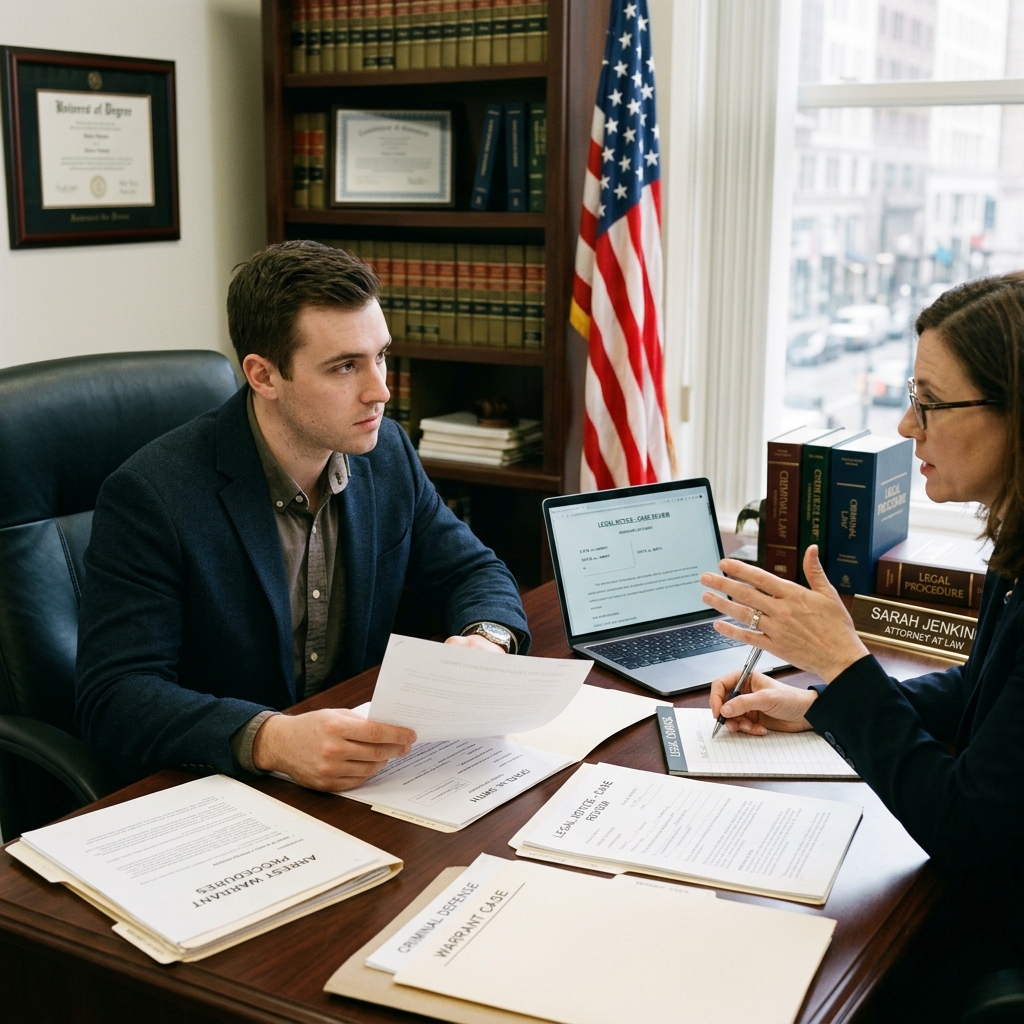
An outstanding arrest warrant can disrupt almost every part of your life. It can lead to arrest during a routine traffic stop, at work, or even at home, and ignoring it rarely makes it go away. Instead of hoping the warrant will disappear, you can take informed, strategic steps to address it while protecting your rights and limiting the impact on your future.
This guide explains what outstanding warrants are, how to safely confirm whether one exists, and how to respond in a way that reduces risk, keeps you from unnecessary jail time, and gives you the best chance of a favorable outcome.
Understanding Arrest Warrants and Why They Become Outstanding
An arrest warrant is a written order issued by a judge or magistrate authorizing law enforcement to arrest the person named in the warrant. To issue a valid warrant, the judge must determine that there is probable cause—a reasonable belief that a crime has been committed and that the person named is responsible—based on sworn testimony or an affidavit.
A warrant becomes outstanding when it has been issued, but the person named has not yet been arrested. Warrants can remain active for long periods and are typically entered into state and national databases that officers can access during traffic stops, investigations, or other encounters.
| Key Feature | Arrest Warrant | Outstanding Arrest Warrant |
|---|---|---|
| Legal status | Issued by a judge, may or may not have been executed | Issued and still active; person has not yet been arrested |
| Risk of arrest | Arrest possible if the warrant is active | High risk of arrest at any encounter with law enforcement |
| Typical triggers | New criminal charges, probation violations, investigations | Failure to appear, unresolved charges, backlogged enforcement |
| Resolution | Can be executed, recalled, or quashed by a court | Must be addressed through arrest, voluntary surrender, or court action |
Why a Warrant Might Be Issued
Common reasons a court or law enforcement agency may seek an arrest warrant include:
- New criminal charges, such as theft, assault, or drug offenses.
- Failure to appear in court after receiving notice of a hearing or arraignment.
- Probation violations, including missed appointments, positive drug tests, or new offenses.
- Bench warrants, often issued directly by a judge for failure to follow court orders or pay fines.
Once issued, warrants usually remain active until they are executed or formally recalled by the court; they rarely expire simply with the passage of time.
How an Outstanding Warrant Can Affect You
Living with an outstanding warrant involves real and ongoing risk:
- Police can arrest you at any time if they confirm your identity and the warrant’s validity.
- Routine events, such as traffic stops or ID checks, can lead directly to detention.
- Your name may appear in public or law-enforcement databases, affecting employment or housing if background checks are performed.
- You may face more severe consequences in court if you are seen as ignoring or evading the warrant.
Addressing the warrant proactively, rather than waiting to be arrested without preparation, often leads to better outcomes and may reduce the time you spend in custody.
Confirming Whether You Have an Outstanding Warrant
Before planning your response, you need to know for sure whether a warrant exists and what type it is. Importantly, you should confirm this without unnecessarily exposing yourself to arrest.
Safe Ways to Check for a Warrant
In many jurisdictions, you can verify the existence of a warrant through official channels:
- Court or clerk’s office: Contact the court in the county where the case would be pending for information about warrants and scheduled hearings.
- Official online databases: Some states maintain searchable warrant or case-status systems. For example, Florida’s criminal records can be checked through state or sheriff websites, and Colorado provides access via the judicial branch’s court database.
- Criminal defense attorney: An attorney can discreetly confirm the warrant on your behalf, often with less risk than you contacting law enforcement directly.
Official government sites, such as state judicial branches or law-enforcement databases, are typically the most reliable sources for warrant information.
Why You Should Avoid Asking Police Directly
Calling or walking into a police station to ask whether you have a warrant may seem straightforward, but it can be dangerous. Officers who confirm your identity and see an active warrant are generally obligated to arrest you.
Instead, it is usually safer to:
- Have a lawyer communicate with law enforcement or the prosecutor.
- Use court or clerk’s office channels where you are seeking information about case status, not volunteering for detention.
- Rely on verified online tools provided by courts or state agencies.
Types of Warrants and Why They Matter
Not all warrants are the same. Understanding the type of warrant helps shape an effective strategy for resolving it.
Common Warrant Types
- Arrest warrant: Authorizes police to arrest you for suspected criminal offenses.
- Bench warrant: Issued directly by a judge, often after failure to appear in court or failure to comply with court orders.
- Probation violation warrant: Issued when a probation officer reports that you have violated the terms of probation.
- Capias or failure-to-appear warrant: In some jurisdictions, a capias is issued after you miss a required court appearance.
The type of warrant will affect whether it can be recalled before arrest, what bail might be set, and whether you can resolve the matter without physically going to jail.
First Steps When You Learn About an Outstanding Warrant
If you confirm that a warrant exists, it is important to act quickly but calmly. Panic can lead to rushed decisions, such as turning yourself in without preparation or posting incriminating details online.
Contact a Criminal Defense Attorney Immediately
Across states and jurisdictions, one piece of advice is consistent: speak to a qualified criminal defense lawyer before you do anything else.
An attorney can:
- Verify the warrant and identify the charges and court involved.
- Explain your rights and potential penalties.
- Advise whether the warrant can be recalled or challenged.
- Negotiate with prosecutors or law enforcement to arrange terms for surrender and bail.
In misdemeanor cases, an attorney may sometimes file motions to recall or quash the warrant without you being arrested, depending on local law and the underlying issue. In felony cases, voluntary surrender coordinated by a lawyer is often the safest and most effective approach.
What Not to Do When There Is a Warrant
Certain actions can make your situation worse and should generally be avoided:
- Do not ignore the warrant. Warrants rarely disappear with time, and delays can increase penalties.
- Do not turn yourself in without legal advice. You may spend longer in jail and have fewer options if you surrender without an attorney negotiating conditions or bond.
- Do not discuss your situation on social media. Public posts can be used against you in criminal proceedings.
- Do not attempt to flee or hide. Evading law enforcement can result in additional charges and reduce your credibility with the court.
Planning a Safe and Strategic Voluntary Surrender
In many cases, you and your attorney may decide that voluntary surrender is the best path to resolve an outstanding warrant. Voluntary surrender means turning yourself in under planned conditions, rather than waiting to be arrested unexpectedly.
Benefits of Voluntary Surrender
Working with a lawyer to arrange a surrender can offer several advantages:
- Reduced likelihood of being arrested in public, at work, or in front of family.
- Opportunity to arrange bond or bail in advance where possible.
- Scheduling surrender at a time and place that allows rapid processing and potential same-day release.
- Demonstrating to the court that you are taking responsibility, which can influence future decisions on bail and sentencing.
How Attorneys Coordinate Surrender
Depending on local practice, your attorney may:
- Contact the prosecutor and the court to confirm the warrant details and any bond amount.
- Negotiate conditions, such as surrender during business hours when judges are available to set or review bail.
- Arrange for a bail bondsman to be ready to post bond quickly, where permitted.
- Ensure you surrender to the correct agency or jurisdiction to avoid unnecessary delays or extradition.
In some misdemeanor cases, the attorney may be able to resolve the warrant through motions and scheduled appearances, reducing or eliminating the need for you to spend time in custody.
Documents and Preparation Before Surrender
Before you appear to address the warrant, your lawyer will likely advise you to gather:
- Government-issued identification.
- Proof of address and employment, which can be relevant to bail decisions.
- Any prior court documents or payment receipts related to the underlying case.
Being prepared and organized helps your attorney present a clear picture of your situation to the judge and can support arguments for lower bail or release on recognizance.
Challenging or Clearing an Outstanding Warrant
In some circumstances, warrants can be recalled, withdrawn, or quashed without full execution, especially in lower-level or procedural cases. The options available depend heavily on local law, the type of warrant, and the underlying charges.
Recalling Misdemeanor Warrants
For minor offenses such as failure to appear in traffic or misdemeanor cases, attorneys may be able to:
- File a motion asking the court to withdraw or recall the warrant.
- Schedule a hearing where you appear voluntarily to resolve the missed court date or unpaid fines.
- Negotiate resolution of the underlying issue (e.g., paying fines, completing classes) in exchange for removing the warrant.
This approach can sometimes avoid arrest entirely if the court is willing to recall the warrant once it is clear you are cooperating.
Addressing Felony Warrants
Felony warrants are more serious and are less likely to be recalled without arrest. In these cases, attorneys generally focus on:
- Strategic voluntary surrender, as described above.
- Ensuring that bail is considered promptly, and, where permissible, negotiating reasonable bond conditions.
- Preparing an immediate defense strategy for the underlying charges once the warrant has been addressed.
Even when a warrant cannot be removed ahead of time, early legal representation can mitigate the consequences and help protect your rights throughout the process.
After the Warrant Is Resolved: Focusing on the Underlying Case
Removing or executing the warrant is only the beginning. The underlying criminal or court case remains, and how you handle it will shape your long-term outcome.
Building a Defense Strategy
Your lawyer will typically move from managing the warrant to addressing the core issues:
- Reviewing police reports, witness statements, and any evidence supporting the charges.
- Identifying procedural problems that might affect the warrant’s validity or the admissibility of evidence.
- Exploring plea negotiations or alternative resolutions, such as diversion programs or probation, where appropriate.
Courts often view defendants more favorably when they voluntarily address warrants and comply with subsequent conditions, which can influence plea discussions and sentencing.
Protecting Your Future
An outstanding warrant can be a serious warning sign, but it does not have to define your future. With informed legal advice and a proactive approach, you can:
- Reduce the risk of surprise arrest and lengthy detention.
- Limit the impact on employment, housing, and family life.
- Work toward resolving the underlying case in a way that protects your rights and freedoms.
Frequently Asked Questions About Outstanding Warrants
1. Can I be arrested for an outstanding warrant during a routine traffic stop?
Yes. Officers who run your information during a stop and see a valid outstanding warrant generally have authority to arrest you on the spot.
2. Will an arrest warrant eventually expire if I do nothing?
In many jurisdictions, arrest warrants remain active until they are executed or recalled by a court; they do not simply expire after a set number of years. Local rules vary, so it is important to consult an attorney in your area.
3. Is it safe to check for a warrant using online databases?
Official court or state-law-enforcement databases are typically safe and reliable ways to confirm whether a warrant exists. However, because search tools and procedures differ by jurisdiction, a criminal defense lawyer can help interpret the results and verify accuracy.
4. Can a lawyer clear my warrant without me going to jail?
In some misdemeanor or procedural cases, attorneys may file motions to withdraw or quash a warrant, or arrange a court date where the judge recalls the warrant without requiring you to be taken into custody. For more serious charges, voluntary surrender with an agreed plan for bail is more common.
5. What happens if I fail to appear in court after the warrant is resolved?
A second failure to appear can lead to new or additional warrants, higher bail, or stricter conditions, and may seriously damage your credibility with the court. Once you commit to resolving an outstanding warrant, continuing to appear as required is crucial.
References
- Arrest Warrant — Various contributors, via Wikimedia Foundation. 2024-01-01. https://en.wikipedia.org/wiki/Arrest_warrant
- What Happens When a Warrant Is Issued in Florida — Matassini Law. 2023-06-01. https://www.matassinilaw.com/what-happens-when-a-warrant-is-issued-in-florida/
- What Should I Do If There’s a Warrant Out for My Arrest in Florida? — The Ansara Law Firm. 2023-05-01. https://www.ansaralaw.com/practice-areas/florida-criminal-defense-lawyer-faq/what-should-i-do-if-there-s-a-warrant-out-for-my-arrest-in-flori/
- Can I Clear an Arrest Warrant in a Florida Criminal Case? — The Law Offices of Kevin J. Kulik, P.A. 2022-11-15. https://www.kevinkuliklaw.com/can-i-clear-an-arrest-warrant-in-a-florida-criminal-case/
- What to Do If You Have a Warrant for Arrest in Colorado — J. Baker Law Group. 2023-04-10. https://jbakerlawgroup.com/what-to-do-when-theres-a-warrant-for-your-arrest-in-colorado/
- Attorney on FDLE Warrant Search for “Wanted Persons” in Florida — Sammis Law Firm. 2022-08-01. https://criminaldefenseattorneytampa.com/warrant-for-arrest/search-warrant/fdle/
- How To Deal With an Outstanding Warrant for Your Arrest — Suhre & Associates, LLC. 2023-09-01. https://www.suhrelaw.com/blog/how-to-deal-with-an-outstanding-warrant-for-your-arrest/
Similar Articles








Read full bio of medha deb




