
Facial Recognition For Law Firms: Risks, Uses, And 2025 Guide
Unlocking the potential of facial recognition technology to enhance law firm operations, security, and client services.
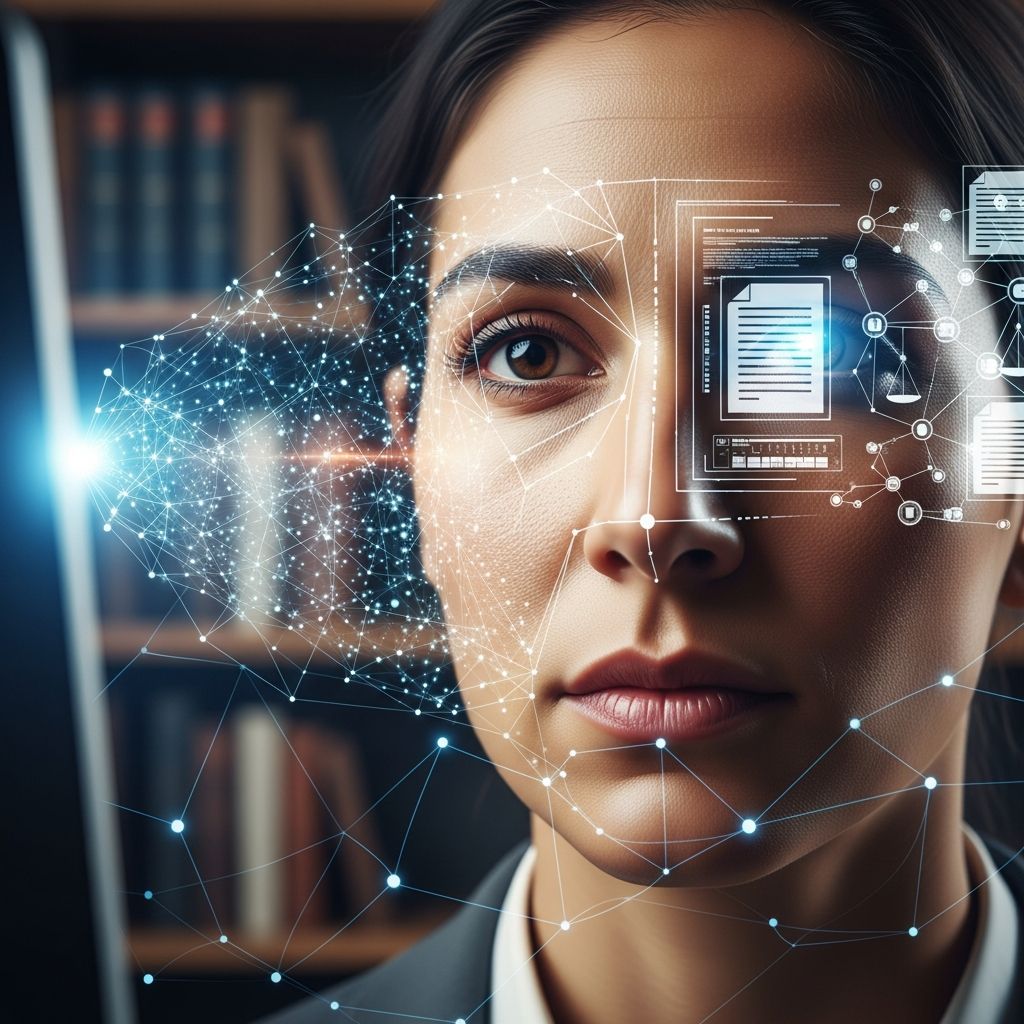
Facial recognition technology analyzes facial features to identify or verify individuals, offering law firms tools to streamline operations and bolster security. This article examines its integration into legal workflows, balancing innovation with privacy concerns and regulatory compliance.
Understanding Facial Recognition Fundamentals
Facial recognition systems use algorithms to map facial landmarks, creating unique biometric profiles for matching against databases. In legal settings, these tools process images from surveillance, photos, or videos to support investigations or access control.
Key components include face detection, feature extraction, and matching phases. Modern systems, like those tested by NIST, achieve over 99% accuracy across demographics when properly implemented, reducing reliance on subjective eyewitness accounts.
Enhancing Firm Security and Access Management
Law firms handle sensitive client data, making secure premises essential. Facial recognition enables touchless entry, verifying attorneys, staff, and visitors against authorized profiles.
- Automated door unlocks for pre-registered personnel, minimizing keycard losses.
- Visitor logging with instant identity checks, alerting staff to unauthorized entries.
- Integration with CCTV for real-time threat detection, flagging known risks.
Venues like entertainment arenas have deployed similar systems to exclude specific individuals, sparking debates on private entity rights versus civil liberties.
Streamlining Client Onboarding and Verification
Know Your Client (KYC) processes demand robust identity checks. Facial recognition verifies identities via selfies against official IDs, accelerating onboarding while combating fraud.
| Traditional KYC | Facial Recognition KYC |
|---|---|
| Manual document review (days) | Instant biometric match (seconds) |
| Human error risk | Algorithmic precision >99% |
| Paper-based storage | Secure digital vaults |
This approach complies with anti-money laundering rules, as seen in financial sectors adopting biometrics.
Leveraging Technology in Litigation and Investigations
In criminal defense, attorneys challenge facial recognition evidence by scrutinizing algorithm biases, data quality, and operator training. Firms can deploy proprietary tools to analyze opposing evidence.
- Review surveillance footage for misidentifications, common in low-light conditions.
- Cross-reference social media images against probe photos for alternative narratives.
- Engage experts to testify on demographic error rates, where certain groups face higher false positives.
Prosecutors use tools like Clearview AI’s database of billions of images for suspect identification, aiding cases like the January 6 investigation.
Operational Efficiency Gains
Beyond security, facial recognition optimizes daily tasks. Time-tracking systems log billable hours via entry scans, while meeting room bookings confirm attendees automatically.
Document management benefits from facial search in photo archives, quickly retrieving case-relevant images. In discovery, it flags faces in video depositions, saving paralegal hours.
Navigating Privacy Regulations and Compliance
U.S. states like Illinois (BIPA) and New York impose strict biometric rules, requiring consent for data collection and prohibiting sales without permission. Firms must audit vendors for compliance.
- Obtain explicit client consent for biometric use.
- Implement data retention policies, deleting scans post-verification.
- Conduct privacy impact assessments per GDPR equivalents for international clients.
MSG Entertainment’s venue bans faced lawsuits under Civil Rights Law §40-b, highlighting risks of unauthorized scanning.
Addressing Bias and Accuracy Concerns
Early systems exhibited racial and gender biases, with higher error rates for darker-skinned females. NIST evaluations now mandate demographic reporting, pushing vendors toward equity.
Law firms should:
- Test tools on diverse datasets.
- Document mitigation strategies for court challenges.
- Train staff on limitations, like photo editing impacts.
Ethical Considerations in Adoption
Ethics demand transparency; inform clients of biometric use and offer opt-outs. Surveillance ethics weigh security against intrusion, as debated post-George Floyd.
Firms adopting responsibly foster trust, positioning as tech-forward while upholding professional duties.
Implementation Roadmap for Law Firms
Start with pilot programs in low-risk areas like internal access. Partner with NIST-evaluated vendors for reliability.
| Phase | Actions | Timeline |
|---|---|---|
| Assessment | Gap analysis, vendor RFPs | 1-2 months |
| Pilot | Deploy in one office | 3 months |
| Scale | Firm-wide rollout, training | 6 months |
| Monitor | Audits, feedback loops | Ongoing |
Future Trends Shaping Legal Applications
Advancements promise real-time courtroom analysis and AI-enhanced depositions. By 2025, law enforcement budgets for biometrics hit $375 million, signaling broader adoption.
Hybrid human-AI workflows will dominate, with attorneys focusing on strategy over grunt work.
Frequently Asked Questions
What are the main legal risks of using facial recognition in a law firm?
Primary risks include BIPA violations, privacy torts, and bias claims. Mitigate with consent forms and compliant vendors.
Can facial recognition evidence be excluded from court?
Yes, defense attorneys challenge admissibility via Daubert hearings, citing error rates and lack of standardization.
How accurate is modern facial recognition technology?
Top systems exceed 99% accuracy per NIST tests, but real-world factors like lighting reduce reliability.
Does facial recognition comply with federal privacy laws?
No comprehensive federal law exists; rely on state statutes and FTC guidelines for fair practices.
What steps protect against algorithmic bias?
Use diverse training data, regular audits, and expert reviews as recommended by NIST.
References
- Use of Facial Recognition Technology to Ban Lawyers with Pending Lawsuits Against MSG Entertainment — Maryland Law Review, University of Maryland. 2024. https://digitalcommons.law.umaryland.edu/cgi/viewcontent.cgi?article=3994&context=mlr
- Face Recognition Technology in the Courtroom: Legal Challenges and Defense Strategies — MyLawCLE. 2023. https://mylawcle.com/products/face-recognition-technology-in-the-courtroom-legal-challenges-and-defense-strategies/
- Protecting Rights in An Era Of Facial Recognition Technology — AL & Associates Law. 2024. https://www.alsolaw.com/protecting-rights-in-an-era-of-facial-recognition-technology/
- What Clearview AI has Implemented to Ensure That Facial Recognition Technology is Used Responsibly — Clearview AI. 2023. https://www.clearview.ai/post/what-clearview-ai-has-implemented-to-ensure-that-facial-recognition-technology-is-used-responsibly
- Privacy vs. Security: The Legal Implications of Using Facial Recognition Technology at Entertainment Venues — New York State Bar Association. 2024. https://nysba.org/privacy-vs-security-the-legal-implications-of-using-facial-recognition-technology-at-entertainment-venues/
- The ethics of facial recognition technologies, surveillance, and accountability in an age of artificial intelligence — National Library of Medicine, NIH. 2021-07-20. https://pmc.ncbi.nlm.nih.gov/articles/PMC8320316/
Similar Articles








Read full bio of medha deb


