Facial Recognition vs. Passwords: Making the Right Choice for Your Business
Explore the trade-offs between facial recognition and password systems for workplace security.
Understanding Authentication Technology in Modern Workplaces
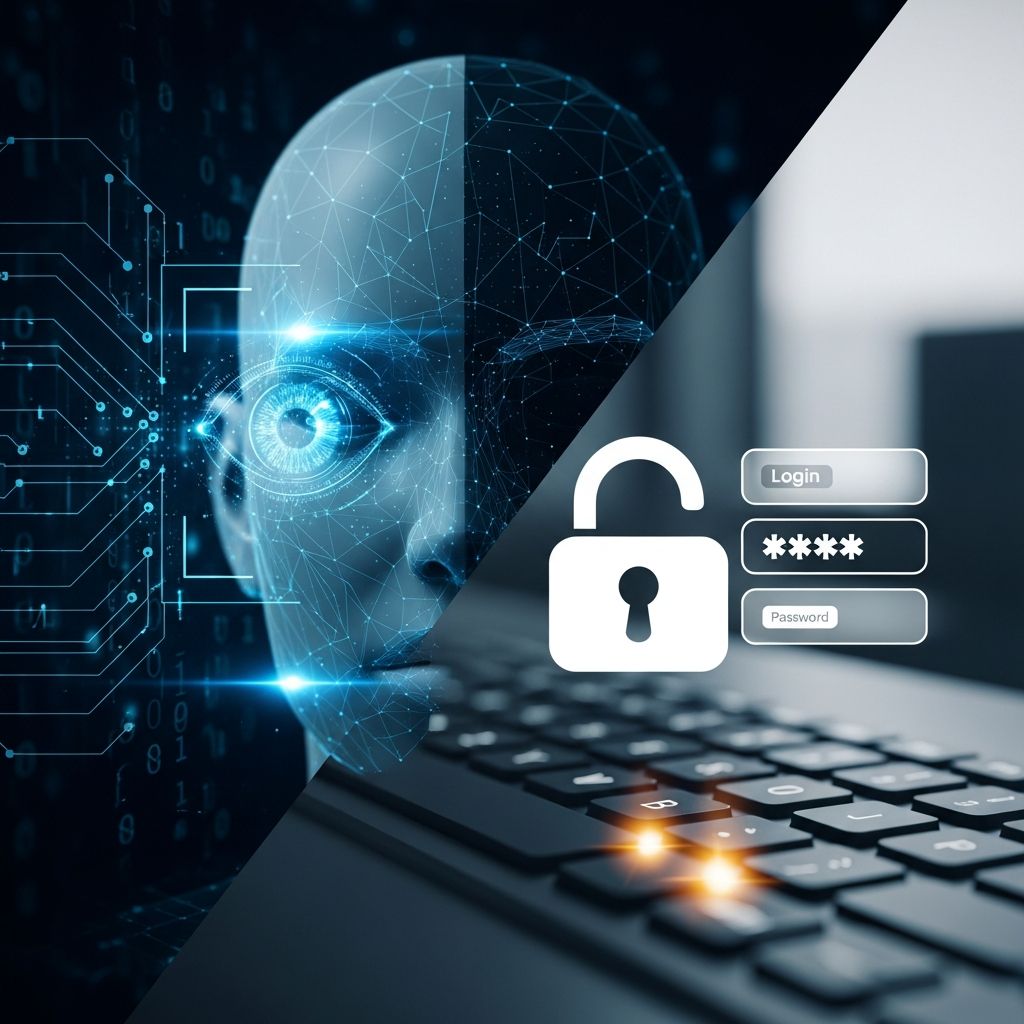
Organizations today face an increasingly complex security landscape where traditional password-based authentication systems continue to show vulnerabilities. The shift toward biometric technologies, particularly facial recognition, represents a significant evolution in how businesses protect sensitive information and control employee access to critical systems. Before making the transition from conventional passwords to facial recognition technology, business leaders must carefully evaluate the practical, financial, and legal dimensions of this decision.
The fundamental challenge lies in balancing enhanced security capabilities with user convenience, cost considerations, and regulatory compliance. Facial recognition systems offer distinct advantages over password management, yet they introduce new complexities that organizations must navigate thoughtfully.
The Vulnerability Problem With Password-Based Systems
Traditional password authentication has become the weak point in many organizational security frameworks. According to security research, 81% of data breaches involved weak or stolen passwords, demonstrating the persistent vulnerability of this authentication method. Employees frequently struggle with password management, forgetting an average of 12 passwords annually, which creates both security risks and operational friction.
The cognitive burden on users leads to predictable patterns that compromise security. Common practices such as password reuse across multiple accounts, writing credentials on sticky notes, or choosing easily guessable combinations significantly weaken organizational defenses. Help desk departments dedicate considerable resources to password reset requests and recovery procedures, representing a hidden cost of password-dependent systems.
Phishing attacks specifically target password-based authentication, with employees unable to distinguish legitimate requests from sophisticated social engineering attempts. The human element remains the most exploitable vulnerability in password systems, regardless of technical complexity requirements.
Advantages of Facial Recognition Technology
Facial recognition systems fundamentally change the authentication equation by shifting from ”what you know” to ”what you are.” This distinction creates substantial security improvements since biometric characteristics cannot be forgotten, stolen in the traditional sense, or shared with others. Unlike passwords, facial features remain constant and immediately available for verification.
The speed of facial recognition authentication eliminates the friction associated with remembering and entering complex credentials. Employees gain instant access to systems without typing passwords or managing recovery codes. This streamlined experience naturally encourages compliance with security protocols since authentication becomes effortless rather than burdensome.
Multi-factor authentication incorporating facial recognition reduces unauthorized access risk by 99%, according to security research. The technology achieves accuracy rates exceeding 99% in many implementations, providing reliability comparable to or exceeding password security while removing human error from the equation.
Facial recognition also mitigates shoulder surfing attacks, where unauthorized individuals attempt to observe credential entry. Since no visible input occurs during facial verification, this common attack vector becomes irrelevant.
Implementation Costs and Technical Considerations
The financial investment required to transition from passwords to facial recognition extends beyond purchasing biometric hardware. Organizations must account for system infrastructure, software licensing, camera installation, network connectivity upgrades, and employee training.
Initial deployment represents the highest expense component, particularly for organizations with distributed workforces or multiple office locations. However, the global biometric technology market is projected to reach $68.6 billion by 2025, reflecting increased adoption and improving cost-effectiveness as the technology matures.
Long-term cost analysis often favors facial recognition systems despite higher upfront expenditures. Reduced password reset requests, lower help desk support requirements, and decreased security breach costs can offset initial investments over time. Organizations experience productivity gains as employees spend less time managing authentication and more time performing actual work.
Integration with existing systems requires careful planning to ensure compatibility with current infrastructure. Modern facial recognition solutions increasingly integrate seamlessly with enterprise systems, though legacy environments may require additional middleware or customization.
Legal and Regulatory Landscape
Deploying facial recognition in the workplace triggers various legal considerations that differ significantly across jurisdictions. The European Union’s General Data Protection Regulation fundamentally shapes how organizations handle biometric data, requiring explicit consent and establishing stringent processing requirements.
Biometric data qualifies as special category personal information under GDPR, subject to enhanced protection standards. Organizations cannot process facial recognition data without clear legal basis and employee consent. This regulatory framework substantially affects implementation strategy and requires documentation of legitimate business purposes.
Several U.S. states have enacted biometric privacy legislation that restricts facial recognition deployment without explicit informed consent. Illinois, Texas, and other jurisdictions impose requirements for data retention policies, deletion procedures, and transparency regarding system usage. Organizations operating across multiple states must navigate conflicting regulatory requirements.
Employment law considerations include notice requirements, employee communication protocols, and potentially collective bargaining obligations if union representation exists. Labor regulations in some jurisdictions may require consulting with employee representatives before implementing biometric monitoring systems.
Privacy and Employee Concerns
Facial recognition systems inherently raise privacy concerns since they involve continuous collection and analysis of biometric data. Employees may object to facial recognition on philosophical grounds, regarding such monitoring as invasive or excessive. Addressing these concerns through transparent communication and clear policies becomes essential for successful implementation.
Data security risks accompany facial recognition deployment. Biometric data breaches carry unique concerns since compromised facial information cannot be simply reset like a password. A single data breach could expose facial templates to malicious actors indefinitely, creating persistent vulnerability for affected individuals.
Storage and retention policies must address how facial data is maintained, who accesses this information, and how long it remains in organizational systems. Clear protocols for data deletion upon employment termination or system discontinuation help mitigate ongoing privacy risks.
Employee training on facial recognition policies, data handling procedures, and privacy protections demonstrates organizational commitment to responsible deployment. Transparent communication about system capabilities and limitations reduces anxiety and builds trust in implementation.
Security Limitations and Bypass Mechanisms
While facial recognition offers substantial security advantages, no authentication system remains perfectly foolproof. Most biometric systems maintain password backup authentication in case facial recognition fails or becomes unavailable. This redundancy actually reintroduces password vulnerabilities that facial recognition was intended to eliminate.
Spoofing attacks remain a consideration, though modern systems increasingly incorporate anti-spoofing measures such as liveness detection. These protections verify that facial recognition is reading an actual face rather than a photograph or other counterfeit representation.
Biometric characteristics change over time through aging, injury, or cosmetic procedures. While facial recognition systems adapt reasonably well to gradual changes, significant alterations may require re-enrollment. Environmental factors such as lighting conditions, camera angles, or obstructions can temporarily affect recognition accuracy.
The immutability of biometric data creates a different security paradigm than passwords. If compromise occurs, remediation options remain limited since individuals cannot simply change their face. This fundamental difference requires organizations to implement exceptionally robust data protection measures.
Comparative Analysis: When Each System Makes Sense
| Consideration | Password Systems | Facial Recognition |
|---|---|---|
| Initial Cost | Lower | Higher |
| User Experience | Cumbersome | Seamless |
| Security Strength | Variable | Consistently High |
| Recovery Options | Multiple | Limited |
| Regulatory Complexity | Moderate | Substantial |
| Infrastructure Requirements | Minimal | Significant |
| Long-term Support Costs | Ongoing | Reduced |
Strategic Approach to Technology Transition
Rather than viewing facial recognition and passwords as mutually exclusive options, many organizations benefit from hybrid approaches that leverage both technologies strategically. This implementation strategy provides security advantages while maintaining fallback authentication methods and reducing abrupt disruption.
Phased deployment allows organizations to pilot facial recognition in specific departments or locations before enterprise-wide rollout. This approach identifies technical challenges, refines procedures, and builds employee confidence through managed implementation.
Combining facial recognition with additional authentication factors creates robust multi-factor authentication frameworks. Even facial recognition systems benefit from supplementary verification methods for highly sensitive applications or administrative access.
Organizations should establish clear policies defining which systems require facial recognition versus password authentication based on security sensitivity and operational requirements. Not all access points require identical authentication rigor, and differentiated approaches maximize both security and usability.
Employee Training and Change Management
Successful facial recognition implementation depends critically on effective employee training and communication. Organizations must explain technical functionality, address privacy concerns, clarify data handling procedures, and provide hands-on system familiarization before deployment.
Change management initiatives should acknowledge legitimate employee concerns while demonstrating organizational commitment to responsible technology deployment. Transparently addressing questions about data retention, access controls, and privacy protections builds institutional trust.
Technical training should cover system operation, fallback procedures, troubleshooting for failed authentications, and escalation pathways for issues. Well-trained employees become system advocates who contribute to successful deployment and help colleagues understand capabilities and limitations.
Ongoing communication about system updates, policy changes, and security measures reinforces that facial recognition implementation represents a deliberate security investment rather than intrusive monitoring.
Industry-Specific Considerations
Different business sectors face varying security requirements and regulatory obligations that influence facial recognition adoption decisions. Financial institutions, healthcare organizations, and government contractors operate under heightened compliance frameworks that may either mandate biometric authentication or impose substantial restrictions.
Organizations handling sensitive intellectual property or government contracts frequently benefit from facial recognition’s enhanced security capabilities. The security advantages justify implementation costs and complexity in environments where data breaches carry catastrophic consequences.
Industries with significant remote work components face distinct challenges in facial recognition deployment. Organizations must determine whether facial recognition systems support distributed authentication or remain limited to physical office locations.
Frequently Asked Questions
Q: Can facial recognition completely replace passwords in business environments?
A: While facial recognition offers superior security and user experience, most organizations maintain passwords as backup authentication methods. Complete password elimination remains impractical since facial recognition can experience temporary failures, and regulatory requirements in some jurisdictions necessitate alternative authentication options.
Q: What happens if facial recognition fails to recognize an employee?
A: Most systems offer password fallback authentication when facial recognition fails due to lighting conditions, camera positioning, or temporary changes in appearance. However, falling back to passwords reintroduces password vulnerabilities. Some systems use alternative biometric methods such as fingerprint scanning as backup authentication.
Q: How does facial recognition affect employee privacy?
A: Facial recognition involves continuous collection and analysis of biometric data, which raises privacy concerns. Organizations must implement clear data protection policies, establish legitimate purposes for facial data collection, obtain employee consent, and maintain secure storage with strict access controls. GDPR and other privacy regulations impose substantial requirements for responsible deployment.
Q: Is facial recognition technology affordable for small businesses?
A: Initial facial recognition implementation costs remain significant, though pricing has decreased as technology matured. Small businesses should evaluate long-term savings from reduced password reset support, improved security, and productivity gains against upfront infrastructure investments. Many organizations find facial recognition cost-effective over multi-year periods despite higher initial expenses.
Q: What regulatory requirements apply to facial recognition in the workplace?
A: Regulatory requirements vary by jurisdiction. GDPR in Europe imposes strict biometric data handling requirements. Various U.S. states have enacted biometric privacy laws requiring explicit consent and data management policies. Organizations must research applicable regulations in their operating jurisdictions and consult legal counsel before implementation.
Q: Can facial recognition be spoofed with photographs or masks?
A: Modern facial recognition systems incorporate anti-spoofing measures and liveness detection that verify actual faces rather than static representations. However, sophisticated spoofing attempts continue to emerge as technology advances. Reputable facial recognition solutions maintain continuous security updates to address emerging spoofing techniques.
References
- Employers are swapping passwords for fingerprints, face recognition — HR Dive. 2017. https://www.hrdive.com/news/employers-are-swapping-passwords-for-fingerprints-face-recognition/519503/
- Biometric MFA vs Traditional Passwords: A Security Comparison — Avatier. 2025-06-20. https://www.avatier.com/blog/biometric-mfa-vs-passwords/
- Biometrics vs Face Recognition for Identity Authentication — OLOID. https://www.oloid.com/blog/biometrics-vs-facial-recognition-effectiveness-for-identity-authentication
- Facial recognition systems: applications, benefits and challenges — Keyless.io. https://keyless.io/blog/post/facial-recognition-applications-benefits-and-challenges
- Which is Safer: Biometrics or Passwords? — Experian. https://www.experian.com/blogs/ask-experian/biometrics-vs-passwords-which-is-safer/
Similar Articles








Read full bio of medha deb