
Online Threats And True Threat Law: What Users Need To Know Now
How courts separate protected online speech from punishable threats
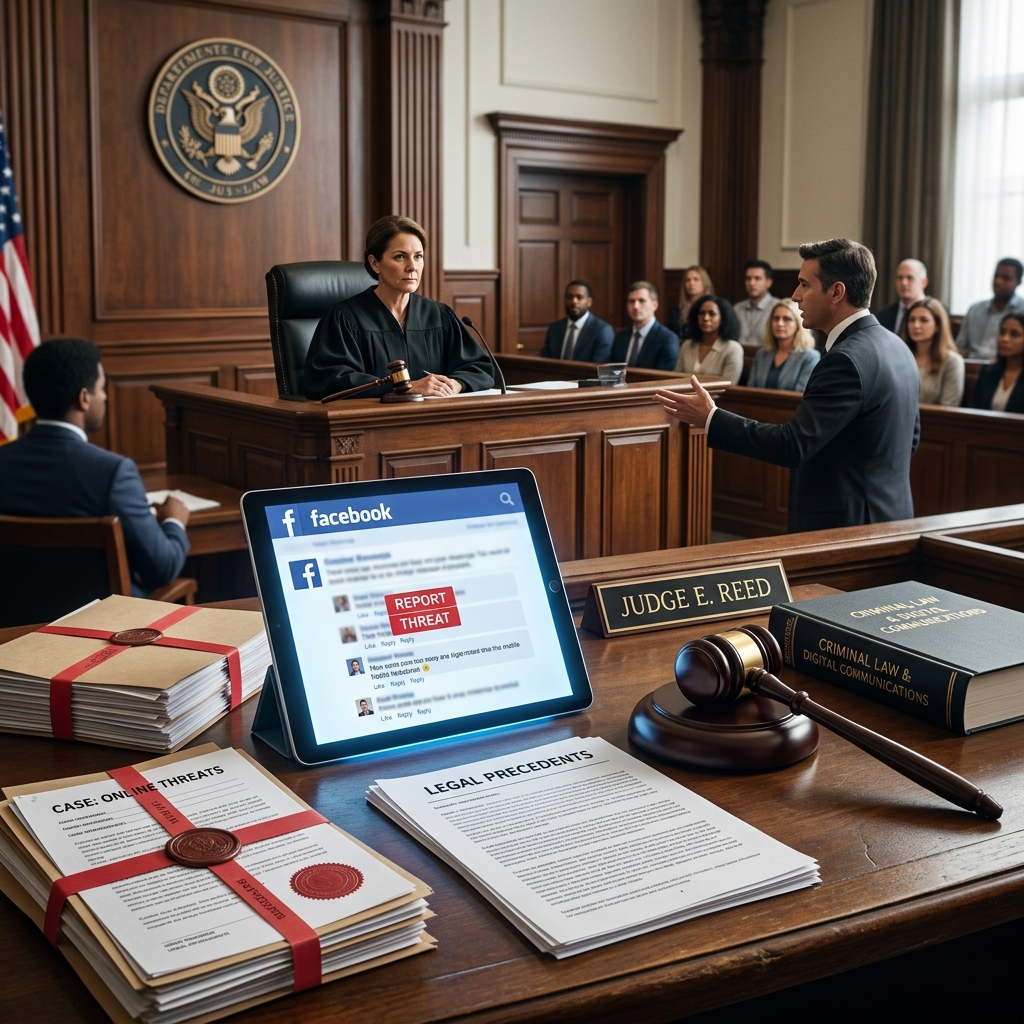
Social media has changed how people speak, vent, argue, and joke in public. It has also forced courts to decide when a disturbing post is simply offensive speech and when it becomes a criminal threat. The key legal question is not only what was said, but also what the speaker meant and how the message should be understood in context.
The Supreme Court’s modern approach makes one point clear: the government cannot punish threatening speech based only on how an ordinary reader might react. Courts must look for proof that the speaker had at least some awareness that the message would be taken as threatening. That requirement protects free expression while still allowing punishment for serious threats of violence.
Why online threats create a legal problem
Internet posts are different from face-to-face statements because they can be impulsive, exaggerated, repetitive, and posted to a broad audience without much thought. A message that looks alarming on its face may be sarcasm, song lyrics, political rage, or emotional venting. At the same time, a real threat can be hidden inside casual language, making it hard for police, prosecutors, and juries to separate protected speech from dangerous conduct.
Courts therefore have to balance two important interests:
- the First Amendment right to speak freely, even in harsh or unsettling ways
- the government’s responsibility to prevent fear, intimidation, and violence
That balance becomes especially difficult on platforms like Facebook, where posts can be screen-captured, shared instantly, and interpreted out of context long after they were written.
The legal idea behind a “true threat”
Not every violent statement is a crime. American law recognizes a category called a “true threat,” which refers to speech that is not protected by the First Amendment because it is a serious expression of intent to commit unlawful violence. The label matters because a true threat is treated differently from political hyperbole, artistic expression, or crude venting.
In practical terms, a true threat usually involves words that would make a reasonable person fear harm, but that is not the whole test. The Supreme Court has made clear that the speaker’s mental state matters too. The law does not allow a criminal conviction based only on a careless misunderstanding of a post.
| Issue | Why it matters |
|---|---|
| What was said | The words help show whether the message sounded threatening on its face. |
| Context | The platform, audience, tone, history, and timing can change how the post is read. |
| Speaker intent | The government must show the speaker knew the statement would be seen as threatening, or acted with enough awareness under the law. |
| Protected speech | Jokes, exaggeration, political statements, and emotional outbursts may remain protected if they are not true threats. |
What the Supreme Court changed
The Court rejected the idea that a person can be convicted of a threatening communication merely because a reasonable reader might think the post was dangerous. That kind of rule would make criminal punishment turn too heavily on negligence, meaning a failure to be careful rather than a conscious decision to threaten. In criminal law, negligence is usually too weak a mental state for serious punishment.
Instead, the Court required proof of a subjective mental state. In other words, the prosecution must show that the defendant had some understanding of the threatening nature of the statement. This does not mean the speaker must prove they truly meant to carry out the threat. It means the law focuses on whether the speaker knew, or at least was sufficiently aware, that the communication would be understood as threatening.
This approach matters because speech can sound ugly without being criminal. The Constitution does not permit the government to punish someone simply for being rude, dramatic, or emotionally unstable online.
Why intent is so important in criminal speech cases
Intent is one of the central building blocks of criminal law. Most crimes require more than a bad result; they require a guilty mind. That principle helps prevent punishment from being imposed on people who acted carelessly but not criminally.
In the context of social media threats, intent helps separate several different situations:
- a genuine threat designed to frighten or intimidate
- a reckless post written with disregard for how it will be taken
- a thoughtless joke that is taken too seriously
- a political rant or emotional venting that is offensive but not threatening
Without an intent requirement, prosecutors could turn a wide range of heated online speech into criminal cases. The Court’s insistence on mental-state proof places a constitutional limit on that power.
What prosecutors still can prove
The Supreme Court’s decision did not make online threats legal. A person can still face charges if the evidence shows the communication was a real threat and the speaker had the necessary mental state. Prosecutors may rely on the words used, prior messages, direct references to the target, repeated harassment, timing, and surrounding circumstances.
Evidence can include:
- the exact language of the post
- private messages sent before or after the public post
- previous conflicts between the speaker and the target
- whether the statement named a person or group
- whether the post included details suggesting violence was being planned or fantasized about in a credible way
That means a defendant cannot escape liability simply by arguing that the statement was posted online rather than spoken aloud. The internet is a forum, not a shield.
Why context matters on social media
Context can radically change the meaning of a post. A line that appears alarming in isolation may look less serious if it is part of a pattern of crude jokes among friends. On the other hand, a brief post may be threatening if it comes after repeated harassment, stalking, or explicit references to harm.
Courts may consider whether the audience knew the speaker’s style, whether the post was public or private, whether the language was specific or vague, and whether the target had reason to believe violence might follow. These details help determine whether the communication was a true threat or just reckless bluster.
For that reason, screenshots alone are often not enough. A message may need surrounding evidence before a court can fairly judge what it meant.
How the ruling affects free speech
The decision strengthens constitutional protection for speech that is merely careless, exaggerated, or emotionally charged. That matters because people often speak differently online than they do in formal settings. A broad rule based only on how readers react could chill criticism, humor, activism, and personal expression.
At the same time, the ruling does not expand protection to real threats. The law still allows punishment for speech that crosses the line into intimidation or fear of violence. The key change is that the state must prove more than the fact that the post sounded bad to an outside observer.
This makes the doctrine more speech-protective while still preserving criminal liability for genuine danger.
Common questions about violent posts on Facebook
Below are some of the most common issues people ask when online speech turns controversial.
- Can a joke become a crime?
- Yes, if the statement is framed as a real threat and the surrounding facts show the speaker understood it would be taken that way.
- Does the speaker have to plan to follow through?
- No. The law focuses on threatening communication, not on whether the person actually intended to carry out the violence.
- Is anger enough?
- Anger alone is not enough. The government still must prove the communication met the legal standard for a true threat.
- Can private messages matter?
- Yes. Private messages, comments, and repeated contacts can help show intent and context.
- Are all social media threats treated the same?
- No. Courts evaluate the language, audience, platform, and surrounding circumstances case by case.
Practical lessons for online users
People often underestimate how seriously a post can be read once it is shared, quoted, or reported. Even a message meant as sarcasm may create problems if the wording sounds like an actual threat. That is especially true where there is a history of conflict, harassment, or violence.
Several practical lessons follow from the case law:
- Write as if the post could be read by strangers, law enforcement, and a judge.
- Assume context can be lost once content is copied or forwarded.
- Avoid language that names targets and describes violence in a specific way.
- Remember that repeated posts can make a statement look more serious over time.
- Do not assume that posting online makes words less legally significant than speaking them in person.
What remains uncertain
Even after the Court’s decision, some questions remain open. One of the biggest is exactly how much intent is required in every threatening-speech case. The Court made clear that negligence is not enough, but lower courts may still debate how to apply the required mental state in borderline cases. That leaves room for ongoing litigation over the line between recklessness, knowledge, and true intent.
Another unresolved issue is how courts should weigh different kinds of digital context. Social media is fast-moving and often informal, which can make the legal meaning of a post harder to pin down than a spoken remark in a one-on-one encounter. Judges will likely continue to refine how they evaluate online speech as new platforms and posting habits emerge.
Why the decision matters beyond Facebook
Although the case involved Facebook, the reasoning reaches far beyond one platform. The same principles apply to text messages, direct messages, comment sections, email, and other forms of digital communication. Any medium that can carry a threat raises the same constitutional issue: how to punish true threats without criminalizing poorly worded speech.
That broad relevance is part of what makes the ruling significant. It does not merely affect one defendant or one website. It shapes how courts nationwide think about speech, fear, and intent in the digital age.
Frequently asked questions
Can someone be arrested for a violent Facebook post?
Yes, if the post qualifies as a true threat and the prosecution can prove the required mental state.
What is the biggest mistake people make in these cases?
Assuming that a post is protected just because it was written in frustration or claimed to be a joke.
Does the First Amendment protect threats?
No. True threats are one of the long-recognized exceptions to First Amendment protection.
Why not use only an objective standard?
Because criminal punishment generally requires proof of a culpable mind, not just a statement that happened to scare someone.
Does the ruling protect all online speech?
No. It protects speech that is not a true threat; it does not shield genuine threats of violence.
References
- Counterman v. Colorado — Supreme Court of the United States. 2023-06-27. https://www.supremecourt.gov/opinions/22pdf/22-138_43j7.pdf
- Supreme Court Tosses Conviction for Facebook Threats — Greenspun Law. 2015-06-01. https://www.greenspunlaw.com/blog/supreme-court-tosses-conviction-for-facebook-threats.cfm
- U.S. Supreme Court Addresses Criminal Liability For Facebook Threats — Michigan IT Law. 2023-07-01. https://www.michiganitlaw.com/Supreme-Court-Criminal-Liability-Facebook-Threats
- I U: Considering the Context of Online Threats — California Law Review. 2015-01-01. https://www.californialawreview.org/print/iu-considering-the-context-of-online-threats
- Court difficult to read on Facebook threats: In Plain English — SCOTUSblog. 2014-12-01. https://www.scotusblog.com/2014/12/court-difficult-to-read-on-facebook-threats-in-plain-english/
Similar Articles








Read full bio of medha deb


